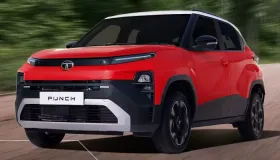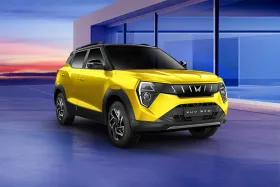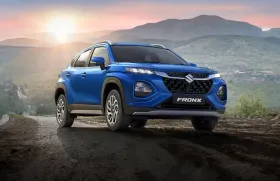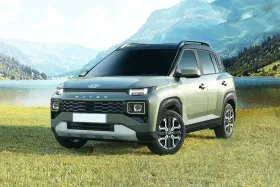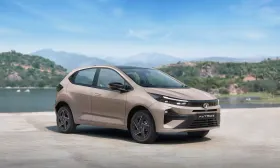


The micro-SUV segment in India is no longer just about affordable prices and compact dimensions; it’s now a full-blown battleground of safety, features, performance, and road presence. And standing right at the centre of this fight is the 2026 Tata Punch.
Known for its tough build, high safety credentials, and SUV-inspired design, the Tata Punch has been a popular choice for first-time buyers and city drivers alike. But times have changed. Rivals like the Hyundai Exter, Nissan Magnite, and Renault Kiger have raised the bar with better features, turbo engines, and aggressive pricing.
So, does the 2026 Tata Punch still have what it takes to stay ahead? Let’s find out.
Also Read: 2026 Tata Punch Gets A Turbo-Petrol Engine, Sharper Styling, And Revised Variant Naming
2026 Tata Punch vs. Competition: Tech Specs


| 2026 Tata Punch | Hyundai Exter | Nissan Magnite | Renault Kiger | Maruti Suzuki Fronx / Toyota Taisor | Maruti Suzuki Swift | Hyundai Grand i10 Nios | |
| Dimensions | 3827 x 1742 x 1615 mm | 3815 x 1710 x 1631 mm | 3994 x 1758 x 1572 mm | 3991 x 1750 x 1605 mm | 3995 x 1765 x 1550 mm | 3860 x 1735 x 1520 mm | 3815 x 1680 x 1520 mm |
| Weight | 1030 – 1095 kg | 999 kg | 939 – 1109 kg | 916 – 1106 kg | 965 – 1060 kg | 920 – 990 kg | 925 – 950kg |
| Ground Clearance | 193 mm | 185 mm | 205 mm | 205 mm | 190 mm | 163 mm | 165 mm |
| Boot Capacity | 366 liters / 210 liters | 391 liters / – | 336 liters | 405 liters | 308 liters / – | 265 liters | 260 liters |
| Wheelbase | 2445 mm | 2450 mm | 2500 mm | 2500 mm | 2520 mm | 2450 mm | 2450 mm |
| Petrol Engine (NA) | 1.2L 3-cylinder; 88 PS / 115 Nm | 1.2L Kappa 4-cylinder; 83 PS / 113.8 Nm | 1.0L 3-cylinder; 72 PS / 96 Nm | 1.0L 3-cylinder; 72 PS / 96 Nm | 1.2L 4-cylinder; 89 PS / 113 Nm | 1.2L 3-cylinder; 82 PS / 112 Nm | 1.2L Kappa 4-cylinder; 83 PS / 113.8 Nm |
| Petrol Engine (Turbo) | 1.2L 3-cylinder: 120 PS / 170 Nm (6-speed manual only) | – | 1.0L 3-cylinder; 100 PS / 160 Nm | 1.0L 3-cylinder; 100 PS / 160 Nm | 1.0L 3-cylinder; 100 PS / 148 Nm (with 6-speed TC) | – | – |
| CNG Engine | 1.2L 3-cylinder; 73.5 PS / 103 N (with AMT) | 1.2L Kappa 4-cylinder; 69 PS / 95.2 Nm | – | – | 1.2L 4-cylinder; 77.5 PS / 98.5 Nm | 1.2L 3-cylinder; 70 PS / 102 Nm | 1.2L Kappa 4-cylinder; 69 PS / 95.2 Nm |
| Transmission Options | 5-speed manual, 5-speed AMT | 5-speed manual, 5-speed AMT | 5-speed manual, CVT | 5-speed manual, CVT | 5-speed manual, 5-speed AMT | 5-speed manual, 5-speed AMT | 5-speed manual, 5-speed AMT |
| Fuel Tank Capacity | 37 liter | 37 liter | 40 liter | 40 liter | 37 liter | 37 liters | 37 liters |
| Wheel Size | 16-inch | 175/65 R15 | 195/60 R16 | 195/60 R16 | 95/60 R16 | 185/65 R15 | 170/65 R15 |
| Airbags | 6 | 6 | 6 | 6 | 6 | 6 | 6 |
Also Read: 10 Cheapest Cars With Ventilated Seats in India
2026 Tata Punch vs. Competition: Key Takeaways


- The newly launched Tata Punch is longer than the Hyundai Exter, its closest competitor in the B1 micro-SUV segment. However, all its B2 segment rivals are longer than the Punch.
- The Punch is wider than the Exter, Swift, and Grand i10 Nios. However, the B2-segment SUVs offer more space.
- In terms of height, the Exter is taller than the Punch, which is taller than all other B1- and B2-segment cars in the comparison.
- After the Magnite and the Kiger (205 mm), the Tata Punch has the highest ground clearance, followed by the Maruti/Toyota B2 SUVs.
- The Kiger has the largest boot in this comparison (405 liters), followed by the Hyundai Exter (391 liters) and the 2026 Tata Punch (366 liters).
- The Punch has the shortest wheelbase of all the cars in this comparison.


- If you’re looking for a four-cylinder naturally-aspirated engine in the B1 segment (up to 3849 mm), your only options are the Hyundai Exter and the Grand i10 Nios (and its sibling, the Aura). Both vehicles produce 83 PS of peak power and 114 Nm of peak torque.
- However, the Punch’s 1.2L NA engine is significantly more powerful than the 1.0L engines in the Magnite and Kiger. In fact, it is as powerful as the one on the B2 segment rivals, including the Fronx and Taisor.
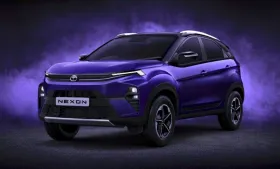
- However, where the 2026 Punch shines (across the B1 and B2 segments) is its peak power and torque on the turbo-petrol engine: 120 PS and 170 Nm, the highest in this comparison. Punch has borrowed the engine from the Nexon, making it feel even more responsive and peppy in a smaller vehicle.
Also Read: Mahindra XUV 3XO EV Launched in India: Price Starts at ₹13.89 Lakh, Delivers 295km Range

- Interestingly, Punch is the only vehicle to offer a six-speed manual transmission with the turbo-petrol engine, while all the other cars still have a five-speed manual or a CVT.
- While a 37-liter fuel tank is standard across all the cars, the Nissan Magnite and Renault Kiger have 40-liter tanks.
- The top variant of the Punch features 16-inch alloys, the largest in the segment.
- Last but not least, the Punch is among the safest cars in the segment, as it has consistently scored a perfect score in adult and child occupants.

You can follow Smartprix on Twitter, Facebook, Instagram, and Google News. Visit smartprix.com for the latest tech and auto news, reviews, and guides.