

Facelifts are rarely about reinvention, but the recent launches in the fast-moving Indian automotive market have been all about overtaking the others and setting new buyer expectations.
Skoda’s Kushaq arrived with strong fundamentals: solid build quality, engaging engines, and driving dynamics that appeal to budget-conscious enthusiasts. With the 2026 update, the company has focused on visual freshness and selective improvements.
However, as rivals push boundaries in safety tech, cabin space, convenience, and drivetrain choices, the spotlight inevitably shifts to what hasn’t changed. The 2026 Kushaq is among the most well-rounded products on the market, but there are aspects where omissions and conservative decisions stand out more sharply than they might have a few years ago.
Also Read: 2026 Skoda Kushaq Facelift Unveiled: Gets Segment-First 8-Speed AT & Rear Massage Seats
Lack Of Level 2 ADAS

In a market where crash tests are becoming increasingly critical, an educated customer also looks for active safety features. Among other features, Level 2 Advanced Driver Assistance Systems (ADAS) have emerged as one of the most visible and tangible indicators of proactive safety measures in cars.
Level 2 ADAS often includes features such as Lane Keep Assist, Adaptive Cruise Control, Collision Avoidance/Emergency Braking, and more. All these features help prevent accidents rather than protect occupants in a crash. This is where the 2026 Skoda Kushaq feels out of step, especially when compared to the other offerings in the segment.
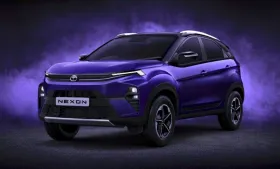
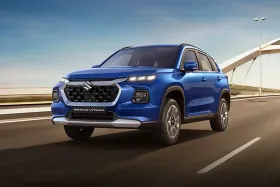
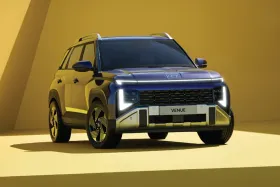
Kushaq’s primary competitors, including the Creta, Seltos, and Victoris, all offer Level 2 ADAS features. In fact, a couple of vehicles from the lower segment, including the Tata Nexon and the latest-generation Venue, also offer several automated driver-assistance features.
For the value-conscious buyer, a Rs. 20 lakh (ex-showroom) car with a five-star safety rating and another vehicle that combines a strong build with Level 2 ADAS features (like the Victoris), presents a dilemma. Yes, ADAS isn’t all that effective on Indian roads, especially when systems are tested and trained on local data, but even so, its omission on the new Skoda Kushaq is tough to justify.
Also Read: ADAS Explained: The tech behind this popular safety and convenience feature
Lack Of A 360-Degree Camera

Another feature that’s quite common among the modern mid-sized SUVs, or the C-segment SUVs, is a 360-degree camera setup, or a noticeably upgraded reverse parking camera. While Kushaq’s immediate competitors like the Creta, Seltos, and Sierra already offer this feature, we’ve recently seen it trickle down to smaller vehicles, such as the Tata Punch.
In Indian driving conditions, often characterized by tight parking spaces, unpredictable traffic, narrow lanes, and giant potholes, a surround-view camera feels like a necessity. Whether you want to monitor tire movement, measure the distance between your car’s left frame and another vehicle, or see the blind spots around your car, a 360-degree camera is a significant omission on the Skoda Kushaq.
For buyers upgrading from smaller cars, a 360-degree camera provides the assistance needed to maneuver through tricky, tight spaces. The likely reasons behind Skoda’s decision could include cost control, hardware sourcing constraints, or concerns about calibration accuracy in Indian conditions.
Also Read: Cars With 360° View Camera
No Increase In Dimensions

At a time when competitors are increasing the dimensions, wheelbase, and overall space inside their cars, Skoda’s decision to stick with the Kushaq’s dimensions (which were smaller than the competition even when the car arrived in 2020) now feels like a conservative choice in the rapidly evolving segment.
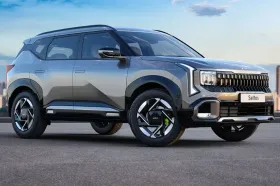
Take the 2026 Kia Seltos, for example. The C-segment SUV is 95mm longer, 30mm wider, and has an 80mm longer wheelbase. This has led to a significant improvement in cabin space, primarily for rear passengers, who now have more legroom and shoulder room.
Read how the Seltos base variant compares to the Sierra’s base here for more details.
| Skoda Kushaq | Kia Seltos | Tata Sierra | Hyundai Creta | |
| Length | 4,299 mm | 4,460 mm | 4,340 mm | 4,330 mm |
| Width | 1,760 mm | 1,830 mm | 1,841 mm | 1,790 mm |
| Height | 1,612 mm | 1,635 mm | 1,715 mm | 1,635 mm |
| Wheelbase | 2,651 mm | 2,690 mm | 2,730 mm | 2,610 mm |
| Boot Space | 491 liters (measured to the roof) | 447 liters | 622 liters (measured to the roof) | 433 liters |
The newly launched Tata Sierra is wider and taller than both the Seltos and the Creta. Further, it also has the longest wheelbase of all three SUVs. All these are intentional improvements to improve the sense of space inside the cars, and ultimately enhance the owner’s experience.
Against this backdrop, the Kushaq’s decision to stick with its original footprint feels conservative at best. As a result, buyers looking for the best room for their family of four or five people might consider other options.
Also Read: 2026 Kia Seltos Revealed For India: Check New Features, Booking/Delivery Timeline, & Expected Prices
DSG Gearbox With 1.5L TSI Engine

The continued pairing of the 7-speed DSG gearbox with the 1.5L TSI engine is yet another aspect where the Kushaq seems to have missed a big opportunity. Even though the gearbox offers quick shifts and an engaging drive experience on open roads, its long-standing reliability concerns in the indian conditions aren’t unheard of.
Heat, especially in the scorching months of May and June, stop-and-go traffic (typical of most tier-1 cities in the country), slow crawling speeds, and inconsistent driving environments are among the gearbox’s most prominent weaknesses. Even more puzzling is that the company already has a new 8-speed automatic transmission on the offering.
For now, the 8-speed TC transmission is paired with the smaller 1.0L TSI engine, but the higher torque output and the cylinder-deactivation technology of the 1.5L TSI could have benefited even more from the new transmission.
Skoda’s 1.5L TSI engine, combined with the new 8-speed transmission, could have offered better real-world efficiency and smoother drivability. Understandably, the inclusion of both could have led to a higher price tag for the 1.5L TSI automatic powertrains.
Also Read: Tata Sierra vs. Competition: How Does The New Mid-Sized SUV Compare To Rivals In Segment?
No Significant Changes To The Interiors


While Skoda has updated the exteriors of the Kushaq with a new connected DRL and LED headlights, new alloy wheels, and a connected taillamp that includes the company’s name, there aren’t any major changes to the interiors.
All we get, besides new color combinations and upholstery, is the 10.25-inch digital driver’s instrument cluster, which isn’t entirely new either. The competition, at the same time, is using plenty of soft-touch materials at driver interaction points, giving their vehicles a more premium cabin feel.
Touch-based AC controls, something the industry has been pursuing lately, aren’t exactly useful. It requires the driver to look at the HVAC panel for reassurance, rather than providing haptic feedback, which physical buttons do.


Further, Skoda hasn’t confirmed the presence of a better, stronger air conditioning system in the 2026 Kushaq, something that initial buyers have complained about from time to time. Further, the center console lacks an electronic parking brake, a feature that has become increasingly common in rivals.
The Skoda Kushaq is among the few driver-centric vehicles in the segment; the thrill and control it provides, even at high speeds, remain among the best. However, the company has equipped the rear passenger seats with an in-built massager. We aren’t sure about how many owners would buy the Kushaq as a chauffeur-driven vehicle.
While there are no sunshades in the Skoda Kushaq, the panoramic sunroof doesn’t look as big as what you’d get with other C-segment SUVs in India.
Also Read: 2026 Tata Punch Variant-Wise Price & Features Explained: Which One Should You Buy?
Conclusion
Disappointment is often a consequence of expectations, and the Indian buyers, particularly the fans of the Volkswagen Group, expect much more from Skoda today. Under the brand’s “Skoda 2.0” strategy, the automaker has emphasized its focus on the Indian market, and that promise raises the bar.
The Kushaq still excels where it always has: steering feel, high-speed stability, engine performance, and a sense of solidity that many competitors struggle to replicate. However, as the market has evolved, buyers now expect a more complete pack.
The good news is that most of the gaps don’t require a ground-up redesign and might still arrive on the Skoda Kushaq with minor generation updates.

You can follow Smartprix on Twitter, Facebook, Instagram, and Google News. Visit smartprix.com for the latest tech and auto news, reviews, and guides.