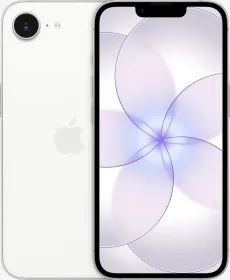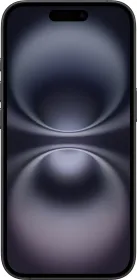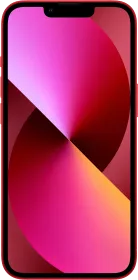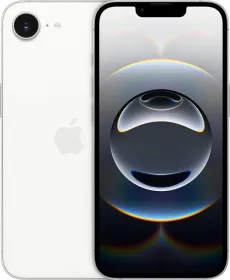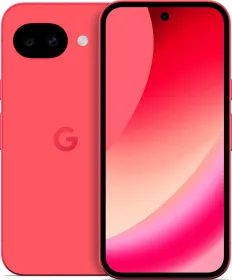


Apple has a habit of releasing a “more affordable” iPhone and then quietly leaving out features that make you question whether it’s actually a good deal. The iPhone 16e did that — nice phone, wrong side of 2025 when it came to MagSafe and storage. A year later, the iPhone 17e lands, and it reads almost like Apple took last year’s complaint list and worked through it one by one.
Let’s talk about what’s actually changed, because a few of these upgrades aren’t incremental — they’re corrections.
Same Price, Twice the Storage

In India, it starts at Rs. 64,900 for the 256GB model and ₹84,900 for 512GB. That’s not cheap by any stretch, but it’s also not wildly out of step with where Apple tends to land in the Indian market — and you’re getting twice the base storage the 16e launched with at Rs. 59,900, so the value argument holds up reasonably well. Whether the jump to Rs. 84,900 for 512GB makes sense depends on how much you rely on local storage versus iCloud, but most people will find 256GB more than enough to start.
Pre-orders open March 4, phones start arriving March 11 in over 70 countries. Colors are black, white, and soft pink — the last of which is new, and a clear signal Apple is going after a specific buyer here.
The A19 Is a Real Upgrade

Last year’s 16e ran on the A18. The 17e gets the A19 — the same chip inside the standard iPhone 17. That gap matters more than chip generations usually do, because the A19’s 16-core Neural Engine is built specifically for running Apple Intelligence features on-device. The 16e could handle it, but the 17e handles it better and with more room to breathe as Apple Intelligence expands.
The new C1X modem is also here, replacing the original C1 from the 16e. Apple says it’s up to twice as fast. Both chips are shared with the iPhone 17 and iPhone Air, so the 17e isn’t getting a watered-down version — it’s just getting them a generation later than the flagships did.
Also Read: Xiaomi 17 Series Goes Global at MWC 2026; India Launch Scheduled for March 11
MagSafe, Finally

The 16e not having MagSafe was a strange call. MagSafe had been around long enough by 2025 that skipping it wasn’t really saving money — it was just leaving people out of an accessory world that had quietly become the norm for iPhone users. Wallets, chargers, mounts — all of it built around that magnet ring. The 17e has it now. Wireless charging is up to 15W with a 20W adapter — the 16e was stuck at 7.5W — and you can hit 50% on a wired charge in around 30 minutes. Video playback is rated at 26 hours, same as before, though real-world battery performance with the C1X doing the cellular heavy lifting is something that’ll only become clear once people are actually using it day-to-day.
One Camera, But a Better One

Single rear camera — that’s still the deal here, and anyone hoping for an ultra-wide is going to be disappointed. What Apple has done, though, is make that one sensor work harder. The 48MP Fusion camera now comes with a redesigned Portrait mode that figures out what the subject is without you having to tap and confirm, which sounds small until you’ve missed a shot waiting for that step. The optical-quality 2x zoom is still present, which gives you a bit of flexibility without a second physical lens doing the work. Video goes up to 4K Dolby Vision at 60fps, putting it level with the standard iPhone 17 on that front at least.
Up front, the notch is still there — Apple didn’t bring Dynamic Island to the 17e, which will disappoint anyone who was hoping for a more modern-looking front. The 16e kept the notch, and so does this one. It’s the most visible sign that you’re holding the budget model, and Apple clearly drew that line on purpose.
Also Read: vivo X300 Ultra Appears at MWC 2026 With Massive 400 mm Teleconverter and New Camera Rig
Display: Great, Except the One Part That Isn’t

The 6.1-inch Super Retina XDR OLED is sharp, hits up to 1,200 nits of peak HDR brightness, and is now covered by Ceramic Shield 2 — Apple claims three times better scratch resistance and noticeably less glare than before. The screen looks good. It will hold up to use better than the 16e’s did.
But it’s still 60Hz. The iPhone 17 moved to 120Hz ProMotion last year and the 17e didn’t get it — simple as that. You feel it most when scrolling or switching between apps, particularly if your last phone had a higher refresh rate. At $599, Apple had to cut somewhere, and this is where they cut.
How The iPhone 17e Compares to the iPhone 17
The chip is the same. The modem is the same. iOS runs identically on both. Past that, the 17 pulls ahead in a few places — a bigger 6.3-inch screen, 120Hz, an ultra-wide camera, and the N1 chip that brings Wi-Fi 7 along with it. The 17e has none of those. For some people that list is a dealbreaker; for others it genuinely isn’t. Depends entirely on how you use your phone.
Also Read: iQOO Z11x Launch Confirmed for India on March 12
Worth Getting?
If you’re coming from a 16e, it’s a closer call than the spec sheet makes it seem — the display and camera aren’t dramatically different, though MagSafe and better charging are real quality-of-life upgrades. If you’re coming from anything older — an SE, a 14, a 13 — the 17e is a meaningful step forward in almost every area, at a price that makes the decision fairly easy.
Apple has spent years getting the “affordable iPhone” concept right. The 17e isn’t perfect, but it’s the closest they’ve come.

You can follow Smartprix on Twitter, Facebook, Instagram, and Google News. Visit smartprix.com for the latest tech and auto news, reviews, and guides.