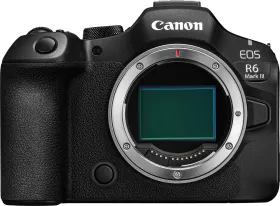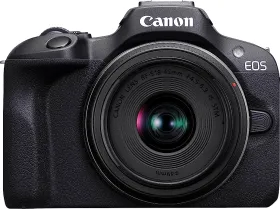


The Canon EOS R6 Mark III is my first full-frame mirrorless camera, and after several weeks of heavy use, primarily with the RF 45mm f/1.2 STM lens, it’s proven to be an exceptionally capable hybrid that bridges enthusiast and pro needs without major compromises.
The R6 Mark III sits at around $2,799 body-only (₹2,43,999 in India). What you get for that price is the kind of spec jump that actually shows up in real shooting: a fresh 32.5MP full-frame sensor, Dual Pixel CMOS AF II, massive buffer depths (150+ full RAW at 40fps), internal 7K RAW video, oversampled 4K 120p, open-gate recording, 8.5-stop IBIS, and dual slots (CFexpress Type B + UHS-II SD).
The full-frame leap from APS-C is profound. Dynamic range is stronger, high ISO is cleaner, colors look richer, and the shallow depth of field is the kind you feel instantly, especially once you start shooting f/1.2.
Now let’s expand on the full experience in this review, including the practical bits like battery and charging realities, ergonomics flow, and what you actually get in the box.
Canon EOS R6 Mark III Price & Availability
- Body-only pricing is $2,799 / ₹2,43,995.
- The RF 45mm f/1.2 STM is around $470 / ₹40,495.
Pros
- Mind-blowing natural blur and subject separation at f/1.2 on full-frame
- 32.5MP sits in a sweet spot
- Sticky AF tracking across people, animals, birds, and vehicles, even in low light (-6.5 EV)
- 40fps bursts with pre-capture and a huge buffer for action
- Internal 7K 60p RAW, oversampled 4K 120p, and open gate
- Excellent IBIS
- Dual slots, full-size HDMI, plus USB-C charging and power delivery
Cons
- Battery life is not exceptional
- No top-deck LCD or built-in flash
- Rolling shutter in 7K during rapid pans, but much better control in 4K
Canon EOS R6 Mark III Specifications
- Sensor: 32.5MP full-frame CMOS
- Processor: DIGIC X
- Autofocus: Dual Pixel CMOS AF II (whole-area, Register People Priority, whole-scene deep learning detection)
- Burst shooting: 40fps electronic (pre-continuous + pre-capture included), 12fps mechanical
- Buffer: 150+ full RAW frames at 40fps
- IBIS: Up to 8.5 stops coordinated
- EVF: 3.69M-dot OLED 120Hz
- Screen: 3.0-inch fully articulating touchscreen, 1.62M dots
- Video: internal 7K 60p Cinema RAW Light, 7K open gate 30p, oversampled 4K 120p, Full HD 180p
- Storage: CFexpress Type B + UHS-II SD
- Battery: LP-E6P (16 Wh, 2130 mAh)
- Build: magnesium alloy, weather-sealed
- Ports: full-size HDMI, USB-C (charging + power delivery)
- Weight: ~699 g with battery (~670 g to 699 g body-only depending on source)
Canon EOS R6 Mark III Review: Design, Build, and Ergonomics
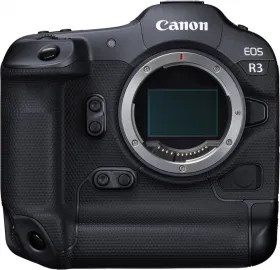
The Canon EOS R6 Mark III borrows heavily from the flagship R3, and it pulls from Canon’s cinema side too, with sensor lineage tied to the EOS C50. Canon also adds meaningful upgrades like deeper buffers, internal 7K RAW, open-gate recording, and refined AF, while keeping the body compact, comfortable, and enthusiast-priced at $2,799 or ₹2,43,999 body-only.

You might be tempted by the R6 II before, but there are a few reasons to hold off. The lower resolution limits cropping, there are video heat concerns in extended shoots, and it’s not as future-proof. The R6 III solves those points, and after switching from my APS-C setup, the full-frame is addictive.

What surprised me most is how “restrained” the camera feels. Tactility and simplicity matters a lot. The R6 III feels like Canon applied an “essentials” philosophy to the hybrid formula. It keeps what works well, strips away the fluff, and delivers where it matters.

In hand, it’s comfortable. The deep grip fits my medium hands perfectly, and I never felt fatigue after hours of portraits or event-style shooting. The button layout is logical. The power switch is easy to use one-handed, and custom buttons fall naturally under your fingers.

The on and off switch has positive detents, so it avoids accidental bumps. Weather sealing holds up in light rain and dust. Dual slots are genuinely practical, with CFexpress for speed and SD for backup. The full-size HDMI port is also a huge win if you use external monitors. The camera balances well even with the 45mm f/1.2, and it avoids that top-heavy feeling that other compact mirrorless bodies can have.
Canon EOS R6 Mark III Review: Display and Viewfinder

The EVF is excellent. It’s a 3.69M-dot OLED 120Hz panel that’s bright, detailed, and low-lag. The articulating screen is a 3-inch TFT LCD with 1.6M dots, which is snappy and reliable for vlogging, overhead angles, or awkward compositions.

Canon’s touchscreen AF implementation is also among the best. You can pinch to resize the AF point and keep it independent of the EVF, which makes the shooting experience better. The eye sensor switches seamlessly, and auto-brightness works well (though the TFT gets dim in direct sunlight).
Canon EOS R6 Mark III Review: Autofocus and Performance
AF performance is the main reason the R6 III feels like it belongs closer to Canon’s higher-end bodies. Dual Pixel CMOS AF II with whole-scene deep learning detection is sticky in the best way. Eye, head, and body detection holds through bursts, erratic motion, and dim venues, and the low-light rating of -6.5 EV is incredible.


Pre-capture is also incredibly useful. The camera can record 20 frames before you fully press the shutter, which saves moments that you would normally miss. Combined with 40fps electronic bursts and a deep buffer, it’s the kind of performance that makes family chaos, sports, and fast candid shooting feel effortless.


The best part is how little waiting there is. Buffer clearing is fast thanks to CFexpress, so the camera doesn’t feel like it slows down after you push it hard.
Canon EOS R6 Mark III Review: Image Quality
Image quality is pleasing in a technical sense, but it’s also pleasing emotionally, which is harder to quantify. Full-frame delivers cleaner shadows and highlights, with usable ISO 6400 to 12,800 that still keeps a natural grain instead of falling apart.


Canon colors are rich and familiar. Skin tones look flattering without that artificial, overly “processed” look.


The 32.5MP sensor is a sweet spot. You get more detail and cropping room than the 24MP generation without stepping into the heat and noise trade-offs that often come with 45MP+ bodies.


Files have punchy micro-contrast and a real 3D feel. The recovery latitude is excellent too. Cropping flexibility is genuinely useful. You can tighten portraits from wider shots, pull details out of frames, and print large while still keeping detail intact.
Canon EOS R6 Mark III Review: Lens: RF 45mm f/1.2 STM
The lens I’ve used most is the RF 45mm f/1.2 STM, which launched alongside the camera at around $470 or ₹40,495. It’s also my first f/1.2 experience, and the amount of natural blur is honestly insane.


Wide open, backgrounds dissolve into creamy, dreamy blur with smooth transitions and genuine 3D separation. It feels almost unreal if you’re coming from APS-C f/2.8.
The 45mm focal length is versatile. It works for environmental portraits, street photography, and indoor shooting. Center sharpness is solid even at f/1.2, and corners improve by f/2.8. Micro-contrast is lively, so textures and details look punchy Bokeh rendering is elegant. It stays smooth and avoids any distracting edges. For the price and weight (346g), it’s remarkable.
Canon EOS R6 Mark III Review: Video Capabilities
Video performance is strong on the R6 Mark III. Internal 7K 60p Cinema RAW Light gives huge post flexibility. Oversampled 4K 120p looks silky for slow motion. Open-gate 7K 30p makes reframing easy for vertical and horizontal output.
Canon Log grades enjoyably, and Canon’s color science stays a major advantage. IBIS keeps handheld footage stable.
Rolling shutter is present in 7K during fast pans, but it’s controlled much better in 4K. This is not cinema-camera thermal resilience, but in typical recordings, overheating hasn’t been a real issue.
Canon EOS R6 Mark III Review: Battery Life, Charging, and Power Management

Battery life has been a mixed bag. The LP-E6P battery gets around 500 to 800+ shots per charge in mixed use with moderate EVF shooting. 7K drains it faster, and video in general will pull it down quickly. Continuous 4K can land around 90 to 120 minutes depending on settings.
USB-C PD charging makes a big difference. You can top up on the go during breaks, and PD support means you can run plugged in for longer. Canon’s older LP-E6NH and LP-E6 batteries work too, though you’ll see warnings and feature limitations.
Canon EOS R6 Mark III Review: Stabilization
The 8.5-stop coordinated IBIS is rock-solid. Handheld shooting feels amazing. Getting sharp results at 1/10s at wider angles is easy, and the stabilization also helps video feel smoother without relying entirely on electronic stabilization.


Check out the photos in full resolution here.
Canon EOS R6 Mark III Review: Unboxing

In the box, Canon keeps things simple and standard.
You get:
- Camera body
- Body cap R-F-5
- Multi-function shoe cover ER-SC2
- Battery Pack LP-E6P (with protective cover)
- Battery Charger LC-E6 or LC-E6E (LC-E6E includes power cord)
- Strap (neck/shoulder)
You do not get a memory card, interface cable, or HDMI cable, so plan on buying those separately.
Review Verdict: Should You Buy the Canon EOS R6 Mark III?
After weeks of real use, I’m happy with the Canon EOS R6 Mark III. It’s one of the most complete hybrid cameras Canon has released in years. It’s compact enough to carry, comfortable enough to shoot all day, and powerful enough that it rarely feels like it’s holding you back.
If you’re stepping into full-frame and you want detail, speed, low-light performance, and hybrid video without paying super flagship prices, the R6 Mark III is firmly one of the most enjoyable cameras you can buy in 2026.

Smartprix ⭐ Rating: 9/10
- Image Quality: 9.5/10
- Autofocus: 9.6/10
- Video: 9.5/10
- Build & Handling: 9.3/10
- Battery: 8.9/10
First reviewed in February 2026.