

iQOO 15R vs. OnePlus 15R: Table of Contents
Mid-range phones have gotten really good, almost uncomfortably so. The iQOO 15R and OnePlus 15R are a perfect example of that problem. Same chipset, same Android version, big batteries, fast charging, on the surface, they look like the same phone wearing different clothes.
But spend some time with the specs, and the differences start showing up in places that actually matter for daily use. iQOO is gunning for the performance crowd, OnePlus is playing the refined all-rounder card — and depending on how you use your phone, one of these is clearly the better buy for you.
We broke it all down. Here’s what you need to know.
Also Read: Redmi Note 15 Pro+ vs. realme 16 Pro+: Which Mid-Range Should I Buy In 2026?
iQOO 15R vs. OnePlus 15R: Design
| iQOO 15R | OnePlus 15R | |
| Dimensions | 157.6 x 74.4 x 7.9 mm | 163.4 x 77 x 8.1 mm or 8.3 mm |
| Weight | 202 or 206 grams | 213 or 219 grams |
| Material | Glass / Aluminum / Glass or finger-reinforced back | Gorilla Glass 7i / Aluminum / Glass or finger-reinforced back |
| IP Rating | IP68 / IP69 (1.5m for 30 min) | IP68 / IP69K (1.5m for 30 min) |
| Colors | Dark Knight, Triumph Silver | Charcoal Black, Mint Breeze, Electric Violet |
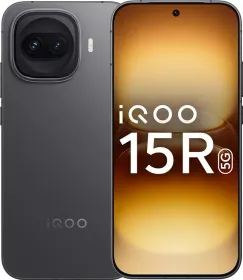
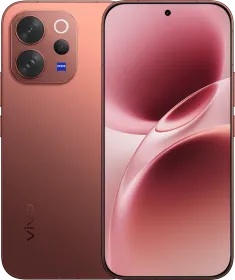
The iQOO 15R is the smaller, lighter one. We’re talking up to 17 grams lighter than the OnePlus 15R depending on which variant you pick up. That doesn’t sound like much on paper but trust me, after a few hours it adds up. It’s also thinner, which makes one-handed use a lot more comfortable day to day.

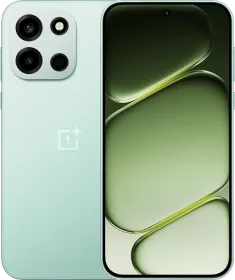
The OnePlus 15R is chunkier. There’s no sugarcoating it. But it does specifically mention Gorilla Glass 7i on the front, which the iQOO doesn’t call out — so if you’re someone who drops their phone regularly, that’s probably worth noting.
Water resistance? Both are rated IP68/IP69 at 1.5m for 30 minutes. Essentially the same, move on.
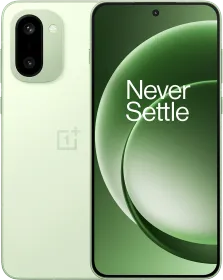
Colors are subjective but the OnePlus gives you three options including that Electric Violet which honestly looks pretty sick. The iQOO plays it safer with Dark Knight and Triumph Silver — classic, clean, nothing too adventurous.

So who wins on design? Depends on your priorities. If portability and weight matter to you, iQOO all the way. If you want a slightly more premium feel in the glass department and don’t mind the extra size, OnePlus holds its own just fine.
Also Read: realme P4 Power 5G vs. Redmi Note 15 Pro 5G: Which One Should I Choose With A Budget Of Rs. 30,000?
iQOO 15R vs. OnePlus 15R: Display
| iQOO 15R | OnePlus 15R | |
| Display Size | 6.59-inch | 6.83-inch |
| Aspect Ratio | 19.5:9 | |
| Technology | AMOLED | AMOLED |
| Resolution | 2750 x 1260 pixels | 2800 x 1272 pixels |
| Refresh Rate | 144Hz | 120Hz |
| Peak Brightness | 5000 nits | 3600 nits |
| Dimming | 4320 Hz PWM | PWM Dimming |
| HDR Formats | HDR10+ | Dolby Vision, HDR10+ |
| Colors | 1B | 1B |
The iQOO 15R punches hard with a 144Hz refresh rate against the OnePlus 15R’s 120Hz. For everyday scrolling, you probably won’t notice, but gamers absolutely will. And given iQOO’s whole identity is around gaming, that makes total sense.
Brightness is a bigger gap than I expected, though — 5000 nits on the iQOO vs 3600 nits on the OnePlus. Outdoors in harsh sunlight, that’s going to be a real difference. The iQOO screen will just be more readable, full stop.

Now, where does the OnePlus quietly win? Dolby Vision support. The iQOO stops at HDR10+ which is still great, but Dolby Vision means Netflix, Prime, Apple TV+ content looks richer and more precisely tuned. If you watch a lot of streaming, that matters more than people give it credit for.
The OnePlus also gets the bigger screen at 6.83 inches vs 6.59 — so movies and videos naturally feel more immersive on it. The resolution difference between the two is basically nothing; both are as sharp as anything.

One thing worth flagging — the iQOO specifies 4320Hz PWM dimming which is genuinely impressive for eye strain reduction in low light. The OnePlus just says “PWM Dimming” with no specifics, which tells you less than you’d want.
Also Read: iPhone 16 vs. Reno 15 Pro Mini: Which Is The Better Compact Flagship Under Rs. 60,000?
iQOO 15R vs. OnePlus 15R: Processor
| iQOO 15R | OnePlus 15R | |
| Chipset | Snapdragon 8 Gen 5 | Snapdragon 8 Gen 5 |
| Manufacturing Process | 3nm | 3nm |
| Core Configuration | Octa-core; 2 x 3.8 GHz Oryon V3 Phoenix L + 6 x 3.32 GHz Oryon V3 Phoenix M | Octa-core; 2 x 3.8 GHz Oryon V3 Phoenix L + 6×3.32 GHz Oryon V3 Phoenix M |
| GPU | Adreno 829 | Adreno 829 |
| Memory / Storage | LPDDR5X + UFS 4.1 | LPDDR5X + UFS 4.1 |
| Connectivity | Wi-Fi 7, Bluetooth v6.0 | Wi-Fi 7, Bluetooth v6.0 |
So yeah, this section is going to be short — because these two phones are literally identical under the hood.

Same Snapdragon 8 Gen 5, same 3nm process, same core configuration, same Adreno 829 GPU, same LPDDR5X + UFS 4.1 memory setup, same Wi-Fi 7 and Bluetooth 6.0. There is genuinely nothing to separate them here on paper.
Which means in real-world performance? They’re going to feel the same running apps, loading games, multitasking — all of it. Any difference you see in benchmarks will be margin-of-error stuff, not anything you’d actually notice using the phone.
Where things could diverge in practice is thermal management — how each brand has tuned the cooling system around this chipset. iQOO tends to be pretty aggressive about sustained performance under load, given their gaming focus, but that’s something you’d only know after proper testing, not from a spec sheet.

Connectivity-wise, Wi-Fi 7 on both is a nice get — faster, lower latency wireless, especially if your router supports it. Same story with Bluetooth 6.0.
Honestly, if the processor is your deciding factor, flip a coin. Your money is better spent weighing the display, camera, or battery differences between these two instead.
Also Read: Reno 15 Pro Mini vs. OnePlus 13s: Which Compact Premium Phone Should You Buy?
iQOO 15R vs. OnePlus 15R: Software
| iQOO 15R | OnePlus 15R | |
| Operating System (At Release) | Android 16 | Android 16 |
| User Interface | Origin OS 6 | OxygenOS 16 |
| Software Update Policy | 4Y OS + 6Y of Security Updates | 4Y OS + 6Y of Security Updates |
Both ship with Android 16 and both promise 4 years of OS updates plus 6 years of security patches. So longevity-wise, you’re getting the same deal. No advantage either way there.

The real split is the UI layer sitting on top. iQOO runs Origin OS 6, OnePlus runs OxygenOS 16 — and these two are genuinely different experiences to live with daily.
OxygenOS has a long history and a loyal fanbase for good reason. It’s relatively clean, snappy, and doesn’t get too in your face with bloat. OnePlus built a reputation on this and for the most part still delivers. If you’ve used a OnePlus before, you know what you’re getting.

Origin OS is a different story. It’s more feature-heavy, more customization-forward, and honestly a bit more cluttered out of the box. Some people love that, some people find it overwhelming. It also leans harder into gaming-specific features which makes sense for iQOO’s audience.
Neither is objectively better — it really just comes down to taste. Want something cleaner and more straightforward? OnePlus. Want more control and gaming extras baked in? iQOO.
Also Read: Xiaomi 17 Ultra vs. vivo X300 Pro: Which Camera-Centric Flagship Actually Makes Sense For You?
iQOO 15R vs. OnePlus 15R: Optics
| iQOO 15R | OnePlus 15R | |
| Primary Camera | 50MP (f/1.8, 1/1.56″, OIS) | 50MP (f/1.8, 1/1.56″, OIS) |
| Video Resolution | 4K@30/60fps | 4K@30/60/120fps |
| Secondary Camera | 8MP (f/2.2, 1/4.0″) | 8MP (f/2.2, 112˚, 1/4.0″) |
| Tertiary Camera | – | – |
| Selfie Camera | 32MP (f/2.2) | 32MP (f/2.0) |
| Video Resolution | 4K@30/60fps | 4K@30 |
Main sensors are a dead tie. Both are 50MP, same aperture, same sensor size, same OIS. Whatever processing magic each brand applies will matter more than the hardware here, and that’s something only real-world samples can tell you.

Where the OnePlus separates itself is 4K@120fps on the rear camera. The iQOO caps out at 4K@60fps. If you shoot slow-mo video even occasionally, that’s a meaningful gap — 120fps at 4K gives you buttery smooth footage that 60fps just can’t replicate. For a gaming-focused phone, it’s honestly a bit surprising iQOO didn’t push this further.
Ultrawide is essentially the same story on both — 8MP, f/2.2, 1/4.0″ sensor. The OnePlus does mention a 112° field of view explicitly, the iQOO doesn’t specify, but they’re likely in the same ballpark.

The selfie camera is where it flips back. Both are 32MP but the iQOO shoots selfie video at 4K@30/60fps while the OnePlus front camera only goes up to 4K@30fps. So content creators who film themselves a lot — that extra 60fps on the front is genuinely useful. The OnePlus also has a slightly wider f/2.0 aperture up front vs f/2.2 on the iQOO, which should help in lower light situations.
Neither phone has a tertiary camera, which is a bit of a shame at this price point, but not a dealbreaker.
iQOO 15R vs. OnePlus 15R: Battery
| iQOO 15R | OnePlus 15R | |
| Battery Capacity | 7,600 mAh | 7,400 mAh |
| Charging Speed | 100W | 80W |
7,600 mAh vs 7,400 mAh isn’t a massive gap on capacity alone, and honestly in day-to-day use both are going to last you well into a second day without breaking a sweat. These are genuinely big batteries, and either phone should handle heavy users just fine.

In our review of the OnePlus 15R, we’ve mentioned how the device offers over 13 hours of screen-on time. The iQOO 15R, with an even bigger battery and the same chipset, should provide even better results, but we’re yet to test it out.
But the charging speed difference is where it actually matters. 100W on the iQOO vs 80W on the OnePlus. That’s not a small gap — at 100W, you’re probably looking at a full charge of 35-40 minutes, while 80W will take noticeably longer. If you’re the kind of person who plugs in for 15 minutes before running out the door, that extra wattage is real-world useful, not just a spec sheet flex.
Combined — more battery AND faster charging on the iQOO — this category isn’t really close. OnePlus isn’t bad by any means, 80W is still quick, but iQOO just does it better across the board here.
Also Read: Find X9 vs. OnePlus 15 vs. Pixel 10: Which Android Flagship Is Right For You?
iQOO 15R vs. OnePlus 15R: Price & Verdict
iQOO 15R Price

- iQOO 15R (8GB + 256GB): Rs. 44,999
- iQOO 15R (12GB + 256GB): Rs. 47,999
- iQOO 15R (12GB + 512GB): Rs. 52,999
The iQOO 15R is lighter, charges faster, has a bigger battery, hits 5000 nits of brightness, and runs at 144Hz. For a phone positioned around performance and gaming, it delivers exactly what it promises on paper. The 4320Hz PWM dimming is also a quiet win for people sensitive to eye strain — not something most brands bother with at this price.
The tradeoffs, though, are real. No 4K@120fps on the rear camera is genuinely strange for a phone with this spec sheet. Origin OS won’t be for everyone — it’s busy, it takes getting used to, and if you’re coming from a cleaner Android experience, you might find yourself turning off half the features in settings. The design also plays it safe with just two color options, which isn’t a dealbreaker but reflects the device’s overall no-frills personality.

- Reasons to buy: You game on your phone regularly. Outdoor visibility matters to you. You hate waiting for your phone to charge. You want the lighter, more pocketable option between the two.
- Reasons to avoid: You prioritize video quality over everything else. You prefer a cleaner, less cluttered software experience. You want Dolby Vision for streaming.
OnePlus 15R 5G

OnePlus plays a different game here — and in some areas, a smarter one. Dolby Vision support, 4K@120fps video, a bigger screen, Gorilla Glass 7i, and OxygenOS, which remains one of the better Android skins available. It’s the more well-rounded device for people who consume a lot of content and want their phone to feel premium beyond just the spec sheet.
Where it stumbles is the battery. 80W charging on a phone competing in this segment feels like OnePlus left something on the table — especially when the rival is hitting 100W. The heavier, bulkier build won’t suit everyone either. And 3600 nits, while still good, doesn’t match the iQOO outdoors.
- Reasons to buy: You watch a lot of movies and shows on your phone. You shoot video and want that 4K@120fps slow-mo capability. You prefer a cleaner software experience. You don’t mind a larger phone if it means a more immersive screen.
- Reasons to avoid: You game heavily and need sustained high refresh performance. Charging speed is a priority in your daily routine. You want something lighter and easier to handle one-handed.
Verdict
- Go iQOO 15R if you’re a: Gamer, heavy battery user, outdoor user, selfie/content creator, or someone who just wants a lighter, more pocketable daily driver.
- Go OnePlus 15R if you’re a: Video shooter, binge watcher, someone who values clean software, or a person who prefers a bigger screen experience overall.
- Value for Money Pick: iQOO 15R (especially the entry-level variant).

You can follow Smartprix on Twitter, Facebook, Instagram, and Google News. Visit smartprix.com for the latest tech and auto news, reviews, and guides.