

Quick Verdict
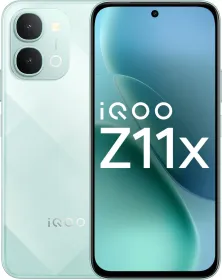
The iQOO Z11x 5G gets the essentials right. The 7,200mAh battery is class-leading under ₹20,000, the Dimensity 7400 Turbo handles almost everything you throw at it, the 120Hz screen makes daily usage feel smooth, and the 50MP primary camera holds its own in daylight.
That said, the trade-offs are there. The LCD panel can’t match OLED rivals’ contrast, the 44W charging feels underwhelming for such a large battery, bloatware is present out of the box, and at 219g, the phone might feel noticeably heavy (with prolonged usage).
Buy it if:
- You want the best possible battery life under ₹20,000
- 60 fps gaming and sustained day-to-day performance matter to you
Skip it if:
- A vibrant OLED display is non-negotiable for you
- You want a well-rounded camera system for photography
- Clean, bloat-free software is important to your experience
The iQOO Z11x is among the most feature-packed mid-rangers available under ₹20,000 in the market. It features a large 120Hz screen, an octa-core chipset that can comfortably handle 60 fps BGMI gaming, a high-resolution primary camera, and a massive battery that can turn things around for people who charge their phones twice a day. It’s a decent upgrade over the iQOO Z10x series that debuted last year. There are quite a lot of things that I have to say about the smartphone, both pros and cons, so without any further ado, let’s dive straight into it.

HOW I TESTED
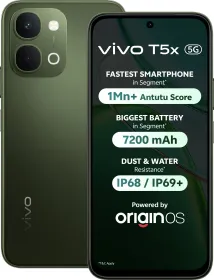
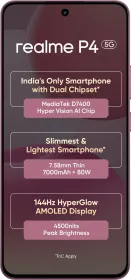
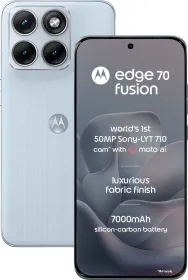
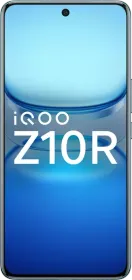
| Test Unit: iQOO provided the review unit of the iQOO Z11x 5G, though the company had no input in this review Duration and Environment: I used the phone for over 10 days and tested it on a Jio SIM in India. The unit ran OriginOS 6’s latest version — PD2532CF_EX_A16.0.13.0.W30. Tests: I tested daily usage including calls, social media, streaming, and navigation, along with BGMI sessions to evaluate performance. Synthetic benchmarks such as AnTuTu, Geekbench 6, and 3DMark were also used, alongside camera testing in different lighting conditions and battery drain tracking on mixed usage. Competitors: realme P4, Moto G86 Power, OPPO K14, Redmi Note 15 5G, vivo T5x 5G, POCO M8 5G |
iQOO Z11x 5G: Price & Availability
The iQOO Z11x 5G is available in three storage variants. The baseline variant comes with 6GB of RAM and 128GB of storage, the mid variant comes with 8GB of RAM and 128GB of storage, whereas the top variant comes with 8GB of RAM and 256GB of storage.
iQOO is also offering up to ₹2,000 off using Axis Bank and SBI cards and six months of NCEMI.
ALSO READ: iQOO Z11x 5G Launched In India With 7,200 mAh Battery & Dimensity 7400 Turbo SoC
The phone is available in Titan Black and Prismatic Green. I received the former for the review.
Pros
- Segment-leading massive 7,200mAh battery
- 10–11 hours screen-on time
- Fast 44W charging is included in the box
- Strong 50MP primary camera with OIS
- 32MP selfie with 4K recording
- Smooth 120Hz display with bright outdoors visibility
- Reliable Dimensity 7400 Turbo daily performance
- Feature-rich OriginOS with useful multitasking tools
- Durable build with IP68, IP69+ certification
- Military-grade durability
- Loud dual speakers
- Snappy fingerprint sensor
Cons
- Heavy at 219g
- LCD with thick bezels and a bottom chin
- 120Hz resets on new apps
- Significant pre-installed bloatware
- The 2MP depth sensor isn’t as useful
- The camera struggles in low light
- Selfie HDR is hit or miss
- 44W charging feels slow for the battery
iQOO Z11x 5G Specifications
- Display: LCD 6.76-inch FHD+, 1080 x 2344, 120Hz, 1200 nits peak, 382 ppi
- Processor: MediaTek Dimensity 7400 Turbo, 4nm, Mali-G615 MC2 GPU
- RAM: 6GB / 8GB LPDDR4X + 8GB Virtual RAM
- Storage: 128GB / 256GB UFS 3.1, no microSD slot
- Rear Camera: 50MP Sony IMX852 1/2.93-inch, f/2.45, 4K30 + 2MP bokeh sensor
- Front Camera: 32MP, f/2.45, 4K30
- Battery: 7,200mAh Silicon-Carbon, 44W wired FlashCharge, 7.5W reverse wired, no wireless charging
- Speakers: Dual stereo, 400% volume boost
- Build: Polycarbonate back and frame
- Protection: IP68 + IP69 rated, side-mounted fingerprint sensor
- Connectivity: Wi-Fi 6, Bluetooth 5.4, USB Type-C 2.0, IR blaster, 3.5mm jack, no NFC, no eSIM
- Software: OriginOS 6 based on Android 16, 2 OS + 4 years security updates
- Dimensions: 166.6 x 78.4 x 8.39mm, 219g
- Colors: Titan Black, Prismatic Green
iQOO Z11x 5G Review: Design

One thing that’s immediately clear about the iQOO Z11x 5G is that it’s a big phone that isn’t shy about its dimensions (166.6 x 78.4 x 8.4 mm), thickness, or weight (219 grams). But if you aren’t the type of customer who prioritizes form over function, there’s nothing to be worried about.
One-handed usage could be a bit of a struggle for some users, but otherwise, iQOO has nailed the weight balancing. We got the Titan Black finish for review, the more stealthy variant, while there’s a Prismatic Green variant available as well.


The back panel and frame are made of plastic, and there are no awkward bends or squeaks. The phone features flat frames and rounded edges, in line with the other contemporary handsets.
It’s worth noting that the textured back panel glows under different lighting conditions, adding a bit of personality to the smartphone’s appearance. There’s a squircle camera module on the back panel that houses the two camera sensors, a flash module, and a circular RGB dynamic light (which glows up for notifications, gaming modes, etc), which doesn’t draw as much attention.

The slightly curved back panel contributes to a comfortable in-hand feel. The iQOO Z11x 5G also features IP68 and IP69+ ingress protection ratings, implying that it can survive an accidental drop in the sink, a bucket of water, or a pool. The phone passed military-grade testing, as claimed by the brand.
The button and port placement are standard: volume rockers and the power button on the right frame, the USB-C port, the primary microphone, and the main speaker vent on the bottom panel. The SIM tray is placed at the top of the left panel, while the IR Blaster is placed on the top panel.
iQOO Z11x 5G Review: Display

The iQOO Z11x 5G sports a 6.76-inch LCD screen (FHD+) that supports up to 120Hz refresh rate and a peak brightness of 1200 nits. One by one, let’s break down everything.
At 6.76 inches, the screen is big enough to comfortably consume content, such as YouTube videos, OTT shows or movies, or even videos you capture with the phone. The screen is sharp and clear, with enough pixels that they don’t show up even when you squint hard. That’s where the 382 ppi pixel density really helps.

The default color profile — Natural — produces rich, vibrant colors, whether you’re navigating the user interface or watching something. However, I’m pretty sure some users will appreciate Bright mode (Settings > Display, brightness & eye protection > Screen colors) more, as it elevates highlights and vibrancy by just the right amount.
Now, here’s something you should keep in mind, and align your expectations accordingly: the handset comes with an LCD screen. As a result, the display falls noticeably short in contrast compared to rivals that offer OLED screens in the same segment.
Even so, iQOO provides an always-on feature for the screen, which, I’m guessing, keeps the panel active at the lowest possible brightness. However, it only shows up for a few seconds after locking the device, or once I tap the screen.

Indoor and outdoor legibility isn’t a concern with the iQOO Z11x, thanks to its bright 1200 nits screen (up from 1,050 nits on the iQOO Z10x). I kept the brightness bar at around 25% indoors and around 60% outdoors, particularly in the afternoons or evenings (though I’m infamous in my friend circle for keeping my phone’s brightness extremely low). Automatic brightness works fine.
However, it was while testing the screen under direct sunlight (at 12 noon) that I wished the brightness bar were just a tad longer. Coming to the 120Hz refresh rate, it genuinely makes the scrolling and general navigation feel smooth and fluid. The only downside is that every time I install a new app, it defaults to a lower refresh rate. You can rectify that by manually enabling per-app switches in the screen refresh rate menu.

There are several eye-protection features baked into the display settings menu as well, which apply a warmer tone across the entire screen, gradually warm the screen colors before your bedtime, or intelligently adjust brightness based on your usage.
The punch-hole cutout is as big as you’d see on a phone in the segment, and so are the bezels, and the thick chin at the bottom.
iQOO Z11x 5G Review: Performance

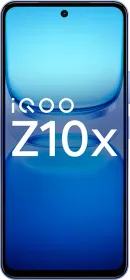
The performance department has been handed over to the Dimensity 7400 Turbo (4nm) chipset, which is a minor step up from the Dimensity 7300 on the Z10x.
To start, the Dimensity 7400 Turbo (4nm) features four 2.6 GHz performance cores, four 2.0 GHz balanced cores, the Mali-G615 MC2, up to 8GB of LPDDR4X (relatively older, but works at the price point), and up to 256GB of UFS 3.1 storage (which ensures quick app loading). Although this isn’t the best chipset in the segment, it doesn’t lag behind in day-to-day digital chores by any means.
Day-To-Day Performance

The iQOO Z11x 5G was able to handle all my daily tasks like messaging via WhatsApp, streaming on YouTube or OTT apps like Netflix and Prime Video, playing casual games (the small ones that hold users in by hyper brain simulation), with ease. Switching between apps isn’t difficult at all. However, if you trying switching between heavy apps, like a video game and the camera, the phone might lag a bit.
RAM management is well done, though the phone tends to kill the sixth or seventh app when a heavy app is running in the background. iQOO is also claiming 50 months of smooth, lag-free performance, which is beyond the scope of this review. However, in the limited time I tested the phone (about two weeks), it didn’t bother me, with only occasional lags and stutters here and there.
Synthetic Benchmarks


Regarding benchmarks, iQOO is advertising the phone’s AnTuTu score as above 1 million. However, in my testing, the phone scored a maximum of 947,858 points on AnTuTu V11.0.9 (close enough, but still not enough). Something worth noting is that the phone’s back panel got noticeably warm during the test.
| Benchmark | iQOO Z11x 5G (Dimensity 7400 Turbo) |
| AnTuTu v11 | 947,858 |
| Storage (Score, Sequential Read Speed, Write Speed) | Score: 96282; Sequential Read: 2144.3 MB/s; Sequential Write: 1894.8 MB/s |
| Geekbench 6 CPU (Single-Core, Multi-Core) | Single-Core: 1070; Multi-Core: 2659 |
| Geekbench 6 GPU (OpenCL, Vulkan) | OpenCL: 3037; Vulkan: 3074 |
| 3DMark Wildlife Extreme (Score, Avg FPS) | Score: 1005; Avg FPS: 6.02 |
| 3DMark Wildlife Extreme Stress Test (Best Loop, Lowest Loop, Stability) | Best Loop: 1012; Lowest Loop: 1002; Stability: 99% |
Gaming


BGMI is limited to 60fps on the iQOO Z11x 5G. The game only offers an Extreme frame rate at either the Super Smooth or Smooth graphics settings. The average frame rate, measured at the start and end of a 30-minute gaming session, was 58.98 and 58.88 fps, respectively, which is great.
Even afterward, I handed over the phone to my younger brother for an hour-long BGMI session, after which, the phone felt slightly warm, but nothing to be worried about. The highest available graphics setting is HDR at Ultra frame rate. So, the iQOO Z11x 5G is a pretty good option for casual gaming.

The dual stereo speakers on the iQOO Z11x 5G get pretty loud, which is great, but don’t expect them to sound full or rich — that’s something you’d only really get on more expensive phones. Haptics are quite decent, honestly better than what you’d expect at this price. For biometrics, you get the usual pattern, password, and a side-mounted fingerprint sensor that’s snappy and reliable. There’s also an optical face unlock, which works fine for the most part, but I wouldn’t rely on it in situations where security actually matters.
iQOO Z11x 5G Review: Software

Out of the box, the iQOO Z11x 5G runs on OriginOS 6 (on top of Android 16). Even though iQOO’s commitment to providing two years of major operating system updates and four years of security updates lags behind some competitors, it is decent for a phone in this price segment.
The UI looks easy and feels fluent to me. There are plenty of themes to choose from, including Flip cards (dynamic lock-screen wallpapers), personalizing the always-on display, changing the appearance of home-screen icons, and adjusting the system style.


Something that I didn’t like about the UI was the Lockscreen Poster feature enabled by default, which shows different wallpapers on the lock screen every time you wake up the screen. Anyway, you can also change the home screen style, layout, the sliding effect, and enable/disable the Google Discover feature.
The smartphone offers three different font options: Default, iQOO Sans, and Classic. What I did find useful were the smart screen-on/off features (Raise to Wake, double-tap to wake), which are somehow disabled by default. Everything else, from the quick settings panel and the notification section, is quite familiar.


OriginOS 6 offers plenty of useful features, including iQOOshare, Link Windows, Monster Mode, screen mirroring, and Super Battery Saver. Then there are other useful features, like Esports Mode (optimizes the system settings for uninterrupted gameplay), Off-screen autoplay, Game light effects, 4D Game Vibration, and game countdown.


Then there’s Origin Island (with Drag & Go / Copy & Go), which is something I found quite useful for copying content from Google and sending it to WhatsApp or other apps. You just have to select the content, drag it up to the Origin Island at the top, and then leave it there in the required app. Quite useful (something that even Apple’s Dynamic Island can’t do).


The phone also gets plenty of AI-based features, including an AI document editor that can summarise or rewrite content in Notes, AI Transcript Assist & Captions, and a couple of handy photo editing features, including AI Erase and AI UHD. Google’s Gemini AI Assistant and Circle to Search features are also available and work well on the device.


Last year, we highlighted how the iQOO Z10x 5G shipped with plenty of pre-installed apps, or bloatware, and the same problem exists with the iQOO Z11x 5G. Apps like Netflix, Facebook, Instagram, PhonePe, and Truecaller are already installed on the device, and whether you use them or not, they could degrade your experience.
Further, most AI features, such as AI Erase or the AI summarizer, are network-dependent, but I understand it’s quite difficult to host LLMs for such features on mid-tier smartphones. It’s not a con, just something to keep in mind.
iQOO Z11x 5G Review: Cameras
Even though the iQOO Z11x 5G has three cameras — two on the front, one at the back — you can only get the best from two of them. I’m talking about the primary camera: a 50MP Sony IMX852 sensor with an f/2.45 aperture, optical image stabilization, and a 32MP selfie shooter. The third sensor is a 2MP depth camera accompanying the primary sensor.
Primary Camera
The 50MP primary camera is the heavy lifter here. Daylight shots are quite detailed and adequately sharp, ideal for everyday social media use. The overall exposure control is decent as well; images come out close to real-life tones in most (not all) scenarios. The darker areas of the scene are handled pretty well, though there’s some amount of noise for the keen-eyed.


The primary camera, along with the ISP, also handles skin tones well, especially in well-lit scenarios. However, the camera’s pros become its cons in poorly lit conditions. Images turn out softer, with inconsistent colors or white balance. Night Mode improves pictures, but even so, I’d say daylight photography is the primary camera’s strongest suit.


2x In-Sensor Zoom
The sharpness, clarity, skin tones, and the background blur at 2x in-sensor zoom are quite good. I have no complaints from the shots below, especially considering the phone’s price. However, while capturing 2x pictures in low-light conditions, you’ll get inconsistent colors and details.


Selfie Camera
The 32MP selfie camera retains plenty of details and skin textures, even in portrait mode with the primary source of light in the background. However, as you can see in the third selfie, the HDR didn’t kick in (at all), while recapturing the picture fixed the issue. It’s not a major issue, but the front camera HDR seems to be a bit of a hit and miss.


Video recording on the smartphone is limited to 4K30 with image stabilization, enough for casual family videos and everyday clips. The camera system is workable, wherein the primary sensor provides the best results, providing decent pictures and videos for everyday use.
iQOO Z11x 5G Review: Battery

This is perhaps the largest battery smartphone under ₹20,000 in India, if I recall correctly. The 7,200 mAh Si/C battery on the iQOO Z11x 5G offers a 700 mAh jump over the Z10x’s 6,500 mAh cell. With a SIM card, the phone provided around 10 to 11 hours of screen-on time on moderate usage, which could translate to two days of use, especially for light users.

Without the SIM card, the screen-on time increases to 12-13 hours. Now, these aren’t absolute numbers and can change depending on your usage pattern and habits. Idle drain is minimal as well. The phone comes with a 44W charger in the box, which saves you a couple of thousand rupees. It charges the phone in around 70 to 75 minutes. I’d personally say that the charging speed is a tad slow, especially for a 7,200 mAh.
Review Verdict: Should You Buy the iQOO Z11x 5G?
For the price, the iQOO Z11x 5G tries the strike a balance between all the usable aspects. Its key highlight, however, is the 7,200 mAh battery that should comfortably provide a two-day battery life for call-and-mail users. Other strong aspects of the phone include its capable chipset, enough for handling day-to-day tasks and 60 fps BGMI gaming, the 50MP primary camera that provides enough details and good colors in daylight, and its build.
I would have appreicated the 120Hz screen more had it been an OLED panel. But even the LCD panel gets the job done. However, if OLED or software experience is your top priority, you should look at other options, especially the ones powered by the Snapdragon 7 Gen 4 SoC. There are better camera smartphoes around Rs. 25,000, which come with a telephoto and ultra-wide camera, apart from the primary sensor.

Smartprix ⭐ Rating: 8.1/10
- Design and Build: 8.5/10
- Display: 8/10
- Speakers: 8.5/10
- Software: 7.5/10
- Haptics: 7/10
- Biometrics: 8.25/10
- Performance: 8.5/10
- Cameras: 8.0/10
- Battery Life & Charging: 9/10
First reviewed in March 2026.