


Motorola’s Moto G67 Power isn’t trying to be the flashiest phone in its segment. It is trying to be the one that simply refuses to die.
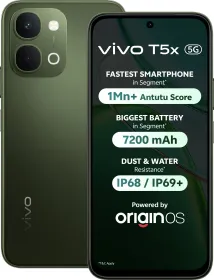
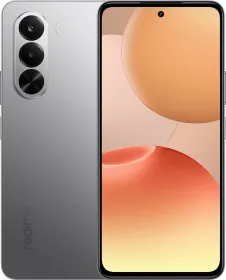
While rivals like the Realme P4 and Vivo T4X chase AMOLED displays and impossibly slim bodies, Motorola has taken a utilitarian route. It packs a massive 7,000mAh battery into a chassis built to survive drops, splashes, and 48-hour days away from a charger.
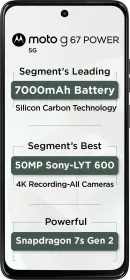
It’s not just a brute, though. With a 50MP Sony LYT-600 main camera that shoots 4K video across all lenses, a genuine rarity at this price point, the G67 Power makes a strong case for prioritizing practicality over polish.
But there are compromises. With chunky bezels and a disappointing software update promise, an unavoidable question remains: Is this the smartest daily driver you can buy, or just a phone that lasts long enough for you to forgive its flaws?
Moto G67 Price & Availability
The Moto G67 Power is currently retailing for ₹15,999 for the base variant (8GB RAM + 128GB storage). It is available on Flipkart and the Motorola India official store.
Pros
- Impressive Battery Life
- Tough Build
- Premium Design
- Decent Performance
- Camera output is doesn’t look over-processed
Cons
- Slow charging
- Only one major Android update promised
- No storage expansion option
Moto G67 Power Review: Design and Build
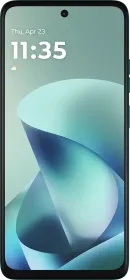
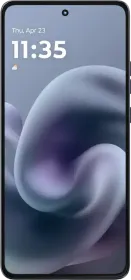
In a segment dominated by glossy, fingerprint-prone plastic slabs, the Moto G67 Power feels like a relief. It pulls off a design that convinces your hands it costs twice as much. I tested the Pantone Regatta model, and Motorola’s reliance on texture over faux-glass pays off immediately. The vegan leather back offers a soft, grippy warmth that makes the device feel secure.

And make no mistake, this is a big phone. Physics is stubborn, and you cannot hide a 7,000mAh battery. At 210 grams and 8.6mm thick, the G67 Power is undeniably dense compared to competitors like the Realme P4. Yet, it avoids feeling like a brick. Motorola has aggressively curved the rear edges to nestle into the palm, masking the bulk with smart ergonomics. It feels substantial and confident, not cumbersome.

Flip the phone over, and the premium illusion dissolves. While the back screams premium, the front screams budget. The bezels, particularly the bottom chin, are thick, framing the display in a way that feels a generation behind the razor-thin fronts of the Vivo T4X.
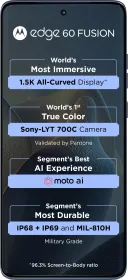
The G67 Power is built to take a beating. It carries a MIL-STD-810H certification for shock resistance and is rated IP64 against dust and splashes. The front is shielded by Gorilla Glass 7i, giving it a toughness that most budget phones lack. However, tough doesn’t mean invincible.

During my testing, I noticed the glass picked up hairline scratches surprisingly quickly. The phone does not come with a pre-applied screen protector, which is why I advise you to get a tempered glass or screen guard to prevent your screen from getting scratched.
Internally, Motorola is offering a 3.5mm headphone jack and a fingerprint scanner that is fast, reliable, and neatly integrated into the power button. For those who prefer to expand their phone’s storage, there’s no microSD slot.
Moto G67 Power Review: Display
The Moto G67 Power features a 6.7-inch Full HD+ IPS LCD panel (2400×1080), and while it skips the AMOLED panel, which is offered by rivals like the Realme P4 or Moto G86, the experience is surprisingly balanced once you understand its strengths and limitations.

Indoors, the panel looks sharp, crisp, and more vibrant than most LCDs in this segment. Out of the box, the Natural color profile may feel slightly washed out, but switching to Vivid mode immediately improves saturation and white balance. In fact, compared to the Vivo T4X, the Moto G67 Power appears a touch less punchy. What it can’t overcome is the fundamental limitation of LCD tech: blacks aren’t truly black. Watch a movie in a dark room, and the sidebars lean grey, and overall contrast falls short of even the most basic AMOLED panels.

Brightness is another area where the Moto G67 Power lands somewhere in the middle. On paper, the screen reaches 1,050 nits. In real-world outdoor use, it’s perfectly readable, but nowhere near as bright as competitors that push 1,600 nits. Direct sunlight exposes its limits, and in camera-heavy scenarios, the phone may even dim the display automatically to manage heat. Viewing angles are fine for casual use, colors hold steady, but brightness noticeably drops when you tilt the screen even slightly off-axis.
Where Motorola redeems itself is in smoothness. The phone’s 120Hz refresh rate makes scrolling and navigating feel fluid, and the Hyper Smooth mode ensures the UI stays locked at 120Hz even in apps that don’t usually run at high refresh rates.
For streaming and entertainment, the Moto G67 Power gets the basics right. It supports Widevine L1 for HD playback on Netflix and other OTT platforms. But it falls behind the Vivo T4X with no HDR support on YouTube, and occasional lag during 4K YouTube playback, unclear whether this is a software issue or a hardware bottleneck.
The upside of sticking with LCD tech is comfort. Without aggressive PWM dimming, this screen is easier on the eyes during long reading or scrolling sessions. Motorola also includes SGS Low Blue Light certification and an “Eye Protection” mode for nighttime use.
Moto G67 Power Review: Audio and Haptic

The Moto G67 Power delivers a surprisingly solid audio experience for its price, leaning on practical hardware choices and smart tuning rather than flashy extras. The stereo setup uses a bottom-firing speaker paired with the earpiece, and while this isn’t a perfect left-right balance, it still produces a wide enough stage to feel immersive during movies, reels, and gaming. Loudness isn’t an issue; the speakers deliver more than enough volume, and clarity remains intact even at higher levels. Most of the sound profile leans toward the mids and highs, so vocals, dialogue, and instrumentals come through cleanly. Dolby Atmos support adds another layer of polish.

Where the phone doesn’t shine is haptics. The vibration motor is strictly average: not sharp, not premium, and not something you’ll remember. It’s functional and sits roughly in the same class as the vivo T4X.
Moto G67 Power Review: Software
The Moto G67 Power runs Android 15 with Motorola’s Hello UI, a layout that feels minimal, but it’s gradually moving away from bloat-free stock Android. If you’re someone who prefers uncluttered visuals, tidy menus, and a straightforward UX instead of the colorful chaos of Funtouch OS or even Realme UI, Hello UI will feel like home. You still get essential customization options, icon shapes, themes, fonts, lock-screen clock styles, but Motorola clearly favors simplicity over heavy personalization.
The one real setback to this otherwise polished experience is Motorola’s update policy. The Moto G67 Power is only guaranteed one major Android update to Android 16 and three years of security patches. For a phone launching in 2025, that’s a weak commitment, especially when rivals like the Vivo T4X and Realme P4 now promise at least two, and sometimes three, OS upgrades. For a battery-focused device that’s built to last physically, the short software support feels like a mismatch.
Motorola’s G67 Power comes with about 8 games and 9 installed apps. During setup, it even suggests small game installations, though you can reject them. The Glance lock screen feed is also enabled by default, and you’ll need to manually disable it if you prefer a cleaner lock screen. There’s also an unwanted Indus app store that users can’t really uninstall.
Motorola’s signature utility features remain present and genuinely helpful. Moto Gestures like the “chop-chop” flashlight toggle and double-twist to open the camera are still unmatched in convenience. Smart Connect 2.0 is another standout—it bridges your phone and PC seamlessly, letting you transfer files, use the phone as a high-quality webcam, and even operate the phone’s screen directly with your PC’s mouse and keyboard. Add ThinkShield, Moto Secure, and Family Space, and the G67 Power quietly becomes one of the more security-focused devices in its bracket.
As for AI, Motorola keeps things simple. You don’t get the deeper “Moto AI” features reserved for the Edge series, but the phone leans on Google’s ecosystem instead. Gemini handles assistant duties, and you get AI-powered tools in Google Photos like Magic Editor, Magic Eraser, and Photo Unblur. It’s not a hyper-AI-driven experience, but it’s clean, stable, and familiar.
Moto G67 Power Review: Biometrics
The Moto G67 Power sticks to a tried-and-true approach for biometrics with a side-mounted fingerprint scanner built directly into the power button, a choice that makes perfect sense for a tall, rugged device like this. The placement is natural, easy to reach, whether you’re right- or left-handed, and doesn’t require any awkward thumb stretching the way in-display sensors sometimes do on big phones.
What strengthens the overall biometric experience is Motorola’s security stack. The fingerprint system is supported by ThinkShield hardware-level protection, ensuring your biometric data is processed and stored securely. Paired with the Moto Secure app, which offers privacy controls, secure folders, network protection, and more, the phone adds a reassuring layer of trust to something users interact with dozens.
Moto G67 Power Review: Performance
The Moto G67 Power is built on Qualcomm’s Snapdragon 7s Gen 2 (4nm) platform. This is one of Motorola’s cleanest, most stable implementations of the chipset yet. Day-to-day performance feels fluid and dependable, with no unexpected stutters or UI hiccups, and the 120Hz display keeps everything smooth. The phone ships in a single configuration 8GB LPDDR4X RAM with 128GB storage. While it gets the job done for most users, the use of UFS 2.2 storage is a clear step behind rivals like the Vivo T4X, which offers faster UFS 3.1. The lack of a microSD slot also limits flexibility, especially for users who record a lot of videos or download large offline content.
In everyday use, the Moto G67 Power feels surprisingly quick. Apps open fast, multitasking is smooth, and RAM management is well-tuned, keeping apps alive in the background without random reloads. Thermals are handled well too; the phone stays cool during browsing, apps, and scrolling. The only time it warms up is outdoors while using the camera continuously, which is common for most devices in this range.
Gaming performance lands in the good, but not class-leading zone. Call of Duty: Mobile can hit 90FPS at the lowest graphics settings and runs well at Very High + Max FPS (~60FPS). BGMI supports Smooth + Extreme (60FPS), though stepping up to HD graphics locks it to around 30FPS. Short to moderate sessions feel stable, but during long 1–2 hour sessions, the chipset starts showing its limits with occasional frame drops and lag. Benchmark numbers align with this upper-mid performance profile: 7,98,991 lakh on AnTuTu, and around 1,008 (single-core) and 2,945 (multi-core) on Geekbench.
Overall, the Moto G67 Power offers a well-optimized, reliable performance package for daily use and moderate gaming. It’s smooth, cool-running, and fast enough for anything outside long, demanding gaming marathons. Its biggest drawbacks UFS 2.2 storage and no expandable memory hold it back from being the most future-proof choice, but for most users, it’s a consistently snappy performer.
Moto G67 Power Review: Cameras
For a phone sitting in the budget-to-midrange bracket, the Moto G67 Power delivers a decent camera experience, one that leans more toward authenticity and versatility than the usual oversharpened, oversaturated output you see in this segment. Motorola’s choice of hardware sets the tone right away: the primary camera uses the 50MP Sony LYT-600 sensor, a larger 1/2-inch sensor that immediately gives it an edge over rivals like the Realme P4 and Vivo T4X. It’s paired with an 8MP ultrawide and a 32MP selfie shooter, both unusually generous inclusions in this price class, especially when many competitors skip ultrawide entirely.
In daylight, the main camera shines because Motorola refuses to chase exaggerated vibrancy. Colors stay natural, shadows are preserved, and the phone avoids that AI paintbrush look some budget rivals lean on. The images look realistic, especially compared to something like the Vivo T4X, which tends to brighten aggressively and sometimes even erases shadows. Detail is generally decent dynamic range is also respectable, thanks to the larger sensor, and only occasionally will fine textures like dense foliage show signs of mild smudging from the processing. There’s no telephoto here, but the 2x digital zoom holds up well enough for casual social posts before detail starts to drop off.
The story changes a bit when you switch to the ultrawide. Having an ultrawide at this price is already a win; several competitors simply don’t offer one, but the quality isn’t in the same league as the main camera. Shots look softer, edge distortion is noticeable, and there’s visible purple fringing if you zoom in. Color consistency also isn’t perfect; the ultrawide often delivers a cooler, flatter tone compared to the main sensor’s more accurate palette.
At night, the Moto G67 Power sticks to its philosophy of realism over artificial brightness. Auto Night Vision kicks in effectively, and the larger LYT-600 sensor helps keep things naturally exposed without overexposing the scene. Low-light shots preserve the natural appearance of the sky, maintain believable contrast, and capture the mood of the scene, albeit with a trade-off. Images can appear a bit noisier and softer than what the Realme P4 produces, simply because Motorola isn’t trying to fake daylight at midnight. The Vivo T4X, meanwhile, struggles more because of its smaller sensor and heavier reliance on software.
Selfies, captured on a 32MP front camera that’s almost overkill for this price, come out sharp with noticeable detail. However, skin tones aren’t always perfectly tuned. There’s a warm or reddish cast that can make faces look slightly more flushed than they are in reality. Portrait mode generally does a good job with separation, though it can occasionally get confused around tricky edges or textured backgrounds.
Moto G67 Power Review: Battery and Charging
Motorola’s battery game on the Moto G67 Power feels almost unreal for the price, and a big part of that comes down to the 7,000mAh cell sitting inside one of the largest you’ll find in a mainstream phone right now. What makes it even more interesting is the Silicon-Carbon (Si-C) battery tech. Older phones with this kind of capacity usually felt like carrying a power bank in your pocket, but the Si-C chemistry lets Motorola pack in far higher energy density without turning the phone into a brick. The weight stays around 210 grams, barely 2 grams more than the Vivo T4X, which actually has a smaller 6,500mAh battery. Surprisingly light and manageable, it feels like something with such a monstrous cell.

Heavy users pulling long gaming sessions, 5G data, camera usage, and constant social apps routinely crossed 8 to 10 hours of screen-on time, with one cycle hitting over the 9-hour mark. For regular users who mostly browse, stream, and stay on WiFi, the phone can comfortably stretch into a second day.
Motorola ships a 33W TurboPower charger, but the phone itself caps out at 30W input, and that’s simply not fast by today’s standards. Rivals like the Realme P4 with 80W charging or even the Vivo T4X at 44W fill up much quicker. On the Moto G67 Power, you’re looking at around 30 percent in half an hour, roughly 65 percent in an hour, and a 100 percent charge takes 1 hour 50 minutes.
Review Verdict: Should You Buy the Moto G67 Power?
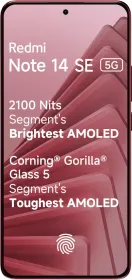
The “Power” moniker is doing heavy lifting here. The standout feature is the massive 7,000mAh battery, which is significantly larger than the standard 5,000mAh cells found in most competitors like the Redmi Note series or the Realme P-series. If you prioritize battery life above everything else. If your day involves long commutes, lots of GPS navigation, or media consumption without access to a plug, this is one of the best value-for-money options in late 2025.
You want the best screen or camera, you could skip the Moto G67 Power and look at other options available in the market. At this price point, you can find phones with AMOLED displays (better contrast) or faster charging speeds if you are willing to sacrifice that extra battery capacity.

Smartprix ⭐ Rating: 7.9/10
- Design and Build: 8/10
- Display: 7.5/10
- Speakers: 8/10
- Software: 8/10
- Haptics: 7/10
- Biometrics: 8.5/10
- Performance: 8.2/10
- Cameras: 7.5/10
- Battery Life & Charging: 8.5/10
First reviewed in December 2025.





Hi