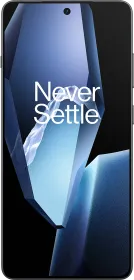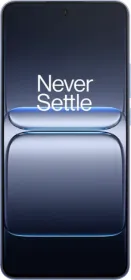


Quick Verdict
The OnePlus Nord 6 feels like it’s going in a slightly different direction this time, and it actually works. The focus is clearly on performance and battery, and both are really strong. The Snapdragon 8s Gen 4 is fast and stable, gaming is smooth, and that 9,000 mAh battery just takes away any stress about charging.
The display is great, and OxygenOS 16 is still one of the best Android skins out there. The cameras are fine and usable, though they’re not really the main focus here. Overall, it’s a performance and endurance-focused Nord that still manages to work well for most people.
Buy it if:
- You want performance, smooth gaming, and excellent battery life.
- You want a fast, fluid software experience with good long-term support.
Skip it if:
- You want the best camera hardware, especially ultra-wide or telephoto.
- You can get the OnePlus 13R at a similar price.
The Nord lineup usually plays it safe. Strong performance, smooth software, and a price that undercuts flagships while still delivering a premium experience. The Nord 5 stayed close to that formula, even if it leaned a bit safer in some areas.
The OnePlus Nord 6 takes a more aggressive approach. It pushes performance much higher, introduces a massive 9,000 mAh battery, and brings features that feel closer to flagship territory. It even targets a slightly different audience this time, especially gamers and users who want long-term endurance without worrying about charging.
At the same time, a few decisions feel confusing. The main camera sensor is smaller than before, the selfie camera takes a step back on paper, and some software features from older Nord devices are missing.
So the question is simple. Does the Nord 6 still get the balance right, or does it lean too far in one direction? After using it as a daily device, here is the full breakdown.
HOW I TESTED
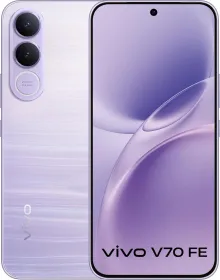
| Reviewed By: Mehtab Ansari, Expert in Smartphones, Laptops, Audio Gear, AI and more (5 years experience, 100+ reviews). Test Unit: OnePlus provided the review unit of the OnePlus Nord 6, with no involvement in the editorial process. Duration and Environment: I used the device as my primary smartphone for over two weeks on the Jio network in India. The unit I tested was the Fresh Mint variant, 12 GB + 256 GB. Tests: Daily usage which includes calls, social media, streaming, navigation, and multitasking. I also tested gaming sessions in BGMI, Wuthering Waves, and Genshin Impact to evaluate performance and thermals. Competitors: Nothing Phone (4a), realme GT 7, and vivo V70 FE |
OnePlus Nord 6 Price & Availability
The OnePlus Nord 6 is available in India in two configurations:
- 8 GB + 256 GB: ₹38,999
- 12 GB + 256 GB: ₹41,999
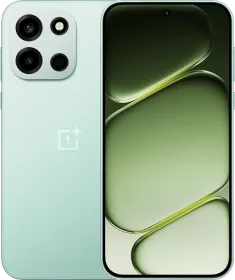
Color options include Fresh Mint, Pitch Black, and Quick Silver (with a more flashy, holographic finish). I have the Fresh Mint with me.
Pros
- Strong performance
- Massive 9,000 mAh battery
- 165 Hz AMOLED display with great outdoor visibility
- UFS 4.1 storage and 256 GB base variant
- IP66, IP68, IP69, IP69K ratings + MIL-STD-810H
- OxygenOS 16 is fast and fluid
- 4 OS + 6 years of security updates
- Decent camera performance
- 27W reverse charging support
- Good haptics
- Loud stereo speakers
Cons
- Main camera sensor is smaller than Nord 5
- Ultra-wide camera is weak
- Some OxygenOS features removed (AOD transition, blur effects)
- USB 2.0 port
OnePlus Nord 6 Specifications
- Display: 6.78-inch Sunburst AMOLED, 1.5K (2772 x 1272), 60-165 Hz, 450 ppi, 1800 nits HBM, 3600 nits peak, 10-bit, 100% DCI-P3 & sRGB, 3840 Hz PWM dimming, 3200 Hz touch sampling, Crystal Guard protection
- Processor: Qualcomm Snapdragon 8s Gen 4 with Adreno 825 GPU
- RAM and Storage: 8 GB / 12 GB LPDDR5X RAM, 256 GB UFS 4.1 storage
- Rear Cameras:
- Main Camera: 50 MP Sony LYT-600, 1/1.95-inch, f/1.8, 26 mm, PDAF, dual-axis OIS + EIS, 4K60
- Ultra-wide Camera: 8 MP OmniVision OV08F, 1/4-inch, f/2.2, 16 mm, fixed focus, 1080p30
- Front Camera: 32 MP OV32C, 1/3.2-inch, f/2.0, AF, 4K30
- Battery and Charging: 9,000 mAh silicon-carbon battery, 80W SUPERVOOC, 27W reverse charging, bypass charging
- Connectivity: Wi-Fi 7, Bluetooth 6.0, NFC, 5G Advanced (Jio), USB Type-C (USB 2.0), Dual nano-SIM (no eSIM)
- Audio: Stereo speakers with 300% volume mode, OReality Audio
- Biometrics: In-display fingerprint sensor, face unlock
- Build and Durability: Polycarbonate frame, fiberglass back, IP66, IP68, IP69, IP69K, MIL-STD-810H
- Software: OxygenOS 16 based on Android 16, 4 years Android updates + 6 years security patches
- Dimensions and Weight: 162.5 x 77.5 x 8.5 mm, 217 grams
- Other Features: Plus Key, IR blaster, G2 Wi-Fi chip, 6-axis gyroscope, DAC support via Type-C
OnePlus Nord 6 Review: Unboxing

Inside the box, you get the phone itself, an 80W SUPERVOOC charger, a USB-A to USB-C cable, a color-matched protective case, SIM ejector tool, documentation, and a pre-applied screen protector. And yes, the classic “Nord” box design is gone.
OnePlus Nord 6 Review: Design and Build

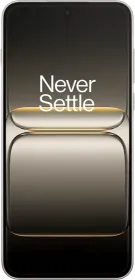
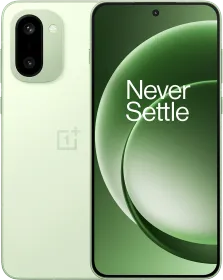
The Nord 6 follows the newer OnePlus design language that started with the OnePlus 13s and carried into the 15 series. It looks cleaner, more minimal, and slightly more unique compared to older Nord devices.
The unit I have is the Fresh Mint variant, and this color really stands out. It has a soft matte finish that shifts slightly under lighting and looks premium too. The Quick Silver option leans more aggressive with a holographic pattern, while Pitch Black keeps things simple.

The back is a fiberglass finish, paired with a polycarbonate frame. It does not feel cheap, but you can tell this is not a full metal-glass build like higher-end devices. That said, the in-hand feel is still solid and well put together.
The phone is 8.5 mm thick and around 217 grams, which is quite impressive considering the massive 9,000 mAh battery inside. Weight distribution is handled well, so it doesn’t feel as heavy as the number suggests, though you will notice it during longer usage.

Durability is a major highlight here. You get IP66, IP68, IP69, and IP69K ratings, along with MIL-STD-810H certification, which is still not very common at this price. This easily makes it one of the most durable phones in this segment right now.
The button layout feels familiar. The power and volume keys are on the right, while the Plus Key sits on the left.

At the bottom, you get a USB Type-C 2.0 port, SIM tray, speaker, and microphone. There’s also an IR blaster here.


There is also support for magnetic accessories like the Sandstone Magnetic Case and Cooling Back Clip.
OnePlus Nord 6 Review: Display
The display is easily one of the strongest parts of the Nord 6. You get a 6.78-inch 1.5K AMOLED panel with a 165 Hz refresh rate. In real-world use, the panel looks excellent. Colors are vibrant, not too saturated, and the 10-bit color support with full DCI-P3 coverage is here too.

Brightness is handled well too. You get 800 nits manual brightness, 1800 nits HBM, and up to 3600 nits peak brightness. Outdoor visibility is solid, even under harsh sunlight, and it doesn’t dim aggressively during longer outdoor use.
The refresh rate goes up to 165 Hz, though like most phones, it isn’t active everywhere. In regular usage, it switches between 60, 90, and 120 Hz depending on the app, while the full 165 Hz is exclusively used in supported games like BGMI, COD Mobile, and similar titles.

Touch response is also excellent with up to 3200 Hz touch sampling, which makes interactions feel instant, especially in gaming.
The panel also supports 3840 Hz PWM dimming, which is good for eye comfort, along with AquaTouch 2.0 that works even with wet fingers, and Crystal Guard protection. Bezels are mostly symmetrical and fairly thin for the price. They are not the slimmest out there, though still among the better ones in this segment.
Overall, this is one of the best displays you can get around ₹35,000. It is bright, smooth, and well tuned for both gaming and media.
OnePlus Nord 6 Review: Speakers and Haptics

The Nord 6 comes with a stereo speaker setup, and it performs well for its segment. The speakers get loud, and clarity stays good even at higher volumes. There is a bit of bass presence too.
There’s also a 300% volume boost mode that pushes loudness even further. It does work, though distortion becomes noticeable, so it’s something you’ll use occasionally.
Haptics are another strong point here. The phone uses an X-axis linear motor, and the tuning is very good. Vibrations feel tight and precise, whether you’re typing or navigating the UI. OxygenOS continues to deliver one of the better haptic experiences on Android, and the Nord 6 benefits from that.
OnePlus Nord 6 Review: Software

The OnePlus Nord 6 runs OxygenOS 16 based on Android 16, and this is still one of the main reasons to consider the phone. The overall experience is fast, fluid, and well optimized. Animations are smooth, apps open quickly, and multitasking has no slowdowns. It’s not just the hardware, but also how OxygenOS has been tuned over time.

The unit I tested was running version CPS2793_16.0.4.601 with the February security patch. OnePlus is promising 4 years of Android updates along with 6 years of security patches, which means it should stay updated till around 2032. OnePlus also has a good track record when it comes to update rollouts.
OxygenOS 16 brings a good level of polish and customization. You get multiple lock screen styles (Flux Theme 2.0), font options like OnePlus Sans, One Sans, and Roboto, along with different icon packs and theme settings.

There are also a bunch of useful features like Parallel Processing 2.0, smoother swipe animations with the predictive back gesture style, floating windows, split screen, drag-and-drop sharing through the content portal, and a 90:10 split view mode called Open Canvas for multitasking.

Other useful additions include Live Alerts, which show real-time updates from apps like Maps, Google Wallet, Blinkit, Swiggy, and sports apps. There is also Glove Mode, Outdoor Mode (which boosts brightness, sound, and battery behavior), Zen Space for focus, and a variety of gesture controls like three-finger screenshots.
The Plus Key replaces the Alert Slider and works similarly by default for switching between ring, vibrate, and silent, but it can also be customized for actions like opening the camera, torch, recorder, translation, screenshot, or Mind Space.
OnePlus AI

The Nord 6 includes a full suite of OnePlus AI features, and this is easily one of the most feature-packed AI smartphones in this segment.
The central feature is Mind Space, which acts like a contextual memory hub. You can save anything on screen using a three-finger swipe or the Plus Key, and it gets organized intelligently. It is also integrated with Google Gemini, so you can ask contextual questions based on saved content.

There is also AI Search, which works across on-device content like files, notes, calendar entries, and settings, allowing you to quickly find information. AI Writer helps with generating text for social media or messages across apps like WhatsApp and Instagram.

AI VoiceScribe can record, transcribe, and translate audio across apps, even while watching videos. For example, you can watch a video in another language and get real-time translated captions. AI Translate works offline as well, which adds to its usefulness.

On the content side, you get AI Summary and AI Speak, which can scan and summarize web pages or read them aloud. The Notes app includes AI features like mind maps and structured summaries.

The photos app also benefits from AI tools such as AI Eraser, AI Unblur, AI Recompose, AI Perfect Shot, Reflection Eraser, and AI 4K Upscale, along with portrait enhancements like AI Portrait Glow. These features are practical and work well in most cases.
The Downsides
OxygenOS is still smooth, but it is no longer as clean as it used to be. There is bloatware and App Picks, although most of it can be disabled.
More importantly, some features from previous Nord devices are missing. There is no AOD to lock screen transition animation, no proper background blur when opening or closing apps, and even video wallpapers are not supported, which were present on the Nord 5 and Nord 4. These omissions make no sense because the hardware is clearly capable of handling them.

There is also no Motion Cues feature, which is available on some higher-end OnePlus devices. These are not deal breakers, but they do feel like unnecessary removals.
Still, OxygenOS 16 on the Nord 6 remains one of the smoothest and most feature-rich Android experiences.
ALSO READ: OxygenOS 16 Review: Complete List of All the New Features and Changes
OnePlus Nord 6 Review: Biometrics

The Nord 6 comes with an in-display fingerprint scanner, and while the placement is slightly lower than ideal, the performance itself is excellent. It is fast, accurate, and reliable.
Face unlock is also present and works quickly under good lighting conditions. It is convenient for quick access, but since it relies on the front camera, it is not as secure as the fingerprint scanner.
OnePlus Nord 6 Review: Performance

Performance is where the Nord 6 clearly separates itself from most phones in this segment. It is powered by the Snapdragon 8s Gen 4, paired with LPDDR5X RAM and UFS 4.1 storage, which is currently among the fastest combinations you can get at this price.
The chipset uses an octa-core CPU architecture with a 1x Cortex-X4 at 3.21 GHz, 3x Cortex-A720 at 3.0 GHz, 2x Cortex-A720 at 2.8 GHz, and 2x Cortex-A720 at 2.02 GHz, built on a 4 nm process. The GPU is the Adreno 825 and it includes the Snapdragon X75 modem for 5G connectivity.
In daily usage, the phone feels extremely fast. Apps open instantly, switching between apps is seamless, and even heavy multitasking does not slow the system down. Storage speeds are also impressive, with very fast read and write performance, which helps with app loading and file transfers.
Synthetic Benchmarks
| Benchmark | OnePlus Nord 5 (Snapdraon 8s Gen 4) |
| AnTuTu Score | 2290104 |
| Storage (Score, Sequential Read Speed, Write Speed) | Score: 131276; Sequential Read: 3987 MB/s; Sequential Write: 3600 MB/s |
| Geekbench 6 CPU (Single-Core, Multi-Core) | Single-Core: 2033; Multi-Core: 6369 |
| Geekbench 6 GPU (OpenCL, Vulkan) | OpenCL: 13160; Vulkan: 18262 |
| 3DMark Wildlife Extreme (Score, Avg FPS) | Score: 4485; Avg FPS: 26.86 |
| 3DMark Wildlife Extreme Stress Test (Best Loop, Lowest Loop, Stability) | Best Loop: 4227; Lowest Loop: 2130; Stability: 50.4% |


Gaming

Gaming is clearly a major focus here, and it shows in real-world performance. The Nord 6 supports up to 165 FPS gameplay, which is enabled in a wide range of titles including BGMI, COD Mobile, Free Fire, Minecraft, Clash of Clans, Clash Royale, Brawl Stars, Real Racing, and Standoff 2.
In BGMI, you get native 120 FPS support, and with frame boost enabled, 165 FPS is also possible. Gameplay feels extremely smooth, and there are minimal framedrops. When played at 165 FPS, the device gets a bit hotter than usual, but still nothing like overheating.


Genshin Impact runs at around 57 FPS with occasional minor drops but you can also run it at 120 FPS with frame boost, while Wuthering Waves averages around 55 to 57 FPS, which is quite good for such demanding titles.
The phone also includes hardware-level improvements like the G2 Wi-Fi chip, which improves connectivity and reduces latency. There is also a 6-axis gyroscope and up to 3200 Hz touch sampling rate, improving responsiveness and control in games.
Thermals

Thermal performance is well controlled. Even during long gaming sessions, the device stays stable and does not show aggressive throttling or overheating. Temperatures remain manageable at under 40-45°C.
And for users who want even better sustained performance, OnePlus also supports accessories like the 27W ice-cooled magnetic back clip, which can help keep the device cooler.
To conclude, the Nord 6 gives you a strong and reliable performance experience. It handles daily tasks easily, and for gaming, it’s easily one of the better phones you can get in this segment.
OnePlus Nord 6 Review: Cameras

The OnePlus Nord 6 takes a different approach with its cameras this time. Instead of upgrading hardware across the board, OnePlus is focusing more on processing, and on paper there are clear downgrades compared to the Nord 5.
You get a 50 MP Sony LYT-600 main sensor (1/1.95-inch f/1.8 25mm) with dual-axis OIS and EIS, along with an 8 MP ultra-wide camera and a 32 MP autofocus selfie camera.
Main Camera
The main sensor is smaller than what we saw on the Nord 5, which is something you notice on paper. That said, in actual use, the camera still performs decently and works well in most situations.


In daylight, the main camera delivers good detail with natural-looking colors. OnePlus has worked on its color science, so skin tones look more accurate and white balance stays more consistent.
HDR performance is decent, though there’s one thing you’ll notice. In the viewfinder, HDR doesn’t look very impressive, but once you take the shot, processing kicks in and the final image looks better.


At 1X, images look clean and well balanced. At 2X, digital zoom holds up fairly well, and even up to around 3X to 4X, images are still usable. Beyond that, things fall apart quickly, and you start seeing a lot of AI trying to fill in details.


Portraits
Portraits are one of the better parts here. Edge detection is good, subject separation is handled well, and you can shoot between 1X and 2X focal lengths. It doesn’t replace a proper telephoto lens, though for this segment, portrait shots come out quite good.


Selfie
The 32 MP autofocus selfie camera does a good job in daylight. You get solid detail, reliable focus, and better HDR compared to older phones in the segment like the 4a. Autofocus actually makes a difference here, especially for videos or when the subject distance changes.


In low light, images get softer and you start to see some noise, though overall it still holds up fine for this segment.
Ultra-wide
The 8 MP ultra-wide camera remains the weakest part of the setup. It is fine in good lighting, but detail drops quickly, noise increases in low light, and the lack of autofocus is even worse. It should’ve been 12 MP at least.


Videos

Video performance is solid overall. The main camera supports 4K60, and footage looks stable with decent detail. There are some exposure inconsistencies in high dynamic range scenes, though nothing too bad. The selfie camera also supports 4K30 and does a good job in daylight.
Ultra-wide video is limited to 1080p30, and it feels below average. There’s no proper Pro video mode either, though you do get Pro photo mode with RAW support. Cinematic video is capped at 1080p30, and the results are decent.
Overall, the Nord 6 cameras are reliable but not standout. The main camera and portraits are good, selfies are solid, though the ultra-wide and lack of a telephoto hold it back from being a complete setup.
OnePlus Nord 6 Review: Battery Life and Charging

Battery life is easily the biggest highlight of the Nord 6. The phone packs a 9,000 mAh silicon-carbon battery (15% silicon anode), which is the largest battery ever on a OnePlus smartphone and one of the largest in the ₹35K-40K segment.
And the battery is exactly what you’d expect from something this big. With mixed usage like social media, browsing, camera, streaming, and some gaming, I was getting around 13 to 14 hours of screen-on time pretty consistently. If you use it lightly, it can go even higher.
OnePlus says up to 2.5 days on a single charge, and yeah, that depends on how you use it, but the battery life here is actually really good. It uses a silicon-carbon battery with around 15% silicon, which is why OnePlus is able to pack a battery this big in a phone.
Charging is also pretty good for a 9,000 mAh battery. You get 80W SUPERVOOC, and it takes about 1 hour 15 minutes to go from 0 to 100 percent, which is quite fast for this size.
There’s also bypass charging, which is useful not just for gaming but also while recording videos. You also get 27W reverse wired charging, though it starts fast and then slows down after a while. Most of the time it sits around 10W, which is a bit odd. It’s still useful if you want to charge earbuds or even another phone in an emergency.
OnePlus is also claiming around 1,600 charge cycles with 80% battery health, which basically means it should last you close to 5 years, with 7,200 mAh still left. Battery and charging are easily one of the biggest strengths of the OnePlus Nord 6.
Review Verdict: Should You Buy the OnePlus Nord 6?
The OnePlus Nord 6 feels like a very different kind of Nord this time. It’s clearly focused on performance, battery life, and durability, and it does all three really well. The Snapdragon 8s Gen 4 is strong, gaming is solid, and that 9,000 mAh battery just takes away any battery stress completely.
The display is also one of the best in this segment, and OxygenOS 16 still delivers a fast and smooth experience, even with some missing features. At the same time, the camera setup feels more like a step sideways.
If your priority is performance, gaming, battery life, durability, and most importantly, long-term use, the Nord 6 makes a lot of sense and it’s the best choice at around ₹36,000. If you care more about cameras, especially telephoto, the Phone (4a) might make more sense but it has its own caveats. I would hence suggest the Nord 6 over most other phones in this segment for most people.

Smartprix ⭐ Rating: 8.75/10
- Design and Build: 8.9/10
- Display: 8.9/10
- Speakers: 8.5/10
- Software: 9/10
- Haptics: 9/10
- Biometrics: 8.5/10
- Performance: 9/10
- Cameras: 8/10
- Battery Life & Charging: 9/10
First reviewed in April 2026.