

Quick Verdict
The OPPO F35 Pro is a proper step up from the F33 Pro. The 8,000 mAh battery is excellent, 80W charging is still fast enough, the 1.5K AMOLED is brighter, and the camera setup is the real change this year. You now get a 1/2-inch main sensor with OIS, an 8 MP ultra-wide, 4K from both cameras, and a 50 MP ultra-wide selfie camera that still fits the F-series brief.
At the same time, the price has moved up, performance is better than last year but not really class-leading, NFC is still missing, and the always-on display is still not actually always on. Design is largely the same phone with new colors.
Buy it if:
- You want excellent battery life and fast charging
- Selfies, group shots, and a more usable rear camera matter to you
- You want a bright 1.5K AMOLED and strong water resistance
- You like ColorOS and do not mind a familiar F-series design
Skip it if:
- You want stronger performance at this price
- NFC matters to you
- A continuous always-on display is important
The F-series has usually been about design, selfies, battery life, and a polished everyday phone rather than benchmark numbers. The F33 Pro followed that closely, and it also left a few obvious gaps. No ultra-wide, no OIS, no 4K, a smaller main sensor, and a chipset that felt weak for the money.
The F35 Pro tries to close most of those. OPPO has kept the slim look, changed the colors, and then upgraded the things people complained about. The battery is now 8,000 mAh, the display is a brighter 1.5K panel, the rear camera finally has OIS and an ultra-wide, and ColorOS 16.5 on Android 17 is a lot smoother than what the F33 Pro shipped with.
So the question is fairly simple. Is this a big enough upgrade to justify the higher price, or has OPPO improved the phone without fixing the things that still hold it back? After using it, here’s the full review.
HOW I TESTED
| Reviewed By: Mehtab Ansari, Expert in Smartphones, Laptops, Audio Gear, AI and more (5 years experience, 100+ reviews). Test Unit: Review unit of the OPPO F35 Pro, with no involvement of OPPO in the editorial process. Duration and Environment: I used the device on the Jio network in India. Testing included indoor, outdoor, commuting, and daily carry. The unit tested was the Twilight Brown variant. Tests: Calls, social media, messaging, camera use, gaming, video streaming, navigation, charging, long scrolling sessions, and daily multitasking. Competitors: Tecno Pova 8 Pro, vivo S2 |
OPPO F35 Pro Price & Availability
The OPPO F35 Pro is available in three configurations:
- 6 GB + 128 GB: ₹45,999
- 8 GB + 128 GB: ₹49,999
- 8 GB + 256 GB: ₹54,999
Color options are Sunset Orange, Wave Blue, and Twilight Brown. It is available through OPPO’s official channels, Amazon, Flipkart, and offline retail stores across India.
Pros
- Excellent 8,000 mAh battery, 9+ hours on 5G
- 80W charging, full charge in about 1 hour 10 minutes
- Bright 1.5K 144 Hz AMOLED, 1800 nits HBM
- 50 MP ultra-wide selfie camera with autofocus
- 1/2-inch main camera with OIS
- 8 MP ultra-wide, missing on the F33 Pro
- 4K30 from front and rear
- Slim design, new colors
- IP66/IP68/IP69/IP69K
- Stereo speakers
- Useful ColorOS 16.5 features, including Shake & Pay
- UFS 3.1 storage
- Rainstorm Touch works fairly well
Cons
- Price has gone up
- Performance is better, still not what this price fully asks for
- No NFC
- No continuous always-on display
- Springy haptics
- USB 2.0
- Plastic frame
OPPO F35 Pro Specifications
- Display: 6.78-inch (17.22 cm) 1.5K AMOLED, 2772 x 1272, 450 ppi, 1.65 mm side bezels, 144Hz, 800 nits typical, 1800 nits HBM, 3600 nits peak, 2160 Hz PWM, DC dimming, Rainstorm Touch
- Processor: MediaTek Dimensity 7360 Max, 4 nm
- RAM and Storage: 6 GB / 8 GB LPDDR4X, 128 GB / 256 GB UFS 3.1
- Main Camera: 50 MP SmartSens SC532HS, 1/2-inch, f/1.8, 26 mm, PDAF, OIS, 4K30
- Ultra-Wide Camera: 8 MP GalaxyCore GC08A8, 1/4-inch, f/2.2, 15 mm, autofocus, 1080p30
- Front Camera: 50 MP GalaxyCore GC50F6, 1/2.88-inch, f/2.0, 18 mm, 100° FOV, autofocus, 4K30
- Battery and Charging: 8,000 mAh, 80W SUPERVOOC, 55W PPS, 44W UFCS, 13.5W PD
- Connectivity: 5G, Wi-Fi 6, Bluetooth 5.4, USB Type-C (USB 2.0), dual nano-SIM, IR blaster, AI LinkBoost, dual microphones, no NFC
- Audio: Stereo speakers, no 3.5 mm jack
- Biometrics: In-display optical fingerprint scanner, face unlock
- Build and Durability: Glass front, plastic frame, 1.5 mm one-piece acrylic-polycarbonate back, internal alloy reinforcement, IP66, IP68, IP69, IP69K
- Software: ColorOS 16.5 based on Android 17, 3 years of Android updates + 4 years of security patches
- Dimensions and Weight: 162.6 x 77.6 x 8.4 mm, 210 grams
- Other Features: 5,000 mm² vapor chamber, Hunter antenna, Shake & Pay, Trinity Engine, rotor motor
OPPO F35 Pro Review: Unboxing
Inside the box, you get the OPPO F35 Pro, an 80W SUPERVOOC charger, a USB-A to USB-C cable, a protective case, a SIM ejector tool, and documentation. A screen protector comes pre-applied.
OPPO F35 Pro Review: Design and Build

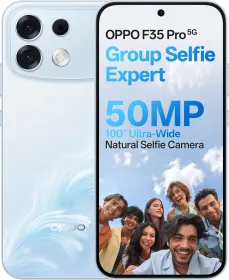
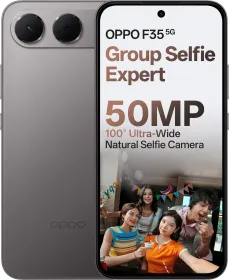
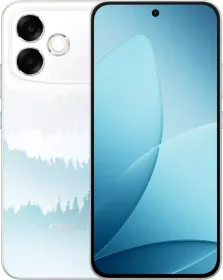
The OPPO F35 Pro looks a lot like the F33 Pro. OPPO has not changed the shape. It is still the same slim, slightly curved F-series body, with the circular camera island on the back and the “Smile Curve” that lifts the bottom edge a little when the phone is lying flat.
What has changed is the finish. You get Sunset Orange, Wave Blue, and Twilight Brown. OPPO sent us the Twilight Brown, which I think is a pretty dark color. Personally, I would go for the Wave Blue if I had a choice.
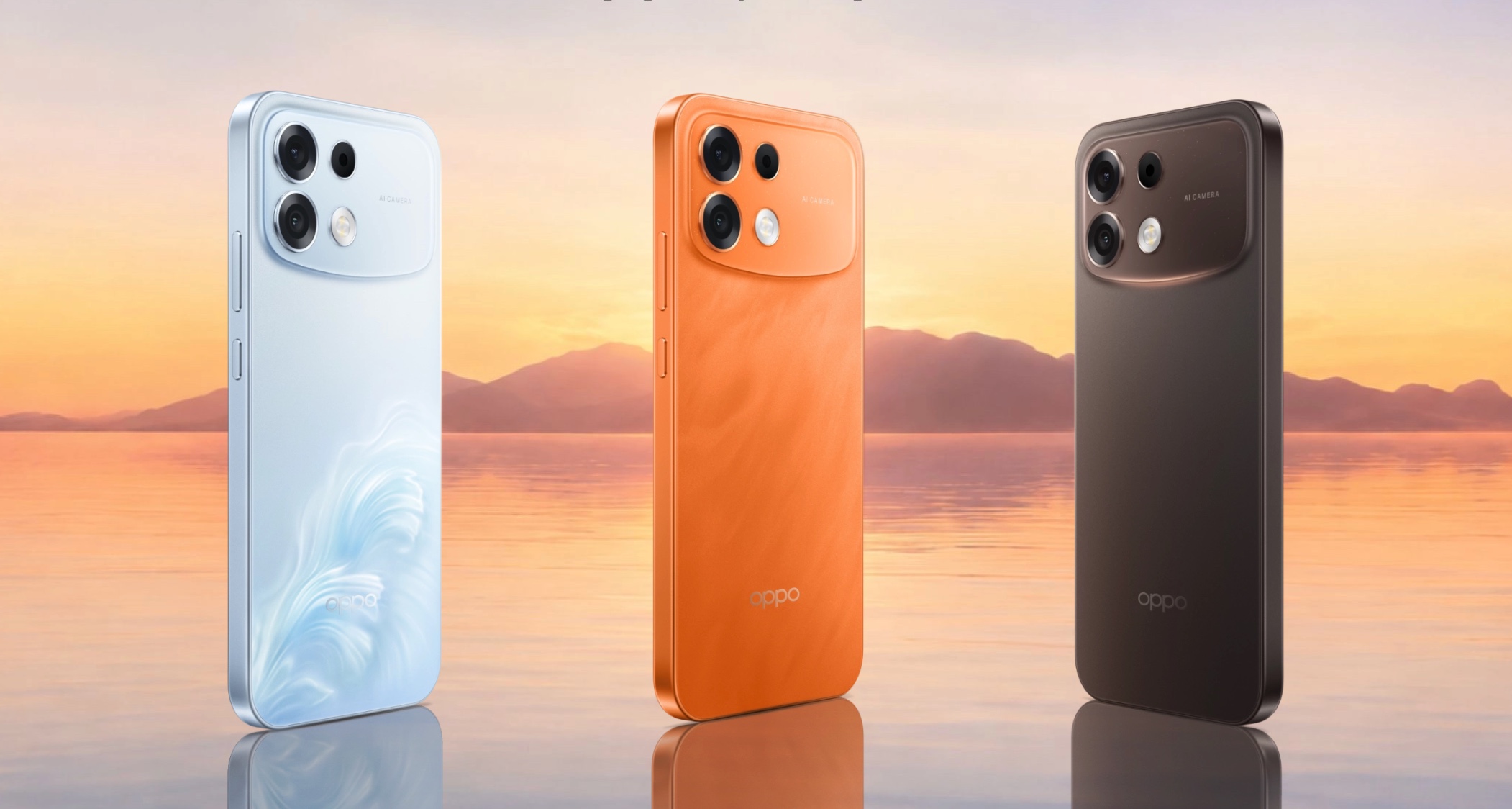
In the hand, the phone doesn’t feel too thick. The phone measures 162.6 x 77.6 x 8.4 mm and weighs 210 grams. That is a little heavier than the F33 Pro, which was 194 grams, but it does not feel heavy. The extra weight is easy to ignore once you start using it.

The side bezels are even at 1.65 mm. The top and bottom are a little thicker, though that is not very noticeable. The front is glass. The back is a one-piece acrylic-polycarbonate panel with a glossy, mirror-like finish.
The outer frame is plastic, not aluminium. OPPO does use an alloy piece inside the body, but the part you actually hold is plastic. It still looks good, and the glossy back helps (beware of scratches), but it is not a metal phone.

Durability is a strong point. The F35 Pro is rated IP66, IP68, IP69, and IP69K, so it is covered for dust, immersion, and high-pressure water. OPPO also points to an SGS 16-procedure reliability test and a separate high-heat smoothness test. Rainstorm Touch is here so the screen can still take input with wet hands or in the rain, and in use it works fairly well.

The camera island is the same semi-circular module as last year, now with an extra lens inside it. The flash sits in a small capsule alongside the cameras. There is no headphone jack. The fingerprint scanner is under the display.

If you liked how the F33 Pro looked, you will like this too. If you wanted a new design, this is not that. It is essentially the same design, but finished better, in colors that look different.
OPPO F35 Pro Review: Display

The display is one of the clearer upgrades. The F33 Pro had a 6.78-inch FHD+ AMOLED at up to 120 Hz, with 1400 nits of HBM brightness. The F35 Pro keeps the 6.78-inch size and moves to a 1.5K panel.
It is a 2772 x 1272 AMOLED with a 20:9 aspect ratio, 450 ppi, and a 93.6% screen-to-body ratio. Refresh rate goes from 60 to 90 to 120 Hz automatically, and it can hit 144 Hz in specific scenarios. Color support is 10-bit, with 1.07 billion colors and full DCI-P3 coverage.

Brightness is better outdoors. Typical brightness is 800 nits, HBM is 1800 nits, and peak brightness is rated at 3600 nits. The jump from 1400 to 1800 nits HBM is noticeable in sunlight. The screen stays readable, and the panel does not wash out as quickly as the F33 Pro did.

PWM dimming is now 2160 Hz at low brightness, up from what the older phone offered, and the phone switches to DC dimming once brightness goes above 65 nits. That is a useful change if you are sensitive to flicker at night. The punch-hole is centered and small enough that it does not get in the way.

The always-on display is still not fixed. There is no continuous always-on display here. It comes on, stays for a short while, and then switches off. If you wanted a clock you can glance at all day, this still is not that phone.
For video, social apps, and general use, the panel looks amazing. It is sharper than last year, brighter outside, and smooth enough that you will not complain about scrolling. Again, Rainstorm Touch also helps when the screen is wet, and it works fairly well.
OPPO F35 Pro Review: Speakers and Haptics

The F35 Pro has stereo speakers, and they sound pretty loud. Bass is still phone bass, so it thins out if you push it, but for daily use it is perfectly fine. OPPO has also added a 300% volume boost for that extra loudness when you really need it.

Haptics are the same springy rotor-motor kind as the F33 Pro, not a proper X-axis linear motor. They are better tuned this time, though. Taps, typing, and the fingerprint animation feel just a tiny bit better.
OPPO F35 Pro Review: Software

The OPPO F35 Pro runs ColorOS 16.5 based on Android 17. It is a step up from ColorOS 16, and a lot of the visual language is already close to what ColorOS 17 is expected to bring.

On a mid-range phone the blur effects and extra visuals are limited, so you do not get the full flagship treatment, but the interface still looks good and, more importantly, the day-to-day experience is smooth (OPPO has finally added proper app opening and closing animations too).
Live Capsule sits above the fingerprint scanner (since it’s optical). It is useful for timers, charging, media controls, and ongoing tasks, and it stays out of the way. Though there is no expanded media player on the lock screen.

ColorOS 16.5 brings a new clock style to the lock screen, along with a bunch of new customization options. There is a new font for the long clock, and OPPO has finally added the colon between the hours and minutes.

You can adjust the clock’s thickness, although there are no further customization options for it yet (like size adjustment), and the blur itself is missing on the clock. The Fluid Clock can also sit on the home screen as a widget, and you can resize it.
All system apps, including Photos, Clock, Phone, Phone Manager, Browser, Calculator, Settings, Notes, Calendar, Documents, and Files, have a redesigned interface with a new floating navigation bar. You switch sections by swiping across the bar. Unlike some other Android skins, this design is consistent across the system.

Context menus are redesigned and can be navigated with a swipe. And when you tap a button, there’s an effect with bounce and stretch animations, which looks amazing. Again, you can find this effect across the system.

The Photos app also gets an updated Edit page, with a floating bar for different editing modes and a refreshed layout for each. The Camera app has been updated to the new design language, and notifications have had a visual refresh.


Control Center has more rounded icons, smoother animations, and new icons that look cleaner. The entire Settings app has also got a refresh, including the Battery section and the About Device page.

Live Alerts now cover a much wider set of apps, including X, Zomato, Google Translate, Toing, Swiggy, Snapchat, Rapido, Photos, Netflix, Google Maps, Instamart, Edits, Chrome, ChatGPT, BookMyShow, and Blinkit, among others. It is one of the more complete Live Activities-style implementations on Android right now.

OPPO has made system-level changes too: faster app loading, quicker photo thumbnails, smoother animations, and general performance tuning. Even on this phone with a mid-range chipset, you can notice that.

There are several new useful extra features as well. Shake & Pay opens Google Pay, PhonePe, or Paytm with a shake. AI Call Guard flags spam and also looks for synthetic voice and face on calls.

AI Recording Sticker, AI Popout, AI Remix Collage, AI Ultra-Clear Documents, and AI Writer are also practical features available for whenever you need them. And of course, there’s all the AI photo editing features: AI Editor, AI Recompose, AI Portrait Glow, AI Unblur, AI Perfect Shot, AI Clarity, and AI Reflection Eraser.

Unfortunately, there’s a ton of pre-installed bloatware, including apps and games, which makes the overall experience feel cheap. Global Search and Lock Screen Magazine are also filled with ads, adding to the clutter. Thankfully, most of it can be disabled or uninstalled.

Update support is 3 years of OS updates and 4 years of security patches.
OPPO F35 Pro Review: Biometrics

The fingerprint scanner is an optical sensor under the display. It sits low enough to reach with one hand, but it can take some time getting used to. Unlocking is quick for an optical scanner, but it doesn’t work well with damp fingers.
Face unlock is fast indoors and fine for quick unlocking. It is not as dependable in the dark, which is normal for a 2D face unlock system. You can use both though.
OPPO F35 Pro Review: Performance

The F33 Pro used the Dimensity 6360 Max. The F35 Pro moves to the Dimensity 7360 Max on a 4 nm process, with LPDDR4X RAM and UFS 3.1 storage. Configurations are 6 GB + 128 GB, 8 GB + 128 GB, and 8 GB + 256 GB. There is also a 5,000 mm² vapor chamber.
Day to day, it is clearly quicker than last year. App launches, scrolling, camera opening, and switching between a few apps all feel smoother. ColorOS helps here. The phone does not hesitate in normal use, and storage being UFS 3.1 means installs and file copies are less annoying than on the F33 Pro.
It is still not as strong as the price now asks. The chipset is an upgrade over the 6360 Max, but at this price you can find phones that do more. Multitasking with a few apps is fine. Sustained, demanding work is where the phone can show signs of struggle.
Gaming is in the same place. BGMI and other games run fine, the vapor chamber keeps it from falling apart immediately, and the experience is playable. You can play BGMI at 90fps at the time of writing (120fps coming soon).
Thermals are managed well enough for normal sessions. The phone warms up under load, which is expected, and the 5,000 mm² vapor chamber does enough to keep short gaming sessions usable. It is a better performer than the F33 Pro. It is not a performance phone.
OPPO F35 Pro Review: Cameras

The camera is the biggest change on the F35 Pro. The F33 Pro had a 50 MP main sensor at 1/2.88-inch, no OIS, no ultra-wide, and no 4K. This one has a 50 MP SmartSens SC532HS at 1/2-inch with an f/1.8 aperture, PDAF, and OIS, plus an 8 MP ultra-wide that was missing last year. You can also shoot 4K30 from the rear and the front.
The main camera is the one you will use most. In daylight it resolves more detail than the F33 Pro, and the larger sensor helps with texture on skin, fabric, and foliage. Colors are pleasant without going too warm (you can also use different filters).


Dynamic range is better too, but it still needs some improvement in my opinion. OIS makes a difference if you are walking or shooting one-handed. The phone still processes faces a little, but it is less aggressive than last year.
There is no telephoto. Zoom at 2X is just decent and anything past that falls off quickly.
Portrait mode is better this time. Edge detection is cleaner, hair is less chewed up, and the blur looks more natural. It is still not perfect around glasses and fine strands, but the selection is a clear step up from the F33 Pro.
The ultra-wide is an 8 MP GalaxyCore GC08A8, 1/4-inch, f/2.2, 15 mm, with autofocus. It is good to have, mostly because the F33 Pro had nothing here. It is fine for groups, streets, and the odd wide shot. Detail is average, edges are soft, and it does not match the main camera. At night it is usable only if there is some light. Still, having it is better than not having it.


Low light is where the new sensor and OIS show up. The main camera holds more shadow detail, and night shots are less smeared than last year. Point light sources still bloom a bit, and the ultra-wide is weak once it gets dark. For casual night shots of food, streets, and people, the main camera is usable.


The selfie camera is still the F-series point. It is a 50 MP GalaxyCore GC50F6, 1/2.88-inch, f/2.0, 18 mm, with a 100° field of view and autofocus. Single selfies look clean, skin is handled well by the Natural Tone processing, and the wide view is what makes group shots work.


You can actually fit three or four people without someone leaning out of frame. Autofocus helps when the phone is close. 4K30 from the front is new, and it is useful for talking-head clips or product showcase videos (thanks to the autofocus).
Video is 4K30 on both cameras, with gyro-EIS. The rear also does 1080p60 and an Ultra Steady 1080p30 mode. Stabilization is fine for walking clips. It is not gimbal-smooth, and low light video is still noisy, but 4K being here at all is the upgrade. The F33 Pro stopped at 1080p.

AI Popout, AI Remix Collage, AI Recording Sticker, and AI Ultra-Clear Documents are all useful in small ways. Popout is fun for creating stickers or Instagram stories, and Remix Collage is a quick and creative way to edit and post your captures. The options are endless.
OPPO F35 Pro Review: Battery Life and Charging

The battery is the other easy win. It is an 8,000 mAh cell, up from 7,000 mAh on the F33 Pro, with a rated capacity of 7,780 mAh. On 5G, screen-on time was 9+ hours. That is excellent. A full day is comfortable, and a light day can stretch into the next morning.
Charging is 80W SuperVooc. A full charge from empty took about 1 hour 10 minutes, which is pretty good for an 8,000 mAh battery. You also get 55W PPS, 44W UFCS, 13.5W PD, and reverse wired charging, so a third-party charger is not useless. There is also a 6-year battery durability promise.
Review Verdict: Should You Buy the OPPO F35 Pro?

Smartprix ⭐ Rating: 7.7/10
- Design and Build: 8/10
- Display: 8.4/10
- Speakers: 7.5/10
- Software: 8.2/10
- Haptics: 7/10
- Biometrics: 8/10
- Performance: 7/10
- Cameras: 7.9/10
- Battery Life & Charging: 9/10
The F35 Pro is a much better phone than the F33 Pro. The battery lasts longer, the display is sharper and brighter, the speakers are good, and the camera setup is a different class from last year. OIS, the larger main sensor, the ultra-wide, and 4K on both sides are welcome upgrades.
The price has gone up for that. Performance is better than the 6360 Max, and it is still not what this money fully asks for. NFC is still missing. The always-on display is still not always on.
Buy it if battery life, selfies, and a more complete camera matter more than peak performance. Skip it if you want NFC, a continuous always-on display, or a faster chip at this price.
First reviewed in October 2026.