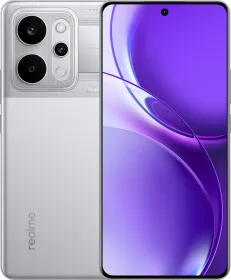


The 5,000 – 7,000mAh battery has been the industry standard for so long that phone makers stopped treating it as a limitation and started treating it as a finish line. realme didn’t get that memo. The Narzo Power 5G walks in with a 10,001mAh Titan Battery — nearly double what most phones ship with in 2026 — and makes the case that battery anxiety shouldn’t be part of your daily routine.
But a massive battery alone doesn’t make a complete phone, and realme seems to know that. Pair it with a 1.5K curved AMOLED display, a 50MP Sony OIS camera, triple IP ratings, 80W fast charging, and realme UI 7.0 on Android 16, and the Narzo Power 5G starts to look less like a one-trick pony and more like a genuinely thought-out package — one that just happens to have an absurdly large battery at its centre.
The question isn’t whether 10,001mAh sounds impressive on paper. It does. The question is whether the rest of the phone can keep up. We’ve been using it, and here’s our verdict.
Jump to :
Narzo Power 5G: Price & Availability
The realme Narzo Power 5G went on sale in India on March 5, 2026, and is available on Amazon.in and realme.com. Here’s the pricing breakdown:
The launch offers include a Rs. 1,000 price discount, a Rs. 3,000 bank offer, 6 months of no-cost EMI, and a free 4-year battery warranty (first sale only).
Pros
- Battery life is class-leading
- 80W charging, bypass, and reverse charging
- Reasonable weight for the battery size
- Wide FOV front camera for groups
- Bright 1.5K AMOLED with high-frequency PWM dimming
- Triple IP rating at this price
- 90fps BGMI on Extreme+ settings
- Three OS and four security update years
- Primary camera handles daylight and low-light well, OIS included
- Gorilla Glass 7i, MIL-STD-810H tested
- Loud earpiece for calls, but the microphone doesn’t impress
Cons
- 9.08mm thickness, 219g weight noticeable
- Mono speaker loses clarity at high volumes
- Portrait shutter slow, moving subjects come out soft
- Ultrawide colours and detail lag behind primary
- Front camera struggles in low-light
- UI capped at 120Hz despite 144Hz marketing
- No vibration intensity slider
- Bloatware needs day-one cleanup
- Chipset is not the segment’s strongest
- Phone warms up quickly during gaming
- Fingerprint scanner a little too low on the screen
Narzo Power 5G Specifications
- Display: 6.8-inch curved AMOLED, 1.5K resolution, up to 144Hz refresh rate, HDR10+, 1,800 nits HBM, 6,500 nits peak brightness, Corning Gorilla Glass 7i
- Processor: MediaTek Dimensity 7400 Ultra (4nm)
- RAM and Storage: 8GB + 128GB, 8GB + 256GB, LPDDR4X RAM with UFS 3.1 storage
- Main Camera: 50MP Sony IMX882, 1/1.95-inch, f/1.8, 2-axis OIS, AF, 4K30
- Ultra-wide Camera: 8MP, f/2.2, FF, 112-degree FOV, 1080p30
- Front Camera: 16MP Sony IMX480, f/2.4, FF, 1080p30
- Speakers: Single bottom-firing mono speaker
- Battery and Charging: 10,001mAh battery, 80W Ultra Charge, 27W reverse wired charging, bypass charging support
- Connectivity: 5G, Wi-Fi 6 (802.11ax), Bluetooth 5.2, GPS, USB Type-C
- Biometrics: Optical in-display fingerprint scanner, face unlock
- Build and Durability: IP66, IP68, IP69 ratings
- Software: realme UI 7.0 based on Android 16, 3 years of OS updates, 4 years of security patches
- Weight and Thickness: 219g, 9.08mm
- Colors: Titan Blue, Titan Silver
Narzo Power 5G Review: Design

The realme Narzo Power 5G is a thick phone. At 9.08 mm, it won’t be winning any beauty pageants in the slimness department. When I first took it out of the box, my gut reaction was something close to “okay, this is a chunky one.”
Two friends of mine had almost the same reaction when I passed it to them — one of them said it felt like something from three or four years ago, and I didn’t exactly argue with him. But then I told them about the battery, and I watched both of them go from vaguely judgmental to borderline jealous in the span of about five seconds. We’ll get to that later.
The full dimensions are 162.26 × 76.15 × 9.08 mm — big phone, no surprises there.


Despite the thickness, realme has kept the weight at 219 grams, which deserves a mention — there are phones out there with much smaller batteries that somehow weigh just as much. So it’s not like the heft is coming from nowhere; it’s all accounted for. The slight curve in the back panel enhances the overall grip
The phone comes in Titan Silver and Titan Blue, and I’ve had the Titan Blue on me throughout. The back finish catches different shades of blue depending on the light — it looks slightly dark and dull indoors, and then you step outside and it picks up a brighter, more electric tone. It has a textured matte finish throughout, but it could still attract some fingerprints (visible from certain angles).


It’s a polycarbonate back, as expected at this price, but the finish does a good job of hiding that fact. realme calls this the “TransView Design” — the idea being that the design nods to the internal technology rather than hiding it, which is a slightly poetic way of describing an almost plastic back with a few decorative elements.
But otherwise, the overall build quality feels solid: no awkward deformations or squeaky sounds whatsoever. The camera module at the rear is quite prominent for a dual-sensor setup; it sticks out quite a lot. However, I think it gives the phone some identity — the “Hyperimage+” and “Dart” engravings on the back add to that.

On the protection front, the Narzo Power 5G carries IP66 + IP68 + IP69 ratings, and the display is covered by Corning Gorilla Glass 7i. At this price point, that’s not something you see every day, and it quietly adds confidence in less-than-ideal conditions.
All in all, the 9.08 mm thickness and large camera bump are hard to ignore, and the polycarbonate frame — while it looks like a metallic one — doesn’t quite match up to what some rivals offer. It’s a phone that clearly prioritises function over form (and I’m a big believer in the philosophy), but the trade-off will bother some buyers more than others.
Narzo Power 5G Review: Display

The 6.8-inch 1.5K AMOLED is honestly the first thing that gets you when you power this phone on. It’s bright, colours pop, and you will absolutely spend more time on YouTube than you planned to.
Curved displays on phones under Rs. 30,000 are usually where things go wrong — edges that distort, corners that look like they’ve been roughed up, and touches near the bezel that the phone acknowledges whenever it feels like it. This one’s different. The curve is restrained, and the 94% screen-to-body ratio means there’s very little wasted space on the front.

If you’re buying this phone and plan to put a screen protector on it — find someone good, stand there while they do it, and don’t let them rush. A botched installation on a curved display is the kind of thing that ruins your mood every single time you pick up the phone.
Now, realme has put 144Hz front and centre in the marketing, which is technically accurate — the display can do 144Hz, but most of the time, including the entire system UI, you’re at 120Hz. I use my phone like any normal person does — scrolling, swiping, going back and forth between apps — and none of that runs at 144Hz. So while I get why it’s on the box, I’d like it if they’re a little more upfront about it.

Brightness peaks at 6,500 nits, with HBM at 1,800 nits. I used this phone through some genuinely brutal North Indian afternoons and it held up well enough — there were maybe two or three instances where I squinted and wished for a bit more, and guess what, it got it by enabling the “Extra brightness” toggle in the display menu. Sunlight legibility is not a problem here.
Colour temperature is where I have a minor personal gripe. The default profile is cold — whites have a blue push that I noticed on day one, mostly because my daily driver is an iPhone and True Tone has completely recalibrated what my eyes consider “neutral.” The natural mode fixes the blue, but then it goes warm, and not in a pleasant way.
I spent a few minutes in the display settings and landed somewhere in the middle that works for me. Your mileage will vary. PWM dimming is high-frequency below 70 nits, so if you’re the type who reads at 10% brightness at midnight and wakes up with a headache, this should help.
Narzo Power 5G Review: Performance

The Narzo Power 5G runs on the MediaTek Dimensity 7400 Ultra — 4nm, clocked up to 2.6GHz, paired with a Mali-G615 MC2 GPU. Same chip as the realme P4 Power (review), and I’ll be upfront — this isn’t the strongest silicon available at this price.
The Snapdragon 7s Gen 4 on the Redmi Note 15 Pro+ will beat it on raw numbers. That’s just where things stand. But having used this phone for a while now, the chipset is honestly the last thing I found myself complaining about.

8GB of LPDDR4X RAM, up to 14GB with virtual RAM pulling from storage when needed, and storage options of 128GB or 256GB on UFS 3.1. GeekBench 6 came back with 1042 single-core and 2829 multi-core — right where you’d expect this chip to sit.
realme has also paired it with a dedicated HyperVision+ AI chip aimed at cutting power consumption, which makes a lot of sense on a phone that’s built around its battery. Thermals are handled by a 7,000mm² vapour chamber, and we’ll get to how well that actually works in a moment.


Every day use is smooth for the most part. I hit the odd stutter — usually when jumping back into something the phone had quietly killed in the background — but these were infrequent enough that I’d forget about them between occurrences. If you’re not the kind of person who notices a half-second hiccup, this phone won’t bother you.
I spent a fair amount of time in BGMI, which is where the performance story gets more interesting. Extreme+ at 90fps is available on Super Smooth and Smooth graphics settings, and I was glad to see it — that’s not a given at this price. Frame rates through a full Classic Erangel match held up well; no drops that cost me a gunfight. The ones I lost were entirely my own doing.


The heat situation is a different story. Within the first five minutes of dropping into a match, the phone was already warm. Not hot enough to put down, but warm enough to register. By the end of the game it had reached that palm-filling warmth and just stayed there for the rest of the session. The vapour chamber is clearly doing something, but extended gaming will test your tolerance. Plan your sessions accordingly.
Narzo Power 5G Review: Operating System

The Narzo Power 5G boots into realme UI 7.0 on Android 16, with three years of OS updates and four years of security patches promised — fair enough for the price.
The “Light Glass Design” overhaul is the first thing you notice — frosted glass control centre, translucent Ice Cube Icons, a Breathing Dock. Yes, it looks a lot like iOS 26’s Liquid Glass direction. No, realme isn’t the only one doing this. It looks good, so I’ll move on.


Flux Themes 2.0 is where you’ll lose an embarrassing amount of time — Live Photo wallpapers, AI depth effects, resizable icons, custom fingerprint animations, multiple lock screen styles. The Flux Engine underneath claims meaningful gains in responsiveness and scrolling smoothness, and day-to-day, the phone does feel well-tuned.
Device Connect is genuinely useful — PC Connect handles screen mirroring and clipboard sharing between the phone and your laptop, and Share with iPhone makes file transfers between realme and iOS devices straightforward. Nothing revolutionary, but it works without drama.


NEXT AI brings Gemini integration, AI Notify Brief — which bundles non-urgent notifications into timed summaries instead of pinging you constantly — and AI Gaming Coach, a feature that sits in gaming mode and offers tips mid-game. Beginners will appreciate it. Everyone else will forget it exists. AI Framing Master works similarly — great if you’re learning photography, ignored if you’re not.


On the downside — no vibration intensity slider, which is annoying. The multiple sound profiles would mean a lot more if this weren’t a mono bottom-firing speaker that loses its composure at high volumes. And there’s bloatware. Not catastrophic amounts, but enough that your first five minutes with the phone will probably involve a small uninstallation session.
Narzo Power 5G Review: Camera

So, what are we working with? On the back, there’s a 50MP Sony IMX882 as the primary shooter — f/1.8, 2-axis OIS, 1/1.95-inch sensor — and an 8MP ultrawide at f/2.2 that covers 112 degrees. Flip the phone over and the 16MP Sony IMX480 at f/2.4 handles selfie duties. Respectable numbers for the segment, and the primary sensor largely backs them up.
Primary Camera
The primary camera is where this phone earns its keep. Daylight shots hold texture and sharpness well — foliage, fabric, signboard text — the kind of detail that separates average from good at this price. It doesn’t crumble after dark either, as long as there’s something to work with. A street lamp, a cafe, a restaurant that’s lit like an actual restaurant — the IMX882 manages these situations well, and you can feel the OIS doing its job.


Portrait mode is a different story. Edge detection is decent, but the shutter drags enough that anyone who shifts weight or blinks at the wrong moment comes out softer than intended. I lost more shots than I’d like to admit here. Patient subjects against plain backgrounds — fine. A social gathering — good luck.


Ultrawide Camera
The ultrawide is there when you need a wider frame, and that’s about the most generous way I can put it. Colours run cooler than the primary, detail takes a hit, and the two lenses clearly aren’t calibrated to match each other. Use it for a landscape or a group shot you’re not going to zoom into, and it does the job. Ask more of it than that and it fails to impress.


For video, the rear camera shoots up to 4K at 30fps and 1080p at 60fps, with both OIS and EIS doing their bit to keep things steady. Slow motion goes up to 240fps at 720p, there’s a Dual-view mode that runs front and rear simultaneously, and Pro Video is there if you want manual control over your footage. The Underwater mode is an actual usable feature given the phone’s IP66+IP68+IP69 ratings.
Selfie Camera
The 16MP front camera’s wide 85-degree FOV is genuinely useful for groups. Sharp in good light, noticeably soft in low-light — the kind of soft you blame on the “vibe” of the photo rather than the camera. Night mode on the rear is worth keeping around, particularly for ambient low-light scenarios where it adds without over-processing.


The primary sensor carries this camera system, and does so well enough. Everything else is capable but unremarkable — which, at this price, is about what you’d expect.
Narzo Power 5G Review: Battery

Let’s talk about why this phone exists. The 10,001mAh Titan Battery is the whole point of the Narzo Power 5G — everything else is built around it. The battery uses third-generation silicon-carbon anode material with realme’s latest internal stacking process, and the results on paper are genuinely hard to argue with.
realme claims 32.5 hours of YouTube, 11.7 hours of BGMI at 90fps, and 185.7 hours of Spotify on a single charge. Even if real-world numbers fall short of those figures by a reasonable margin, you’re still looking at extraordinary endurance.

The battery carries TÜV Rheinland’s 5-Star Battery Certification — which, according to realme, makes it the only 10,000mAh+ phone battery in the world to earn that rating. It’s also passed military-grade MIL-STD-810H shock tests, covering high and low temperature extremes, overcharge scenarios, drop tests, and flat compression.
Long-term health is addressed through the Titan Long-Life Algorithm — realme claims the battery will retain 80% capacity after 8 years of use, based on a once-every-two-days charging assumption.


On charging — 80W Ultra Charge is in the box, and realme says five minutes gets you 3.9 hours of YouTube. 36 minutes covers the 0-50% mark. I also tried charging the phone with a slower charger (around 30W), and the phone took around three hours for a complete charge. There’s also 27W reverse charging, which means this phone can top up other devices — your earbuds, your smartwatch, a friend’s phone when they inevitably forget their charger. Bypass charging is supported, too.
Now, my actual numbers. I put the phone through a proper beating in my first session (with SIM) — GeekBench runs, a CPU throttle test, BGMI at 90fps, and constant file transfers in the background. Checked the battery afterward (on the second day, by the way): 54% gone with 9 hours and 16 minutes of screen-on time.


That’s with me actively trying to stress it. At that drain rate, a normal heavy-use day should get you to the 16-18 hours of screen-on time mark without much trouble — and if your usage is more sensible than mine, somewhere in the 18-20 hours range is very much on the table. Call-and-email type users might genuinely get over two days out of this.
If you’re running low and heading out, Super Power Saving Mode kicks in at 5% and keeps the phone alive for up to 218 minutes of calls or 46.8 hours of standby. That’s not a typo. 46.8 hours of standby on 5% battery is the kind of thing that makes you realise just how absurdly large 10,001mAh actually is.
Review Verdict: Should You Buy the Narzo Power 5G?
The Narzo Power 5G is one of those phones where the spec sheet doesn’t fully capture what it’s like to actually live with it. There’s a 10,001mAh battery — and more than the number, it’s the confidence it gives you that’s hard to put a price on. Picking up this phone in the morning and genuinely not thinking about charging until the next day is an experience that most Android phones at this price simply can’t offer.
The rest of the package holds up well too. The 1.5K AMOLED is one of the better displays in the segment, the primary camera is capable and consistent, the triple IP rating is rare at Rs. 27,999, and realme UI 7.0 on Android 16 with four years of security updates means this phone has legs.
It’s thicker than most, the speaker is a single bottom-firer, and the Dimensity 7400 Ultra won’t top any benchmark charts — but none of these feel like dealbreakers when the rest of the phone is this well put together for the price.
realme has made a very specific phone for a very specific person, and that focus shows: those who’re fed up of their Android phone not lasting an entire day of usage and are habitual of carrying a power bank.
- Buy if: Battery life is your top priority, you enjoy high frame-rate gaming, and a bright, sharp AMOLED display and a reliable primary camera matter more to you
- Avoid if: You’re a photography enthusiast, you want the most powerful chipset in the segment

Smartprix ⭐ Rating: 8.1/10
- Design and Build: 8.5/10
- Display: 8.5/10
- Speakers: 7.0/10
- Software: 8.25/10
- Haptics: 7.5/10
- Biometrics: 8.0/10
- Performance: 8.25/10
- Cameras: 7.5/10
- Battery Life & Charging: 9.25/10
First reviewed in March 2026