

realme P4 Power 5G vs. Redmi Note 15 Pro 5G: Table of Contents
Choosing the right mid-range smartphone in 2026 isn’t just about performance anymore; it’s about finding the best balance between power, features, and long-term value. Two phones that approach this challenge in very different ways are the realme P4 Power 5G and the Redmi Note 15 Pro 5G. On paper, they may look evenly matched, but dig a little deeper and their priorities quickly diverge.
The realme P4 Power 5G is built for users who want extreme battery life, fast charging, and gaming-centric performance, even if it means a heavier design. The Redmi Note 15 Pro 5G, on the other hand, focuses on a premium visual experience, stronger cameras, and longer software support, catering to users who value refinement over raw endurance.
Also Read: iPhone 16 vs. Reno 15 Pro Mini: Which Is The Better Compact Flagship Under Rs. 60,000?
realme P4 Power 5G vs. Redmi Note 15 Pro 5G: Design
| realme P4 Power 5G | Redmi Note 15 Pro 5G | |
| Dimensions | 162.3 x 76.15 x 9.08 mm | 163.61 x 78.09 x 7.96 mm |
| Weight | 219 grams | 210 grams |
| Material | Gorilla Glass 7i front / plastic frame and back | Gorilla Glass Victus 2 front / plastic frame and back |
| IP Rating | IP69 (1.5 meters for 30 minutes) | IP69K (2 meters for 24 hours) |
| Colors | Flash Orange, Power Silver, Blue | Black, Glacier Blue, Mist Purple, Titanium |
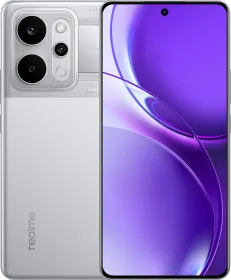
The realme P4 Power 5G is the thicker and heavier phone among the two, and for a good reason (we’ll talk about that later). Even though both phones have a punch-hole screen at the front, the P4 Power 5G features thinner bezels all around the screen (as it has a higher screen-to-body ratio).


On the back, the realme P4 Power has a rectangular camera module at the top left, while the Redmi Note 15 Pro has a centrally-located squircle camera setup. It’s worth noting that Redmi has done a commendable job of equipping the phone with flagship-grade front-screen protection and a superior IP rating.
Finally, the phone offers more finish options.
Also Read: Reno 15 Pro Mini vs. OnePlus 13s: Which Compact Premium Phone Should You Buy?
realme P4 Power 5G vs. Redmi Note 15 Pro 5G: Display
| realme P4 Power 5G | Redmi Note 15 Pro 5G | |
| Display Size | 6.8-inch | 6.83-inch |
| Aspect Ratio | 19.5:9 | 19.5:9 |
| Technology | AMOLED LTPS | AMOLED LTPS |
| Resolution | 2800 x 1280 (453 ppi) | 2772 x 1280 (447 ppi) |
| Refresh Rate | 144Hz | 120Hz |
| Peak Brightness | 6500 nits (HBM) | 3200 nits (HBM) |
| Dimming | TBA | 3840Hz PWM Dimming |
| HDR Formats | HDR10+ | HDR10+, Dolby Vision |
| Colors | 1B | 68B |
Both phones have similar screens, with minor differences that may not be immediately noticeable.
For instance, the P4 Power 5G’s screen is slightly sharper and supports a higher refresh rate, resulting in smoother system animations and scrolling. Further, the phone supports a higher local peak brightness of 6,500 nits, compared to 3,200 nits on the Redmi Note 15 Pro 5G.

However, Redmi provides 3,840Hz PWM Dimming, which should make the screen easier on the eyes. Further, it supports Dolby Vision content in addition to HDR10+. Finally, the phone has a 12-bit panel, which should be able to produce many more colors than the 10-bit panel on the P4 Power 5G.
Also Read: realme 16 Pro+ vs. vivo V60: Which Snapdragon 7 Gen 4 Phone Wins For You?
realme P4 Power 5G vs. Redmi Note 15 Pro 5G: Processor
| realme P4 Power 5G | Redmi Note 15 Pro 5G | |
| Chipset | Dimensity 7400 Ultra | Dimensity 7400 Ultra |
| Manufacturing Process | 4nm | 4nm |
| Core Configuration | Octa-core (4×2.6 GHz Cortex-A78 & 4×2.0 GHz Cortex-A55) | Octa-core (4×2.6 GHz Cortex-A78 & 4×2.0 GHz Cortex-A55) |
| GPU | Mali-G615 MC2 | Mali-G615 MC2 |
| NPU / AI Processing | HyperVision AI+ chip | Xiaomi HyperAI |
| Memory / Storage | LPDDR4X + UFS 3.1 | LPDDR4X & UFS 2.2 |
| Connectivity | Wi-Fi 6, Bluetooth v5.2 | Wi-Fi 6, Bluetooth v5.4 |
Even though both phones are based on the MediaTek Dimensity 7400 Ultra, a mid-range chip that delivers decent performance, there’s a clear difference in how the chip is implemented and the supporting hardware used.

The octa-core CPU features four 2.6 GHz performance cores and four 2.0 GHz balanced cores, paired with the Mali-G615 MC2 GPU. Despite the fact that realme also uses the same chipset on the sub-Rs. 15,000 P4x 5G, it scores a decent 1,045/2,971 points in the single/multi-core GeekBench 6 CPU test.
Both phones also include support for Wi-Fi 6. However, it is the type of storage that could create a difference for the user experience. Let me explain.
The realme P4 Power 5G features a chipset paired with up to 12GB of LPDDR4X RAM and 256GB of UFS 3.1 storage. Even though the Note 15 Pro 5G comes with up to 8GB of LPDDR4X RAM, it features up to 512GB (higher amount) of UFS 2.2 storage (lower quality).
Also Read: MediaTek Dimensity 7400 and 7400X Are Here With a 0.1 GHz Boost

For those catching up, UFS 3.1 is faster and more efficient than UFS 2.2. It offers higher read/write speeds, better multitasking, and improved power efficiency, making apps load quicker and gaming smoother.
Further, realme promises 90 fps BGMI gaming with the same chipset (paired with its HyperVision AI+ chip). It also has a 7000 mm-square vapor cooling chamber. Redmi, on the other hand, doesn’t promise a specific fps number.
So, if gaming is your priority, you should go with the realme P4 Power. Otherwise, the Redmi Note 15 Pro should provide a decent daily performance.
realme P4 Power 5G vs. Redmi Note 15 Pro 5G: Operating System
| realme P4 Power 5G | Redmi Note 15 Pro 5G | |
| Operating System (At Release) | Android 16 | Android 15 |
| User Interface | realme UI 7.0 | Xiaomi Hyper OS 2.0 |
| Software Update Policy | 3Y OS + 4Y Security Updates | 4Y OS + 6Y Security Updates |

realme UI 7.0’s key features include a bold Light Glass Design with refreshed icons and visual polish, vibrant live wallpapers, smoother animations, and enhanced customization options such as Flux Theme 2.0 and fingerprint animations. It also brings AI-powered tools, smarter notifications, performance boosts, and improved multitasking on Realme phones running Android 16.
What’s great is that realme has launched the P4 Power 5G with Android 16 preinstalled.

Xiaomi Redmi Note 15 Pro 5G runs Xiaomi’s HyperOS 2.0 based on Android 15, bringing a modern UI with smoother animations, refreshed control center and lock-screen customisation, plus AI-enhanced wallpapers and dynamic effects. HyperOS 2.0 also introduces better cross-device connectivity, stronger security, performance optimisations, smart AI tools, and improved system responsiveness.
It’s a tad disappointing that Redmi is still launching smartphones with HyperOS 2.0 based on Android 15. Even though it has a superior software support promise (4Y + 6Y), it will only receive three major Android updates post Android 16, which is on par with the realme P4 Power 5G.
realme P4 Power 5G vs. Redmi Note 15 Pro 5G: Optics
| realme P4 Power 5G | Redmi Note 15 Pro 5G | |
| Primary Camera | 50MP (f/1.8, 1/1.95″, OIS) | 200MP (f/1.7, 1/1.4″, OIS) with multi-directional PDAF |
| Video Resolution | 4K@30fps, 1080p@240fps | 4K@30fps, 1080p@120fps |
| Secondary Camera | 8MP (f/2.2, 112˚, 1/4.0″) | 8MP (f/2.2, 120˚, 1/4.0″) |
| Tertiary Camera | – | – |
| Selfie Camera | 16MP (f/2.4, PDAF) | 20MP (f/2.2, 1/4.0″) |
| Video Resolution | 1080p30 | 1080p60 |
The realme P4 Power 5G has an average camera setup, especially for a phone of its price. It includes a 50MP primary and 8MP ultrawide sensor, with a 16MP selfie camera on the front. The phone can record 4K30 videos from the primary camera and 1080p30 videos from the front camera.

However, the Redmi Note 15 Pro 5G sports a 200MP primary sensor, which is bigger, paired with a bigger aperture, and has multi-directional PDAF. The sensor can provide 2x and 4x optical-quality in-sensor zoom. Hence, it should provide a better photography experience, with more detail and improved low-light performance.
It’s ultrawide camera has a wider field of view than the one on the realme P4 Power 5G. The selfie camera also has a higher resolution. Redmi also provides triple-focus-length DAG HDR for better dynamic range, AI Creativity Assistant for improved post-processing, and Dynamic Shots 2.0 for motion effects and object removal.
realme P4 Power 5G vs. Redmi Note 15 Pro 5G: Battery
| realme P4 Power 5G | Redmi Note 15 Pro 5G | |
| Battery Capacity | 10,001 mAh Si/C | 6,580 mAh Si/C |
| Charging Speed | 80W wired, 27W reverse wired, Bypass Charging | 45W wired, 22.5W reverse wired |
The realme P4 Power 5G is slightly thicker and heavier than the Redmi Note 15 Pro 5G, right? That’s because it features a gargantuan 10,001 mAh battery that supports 80W wired charging. That’s right. The Rs. 25,000 smartphone has a bigger battery than the iPhone 17 Pro Max and the Galaxy S25 Ultra combined.

The battery uses next-generation silicone-carbon anode technology (30% improvement in cycle count), a dual-layer coating process for more efficient power delivery, and a C-pack protection board design for added safety. The battery has passed the military-grade shock test and should retain 80% of its maximum charging capacity after four years of use.
The battery should easily offer over 12-14 hours of screen-on time with moderate usage. For regular users, it could be the first smartphone to actually provide two-day battery life.
The Redmi Note 15 Pro 5G features a pretty standard 6,580 mAh battery that supports 45W wired charging. The company claims the battery will retain 80% of its capacity after 1,600 charge cycles, which is about six years of use. Expect the battery to provide about 8 to 10 hours of screen-on time with moderate use.
Also Read: OnePlus 15 vs. OnePlus 13: What’s Changed? A Rs. 72,999 Question
realme P4 Power 5G vs. Redmi Note 15 Pro 5G: Price & Verdict
realme P4 Power 5G

- realme P4 Power 5G (8GB + 128GB): Rs. 25,999
- realme P4 Power 5G (8GB + 256GB): Rs. 27,999
- realme P4 Power 5G (12GB + 256GB): Rs. 30,999
Choose the realme P4 Power 5G if battery life, gaming, and raw endurance are most important. Its massive 10,001mAh battery, faster 80W charging, 144Hz brighter display, UFS 3.1 storage, and better gaming optimisation (90fps BGMI + vapor cooling) make it ideal for heavy users. The downsides are its average cameras and heavier body.
Best value-for-money variant: 8GB + 256GB (₹27,999): faster storage at a competitive price.
Redmi Note 15 Pro 5G
Pick the Redmi Note 15 Pro 5G if you want a more balanced, premium-feeling phone. It wins with a 200MP camera, Dolby Vision display, 12-bit colors, better front glass protection, longer software support, and a lighter design. However, it lags in charging speed, storage tech (UFS 2.2), and battery size.
Verdict
- Power users & gamers: realme P4 Power 5G
- Camera lovers & long-term users: Redmi Note 15 Pro 5G
- More affordable overall: realme P4 Power 5G

You can follow Smartprix on Twitter, Facebook, Instagram, and Google News. Visit smartprix.com for the latest tech and auto news, reviews, and guides.