

Reno 15 Pro Mini vs OnePlus 13s: Table of Contents
Choosing a compact premium smartphone in 2026 isn’t as simple as it used to be. Brands are packing larger batteries, higher-resolution cameras, and flagship-grade performance into smaller, pocket-friendly designs, and two phones that exemplify this shift are the Oppo Reno 15 Pro Mini and the OnePlus 13s.
On paper, they look evenly matched: similar sizes, high-refresh AMOLED displays, fast charging, and polished software. But dig a little deeper, and their priorities begin to diverge: one leans heavily toward cameras, battery life, and durability, while the other focuses on raw performance, efficiency, and a cleaner software experience.
Which one makes more sense for everyday use? Let’s break it down, section by section.
Also Read: realme 16 Pro+ vs. vivo V60: Which Snapdragon 7 Gen 4 Phone Wins For You?
Reno 15 Pro Mini vs. OnePlus 13s: Design
| Reno 15 Pro Mini | OnePlus 13s | |
| Dimensions | 151.2 x 72.4 x 8 mm | 150.8 x 71.7 x 8.2 mm |
| Weight | 187 grams | 185 grams |
| Material | Glass front / Aluminum frame / Glass back | Glass front / Aluminum frame / Glass back |
| IP Rating | IP68/IP69 (up to 1.5m for 30 minutes) | IP65 |
| Colors | Dusk Brown, Aurora Blue, Glacier White | Green Silk, Black Velvet, Pink Satin |

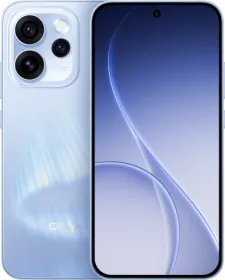
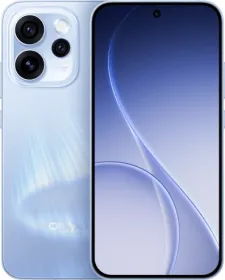
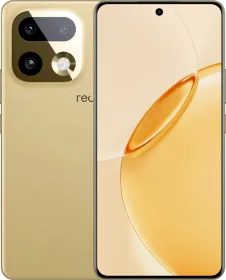
Both the Reno 15 Pro Mini and the OnePlus 13s feature a modern front with a tiny punch-hole at the top and symmetrical bezels on all sides. However, the latter has a slightly higher screen-to-body ratio (90.6% vs. 89.5%)
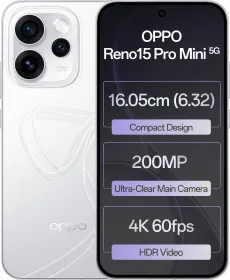
On the back, however, the phones feature a slightly different camera module. The Reno 15 Pro Mini features a triple-camera setup housed in a relatively subtle camera bump, whereas the 13s has a more distinct camera module with sharper edges.
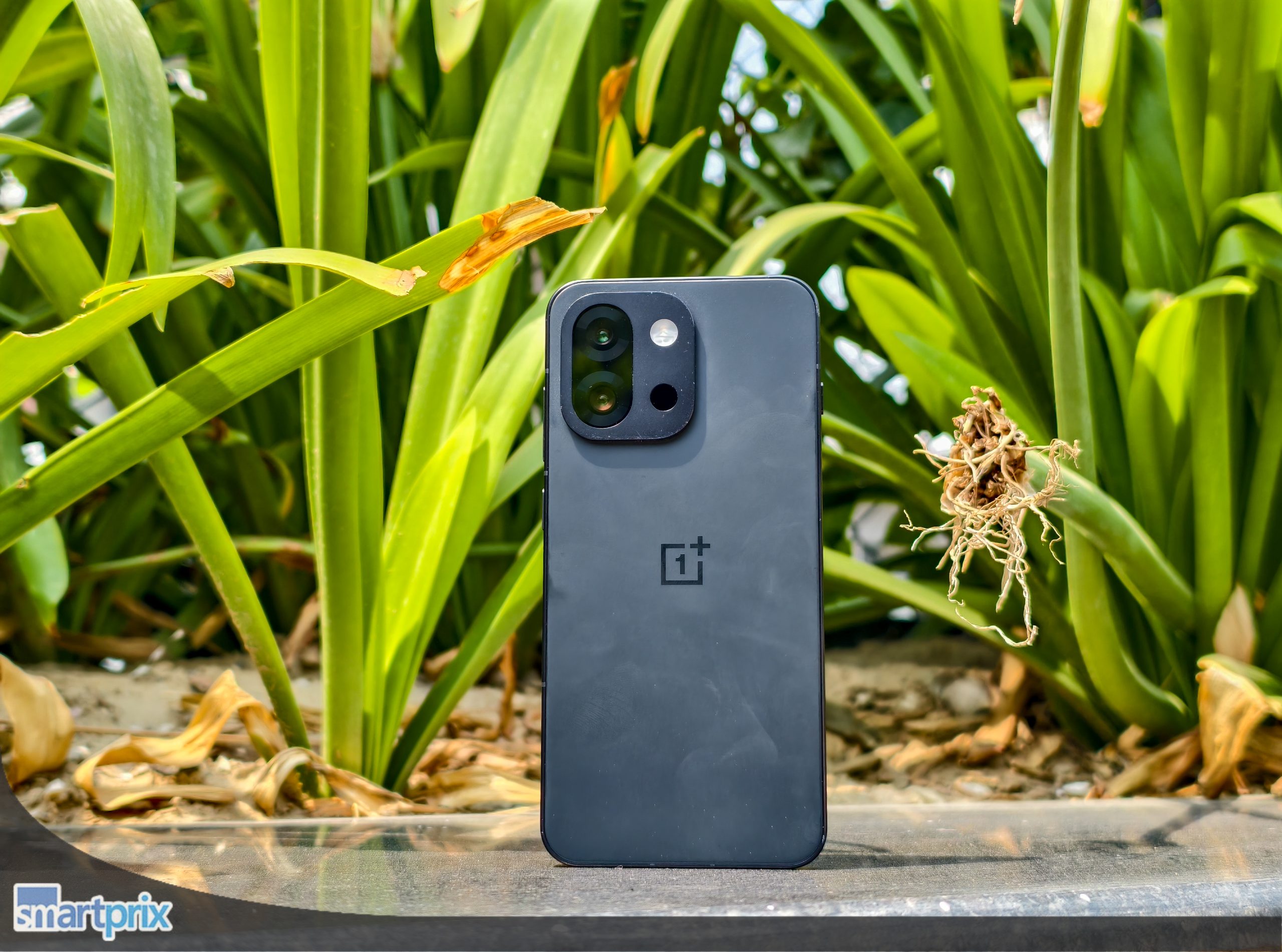
The Reno 15 Pro Mini features a HoloFusion back panel with a ribbon-style pattern that dynamically reflects light. The OnePlus 13s, on the other hand, has a plain, matte-finish back panel that feels equally premium (but slightly less exciting) in the hand.
Based on the specifications above, the Reno 15 Pro Mini is the slimmer phone, whereas the OnePlus 13s is 2 grams lighter. Furthermore, Oppo’s premium mid-ranger has a higher IP rating, making the device more durable against moisture ingress.
Also Read: Xiaomi 17 Ultra vs. vivo X300 Pro: Which Camera-Centric Flagship Actually Makes Sense For You?
Reno 15 Pro Mini vs. OnePlus 13s: Display
| Reno 15 Pro Mini | OnePlus 13s | |
| Display Size | 6.32-inch | 6.32-inch |
| Aspect Ratio | 19.5:9 | 19.5:9 |
| Technology | LTPS AMOLED | LTPO AMOLED |
| Resolution | 1216 x 2640 pixels (460 ppi) | 1216 x 2640 pixels (460 ppi) |
| Refresh Rate | 120Hz | 120Hz |
| Peak Brightness | 1800 nits (HBM) | 1600 nits (HBM) |
| Dimming | PWM | 2160Hz PWM |
| HDR Formats | HDR10+ | Dolby Vision, HDR10+ |
| Colors | 1B colors | 1B colors |
| Protection | Corning Gorilla Glass 7i | – |
Both phones have a 6.32-inch AMOLED screen, making them suitable for one-handed use, for carrying in tight jeans pockets, or for use in backpacks.
However, while the OnePlus 13s features an LTPO panel (capable of a truly variable refresh rate), the Reno 15 Pro Mini uses an LTPS panel that adheres to preset refresh rates (e.g., 60, 90, and 120Hz). On the flip side, the Reno 15 Pro Mini has a brighter display, whereas the OnePlus 13s supports both Dolby Vision and HDR10+.


In conclusion, the OnePlus 13s should provide a slightly better experience, owing to its LTPO panel that smoothly adjusts refresh rate. However, the Reno 15 Pro Mini should provide better outdoor visibility.
Reno 15 Pro Mini vs. OnePlus 13s: Processor
| Reno 15 Pro Mini | OnePlus 13s | |
| Chipset | Mediatek Dimensity 8450 | Snapdragon 8 Elite |
| Manufacturing Process | 4nm TSMC | 3nm TSMC |
| Core Configuration | 1 x 3.25 GHz Cortex-A725 + 3 x 3.0 GHz Cortex-A725 + 4 x 2.1 GHz Cortex-A725 | 2 x 4.32 GHz Oryon V2 Phoenix L + 6 x 3.53 GHz Oryon V2 Phoenix M |
| GPU | Mali-G720 MC7 | Adreno 830 |
| NPU / AI Processing | MediaTek NPU 880 | Qualcomm Hexagon NPU |
| Memory / Storage | LPDDR5X & UFS 3.1 | LPDDR4X + UFS 4.0 |
| Connectivity | Wi-Fi 6, Bluetooth v5.4 | Wi-Fi 7, Bluetooth v6.0 |
Performance-wise, there’s a clear difference between the Reno 15 Pro Mini and the OnePlus 13s. While the former is powered by a next-to-flagship chipset, the latter sports a top-tier Snapdragon processor. Let’s dive deeper into the differences.
Dimensity 8450

The Dimensity 8450 in the Reno 15 Pro Mini is fabricated on TSMC’s 4nm process. The chipset features a prime core clocked at 3.25 GHz, the Mali-G720 MC7 GPU, paired with up to 12GB of LPDDR5X RAM and 512GB of UFS 3.1 storage.
During our evaluation of the device, it performed well. App launches were quick, multitasking was easy, and there were no RAM management issues. The phone scores slightly over 2 million points in AnTuTu v11 and 1609/6355 points in the single- and multi-core GeekBench 6 CPU tests.
Snapdragon 8 Elite

However, the OnePlus 13s is powered by the Snapdragon 8 Elite (3nm) flagship-tier chipset. With an octa-core CPU (with two 4.32 GHz prime cores), the Adreno 830 GPU (with support for hardware-accelerated ray-tracing), up to 12GB of LPDDR5X RAM, and 512GB of UFS 4.0 storage.
The device scores over 2 million points in the AnTuTu v10 benchmark, while maintaining scores of over 2850/8800 in the single/multi-core GeekBench 6 CPU tests. The GeekBench score provides a clear indication of the performance difference between the phones.
Further, the OnePlus 13s also features slightly better thermals for keeping the CPU temperature under control (offering slightly higher sustained performance).
Regarding gaming performance, the Reno 15 Pro Mini supports 90 fps native gaming in BGMI (with an optional mode that increases it to 120 fps), whereas the OnePlus 13s supports native 120 fps playback.
Also Read: OnePlus 15 vs. OnePlus 13: What’s Changed? A Rs. 72,999 Question
Reno 15 Pro Mini vs. OnePlus 13s: Operating System
| Reno 15 Pro Mini | OnePlus 13s | |
| Operating System (At Release) | Android 16 | Android 15 |
| User Interface | ColorOS 16 | OxygenOS 15 |
| Software Update Policy | 5 OS + 6 Security Updates | 4 OS + 6 Security Updates |
Given its January 2026 launch timeline, the Reno 15 Pro Mini has debuted with ColorOS 16, which is based on Android 16. On the other hand, the OnePlus 13s, which debuted in June 2025, came with OxygenOS 15 out of the box.

The user interface offers some of the best lock-screen customization options in the segment, smooth system animations, and features such as Mind Space (save information, such as screenshots, and then analyze them with on-device AI or Gemini), Circle to Search, AI Recorder, AI VoiceScribe, AI Call Summary, and AI Search.
You also get plenty of photo and video editing features, including AI Eraser, Reflection Eraser, AI Unblur, AI recompose, AI Perfect Shot, and AI Portrait Glow. Moreover, the Reno 15 Pro Mini offers an excellent software experience (barring a few pre-installed apps). It’s worth noting here that the smartphone will get new operating system and security updates for longer.

At launch, the OnePlus 13s came with OxygenOS 15 based on Android 15. However, in November 2025, the handset received the OxygenOS 16 update, which is based on Android 16. Even though the interface is based on ColorOS 16’s code, it features fewer visual elements, slightly lighter visual animations, and a less cluttered settings layout.
The handset features OnePlus AI, which includes the Plus key, Mind Space, AI Recorder, AI Portrait Glow, AI Scan, smart photography and editing capabilities, and Google Gemini integration. However, unlike the Reno 15 Pro Mini, the OnePlus 13s has only got three major OS updates left.
Also Read: realme GT 8 Pro vs. OnePlus 15 vs. iQOO 15: Camera Comparison
Reno 15 Pro Mini vs. OnePlus 13s: Optics
| Reno 15 Pro Mini | OnePlus 13s | |
| Primary Camera | 200MP (f/1.8, 1/1.56″, OIS) | 50MP (f/1.8, 1/1.56″, OIS) |
| Video Resolution | 4K60, 1080@480fps | 4K60, 1080@240fps |
| Secondary Camera | 50MP (f/2.8, OIS) for 3.5x optical zoom | 50MP (f/2.0, 1/2.75″) for 2x optical zoom |
| Tertiary Camera | 50MP (f/2.0, 116˚) with AF | – |
| Selfie Camera | 50MP (f/2.0, 100˚, AF) | 32MP (f/2.0, 1/3.1″, AF) |
| Video Resolution | 4K60, 1080p60 | 4K30, 1080p60 |
Right off the bat, the Reno 15 Pro Mini features a superior camera setup, not because it has three cameras (vs. two on the OnePlus 13s), but also because of what those three cameras can do.
First and foremost, the Reno 15 Pro Mini features a 200MP (f/1.8) primary camera, which can provide much sharper images than the 50MP (f/1.8) sensor on the OnePlus 13s.


Furthermore, the smartphone features a 50MP camera with 3.5x optical zoom and up to 120x digital zoom, compared with the OnePlus handset’s 2x optical zoom, which maxes out at 20x.
The Reno 15 Pro Mini also has a 50MP ultrawide camera, unlike the OnePlus handset. Finally, the former has a 50MP primary camera, whereas the latter has a maximum of 32MP.
Reno 15 Pro Mini vs. OnePlus 13s: Battery Life & Charging Speed

| Reno 15 Pro Mini | OnePlus 13s | |
| Battery Capacity | 6,200 mAh | 5,850 mAh |
| Charging Speed | 80W wired (13.5W PD, 55W PPS) | 80W wired (33W PPS, 18W PD, 18W QC) |
With its 6,200 mAh battery, the Reno 15 Pro Mini offers around nine to 10 hours of screen-on time between charges, which is quite excellent. On the other hand, the OnePlus 13s, with its 5,850 mAh battery, offers approximately 7 hours of screen-on time and supports 80W wired charging.
Clearly, the Reno 15 Pro Mini stands out as the battery giant despite sharing the same form factor and being slightly slimmer than the OnePlus handset.
Also Read: ColorOS 16 vs. iOS 26: Who Did Lock Screen Customization Better?
Reno 15 Pro Mini vs. OnePlus 13s: Price & Conclusion
Reno 15 Pro Mini Price

The Reno 15 Pro Mini is an excellent choice for users who value camera versatility, battery life, durability, and long-term software support in a compact flagship-style phone.
Its 200MP primary sensor, 3.5× optical zoom, and ultrawide camera make it far more flexible for photography than rivals. The massive 6,200mAh battery delivers all-day endurance despite the slim form factor, while the brighter AMOLED panel ensures better outdoor visibility.
Add to that IP68/IP69 protection and a longer update policy, and the Reno 15 Pro Mini stands out as a future-proof, camera-centric premium all-rounder.
OnePlus 13s Price

The OnePlus 13s shines for users who want top-tier performance, a smoother display, refined software, and balanced everyday use.
Its flagship Snapdragon 8 Elite chipset delivers faster processing and gaming, while the LTPO AMOLED panel offers a truly adaptive refresh rate for seamless visuals and better power efficiency. OxygenOS provides a clean, fluid UI with thoughtful AI features and a less cluttered experience.
Combined with solid build quality, Dolby Vision support, and competitive pricing, the OnePlus 13s is a well-rounded flagship choice for performance seekers and daily users alike.

You can follow Smartprix on Twitter, Facebook, Instagram, and Google News. Visit smartprix.com for the latest tech and auto news, reviews, and guides.