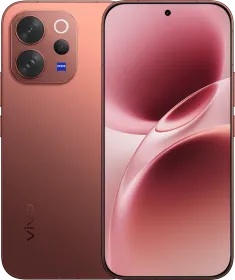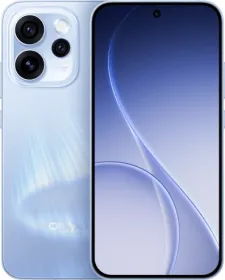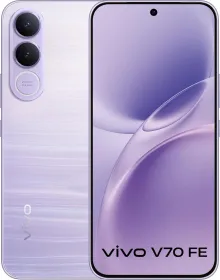


The vivo V70 walks into a hot, competitive, spec-driven market of mid-range smartphones priced between Rs. 40,000 and Rs. 50,000. The V60 wasn’t broken. It wasn’t outdated. So instead of tearing up the script, vivo has chosen a different strategy here: refinement over reinvention.
After using the V70 for a while, it feels less like a dramatic sequel and more like a director’s cut. The same foundation, slightly tighter edits, a brighter screen, a bigger battery, a few smarter software touches, and, of course, a fresh coat of what they’re calling “Passion Red” (which looks more like sunset copper, but we’ll get to that).
The V70 isn’t trying to shock you. It’s trying to convince you. And whether that subtle approach works depends entirely on what you expect from a successor in 2025.
vivo V70 Price & Availability
The vivo V70 Power is currently up for pre-orders. The phone will be available to purchase from February 26, 2026. You can choose from the following variants.
Pros
- Premium slim aluminum design
- IP68 and IP69 rated
- Bright 120Hz OLED panel
- Reliable ultrasonic fingerprint scanner
- Fast LPDDR5X RAM
- UFS 4.1 storage speeds
- Excellent 3.5x telephoto results
- ZEISS portrait styling modes
- 6,500 mAh battery with 90W charging
- Polished OriginOS experience
- Extensive customization options
- Four Android updates promised
Cons
- Same chipset as V60
- Gaming capped at 60fps
- No LTPO refresh rate
- Asymmetrical display bezels
- Speakers lack bass depth
- AI overprocessing beyond 20x
- USB-A charging brick
- Poor haptics
vivo V70 Review: Design & Build

In my opinion, the vivo V70 strikes the right balance between a compact and a full-fledged flagship form factor. It’s big enough to consume content and read the on-screen text from a distance, yet not so big that it doesn’t fit into the pocket of my jeans. At 196 grams, it doesn’t feel exceptionally heavy or light.
Like most other vivo phones, this one does well in the design front. I adore the phone for its slim profile (7.6 mm) with a flat, textured aluminum alloy frame, round corners, a soft-touch glass finish on the back, which is neither reflective nor attracts fingerprints, and appears to shimmer in a brighter shade (or change its shade, in simpler terms) under certain angles of light.


I really like how the smartphone has the brand’s name carved into the rear left side of the back panel with a completely different (reflective) finish. The metallic camera module (with a slightly different finish) acts as a bold personality element. However, it also results in quite a lot of table-top wobble.
Fun fact: The Chinese version of the smartphone, vivo S50 (with Snapdragon 7 Gen 4), features an LED flash module in addition to the circular Aura Light. However, the Indian version gets only the latter.
What I didn’t like, however, is how the brand is calling this particular color “Passion Red.” In bright sunlight, it leans toward a vibrant tangerine or orange hue, but in softer or angled lighting, it shifts into a matte copper-bronze tone.

From the front, the phone looks much like its contemporaries, featuring a relatively large punch-hole cutout and a flat screen, which, by the way, gathered quite a few micro-scratches during day-to-day use without a screen protector.
What isn’t good, however, is the presence of asymmetrical bezels on the sides. The top and the bottom bezels measure 1.46 and 1.77 mm, respectively, while the side bezels measure 1.25 mm.
vivo V70 Review: Display

The vivo V70 features a 6.59-inch LTPS OLED screen (smaller than the V60) with a resolution of 1260 x 2750 pixels (459 ppi), a maximum refresh rate of 120Hz, and a local peak brightness of 5,000 nits (limited to 1,800 nits of global peak brightness). vivo also claims that the screen covers 100% of the P3 color gamut, supports HDR, and comes with an SGS Low Blue Light certification.
First of all, this is not an LTPO panel, so a truly variable refresh rate isn’t technically possible. Even so, the software provides you with three refresh rate modes: Smart adaptation, Standard (limited to 60Hz), and High (up to 120Hz). While using the phone at Smart, apps like Instagram and Netflix default to a 90Hz refresh rate, while the system navigation and scrolling remain at 120Hz.
Thanks to the 459 ppi pixel density, the screen is sharp to the extent that you can’t go pixel peeping on the vivo V70, no matter how hard you squint. However, out of the box, the screen resolution is set to HD (1080 x 2358) to extend the battery life. You can find the option to increase the resolution to UHD (1260 x 2750) in Settings > Display, brightness, & eye protection > Screen resolution.

Coming to the 1,800 nits of HBM brightness, it feels adequate inside, offering excellent visibility in the brightest of the rooms. Under direct sunlight (around 2 PM), the screen offers above-average visibility. The screen also supports HDR10+ for high-dynamic-range content.
Under the “Eye comfort and protection” menu in Settings, the device lets you adjust the screen temperature, schedule eye protection, and enable “Anti-fatigue brightness.”
Although the company doesn’t mention anything about it in the official features guide shared with me, the Chinese version of the vivo V70, the S50, supports 4320Hz of high-frequency PWM dimming. I didn’t experience any issues, such as severe eye fatigue or strain, while viewing the screen, even during extended testing.

You get three color profiles out of the box: Natural (my favorite), Professional, and Bright, and the overall color reproduction is done quite well.
vivo V70 Review: Speaker, Haptics, Biometrics

The vivo V70 features a dual-speaker setup where the bottom-firing speaker seems to be doing most of the heavy lifting. The output (at least on my unit) lacked low-end or bass; audio or video tracks sound treble-heavy (while streaming songs from Spotify or watching YouTube videos). The speakers go loud, but they lack fullness or richness.
However, it could also be the low streaming quality of the apps, as when I opened BGMI to test the phone’s gaming prowess, the music that plays during the intro (while downloading the resource pack) sounded dramatically better.

The vibration motor is below average and you don’t get the premium X-axis linear motor here. I couldn’t find an option to adjust the vibration intensity either. The phone also synchronizes haptic feedback with in-game actions when Ultra Game Mode is activated.
Locking and unlocking the device is a smooth experience, thanks to the 3D ultrasonic fingerprint scanner, which unlocks it every time and rarely fails to register my thumb. The enrolment process was quite fast as well. You also get the traditional pattern and face unlock (optical) options, but the latter isn’t quite as secure.
vivo V70 Review: Performance

The Indian variant of the vivo V70 is powered by the Qualcomm Snapdragon 7 Gen 4 (4 nm) SoC, which features an octa-core CPU with a 2.8 GHz prime core and an Adreno 722 GPU. If the name sounds familiar, that’s because the vivo V60 also featured the same chipset. So, in theory, there shouldn’t be any noticeable performance upgrades in the smartphone.
However, the chipset is paired with LPDDR5X RAM (vs. LPDDR4X on v60) and UFS 4.1 (vs. UFS 2.2 on v60), which boosts performance to some extent. The model that we received for this review has 8GB of RAM and 256GB of storage.
CPU Configuration

- 1 x 2.8 GHz Cortex-720 prime core
- 4 x 2.4 GHz Cortex-720 performance cores
- 3 x 1.8 GHz Cortex-520 efficient cores
- Adreno 722 GPU
- 8GB of LPDDR5X RAM + 256GB of UFS 4.1
Now, Snapdragon 7 Gen 4 isn’t the latest or the most powerful chipset in the segment. In fact, you can also find the chipset on smartphones that cost around Rs. 25,000 to Rs. 30,000. But Vivo seems to have consciously chosen refinement over raw processing power.
Day-To-Day Performance
| vivo V70 | vivo V60 | realme 15 Pro | realme P4 Pro | |
| AnTuTu | 1,405,769 (v11) | 981,381 (v10) | 1,064,065 (v10) | 1,050,805 (v10) |
| GeekBench Single-Core | 1,340 | 1,248 | 1,240 | 1,200 |
| GeekBench Multi-Core | 4,112 | 3,457 | 3,493 | 3,477 |
Day-to-day usage feels smooth and responsive. Tasks like opening Gmail, responding to emails, streaming songs or videos on YouTube, editing photos in the Albums app, and switching between apps are all handled very well. RAM management, however, seems quite aggressive, as the phone repeatedly kills the fifth or sixth app in the background (especially when a video game is running).
I’d say the LPDDR5X RAM and UFS 4.1 storage help mask the chipset’s lack of raw processing power, so a regular user can use the phone daily without major performance issues. However, the use of the same chipset sure is a missed opportunity.
Gaming Performance


Gaming, however, isn’t one of the strongest suits. The device maxes out at Extreme (60 fps) with HDR and Ultra (40 fps) with Ultra HDR. Even at the lowest setting (Super Smooth), the game doesn’t go above 60 fps. However, the lack of high frame rate gaming seems more about optimization than the chipset’s limitations, as chipsets with lower peak frequencies can also achieve 120 fps in BGMI.
vivo V70 Review: Software

Out of the box, the phone runs on OriginOS 6 based on Android 16 (version PD2529F_EX_A_16.0.12.11.W30), which is the latest available firmware for the device.
The user interface has moved away from flat panels, toward a three-dimensional Space System that uses layered cards and translucent textures. The liquid glass effect is quite subtle on the device, but even so, it features translucent color palettes, subtle drop shadows, and a lot of gradient blur to soften transitions.

With regards to personalization, users can choose from a wide selection of wallpapers, themes (including those with a dynamic lock screen clock and Flip cards that switch between the photographs in the Album app), icon styles, intensity of the rounded corners, change the system and app UI color, and change the transition effects for the key system animations, including the unlock to home screen, lock screen, cjarging, and other effects.
The UI also includes three font options: Default, vivo Sans, and Classic. The Origin Island at the top of the screen is clearly a page out of Apple’s playbook, and the implementation is good. An advantage that vivo’s version provides over the original is that users can long-press on any content, such as text, image, or document, draft it to the Origin Island, and the software automatically opens the relevant app (a feature called “Drag & Go”).


The vivo V70 also offers plenty of AI-based features, including AI Creation (for text-based content generation), AI Captions (transcribing meetings, real-time translation, and key takeaways with one tap), and vivo DocMaster (a full-fledged document processing suite).
You also get plenty of AI-based editing features, including AI Magic Weather (often fails to detect the sky in my experience), AI Floral Blessing, an India-exclusive AI Holi Portrait (available from February 19 to March 15) for optimized skin tones and color accuracy, AI Magic Landscape, AI Creative Style, and advanced AI Retouch Suite with AI Erase 3.0, AI Image Expander, and AI upscaler.


With the vivo V70, the company has promised four years of major Android updates and six years of security updates. The software support isn’t as good as that of industry leaders, but viewed in isolation, six years of secure operations should be more than enough for the average smartphone consumer in India.
vivo V70 Review: Camera

The vivo V70 features three rear-facing cameras, including a primary, telephoto, and ultrawide sensor, as detailed below.
- Primary Camera: 50MP (f/1.8, 26mm, PDAF, OIS) Sony IMX766
- Telephoto Camera: 50MP (f/2.8, 80mm, PDAF, OIS) Sony IMX882 sensor paired with 3.5x optical zoom lens
- Ultrawide Camera: 8MP (f/2.2, 15mm, 116˚, 1/4.0″, 1.12µm)
- Selfie Camera: 50MP (f/2.0, 18mm, AF) 92° field of view camera
Primary Camera
The 50MP Sony IMX766 is, in my opinion, the most versatile and reliable sensor on the phone. By default, the sensor captures pictures at 12MP, with plenty of details (both under direct sunlight and indoors), but in the High Resolution mode, you can utilize the 50MP sensor to its fullest extent.


Pictures from the primary camera turn out well, especially when captured in well-lit conditions. The detail and textures are up to market standards, but the dynamic range (and average exposure), especially when you’re capturing a wider composition with tricky lighting (the source of light behind the subject), is a bit of a hit-and-miss. Highlights and shadows are handled well, with pleasing results almost all the time.


However, when capturing pictures in low light, the software seems to be going overboard with dynamic range: the highlights are way too bright, with noticeable noise in the darker areas (or, you could say, it’s quite aggressive in averaging the exposure). There’s noticeable glooming in some shots as well. Also, there’s quite a lot of brightness/contrast shift when zooming in from 1x to 2x within the sensor.


The vivo V70 does an excellent job of capturing portraits, especially with the styled portrait modes. The background blur looks clean enough to compel regular users into thinking that the picture was captured from a DSLR. The edge detection works fine most of the time, and the 3.5x optical camera (which we’ll get to in a bit) captures even more pleasing portraits with plenty of details in broad daylight and a rather softer profile at night.


Telephoto Camera
Before we move on to the telephoto camera, I want to share my experience related to switching between lenses. Going from 1x to 3x doesn’t always engage the telephoto camera.
If the subject is too close, the camera uses in-sensor zoom to reach the 3x zoom level. Only when the subject is farther than 70-80 cm does the camera switch to the telephoto sensor (which, by the way, has a minimum focusing distance of 65 cm).


Coming to the telephoto camera, the 50MP Sony IMX882 sensor follows the trend of delivering sharp, detailed, and accurately tuned photos in broad daylight. You also get natural background blur at 3.5x, which adds visual depth to pictures. The telephoto camera also complements the portrait mode quite well. There’s OIS as well, along with a dedicated night mode.


However, it doesn’t always maintain the same color profile and tones as the primary camera. I’d say the phone captures excellent images at 3.5x, decent images at 5.5x, and usable images at 10x (with noticeable detail). However, beyond that, the camera applies a layer of generative AI over the pictures to add form, detail, and distinguishable visual elements.
But even though the phone can achieve 100x zoom, the quality of pictures at 100x isn’t quite as good as what you’d get from Pro- or Ultra-level flagships. Pictures beyond 20x look, well, for the lack of a better word, slightly animated, with weird artifacts and smudged details.


Ultrawide Camera
The phone also features an 8MP ultrawide camera, which is quite common at this price point. It captures decent pictures in daylight, but the low-light performance isn’t on par with the other two sensors.


Selfie Camera
The selfie camera is yet another highlight of the vivo V70. With a 50MP resolution, the sensor also offers autofocus. At 0.8x, it is one of the widest selfie cameras I’ve used on an Android smartphone, but it isn’t quite as good as the ultra-wide selfie camera on the iPhone 17.


The camera defaults to 12MP photos, but there’s a 50MP mode. It performs well for portraits both in the day and at night and offers great dynamic range.


Another thing that could be better: the camera stutters while transitioning from one sensor to another. You can also record 4K60 videos from the handset.
vivo V70 Review: Battery Life & Charging Speed

vivo equips the V70 with a 6,500 mAh battery, which is quite good for a phone of this size, thickness, and weight. While compiling the review, the phone provided 4 hours and 3 minutes of screen-on time while consuming only 32% of the battery (without the SIM), which translates to over 10 hours of screen-on time.
Even with a SIM card and 5G connectivity, you can expect the handset to provide around 8-10 hours of screen-on time between charges with moderate usage. The company also provides a 90W fast wired charger in the box that replenishes the battery in under one hour (though it still uses a USB-A port).


The Battery settings menu provides you with a ton of optimization options, including performance profiles (Battery Saver and Boost Mode), Super Battery Saver, power-saving management options, an option to view battery health, and background power control.
Review Verdict: Should You Buy the vivo V70?
The vivo V70 is less about raw upgrades and more about refinement. It delivers a premium in-hand feel, a sharp and bright 120Hz OLED display, dependable battery life, strong portrait photography (especially at 3.5x), and a clean, fluid software experience with long-term update support.
The 6,500 mAh battery and fast charging make it reliable for heavy daily users, while the ultrasonic fingerprint sensor and polished haptics add to the flagship-like experience.
However, the biggest caveat is performance. Since it uses the same Snapdragon 7 Gen 4 chipset as the V60, this is not a generational leap in power. Gaming is capped at 60 fps, speakers lack depth, bezels are asymmetrical, and zoom beyond 20x leans heavily on AI processing.
Ideal for:
• Users who prioritize design and in-hand feel
• Portrait photography enthusiasts
• Heavy daily users who need strong battery life
• Those who value smooth software and long updates
Who should avoid:
• Competitive gamers wanting 90–120 fps gaming
• Users expecting a major performance jump from the V60
• Buyers focused on powerful stereo speakers
• Zoom-heavy photographers beyond 20x

Smartprix ⭐ Rating: 8.3/10
- Design and Build: 8.5/10
- Display: 8.0/10
- Speakers: 7.5/10
- Software: 8.5/10
- Haptics: 8.0/10
- Biometrics: 8.5/10
- Performance: 7.5/10
- Cameras: 8.75/10
- Battery Life & Charging: 9/10
First reviewed in February 2026.