


Xiaomi 17 vs. vivo X300: Table of contents
Compact flagships are a dying breed — most manufacturers would rather sell you a phone the size of a small notebook and call it “immersive.” The Xiaomi 17 and Vivo X300 are pushing back against that, quietly and without much fanfare.
Same size category, same Android 16 foundation, similar price territory. Different philosophies entirely. One of them will suit you considerably better than the other — and the gap between them is wider than the spec sheets suggest.
Also Read: iPhone 17e vs iPhone 16: The New iPhone Might Be Better For Most Users (But Not All)
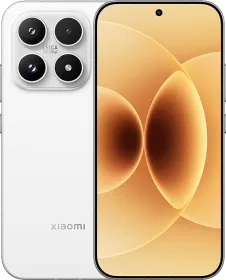
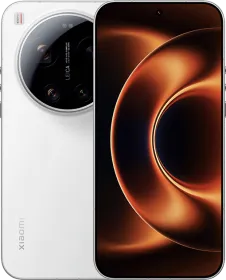
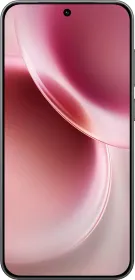
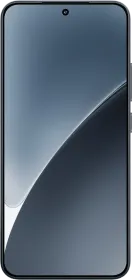
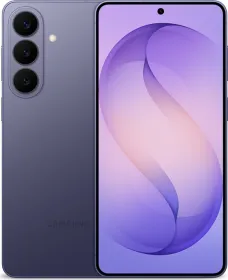
Xiaomi 17 vs. Vivo X300: Design
| Spec | Xiaomi 17 | Vivo X300 |
|---|---|---|
| Dimensions | 151.1 × 71.8 × 8.06 mm | 150.6 × 71.9 × 8.0 mm |
| Weight | 191 g | 190 g |
| Build (Front / Frame / Back) | Xiaomi Shield Glass / Aluminium / Glass | Reinforced Glass / Aluminium / Matte AG Glass |
| IP Rating | IP69 | IP68 + IP69 |
| Colours | Black, White, Ice Melting Blue, Snow Mountain Powder | Black, Blue, Purple, Pink, Red |
One gram. That’s the weight difference. 191 g versus 190 g — and if that’s your deciding factor, I genuinely cannot help you.
Dimensionally, these two are so close that spec-sheet comparisons become an act of self-parody; 151.1 mm tall against 150.6 mm, sub-8mm thickness on both. What actually matters is that neither phone requires you to dislocate a thumb reaching the top of the screen, which in 2026 puts them in a pretty exclusive club.

The back glass is where I’d actually steer someone. Vivo’s matte AG finish has this slightly tactile, almost grippy quality that makes the phone feel considered rather than manufactured — you notice it the first time you hold it without a case, and then you keep noticing it. Xiaomi’s rear glass? Smooth. Looks good in photos. My hands moved on.
Xiaomi drew the line at IP68. Vivo went and got IP69 certified too — the one that covers high-pressure jets, not just the “oops, dropped it in the bathroom sink” scenario most phones already handle.

Five colours on the Vivo — and that peach-toned Red has been making people do a double-take since the phone launched in October. The Pink divides opinion sharply; your college friend will love it, your boss will have questions.
Also Read: Galaxy S26 Ultra vs. Find X9 Pro: Which Rs. 1 Lakh Flagship Is Right For You?
Xiaomi 17 vs. Vivo X300: Display
| Spec | Xiaomi 17 | Vivo X300 |
|---|---|---|
| Size | 6.3 inches | 6.31 inches |
| Panel Type | LTPO AMOLED (CrystalRes OLED) | LTPO AMOLED |
| Resolution | 2656 × 1220 (460 ppi) | 2640 × 1216 (460 ppi) |
| Refresh Rate | 1–120 Hz adaptive | 1–120 Hz adaptive |
| Touch Sampling Rate | 300 Hz | 300 Hz |
| Peak Brightness | 3,500 nits | 4,500 nits |
| PWM Dimming | 2,160 Hz | 2,160 Hz |
| Colour Depth | 12-bit (68.7 billion colours) | 10-bit (1 billion colours) |
| Colour Gamut | DCI-P3 | DCI-P3 |
| HDR Support | HDR10+, HDR Vivid, Dolby Vision | HDR10+, HDR Vivid |
| Eye Care Certifications | TÜV Low Blue Light, TÜV Flicker Free, TÜV Circadian Friendly | 2160Hz PWM + DC Dimming |
On paper, these two panels look almost identical — same size, same pixel density, same adaptive refresh rate, same PWM frequency. Then you get to peak brightness and the Vivo quietly drops a 4,500 nit number while Xiaomi is still at 3,500.

That’s a thousand nits of difference, which is the kind of gap that sounds like a spec-sheet flex until you’re standing in direct afternoon sun trying to read a map in Connaught Place and suddenly it isn’t.
The Xiaomi fights back on colour depth — 12-bit against the X300’s 10-bit, meaning 68.7 billion colours versus one billion. Xiaomi also adds Dolby Vision support, which the X300 skips; stream anything on Netflix in HDR and you’ll notice, or you won’t, depending entirely on how much you’ve spent calibrating your expectations.

The honest verdict: the Vivo X300 wins outdoors, decisively. The Xiaomi 17 edges it indoors, especially for anyone doing long reading sessions or media consumption in the dark. Neither is a bad screen — one of them is just better at different times of day.
Also Read: Galaxy S26 vs. Find X9 vs. vivo X300: The 2026 Baseline Android Flagship Battle Intensifies
Xiaomi 17 vs. Vivo X300: Performance
| Spec | Xiaomi 17 | Vivo X300 |
|---|---|---|
| Chipset | Qualcomm Snapdragon 8 Elite Gen 5 | MediaTek Dimensity 9500 |
| Process Node | TSMC 3nm (N3P) | TSMC 3nm (N3P) |
| CPU Architecture | 2+6 (2× Oryon Prime @ 4.61 GHz + 6× Oryon Performance @ 3.63 GHz) | All Big Core (1× C1-Ultra @ 4.21 GHz + 3× C1-Premium @ 3.5 GHz + 4× C1-Pro @ 2.7 GHz) |
| GPU | Adreno 840 (up to 1.2 GHz) | ARM Mali-G1 Ultra MC12 |
| NPU | Qualcomm Hexagon NPU (37% faster vs. prev. gen) | MediaTek APU 990 (2× faster vs. prev. gen, 56% lower peak power) |
| RAM | 12GB / 16GB LPDDR5X | 12GB / 16GB LPDDR5X |
| Storage | UFS 4.1 | UFS 4.1 |
| Cooling | Xiaomi 3D IceLoop | Vapour Chamber |
Two different chips, two different philosophies — and the benchmarks actually reflect that, which doesn’t happen as often as it should.
CPU

Qualcomm’s approach to the Snapdragon 8 Elite Gen 5 is essentially: fewer cores, clock them harder, make them custom. The Oryon CPU architecture isn’t licensed from ARM; Qualcomm designed it themselves, which is either an impressive feat of engineering ambition or a very expensive way to prove a point, depending on how cynical you are.
Either way, it results in a Geekbench multi-core lead for the Xiaomi 17 — about 14% higher than the X300 in independent tests. Single-core, however, tells a different story; the Dimensity 9500 edges ahead there, running ARM’s new C1-Ultra core at a lower clock speed but somehow extracting more output per cycle. That’s MediaTek’s answer to the Qualcomm premium: ARM’s latest silicon, used efficiently.
GPU

The GPU matchup is where it gets interesting for gamers. Adreno 840 hits higher peak numbers on paper — 3DMark Wild Life Extreme puts Qualcomm clearly ahead in burst performance. Sustained performance is another matter entirely; thermal throttling on the Snapdragon 8 Elite Gen 5 is not subtle, with some stress tests showing the chip drop to around 25% stability after 20 rounds.
The Mali-G1 Ultra on the Dimensity 9500 is not as fast off the line but holds its numbers better over long sessions — which matters considerably more if you’re actually playing a game for an hour rather than running benchmarks to post on Reddit.
Also Read: Samsung Galaxy S26 Ultra vs. Galaxy S25 Ultra: Here’s Everything That’s New
NPU
On the NPU side: Qualcomm’s Hexagon is 37% faster than the previous generation, and the Dimensity 9500’s APU 990 is 2× faster than its own predecessor while consuming dramatically less power. Both figures are vendor-supplied, both should be treated accordingly, and neither will mean much to most users until the software actually catches up — which, as of early 2026, it mostly hasn’t.
The Xiaomi 17 has a stronger single-chip pedigree and better peak CPU headroom; the Vivo X300 sustains that performance more consistently without cooking itself. Decide what matters to you — the sprint or the marathon.
Xiaomi 17 vs. Vivo X300: Operating System
| Spec | Xiaomi 17 | Vivo X300 |
|---|---|---|
| OS (Out of Box) | Xiaomi HyperOS 3 (Android 16) | Vivo OriginOS 6 (Android 16) |
| Dynamic Notification Feature | HyperIsland (pill-shaped live activities hub) | Origin Island (contextual live activities hub) |
| AI Features | HyperAI — writing, transcription, speech recognition, AI search, dynamic wallpapers | AI writing, AI Captions (real-time transcription & translation), document editor with AI |
| Update Promise | 6 years of major OS updates + security patches (until ~2032) | 5 years of major OS updates + 7 years of security patches |
Both phones ship on Android 16 — that’s where the common ground ends and the personalities diverge.
HyperOS 3

HyperOS 3 on the Xiaomi 17 is the third iteration of an OS that started life as MIUI, which older Xiaomi users will remember with a very specific kind of affection: the way you remember a college hostel room — functional, occasionally chaotic, weirdly nostalgic. HyperOS 3 has genuinely cleaned that up.
Animations are fluid, the interface is polished, and HyperIsland — Xiaomi’s take on the live activities pill — works well in practice. Whether it was designed independently or with extensive inspiration from a certain Cupertino company is a conversation best left to someone else’s comments section.
OriginOS 6

OriginOS 6 on the Vivo X300 is the bigger story. For years, international Vivo buyers were stuck with Funtouch OS — software that had all the charm of a government website circa 2017.
OriginOS was always China-only; the X300 brings it globally for the first time, which means Indian buyers are finally getting the real Vivo software experience. It shows. The Liquid Glass design language, Origin Island, the Spring animation system — it feels like a different company built it, because in a meaningful sense, it was.
The AI features on both are functionally similar: writing tools, transcription, real-time translation, and document summarisation.
Also Read: iQOO 15R vs OnePlus 15R: Which Snapdragon 8 Gen 5 Phone Is Better For You?
Xiaomi 17 vs. Vivo X300: Cameras
| Spec | Xiaomi 17 | Vivo X300 |
|---|---|---|
| Camera Partnership | Leica (Summilux optics) | Zeiss (T* coating, APO certification) |
| Main Camera | 50MP OmniVision Light Fusion 950, 1/1.31″, f/1.67, OIS, 23mm | 200MP Samsung ISOCELL HPB, 1/1.4″, f/1.68, OIS, 23mm |
| Telephoto Camera | 50MP Samsung JN5, 1/2.75″, f/2.0, OIS, 60mm (3x equiv.) | 50MP Sony LYT-602, 1/1.95″, f/2.57, OIS, 70mm (3x equiv.) |
| Ultrawide Camera | 50MP OmniVision OV50M, f/2.4, 17mm, FOV 102° (no AF) | 50MP Samsung JN5, 1/2.76″, f/2.0, 15mm, AF |
| Front Camera | 50MP OmniVision OV50M, f/2.2, 21mm, AF | 50MP Samsung JN5, f/2.0, 24mm, AF |
| Max Video (Main) | 8K@30fps, 4K@60fps, Dolby Vision | 4K@120fps, 4K@60fps, Dolby Vision, 10-bit Log |
| Optical Zoom | 3x (60mm) | 3x (70mm) |
| Max Digital Zoom | 60x | 30x |
| Telephoto Macro | Yes (10cm min. focus distance) | Yes (14cm min. focus distance) |
| HDR Standards | HDR10+, Dolby Vision | HDR10+, Dolby Vision |
This is where the two phones diverge most sharply — not just in specs, but in philosophy.
Primary Sensor

Xiaomi went conventional: a 50MP main sensor with Leica Summilux optics and a 1/1.31″ Light Fusion 950 body, well-tuned and proven. Vivo took a different road — the X300’s main camera is a 200MP Samsung ISOCELL HPB on a larger 1/1.4″ sensor.
Shooting at 200MP is a bit like buying a professional DSLR and only ever using it to take pictures of your lunch — technically, you can, practically, you won’t. The mode earns its place for product shots, architecture, anything where you’ll crop hard in post. Day-to-day? Standard resolution within a week, just like everyone else.
The Leica-Zeiss question comes up every time these brands share a comparison. Leica colours run warm — skin tones come out flattering without effort, highlights feel intentional rather than blown. Zeiss wants the scene exactly as it was: sharp, neutral, accurate.
Telephoto

Telephoto is where each phone makes an interesting trade-off. Xiaomi’s 60mm with a 10cm minimum focus distance is genuinely versatile for macro work. Vivo’s 70mm Sony LYT-602 with Zeiss APO certification closes to 14cm — usable, but noticeably further. Neither breaks new ground at longer zoom ranges.
Ultrawide
The ultrawide is where Xiaomi takes a hit it didn’t need to. No autofocus in 2025 is frustrating — anything closer than arm’s length and you’re just hoping. Autofocus on an ultrawide is a 2021 expectation, not a 2025 differentiator.
Video
On video: the X300’s 4K@120fps with 10-bit Log is genuinely useful if you edit — Log footage holds up in post in a way standard colour profiles simply don’t. Xiaomi counters with 8K@30fps, the smartphone spec equivalent of a car manufacturer listing its top speed. Technically true. Practically, almost nobody needs it.
Also Read: Redmi Note 15 Pro+ vs. realme 16 Pro+: Which Mid-Range Should I Buy In 2026?
Xiaomi 17 vs. Vivo X300: Battery Life & Charging Time
| Spec | Xiaomi 17 | Vivo X300 |
|---|---|---|
| Capacity (India/Global) | 6,330 mAh (Si/C) | 6,040 mAh (Si/C) |
| Wired Charging | 100W HyperCharge | 90W FlashCharge |
| Wireless Charging | 50W | 40W |
| Reverse Wired Charging | 22.5W | Yes (speed unspecified) |
| Reverse Wireless Charging | 22.5W | Yes |
| Charger in Box (India) | Not included (sold separately) | 90W charger included |
| 0–100% (wired) | ~46 minutes | ~48 minutes |
The Xiaomi 17’s 21-hour active use score is exceptional for a compact phone — it outperformed both the larger, pricier 17 Ultra and the 17 Pro Max in GSMArena’s testing, which is the kind of result that makes you do a double-take. Silicon-carbon chemistry on both phones is doing real work; this capacity in a sub-8mm body wasn’t possible two years ago.

The X300’s 17.5-hour score is still a comfortable full day for most users. The gap matters in a benchmark more than in daily life — unless you game heavily, stream on a commute, and leave Bluetooth running all day, you’ll reach your charger fine on either phone.
Here’s the thing about charging: Xiaomi technically wins — 100W wired, 50W wireless, numbers that look great on a spec sheet. Open the box in India, though, and the charger isn’t there. The adapter that actually unlocks those speeds is sold separately.
Vivo, meanwhile, drops a 90W FlashCharge brick straight into the X300’s box.
Also Read: iPhone 16 vs. Reno 15 Pro Mini: Which Is The Better Compact Flagship Under Rs. 60,000?
Xiaomi 17 vs. Vivo X300: Pricing & Verdict
Xiaomi 17

| Pros | Cons |
| Exceptional battery life (21+ hours active use) | No charger included in the box |
| Leica-tuned camera with excellent main and telephoto output | Ultrawide lacks autofocus |
| Snapdragon 8 Elite Gen 5 — stronger CPU multi-core performance | Smaller sensor than the X300’s main camera |
| 6 years of major OS updates | Adreno 840 throttles under sustained load |
| 8K video recording | HyperOS still carries MIUI-era quirks |
| 12-bit colour depth on display | No 4K@120fps or 10-bit Log |
| 60x digital zoom | 100W charging requires a proprietary adapter sold separately |
Buy the Xiaomi 17 if you want a compact phone that genuinely lasts all day and then some, with Leica-tuned cameras that rarely disappoint and a chipset that leads the Android pack; it’s the better all-rounder for most Indian buyers, provided you budget for the charger separately.
vivo X300

- vivo X300 (12GB + 256GB): Rs. 75,998
- vivo X300 (12GB + 512GB): Rs. 81,998
- vivo X300 (16GB + 512GB): Rs. 85,999
| Pros | Cons |
| 4,500 nits peak brightness — best-in-class outdoor visibility | Only 5 years of major OS updates (vs. Xiaomi’s 6) |
| 200MP main sensor with larger 1/1.4″ sensor body | Dimensity 9500 throttles less but peaks lower than Snapdragon |
| Zeiss APO-certified telephoto with strong low-light output | 40W wireless charging vs. Xiaomi’s 50W |
| 4K@120fps + 10-bit Log video recording | Smaller battery capacity (6,040 mAh vs. 6,330 mAh) |
| 90W charger included in the box | Circular Zeiss camera island — polarising design |
| IP68 + IP69 dual water resistance rating | Zeiss colour science runs cooler; it may not suit all tastes |
| OriginOS 6 — cleaner, more polished UI than predecessor |
Buy the vivo X300 if outdoor visibility, video recording flexibility, and a cleaner out-of-the-box software experience matter more to you than raw battery endurance; photographers who edit footage and users coming from Funtouch OS will feel the upgrade most sharply.

You can follow Smartprix on Twitter, Facebook, Instagram, and Google News. Visit smartprix.com for the latest tech and auto news, reviews, and guides.







How much is this phone in Nigeria currency