


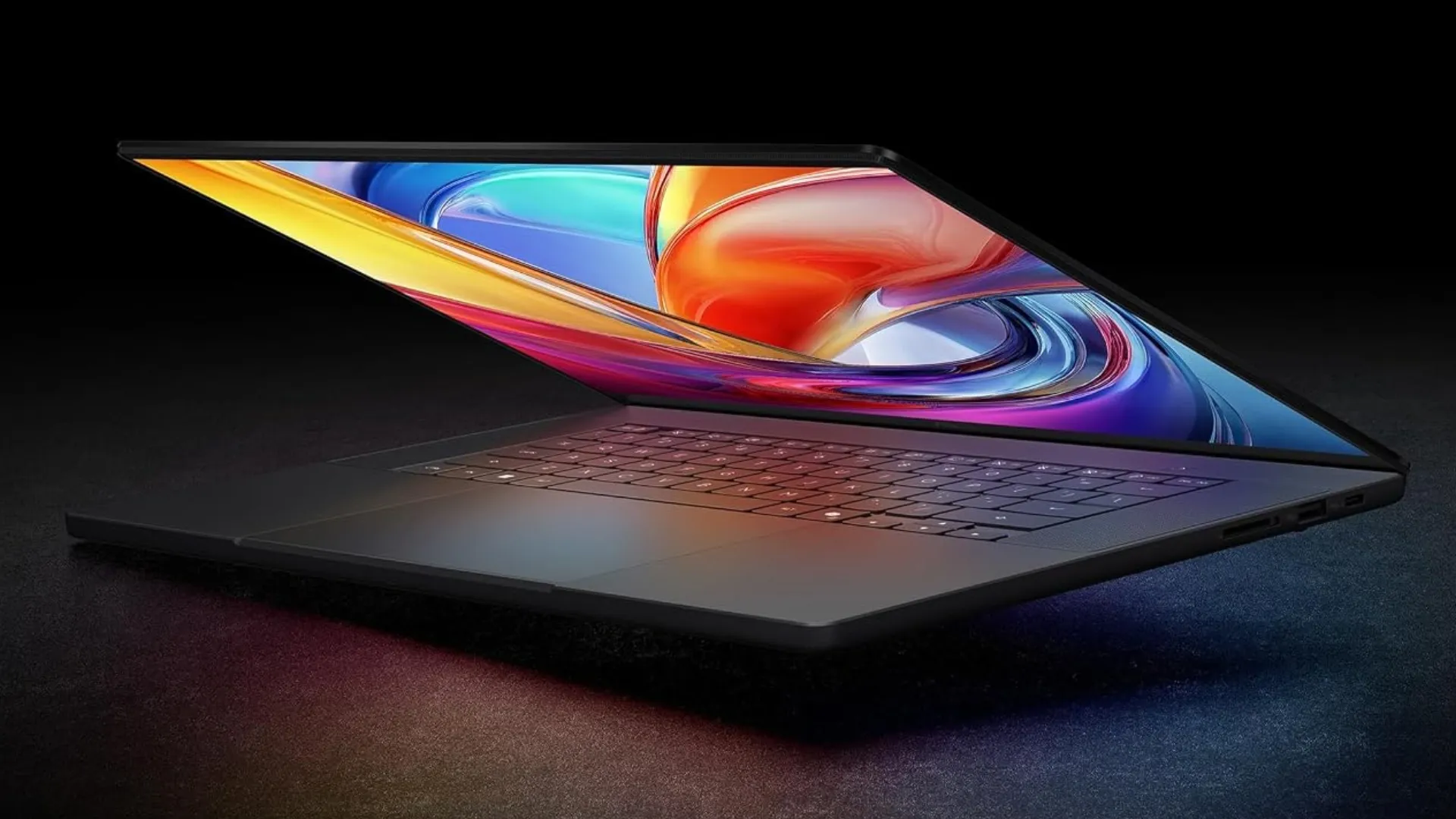
TL; DR
- Asus ProArt P14 costs ₹3,29,990; P16 costs ₹4,99,990 or ₹6,49,990.
- Both pair RTX Spark N1X with 120Hz OLED touchscreens; P16 scales to 128GB of memory.
- Launch offers run until 30 November; the keyboard goes on sale November 14, 2026.
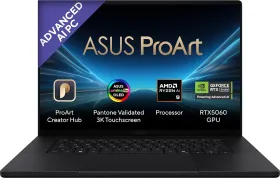
Asus India has launched a fresh pair of creator laptops that are built around a new Nvidia platform. I’m talking about the ProArt P14 and the ProArt P16. The smaller version starts with 24GB of RAM and 1TB of storage, which tells us how seriously Asus is taking performance (or how hard the company is being hit by the ongoing component crisis).
Also Read: SanDisk’s Extreme Portable SSD Costs ₹29,599 In India And Reads At Up to 2,000MB/s

Asus ProArt P14 & ProArt P16: Pricing & Availability
Remember the new Nvidia platform I mentioned about? Both the ProArt P14 and ProArt P16 are based on Nvidia’s new RTX Spark N1X platform. I’d say these are the first to debut with the N1X platform, but that title goes to Lenovo’s Yoga Pro 9n Gen 11 laptops, which launched in late October 2026.
Anyway, the Asus ProArt laptops are available starting today. You can get them via the company’s Exclusive Stores, Reliance Digital, Croma, Flipkart, Amazon, and of course, the online store.

Also Read: Google Dreambeans Now Available in India: Daily Stories Based on Your Interests
What’s interesting, or rather the new norm, is the pricing. The P14 with 24GB of memory costs ₹3,29,990, the P16 with 64GB costs ₹4,99,990; the P16 with 128GB goes all the way up to ₹6,49,990. Some versions are also listed as “available soon,” and they might go on sale in the coming weeks.
| Model | Configuration | Color | Price |
| ProArt P14 | 24GB, 1TB SSD | Nano Black | ₹3,29,990 |
| ProArt P14 | 24GB, 1TB SSD | Neo White | Available soon |
| ProArt P16 | 48GB, 1TB SSD | Nano Black | Available soon |
| ProArt P16 | 64GB, 1TB SSD | Nano Black | ₹4,99,990 |
| ProArt P16 | 128GB, 1TB SSD | Nano Black | ₹6,49,990 |
| ProArt Mouse MD301 | 8,000 DPI, six buttons | Black Aerolite | ₹8,499 |
| ProArt Keyboard KD300 | 65% layout, optical switches | Black Aerolite | ₹14,999 |

Also Read: Vivo X500 Ultra Camera Specs Leak Again With A Single 200MP Telephoto Camera
Now for the math. The 64GB P16 costs ₹1,70,000 more than the P14, and the 128GB P16 adds another ₹1,50,000, so the top model sits ₹3,20,000 above the entry laptop. Divide each price by its memory, and the picture shifts: roughly ₹13,750 per gigabyte for the P14, ₹7,812 for the 64GB P16, and ₹5,078 for the 128GB P16.
| Spec | ProArt P14 | ProArt P16 |
| Display | 14-inch 3K OLED touch, 120Hz | 16-inch 4K OLED touch, 120Hz |
| Resolution and density (my math) | 2,880 x 1,800, about 243 PPI | 3,840 x 2,400, about 283 PPI |
| CPU and GPU | 18-core, 5,120-core | 20-core, 6,144-core |
| Memory | 24GB unified | 48GB, 64GB or 128GB unified |
| Storage | 1TB PCIe 4.0 SSD, one M.2 slot | 1TB PCIe 4.0 SSD, two M.2 slots |
| Ports (overseas listings) | 3x USB4, USB-A, HDMI 2.1, 3.5mm, UHS-II SD | 3x USB4, USB-A, HDMI 2.1, 3.5mm, SD Express 7.0 |
| Battery and charger | 90Wh, 140W USB-C | 99.9Wh, 140W USB-C |
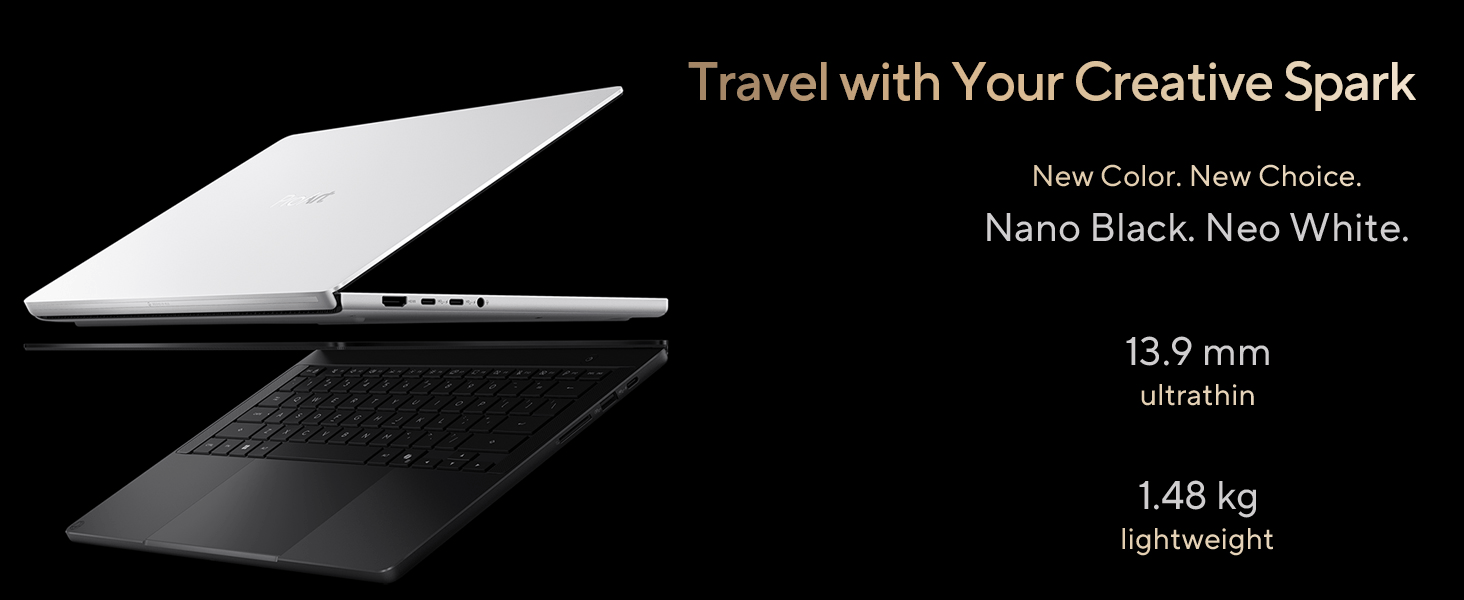
| Weight | About 1.48kg | About 1.77kg |
| Size (overseas listings) | 31.07 x 21.89cm, 1.39 to 1.59cm thick | 35.41 x 24.30cm, 1.29 to 1.59cm thick |
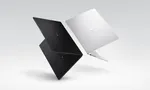
| Colors | Nano Black, Neo White | Nano Black |
ProArt P14 vs. ProArt P16: What’s The Difference?
Design
The P16 is also 0.29kg heavier and has a footprint about 27% larger, which matters if you carry a camera. On the plus side, the P16 adds a faster SD Express card reader and a second M.2 storage slot, while the P14 sticks with a UHS-II reader and one slot.

The P16 is also 290 grams heavier and has a footprint about 27% larger. That matters if your bag carries a camera, a tablet, and a couple of books, too.
On the plus side, the P16 adds the faster SD Express card reader and a second M.2 storage slot, whereas the P14 makes do with a UHS-II reader and one slot.
Both offer three USB 4 ports (40Gbps), a USB-A port, HDMI 2.1, and a headphone jack.
Also Read: SanDisk’s Extreme Portable SSD Costs ₹29,599 In India And Reads At Up to 2,000MB/s

Display
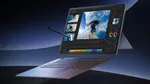
Asus says the P16 has a 16-inch 4K panel and the P14 a 14-inch 3K panel. That’s a size difference right out of the gate. Both of them use OLED touchscreens clocked at 120Hz with Pantone validation.
Asus’s tech specs pages list the resolution as 3,840 x 2,400 and 2,880 x 1,800 pixels. So, the P16 packs about 78% more pixels at roughly 283 ppi. Not only does the bigger display offer more screen real estate, but it should also provide a better visual experience for minute designs.
Also Read: The New Dell 14S Wants to Make Windows Laptops Colourful Again, Starting at ₹79,990
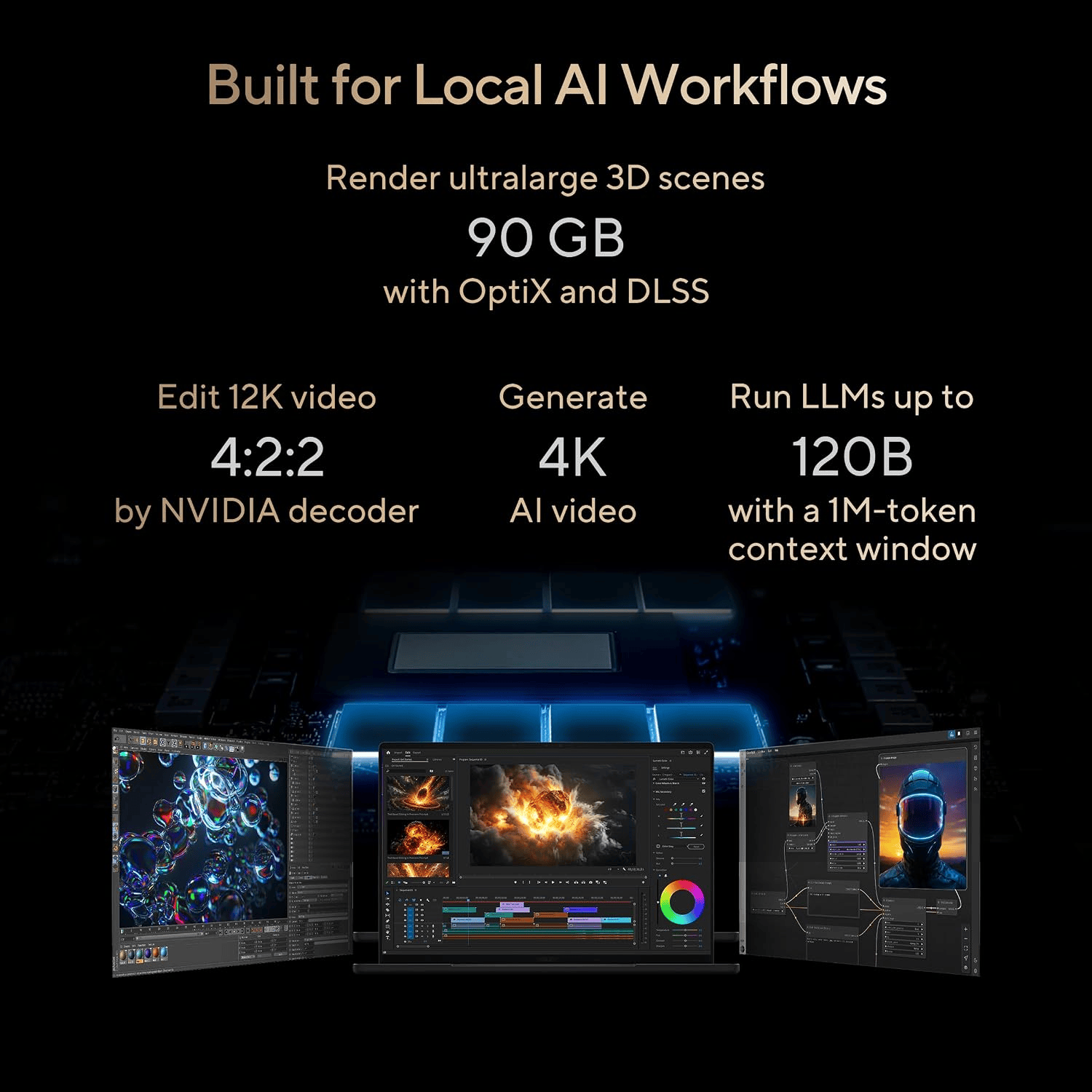
Another major difference hiding in the spec sheet is the screen’s brightness. The larger 16-inch variant is rated to achieve 700 nits of typical brightness and 1,600 nits of peak HDR brightness. The smaller one manages 500 nits and 1,100 nits, respectively.
Chipset
Next comes everything around the chip. The P16’s 20 CPU cores and 6,144 GPU cores are 11% and 20% more than the P14’s 18 and 5,120 (my math), but one benchmark database shows the larger GPU ahead by a marginal extent in most graphics tests. So extra cores do not buy proportional speed.
Also Read: DLSS 5 is coming to Hogwarts Legacy, War Thunder and Where Winds Meet this month

However, they can help with parallel tasks like running and compiling code, while more GPU cores help with graphics-heavy work, like 3D rendering, gaming, and video editing. The difference, in this case, might not be enough to splurge more money on the better chip, except if you want the bigger screen version.
While software doesn’t separate them, since both include ProArt Creator Hub and support 1,000-plus AI-accelerated apps such as Adobe, Blender, and ComfyUI, memory does.
Also Read: ASUS Diwali Sale 2026: The Vivobook, Zenbook and TUF Laptop Deals Actually Worth Buying

Nvidia pairs the better chip (on the P16) with up to 128GB of LPDDR5X. It supports AI models of up to 120 billion parameters, and provides up to one petaflop of FP4 compute. At four bits a parameter, 120 billion weights occupy about 60GB before Windows. So only the top-end 128GB memory variant of the P16 matches that headline.
Meanwhile, the 24GB P14 stays with smaller models. That’s because a 30-billion-parameter AI model needs roughly 15GB alone, leaving the rest for the operating system and other temporary tasks.

Software
Then there is the catch every Windows-on-Arm laptop carries. Both run Windows 11 on Arm. So x86 apps rely on emulation, which might mean some apps don’t work, including some games. This isn’t just about Asus laptops; it applies to other Windows-on-Arm laptops as well.
So, I’d advise you to check whether the apps you use daily or plan to use are supported.
Verdict
The P14 suits travelers who want OLED at 1.48kg for ₹3,29,990, the 64GB P16 suits editors who crave the bigger screen, and the 128GB P16 suits AI developers who will actually use that memory. Everyone else should wait for tests of the exact India configurations.
| If you are… | Pick | Why |
| A traveling photographer or editor | ProArt P14 (24GB) | Lightest at 1.48kg, same USB4 ports, lowest price |
| A colorist or video editor wanting the biggest screen | ProArt P16 (confirm a 4K panel) | 4K, about 283 PPI, larger battery |
| A creator running mid-size local AI models | ProArt P16 64GB | Room for tens of billions of parameters |
| A developer chasing NVIDIA’s 120-billion claim | ProArt P16 128GB | Only model that holds about 60GB of weights |
| Reliant on x86-only plug-ins or anti-cheat games | Wait and test | Windows on ARM compatibility is still uneven |
Also Read: Samsung Galaxy Tab S12 Series vs iPad: Which Premium Tablet Should You Buy in India in 2026?

You can follow Smartprix on Twitter, Facebook, Instagram, and Google News. Visit smartprix.com for the latest tech and auto news, reviews, and guides.