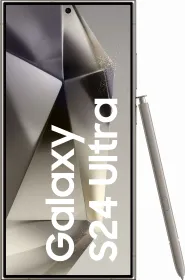


Galaxy S26 Ultra vs. vivo X300 Pro: Table of contents
The Galaxy S26 Ultra and vivo X300 Pro don’t exactly come from the same world. One is Samsung’s most premium flagship, carrying years of brand recognition and a loyal following. The other is vivo quietly building one of the most spec-heavy phones of the year and hoping you notice. Both are expensive, both are powerful, and both make a pretty strong case for themselves depending on what you actually care about in a phone.
In this article, we’ve tried to break down the different aspects of both phones so you can cut through the spec-sheet noise and figure out which one actually makes sense for you — because at the end of the day, the best phone isn’t the one with the biggest numbers, it’s the one that fits how you actually use it.
Also Read: iPhone 16 vs. Reno 15 Pro Mini: Which Is The Better Compact Flagship Under Rs. 60,000?
Galaxy S26 Ultra vs. vivo X300 Pro: Design
| Galaxy S26 Ultra | vivo X300 Pro | |
| Dimensions | 163.6 x 78.1 x 7.9 mm | 161.2 x 75.5 x 8 mm |
| Weight | 214 grams | 226 grams |
| Material | Glass / Titanium frame / Glass | Glass / Aluminum / Glass |
| Display Protection | Corning Gorilla Armor 2 | |
| IP Rating | IP68 (1.5m for 30 mins) | IP68 / IP69 (1.5m for 30 mins) |
| Colors | Black, White, Cobalt Violet, Sky Blue, Silver, Pink Gold | Phantom Black, Mist Blue, Dune Brown, Cloud White |
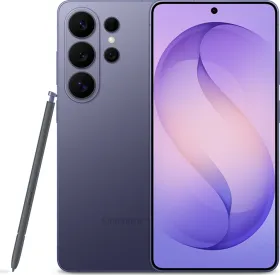
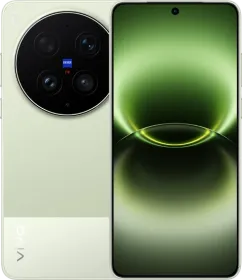
The S26 Ultra is the taller and wider one, and somehow still manages to be slimmer despite that. The vivo X300 Pro is a little more compact overall, but then pulls a weird move by actually being heavier. Like, how? It’s smaller, but you’re carrying an extra 12 grams. Not a dealbreaker, but just… odd.

Material-wise, Samsung clearly decided to go the premium route — titanium frame, glass front and back, the whole deal. It genuinely feels like a conscious “we want this to feel expensive” decision. Vivo went with aluminum instead, which honestly isn’t bad at all; it just doesn’t carry that same “I paid a lot for this” energy when you hold it.
Water resistance is where Vivo actually one-ups Samsung, though. Both handle the usual splashes and “oops, it fell in the sink” moments just fine with IP68. But vivo also has IP69, which means it can survive high-pressure water being blasted directly at it. Samsung’s sitting at IP68 thinking that’s enough — and for most people it probably is — but vivo just went the extra mile there.

Colors are really where Samsung goes all out. Six options, including some genuinely fun ones like Cobalt Violet and Pink Gold. Vivo’s four are clean and minimal — Phantom Black, Mist Blue, Dune Brown, Cloud White — nice, but might not feel as expressive.
Also Read: Reno 15 Pro Mini vs. OnePlus 13s: Which Compact Premium Phone Should You Buy?
Galaxy S26 Ultra vs. vivo X300 Pro: Display
| Galaxy S26 Ultra | vivo X300 Pro | |
| Display Size | 6.9-inch | 6.78-inch |
| Aspect Ratio | 19.5:9 | 20:9 |
| Technology | LTPO AMOLED | LTPO AMOLED |
| Resolution | 3120 x 1440 pixels (498 ppi) | 2800 x 1260 pixels (452 ppi) |
| Refresh Rate | 120Hz | 120Hz |
| Peak Brightness | 2600 nits | 4500 nits peak |
| Dimming | 2160 Hz PWM dimming | |
| HDR Formats | HDR10+ | Dolby Vision, HDR10+ |
| Colors | 1B | 1B |
The S26 Ultra has a 6.9-inch screen, vivo’s sitting at 6.78-inch. That 0.12-inch gap? You’re probably not going to notice it in real life unless you put them side by side.
Samsung’s pushing 3120 x 1440 at 498 ppi. Vivo’s at 2800 x 1260 at 452 ppi. Both look great in everyday use, but if you’re the kind of person who notices individual pixels on a screen, Samsung’s the one for you.

While Samsung limits its panel to 2,600 nits of peak brightness, vivo X300 Pro reaches a higher 4,500 nits of local peak brightness (the HBM numbers should be slightly low). Anyway, both phones should remain perfectly visible under direct sunlight.
Vivo has 2160Hz PWM dimming, which basically means the screen flickers so fast your eyes can’t detect it — significantly reducing eye strain during long usage. The phone also supports 300Hz touch sampling rate while gaming.

Look, it sounds like a gimmick, but the S26 Ultra has a built-in Privacy Display that basically blocks anyone who isn’t looking at your screen dead-on. Your nosy coworker? Gone. That person leaning in on the subway? Nothing.
And you don’t really get it until the day you’re checking your bank account in public or typing a password, and you just don’t have to awkwardly shield your screen with your hand anymore. That’s when it clicks.
Also Read: realme 16 Pro+ vs. vivo V60: Which Snapdragon 7 Gen 4 Phone Wins For You?
Galaxy S26 Ultra vs. vivo X300 Pro: Processor
| Galaxy S26 Ultra | vivo X300 Pro | |
| Chipset | Snapdragon 8 Elite Gen 5 | Dimensity 9500 |
| Manufacturing Process | 3 nm | 3 nm |
| Core Configuration | Octa-core: 2 x 4.74 GHz Oryon V3 Phoenix L + 6 x 3.62 GHz Oryon V3 Phoenix M) | Octa-core: 1 x 4.21 GHz C1-Ultra + 3 x 3.5 GHz C1-Premium + 4 x 2.7 GHz C1-Pro |
| GPU | Adreno 840 | Arm G1-Ultra |
| Memory / Storage | LPDDR5X + UFS 4.1 | LPDDR5X + UFS 4.1 |
| Connectivity | Wi-Fi 7, Bluetooth v5.4 | Wi-Fi 7, Bluetooth v5.4 |
Samsung didn’t just slap a stock Snapdragon 8 Elite Gen 5 in the S26 Ultra — they went back to Qualcomm and asked for more. The result is a custom “for Galaxy” version with prime cores pushed to 4.74GHz instead of the standard 4.61GHz. Small bump, but it says a lot.
Architecture-wise, these two are different animals entirely. Samsung runs Qualcomm’s own Oryon V3 cores, vivo goes with ARM’s brand new C1 architecture. Same generation, completely different DNA.

The S26 Ultra scored 3,648 single-core and 10,898 multi-core in Geekbench 6. The X300 Pro? 3,085 and 8,021 from our own review scores. However, we’ll wait and perform tests on a unit before commenting more on the performance.
GPU-wise, Samsung’s Adreno 840 brings 23% better graphics and 20% better efficiency over the last gen. Vivo’s ARM G1-Ultra claims a 119% improvement in ray tracing, which sounds massive — until real gaming comes into play.
My colleague who reviewed the X300 Pro said it best: “BGMI runs at 120 FPS with steady gameplay, and the device stays around 42 to 43°C after longer sessions. It gets a little warmer than usual, although it never crosses into uncomfortable territory.” Handles gaming fine, just don’t expect it to run cold the whole time.
Also Read: Xiaomi 17 Ultra vs. vivo X300 Pro: Which Camera-Centric Flagship Actually Makes Sense For You?
Galaxy S26 Ultra vs. vivo X300 Pro: Software
| Galaxy S26 Ultra | vivo X300 Pro | |
| Operating System (At Release) | Android 16 | Android 16 |
| User Interface | One UI 8.5 | OriginOS 6 |
| Software Update Policy | 7Y OS + 7Y SS | 5Y OS + 7Y SS |
Both phones launch on Android 16, same OS, no arguments there. But the moment you get past that is when you start coming across the differences.
Samsung’s on One UI 8.5, vivo’s running OriginOS 6. One UI has been refined for years, and honestly, at this point, it’s one of the most polished Android skins out there — customizable, feature-packed, and familiar to anyone who’s used a Samsung in the last few years. OriginOS 6 is clean and has its own charm, but it’s genuinely a different world, especially if you’re coming from a Samsung.
One UI 8.5 with Seven Years Of OS Updates


Samsung promises seven years of OS updates and seven years of security patches. Vivo gives you five years of OS updates and seven years of security patches. That two-year gap in OS updates is actually a big deal if you keep your phone for a long time.
This is where Samsung really pulls ahead on the software side. One UI 8.5 isn’t just a routine update — it’s basically Samsung’s biggest AI push yet. The user interface includes EdgeFusion instant on-device image generation, Perplexity integration across the Samsung apps, AI Notification Summaries, and Now Bar upgrades.
OriginOS 6 with Five Years Of OS Updates

Vivo’s been quiet about AI compared to Samsung, but there’s more going on than you’d think. The camera gets AI Visual with seasonal and themed filters — spring, summer, cyber, oil blend, you name it. They’re cloud-processed, so not instant, but the results are genuinely good.
On the productivity side, there’s an AI writing tool for proofreading and summarization, plus live AI Captions for real-time speech-to-text and translation at the system level — no third-party app needed. Origin Island handles live updates around the front camera, music, deliveries, scores — think Dynamic Island but vivo’s version.
Galaxy S26 Ultra vs. vivo X300 Pro: Cameras
| Galaxy S26 Ultra | vivo X300 Pro | |
| Primary Camera | 200MP (f/1.4, 1/1.3″, OIS) | 50MP (f/1.6, 1/1.28″, OIS) |
| Video Resolution | 8K@24/30fps, 4K@30/60/120fps, 1080p@30/60/120/240fps | 8K@30fps, 4K@30/60/120fps, 1080p@30/60/120/240fp |
| Telephoto Camera (1) | 10MP (1/3.94″, OIS); 3x optical zoom | 200MP (f/2.7, 1/1.4″, OIS); 3.7x optical zoom, macro 2.7:1 |
| Telephoto Camera (2) | 50MP (f/2.8, 1/2.52″, OIS); 5x optical zoom | – |
| Ultrawide Camera | 50MP (f/1.9, 1/2.5″, 120°, AF) | 50MP (f/2.0, 1/2.76″, 119˚, AF) |
| Selfie Camera | 12MP (f/2.2, 1/3.2″, PDAF) | 50MP (f/2.0, 1/2.76″, AF) |
| Video Resolution | 4K@30/60fps | 4K@30/60fps |
Samsung’s main shooter is a 200MP beast at f/1.4 with a 1/1.3″ sensor. Vivo’s primary is 50MP at f/1.6. On paper, Samsung wins the megapixel war by a mile — but here’s the thing, vivo’s 50MP sensor is actually slightly larger at 1/1.28″. Samsung’s key upgrade this year is the wider f/1.4 aperture on the main camera, up from f/1.7 on the S25 Ultra.

Samsung runs a dual-telephoto setup — a 10MP 3x and a 50MP 5x periscope. Vivo goes in a completely different direction with a single 200MP telephoto at 3.7x zoom. Yes, 200MP on a telephoto. That’s not a typo.
Samsung’s 10MP 3x telephoto has actually been criticized as far inferior to the dedicated periscope lenses used by rivals like the vivo X300 Pro. That said, Samsung has the range advantage — 5x optical with a periscope gets you further before things fall apart, and Samsung’s 100x Space Zoom has been its signature trick for years now.
Both are 50MP with autofocus. Samsung’s ultrawide has a slightly larger sensor at 1/2.5″ vs vivo’s 1/2.76″, and a marginally wider 120° FOV vs vivo’s 119°. Honestly, for most people, this comparison ends in a draw.

Vivo puts a 50MP f/2.0 selfie camera with a 1/2.76″ sensor up front. Samsung gives you a 12MP f/2.2 with a tiny 1/3.2″ sensor.
Samsung wins on zoom range, low-light versatility, and overall camera system depth. Vivo punches hard with that bonkers 200MP telephoto and a far superior selfie camera. If you zoom a lot and shoot everything — Samsung. If you’re a portrait and detail person who loves crisp zoomed stills without going beyond 4-5x — vivo’s 200MP telephoto will genuinely surprise you.
Also Read: Galaxy Z TriFold vs. Huawei Mate XTs Ultimate: Battle Of Two Tri-Foldable Smartphones
Galaxy S26 Ultra vs. vivo X300 Pro: Battery
| Galaxy S26 Ultra | vivo X300 Pro | |
| Battery Capacity | 5,000 mAh | 6,510 Si/C mAh |
| Wired Charging Speed | 60W | 90W |
| Wireless Charging Speed | 25W | 40W |
Samsung’s sticking with 5,000mAh — same as the S25 Ultra, same as the S24 Ultra. Vivo, meanwhile, shows up with a 6,510mAh Silicon-Carbon battery, which isn’t just bigger, it’s a fundamentally different type of cell that packs more energy into less space. Real-world endurance on the X300 Pro ranges from 6 to 8 hours of screen-on time, depending on usage — comfortably a full day for most people.

Charging is where vivo pulls ahead again. 90W wired, 40W wireless — done. Samsung’s bumping up to 60W wired this year, up from 45W on the S25 Ultra, which sounds like progress until you realize their own internal tests show 75% in 30 minutes. For a 60W charger in 2025, that’s fine, I guess.
Wireless goes from 15W to 25W, which is a more meaningful jump, but vivo’s already sitting at 40W wireless, so Samsung’s still playing catch-up.
Galaxy S26 Ultra vs. vivo X300 Pro: Price & Verdict
Galaxy S26 Ultra Price

- Galaxy S26 Ultra (12GB + 256GB): Rs. 1,39,999
- Galaxy S26 Ultra (12GB + 512GB): Rs. 1,59,999
- Galaxy S26 Ultra (16GB + 1TB): Rs. 1,89,999
Samsung’s formula with the S26 Ultra is pretty simple — pack in everything, make it feel expensive, and mostly deliver. The titanium frame backs that up, the Privacy Display is one of those genuinely useful features you only appreciate the day you actually need it, and the camera system is about as versatile as it gets on a smartphone right now. Seven years of updates is Samsung basically promising this phone outlives your next two upgrade cycles.
The frustrating bits are hard to ignore, though. Same 5,000mAh battery for the third year running, and 60W charging in 2025 at this price point just feels like Samsung knows you’ll buy it anyway.
- Buy it if: You want the best zoom range available, a software ecosystem that actually keeps getting better, a titanium build that feels the part, and you use the S Pen.
- Skip it if: Charging speed and battery capacity matter to you — because at this price, they really should’ve done better there.
vivo X300 Pro Price

Vivo swung hard with the X300 Pro and connected more than most people expected. The 6,510mAh Silicon-Carbon battery paired with 90W charging is genuinely class-leading, the 200MP telephoto is one of the boldest camera decisions any brand has made in recent memory, and that 4,500 nit display with IP69 just shows vivo wasn’t cutting corners. The selfie camera alone makes Samsung’s front shooter look embarrassing for a phone at this price.
Where it stumbles — OriginOS 6 is decent but nowhere near as polished as One UI, the global version quietly loses AI features the Chinese variant gets, and sustained gaming under pressure causes noticeable throttling despite the impressive specs on paper.
- Buy it if: Battery life, charging speed, a bonkers telephoto camera, and raw display brightness are what you’re after.
- Skip it if: Long-term software support, a deeper ecosystem, and consistent, sustained performance matter more to you than raw hardware numbers.

You can follow Smartprix on Twitter, Facebook, Instagram, and Google News. Visit smartprix.com for the latest tech and auto news, reviews, and guides.