

Galaxy S26 vs. Find X9 vs. vivo X300: Table of contents
On paper, the Galaxy S26, Find X9, and vivo X300 all look like they belong in the same premium bracket — high refresh rate AMOLED displays, top-tier chipsets, and serious camera hardware. But once you move past the spec sheet headlines, the differences become clearer.
Samsung leans into refinement and long-term support. OPPO pushes battery size and charging speed to extremes. vivo doubles down on resolution and bold hardware choices. If you’re trying to figure out which one actually fits your daily routine — not just which one sounds impressive — this comparison breaks it down where it really counts.
Also Read: Galaxy S26 Ultra vs. vivo X300 Pro: The Android Flagship Battle Gets Fierce
Galaxy S26 vs. Find X9 vs. vivo X300: Design
| Galaxy S26 | Find X9 | vivo V300 | |
| Dimensions | 149.6 x 71.7 x 7.2 mm | 157 x 73.9 x 8 mm | 150.6 x 71.9 x 8 mm |
| Weight | 167 grams | 203 grams | 190 grams |
| Material | Armor 2 Glass / Aluminum / Victus 2 Glass | Gorilla Glass 7i / Aluminum / Glass | Glass / Aluminum / Glass |
| IP Rating | IP68 (up to 1.5m for 30 min) | IP68 / IP69 (up to 1.5m for 30 min) | IP68 / IP69 (up to 1.5m for 30 min) |
| Colors | White, Blue, Black, Purple | Space Black, Titanium Grey, Velvet Red, White | Phantom Black, Mist Blue, Summit Red, Iris Purple, Halo Pink |
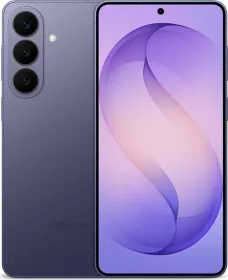
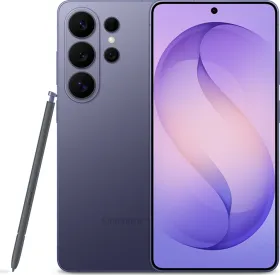
Galaxy S26 is the smallest and lightest at 167 grams and 7.2mm thin — genuinely compact in a world where phones keep getting bigger and heavier. It’s lighter than an iPhone 17, which isn’t something Samsung gets to say very often. Find X9 is the tallest and heaviest of the three at 203 grams and 8mm; you’ll feel that after a long day in your pocket. vivo X300 sits in the middle at 190 grams, also 8mm thick.

Materials are where Samsung excels, unlike the other two. Armor 2 Glass up front is anti-reflective — it handles outdoor glare in a way standard Gorilla Glass simply doesn’t, and neither OPPO nor vivo has anything equivalent. The back is Gorilla Glass Victus 2 with an aluminum frame. OPPO runs Gorilla Glass 7i front and back, vivo does glass-aluminum-glass without specifying the grade.
Water resistance goes to OPPO and vivo — both carry IP68 and IP69, meaning high-pressure jets aren’t a problem. Samsung stops at IP68. Fine for everyday life, just not as thorough.

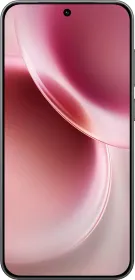
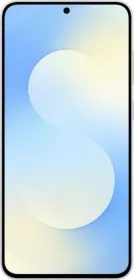
Colors is where vivo quietly wins — five options, including Halo Pink, which takes some confidence to put on a flagship and honestly works. OPPO’s Velvet Red and vivo’s Summit Red are both the kind of colors that make strangers ask what phone you’re holding. Samsung’s four options — White, Blue, Black, Purple — are safe and clean but not exactly memorable.
The Galaxy S26 is the most pocketable of the three by a real margin. If size and weight genuinely factor into your daily comfort with a phone, Samsung’s the one that disappears into your routine quickest.

Also Read: iQOO 15R vs OnePlus 15R: Which Snapdragon 8 Gen 5 Phone Is Better For You?
Galaxy S26 vs. Find X9 vs. vivo X300: Display
| Galaxy S26 | Find X9 | vivo X300 | |
| Display Size | 6.3-inches | 6.59-inches | 6.31-inches |
| Aspect Ratio | 19.5:9 | 19.5:9 | |
| Technology | LTPO AMOLED | LPTS AMOLED | LTPO AMOLED |
| Resolution | 2340 x 1080 pixels (409 ppi) | 2760 x 1256 pixels (460 ppi) | 2640 x 1216 pixels (460 ppi) |
| Refresh Rate | 1-120Hz | Up to 120Hz | 1-120Hz |
| Peak Brightness | 2600 nits | 3600 nits | 4500 nits |
| Dimming | 3840Hz PWM | 2160Hz PWM | |
| HDR Formats | HDR10+ | Dolby Vision, HDR10+ | HDR10+ |
| Colors | 1B | 1B | 1B |
All three are AMOLED, all three do 120Hz, all three hit a billion colors — the basics are identical, so let’s get to where they actually differ.

Size-wise, Find X9 is the largest at 6.59 inches, Galaxy S26 and vivo X300 are close at 6.3 and 6.31 inches, respectively. Samsung sits at 409 ppi, while both OPPO and vivo hit 460 ppi. That gap is subtle in everyday scrolling but genuinely noticeable when you’re reading small text or looking at detailed photos.
One technical detail worth flagging — Find X9 uses LPTS AMOLED while the other two use LTPO. Both adjust refresh rate dynamically, but LTPO scales down to 1Hz while LPTS floors higher. Over a full day, that quietly shows up in your battery life.

Brightness is where the ranking becomes obvious. Samsung peaks at 2600 nits, OPPO at 3600, vivo at 4500. But remember, these. arelocal peak brightness numbers, i.e., not the entire screen can achieve those numbers. Even so, the phones are perfectly usable under direct sunlight.
Dimming is where Samsung goes quiet. OPPO has 3840Hz PWM dimming, vivo has 2160Hz, and Samsung doesn’t mention it at all. A higher PWM frequency means less flicker and less eye strain over long sessions. HDR-wise, OPPO’s the only one with Dolby Vision alongside HDR10+. Samsung and vivo stick to HDR10+ alone.

Samsung’s Armor 2 Glass handles outdoor glare better than anything here — that’s its one real display win. Everything else goes to OPPO or vivo.
Also Read: Redmi Note 15 Pro+ vs. realme 16 Pro+: Which Mid-Range Should I Buy In 2026?
Galaxy S26 vs. Find X9 vs. vivo X300: Processor
| Galaxy S26 | Find X9 | vivo X300 | |
| Chipset | Snapdragon 8 Elite Gen 5 or Exynos 2600 | Dimensity 9500 | Dimensity 9500 |
| Manufacturing Process | 3nm or 2nm | 3nm | 3nm |
| Core Configuration | 8 Elite Gen 5: 2 x 4.74 GHz Oryon V3 Phoenix L + 6 x 3.62 GHz Oryon V3 Phoenix M Exynos 2600: 1 x 3.80GHz C1-Ultra + 3 x 3.25GHz C1-Pro + 6 x 2.75GHz C1-Pro | 1 x 4.21 GHz C1-Ultra + 3 x 3.5 GHz C1-Premium + 4 x 2.7 GHz C1-Pro | 1 x 4.21 GHz C1-Ultra + 3 x 3.5 GHz C1-Premium + 4 x 2.7 GHz C1-Pro |
| GPU | 8 Elite Gen 5: Adreno 840 Exynos 2600: Xclipse 960 | Arm G1-Ultra | Arm G1-Ultra |
| Memory / Storage | LPDDR5X + UFS 4.1 | LPDDR5X + UFS 4.1 | LPDDR5X + UFS 4.1 |
| Connectivity | Wi-Fi 7, Bluetooth v5.4, USB Type-C 3.2 | Wi-Fi 7, Bluetooth v6.0, USB Type-C | Wi-Fi 7, Bluetooth v5.4, USB Type-C 3.2 |
Galaxy S26

The Galaxy S26’s chip situation is the most interesting story in this comparison, and it’s something neither OPPO nor vivo has to deal with. Samsung ships two completely different processors depending on your region — Snapdragon 8 Elite Gen 5 in the US, Exynos 2600 in Europe, India, and several other markets. OPPO and vivo both run Dimensity 9500 globally. No regional lottery, no second-guessing what’s inside your unit.
Here’s the thing about the Exynos 2600 that people aren’t giving enough credit — it’s the world’s first 2nm smartphone chip, beating Apple, Qualcomm, and MediaTek to that milestone. The Xclipse 960 GPU inside runs AMD’s RDNA 4 architecture and, in ray tracing benchmarks, outperforms the Snapdragon variant by roughly 10 to 15 percent.
Samsung also built a copper Heat Path Block cooling system directly onto the processor, cutting thermal resistance by 16 percent. Exynos has had a heating reputation for years, and this time, Samsung actually engineered a fix rather than hoping nobody noticed.
Find X9 & vio X300

Find X9 and vivo X300 both run Dimensity 9500 on 3nm — same chip, same performance, identical results. Solid processor, just a generation behind in manufacturing compared to whatever’s inside the S26.
Connectivity has one quiet winner — Find X9 runs Bluetooth 6.0 while Samsung and vivo are both on 5.4. Bluetooth 6.0 brings better audio latency and Channel Sounding for more precise distance measurement. Most people won’t feel it day one, but OPPO’s ahead. All three carry Wi-Fi 7, and Samsung specifies USB 3.2 for faster wired transfers.
Storage and memory are where vivo pulls a move nobody’s talking about enough. All three run LPDDR5X RAM with UFS 4.1 storage — the fastest combination available on Android.
Also Read: iPhone 16 vs. Reno 15 Pro Mini: Which Is The Better Compact Flagship Under Rs. 60,000?
Galaxy S26 vs. Find X9 vs. vivo X300: Software
| Galaxy S26 | Find X9 | vivo X300 | |
| Operating System (At Release) | Android 16 | Android 16 | Android 16 |
| User Interface | On e UI 8.5 | ColorOS 16 | OriginOS 6 |
| Software Update Policy | 7Y OS + 7Y S | 5Y OS + 6Y S | 5Y OS + 7Y S |
All three launch on Android 16. Everything after that goes in different directions.
One Ui 8.5̉

Samsung’s update commitment settles this category before the features even come up — 7 years of OS updates and 7 years of security patches. OPPO gives you 5 years OS and 6 years security, vivo does 5 years OS and 7 years security. If you’re keeping a phone past 2029, Samsung’s the only one still sending major updates. One UI 8.5 itself is the most feature-complete of the three.
Out of the box, the phone runs on One UI 8.5 (based on Android 16). Galaxy AI this year brings Perplexity baked into Notes, Calendar, and Clock rather than just as a standalone app. EdgeFusion generates images entirely on-device in under a second. AI notification summaries powered by Samsung’s Gauss model condense your entire notification pile across multiple languages.
ColorOS 16

ColorOS 16 took a different approach entirely. OPPO built a Luminous Rendering Engine underneath that makes touch response and scrolling feel genuinely smoother than most Android skins right now — less about feature count, more about how the whole thing flows. AI Mind Space is the standout — swipe up with three fingers, save whatever’s on screen, auto-organized by topic and made searchable.
Point the camera at a concert poster, and it drops the event into your calendar without opening a single app. AI Recorder transcribes in real time, separates speakers, and generates a summary when you’re done. Gemini is woven directly into Mind Space — save articles, ask Gemini to build an itinerary from them.
OriginOS 6

vivo’s taken a cleaner, less cluttered approach — fewer layers, more immediate access to core functions. The global build loses some AI features the China version ships with, which is worth knowing before you buy. What remains includes AI Visual with themed camera filters, a live AI Captions system for real-time speech-to-text and translation, an AI writing assistant, and a gallery editor with object remover and color adjustment built in.
Origin Island sits around the front camera, showing live updates for music, deliveries, and scores — vivo’s take on Dynamic Island, executed cleanly. It doesn’t have the Gemini integration or the depth of Galaxy AI, but it’s the most straightforward of the three, which honestly works in its favor for people who find the other two overwhelming.
Also Read: Reno 15 Pro Mini vs. OnePlus 13s: Which Compact Premium Phone Should You Buy?
Galaxy S26 vs. Find X9 vs. vivo X300: Optics
| Galaxy S26 | Find X9 | vivo X300 | |
| Primary Camera | 50MP (f/1.8, 1/1.56″, OIS) | 50MP (f/1.6, 1/1.4″, OIS) | 200MP (f/1.7, 1/1.4″, OIS) |
| Video Resolution | 8K@24/30fps, 4K@30/60fps, 1080p@30/60/120/240fps | 4K@30/60/120fps, 1080p@30/60/240fps | 4K@30/60/120fps, 1080p@30/60/120/240fps |
| Telephoto Camera (1) | 10MP (f/2.4, 1/3.94″, OIS); 3x optical zoom | 50MP (f/2.6, 1/1.95″, OIS); 3x optical zoom | 50MP (f/2.6, 1/1.95″, OIS); 3x optical zoom |
| Ultrawide Camera | 12MP (f/2.2, 120˚, 1/2.55″) | 50MP (f/2.0, 120˚, 1/2.76″, PDAF) | 50MP (f/2.0, 119˚, 1/2.76″, AF) |
| Selfie Camera | 12MP (f/2.2, 1/3.2″, PDAF) | 32MP (f/2.4, 1/2.74″) | 50MP (f/2.0, 1/2.76″, AF) |
| Video Resolution | 4K@30/60fps | 4K@30/60fps | 4K@30/60fps |
Galaxy S26

Samsung hasn’t made dramatic hardware changes from last year, so the ProVisual Engine is doing the heavy lifting. A new noise reduction algorithm produces cleaner, brighter images with noticeably less grain, and a 12-bit color pipeline tackles the banding issue that’s plagued sky shots on previous Galaxy phones.
In 24MP mode, detail and clarity are genuinely impressive even when you zoom in after capture. Samsung also shoots 8K video, which neither OPPO nor vivo offers on these standard variants. The weak link is that 12MP selfie camera — at this price point, against these two competitors, it’s the hardest spec to defend.
Find X9

The Find X9 is where Hasselblad’s involvement actually shows in the results. The 50MP main camera uses a Sony LYT-808 sensor at f/1.6, capturing significantly more light than the previous generation. The telephoto is a 50MP periscope on a large Sony LYT600 sensor.
What makes the Find X9 genuinely unique is the True Color Camera — an industry-first dedicated spectral sensor that precisely measures ambient light for accurate color reproduction in difficult lighting situations, something no other phone here has.
OPPO’s LUMO Image Engine rebuilds the processing pipeline to use 50% less power and 60% less memory while getting better results — meaning the battery isn’t paying the price for computational photography.
In daylight, cameras default to full 50MP resolution rather than binning down to 12MP, so you’re actually getting what the sensor is capable of. The 32MP selfie is a meaningful step up from Samsung’s offering.
vivo X300

The vivo X300 clearly leans into resolution, but not quite in the way previously described. It pairs a 200MP main camera with a 50MP 3x telephoto and a 50MP selfie shooter. That still makes it one of the most spec-heavy camera setups in this lineup, especially if you like zooming in after the fact or preserving fine detail in bright conditions.
The large 1/1.4-inch main sensor should help with light capture, while the 50MP telephoto keeps zoom shots sharp without relying too heavily on digital tricks.
vivo’s approach is detail and resolution-first rather than Hasselblad color artistry — a different philosophy that produces different results, neither better nor worse, just visibly distinct in character.
Also Read: realme 16 Pro+ vs. vivo V60: Which Snapdragon 7 Gen 4 Phone Wins For You?
Galaxy S26 vs. Find X9 vs. vivo X300: Battery life & Charging Speed
| Galaxy S26 | Find X9 | vivo X300 | |
| Battery Capacity | 4300 mAh | 7025 mAh Si/C | 6040 mAh Si/C |
| Wired Charging Speed | 25W | 80W | 90W |
| Wireless Charging Speed | 15W | 50W | 40W |
The Galaxy S26 has a 4,300mAh battery charging at 25W via a wired connection and 15W wirelessly — same speed as the Galaxy S25. Samsung’s battery management and One UI’s adaptive features do stretch that capacity further than the raw number suggests, and that’s genuinely worth acknowledging

But there’s only so much software can do when the phone next to you has 7,000mAh. The Find X9 brings 7,025mAh Silicon-Carbon — one of the largest batteries ever fitted into a mainstream Android flagship, in a phone that’s still just 8mm thin. Si/C cells are more energy-dense than standard lithium-ion, which is how OPPO pulled that off.
The vivo X300 sits at 6,040mAh Si/C and leads the group on wired charging speed at 90W — fastest of the three. Wireless comes in at 40W, behind OPPO’s 50W but well clear of Samsung. Top-up speeds from a low battery are the quickest here, which matters on days when you can’t sit around waiting. Like OPPO, vivo skips Qi2 in favour of its own wireless standard.
Also Read: Xiaomi 17 Ultra vs. vivo X300 Pro: Which Camera-Centric Flagship Actually Makes Sense For You?
Galaxy S26 vs. Find X9 vs. vivo X300: Price & Verdict
Samsung Galaxy S26 Price

The Galaxy S26 feels like the only flagship here built for people who still care about comfort. At 167 grams and just 7.2mm thin, it’s compact in a way most premium phones simply aren’t anymore. The anti-reflective Armor 2 Glass genuinely improves outdoor visibility, and Samsung’s seven-year software promise is unmatched — this is the safest long-term buy of the three.
Performance, whether Snapdragon or Exynos, is cutting-edge, and Samsung’s AI integration feels deeply embedded rather than experimental. The trade-offs are hard to ignore, though. Battery capacity and 15W wireless charging look conservative next to rivals pushing 7,000mAh and 90W speeds. Camera hardware hasn’t dramatically evolved, and the 12MP selfie feels dated at this level. You’re also stuck with IP68, while others add IP69.
- Buy if: You want a truly compact and lightweight smartphone, value long-term software support, and want flagship performance.
- Avoid if: Battery life, faster charging, or standout camera features top your priority list.
Oppo Find X9 Price

The Find X9 is the quiet powerhouse of this trio. Its 7,025mAh silicon-carbon battery is the headline — it simply lasts longer than anything else here, and 80W wired plus 50W wireless charging keep it practical.
The display is brighter than Samsung’s, sharper, and supports Dolby Vision. Camera-wise, the Hasselblad tuning and spectral True Color sensor give it a distinctive edge in natural color reproduction. Bluetooth 6.0 and IP69 also show attention to detail.
The downsides? It’s big and heavy. At over 200 grams, you’ll feel it by evening. Software support is solid but not class-leading, and while the Dimensity 9500 is powerful, it doesn’t have the bleeding-edge 2nm narrative Samsung brings.
- Buy if: Battery life is your top priority, fast wired and wireless charging matters to you, and you want strong, well-balanced camera performance.
- Skip if: You prefer a lighter, more compact phone, and long-term software update support is a major deciding factor
vivo X300 Price

- vivo X300 (12GB + 256GB): Rs. 75,998
- vivo X300 (12GB + 512GB): Rs. 81,998
- vivo X300 (16GB + 512GB): Rs. 85,999
The vivo X300 doesn’t try to be subtle. It’s the kind of phone that wins arguments on paper and then backs it up in daily use. The 200MP main camera captures an enormous amount of detail, and paired with a 50MP 3x telephoto and 50MP front camera, it gives you room to crop, zoom, and experiment without images falling apart.
The 6,040mAh silicon-carbon battery is comfortably big, and 90W charging makes low-battery anxiety short-lived. It also carries IP68/IP69 protection and one of the brightest displays in this lineup.
Where it feels slightly less mature is in software refinement and the depth of long-term updates compared to Samsung.
- Buy if: You want a higher resolution primary camera, faster wired charging (90W), longer battery life, and a bright display.
- Avoid if: Long-term software and compact form factor are your priority.

You can follow Smartprix on Twitter, Facebook, Instagram, and Google News. Visit smartprix.com for the latest tech and auto news, reviews, and guides.