

Quick Verdict
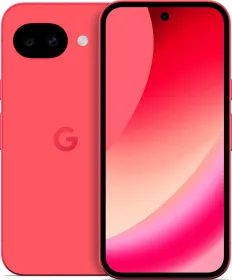
The Pixel 10a provides the iconic Google camera experience at the lowest price of any Pixel 10 smartphone (though with its limitations). It also offers the cleanest Android 16 experience and decent battery life, all wrapped in a clean, flat, no-nonsense design. The Tensor G4 chip and 8GB RAM are showing their age, and the missing telephoto and Pixelsnap are a bit of a disappointment as well.
Buy it if:
- You want a reliable and consistent point-and-shoot camera phone.
- Clean, bloatware-free Android with seven years of updates matters to you.
- All-day battery life is a priority.
- You’re switching from a Pixel 6a or Pixel 7a.
Skip it if:
- You care about telephoto zoom or optical zoom beyond 1x.
- Heavy mobile gaming or top-tier performance is your thing — there are better options.
- You already own a Pixel 9a — the upgrade isn’t worth it.
- You want the absolute best value for your money.
It’s that time of the year again. Google’s latest mid-ranger is here — the Pixel 10a — and it comes with all the Gemini pomp and show you’d expect (leaving some exceptions). The only problem? It looks suspiciously similar to the Pixel 9a we tested last year: same chip, same cameras, and same battery. So, has Google used some optimization sorcery to improve how the phone does in real life, or is it the same Pixel 9a wrapped in a new moniker? Let’s find out.
HOW I TESTED
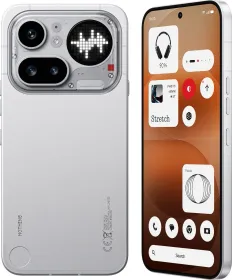
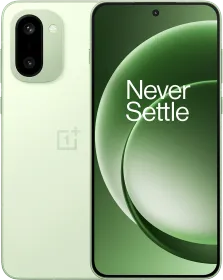
| Reviewed By: Shikhar Mehrotra, Consumer Tech, Auto and AI expert (6 years of experience in the domain). Test Unit: Google provided us with the Pixel 10a (Obsidian) unit for this review, with no editorial input. Duration and Environment: I used the only 8GB + 256GB variant for around two weeks with a Jio SIM in India. Tests: I used the phone as my daily driver, using it for calling, messaging, watching content, capturing pictures and videos, and running benchmarks. I also played BGMI on the smartphone. Competitors: OnePlus 15R, iQOO 15R, Poco X8 Pro Max, and Nothing Phone (4a) Pro. |
Google Pixel 10a Price & Availability
The Pixel 10a is currently available to purchase on Flipkart, Croma, and the Pixel’s official website.
- 8 GB + 256 GB: ₹49,999
Color options include Lavender, Berry, Fog, and Obsidian.
Pros
- Completely flat, pocket-friendly design
- Bright display (both indoors and outdoors)
- Cleanest Android experience available
- Seven years of software updates
- Satellite SOS
- Best-in-class computational photography
- Excellent primary camera performance
- Impressive all-day battery life
- Faster charging than the Pixel 9a
Cons
- Thick bezels and slippery back panel
- Same chip as Pixel 9a
- Only 8GB RAM in 2026
- Key AI features locked out
- No telephoto lens
- No charger in the box
- No Pixelsnap or Qi2 support
Google Pixel 10a Review: Specifications
- Display: 6.3-inch Actua pOLED, 1080 x 2424 (422 ppi), 60-120Hz, 24-bit color, HDR support, up to 2,000 nits (HDR) and 3,000 nits (peak brightness), Corning Gorilla Glass 7i
- SoC: Google Tensor G4 (4nm), Titan M2 security coprocessor
- RAM & Storage: 8GB RAM; 128GB or 256GB storage (UFS 3.1); no microSD slot
- Main Camera: 48MP Quad PD Dual Pixel, 1/2.0-inch sensor, f/1.7, 82° FOV, OIS + EIS, 4K30/60fps Ultra-wide Camera: 13MP, 1/3.1-inch sensor, f/2.2, 120° FOV, fixed focus, 4K30/1080p60
- Front Camera: 13MP, f/2.2, 96.1° ultrawide FOV, fixed focus, 4K30/1080p60
- Speakers: Stereo speakers, 2 microphones
- Battery and Charging: 5,100mAh (typical), 30W wired (45W USB-C PPS charger required, sold separately), 10W Qi wireless charging, bypass charging; no reverse charging
- IP Rating: IP68
- Connectivity: 5G Sub-6GHz, Wi-Fi 6E (2.4GHz/5GHz/6GHz, 2×2 MIMO), Bluetooth 6.0, NFC, GPS/GLONASS/Galileo, USB-C 3.2; no IR blaster, no mmWave 5G
- Biometrics: Under-display optical fingerprint sensor, 2D face unlock
- Weight and Dimensions: 153.9 x 73 x 9mm, 183g
- Colors: Lavender, Berry, Fog, Obsidian
Google Pixel 10a Review: Design and Build

The moment I looked at the Pixel 9a, sorry, I meant the Pixel 10a, it immediately reminded me of its predecessor. Does that work? Yes. Does it make the Pixel 10a look boring? Well, a tad, yes, especially in the Obsidian finish that Google sent us for review.
Google’s Pixel 10a carries forward the same silhouette, rounded corners, flat frames, and a flat back panel as the Pixel 9a (which, per Google, improves weight distribution). If you held both the phones side by side, especially in the same colors, you’d need a name tag to tell them apart.

Fun Fact: While it might look like the camera bar on the Pixel 10a is at the same level as the back panel, in reality, it’s slightly recessed, to the extent that you won’t even notice it.
However, giving credit where it’s due, the Pixel 10a’s form factor strikes the right balance between form and functionality. The phone measures 153.9 x 73 x 9 mm (0.1 mm thicker) and weighs 183 grams (3 grams lighter). The in-hand feel is quite impressive for the price.

The recycled aluminum frame has a certain texture and feels sturdy. The matte composite plastic back also features a grainy design, but it’s smooth to the touch and fingerprint-resistant (to a degree). However, the flip side of the phone’s smoothness is that it’s quite slippery.
The upgrade from Gorilla Glass 3 to Gorilla Glass 7i on the front is a meaningful durability improvement. However, even with a rugged case that has raised lips on the front, the unprotected screen accumulated quite a few microscratches. The phone also carries an IP68 dust and water-resistant rating.

The power button and volume rockers on the right frame are clicky and well-placed, and so is the under-screen fingerprint sensor. The USB-C port, primary speaker vent, and another dummy speaker vent (which likely houses the microphone) are located at the bottom, whereas the SIM tray is now at the top of the left frame (when the phone faces you).

What I didn’t like, however, were the thick, chunky bezels around the Pixel 10a’s screen. It’s 2026, and a phone that costs Rs. 50,000 in India (that’s the upper mid-range segment we’re talking about) shouldn’t have bezels this thick. And then there’s the glaring omission: no Pixelsnap or Qi2 magnetic charging. On a phone with such a beautifully flat back, that stings more than it should.
Google Pixel 10a Review: Display

If I were to put it in one line, the Pixel 10a’s 6.3-inch Actua pOLED display is more of the same, but slightly better, which makes it great for most users. The panel features a 2424 x 1080-pixel resolution (422 ppi), which equates to 1080p. While it is perfectly sharp (no individual pixels are visible) for everyday use, it falls short of QHD, which a handful of rivals offer at this price point.
It also supports 24-bit color depth (8 bits per channel), resulting in rich, vibrant colors. I personally prefer the Natural color profile (which covers 98% of the sRGB gamut) for everything, including the user interface, YouTube, and OTT platforms, but there’s an Adaptive option (which leans on DCI-P3 for punchier, more saturated output) that makes colors look punchier.

The Pixel 10a also debuts Google’s answer to Apple’s True Tone feature: Adaptive Tone. Coming to the Pixel 10a’s headline upgrade — peak brightness. It climbs from 2,700 nits on the 9a to 3,000 nits on the 10a (an 11% jump). On the other side of the brightness spectrum, the display dips to a remarkably low 1.7 nits, making late-night use bearable on my eyes.
While the Pixel 10a’s screen supports a 120Hz refresh rate, it isn’t an LTPO panel. In my experience, after enabling developer settings on the device, I’ve seen the refresh rate change between 120Hz (while scrolling through menus or navigating the user interface), 60Hz (when there’s no movement), which is also the default setting, and 30Hz (on the always-on screen).


Fun fact: Despite both the Pixel 10a and the iPhone 17 advertising identical peak brightness of 3,000 nits, the former feels brighter indoors, with the brightness slider set to maximum on both devices.
I found the phone’s outdoor visibility adequate, even in direct sunlight. For streaming, the phone is Widevine L1-certified with HDR10 support, enabling full-resolution playback on Netflix, Prime Video, and other major platforms.

While capturing pictures of the Pixel 10a’s screen with my DSLR, visible black banding appeared across the panel (an issue that doesn’t exist on my iPhone 17 or the recent Android phones I’ve reviewed). For most users, this won’t be noticeable day to day, but for those sensitive to screen flicker, prolonged low-brightness use in dark environments can cause eye strain and headaches.
Frustratingly, the “Adjust brightness for sensitive eyes” fix Google introduced on the Pixel 10 Pro — which doubles the PWM rate to 480Hz — doesn’t make it to the 10a.
Google Pixel 10a Review: Performance

The Pixel 10a runs on the Tensor G4, the same chip that powered the Pixel 9a in 2025 and the Pixel 9 in 2024. It’s worth noting that Google didn’t hand down the Tensor G5 (not even a binned version) to the latest ‘a’ series handset.
Day-To-Day Performance

The Tensor G4 is an octa-core chip (with a 3.1 GHz prime core), paired with 8GB of LPDDR5X RAM and 256GB of UFS 3.1 storage. In everyday use, app launches, UI navigation, and multitasking appear quite smooth. RAM management works quite well, holding up to seven to eight light apps in the memory (especially the first-party apps).
I did notice a few stutters here and there while switching apps, while playing a video game, while recording the screen, and when dark mode kicks in while the screen is still on (according to the time), but otherwise, the chipset performs really well.
The 8GB RAM is adequate for daily use today, but it locks out several on-device AI features and raises genuine questions about longevity across Google’s promised seven-year update cycle.
Synthetic Benchmarks


While the phone does well in daily tasks, benchmarks are where the gap with the rest of the Rs. 50,000 smartphones (or above) really starts to show. Google says that its phones are optimized for real-world tasks, which the Pixel 10a definitely is, but benchmarks, the measure of a phone’s peak performance, tell you how well the phone can tackle demanding workflows like playing video games at high frame rates or editing and rendering 4K videos. That is where the Pixel 10a lags significantly.
| Benchmark | Google Pixel 10a (Tensor G4) |
| AnTuTu v11 | 1,496,096 |
| Storage (Score, Sequential Read Speed, Write Speed) | Score: 96743; Sequential Read: 2151.0 MB/s; Sequential Write: 1400.5 MB/s |
| Geekbench 6 CPU (Single-Core, Multi-Core) | Single-Core: 1698; Multi-Core: 4467 |
| Geekbench 6 GPU (OpenCL, Vulkan) | OpenCL: 8836; Vulkan: 10,037 |
| 3DMark Wildlife Extreme (Score, Avg FPS) | Score: 2677; Avg FPS: 16.03 |
| 3DMark Wildlife Extreme Stress Test (Best Loop, Lowest Loop, Stability) | Best Loop: 2706; Lowest Loop: 2343; Stability: 86.6% |
Gaming Performance


On the Pixel 10a, which isn’t a gaming-centric phone, I spent quite a lot of time with Battlegrounds Mobile India (BGMI). The maximum playable graphics settings in the game are Ultra HDR + Ultra (40 fps), at which the phone averages around 38.6 fps; slightly lower HDR + Extreme (60 fps) fares even better, averaging 58.22 fps.
The device did get slightly hot after playing three consecutive Erangel sessions in BGMI, but that’s completely normal. Something odd I noticed while playing the game was that the resolution kept changing (between lower and higher) every second or so, not in the hub or lobby. Closing and opening the game two or three times seemed to fix the issue for me.

On the connectivity front, the Pixel 10a features the new Exynos 5400 modem, which brings Bluetooth v6.0, improved thermal stability, and Satellite SOS. Additional connectivity features include Wi-Fi 6E and NFC. The stereo speakers get the job done, but lack the definition and richness of the Pixel 10. The optical under-display fingerprint sensor is accurate but slower than the ultrasonic sensors you’ll find on competing devices.
Google Pixel 10a Review: Software

Out of the box, the Pixel 10a ships with the Android 16 QPR3 update, Google’s cleanest, most polished Android experience on a smartphone yet. To kick things off, there’s zero bloatware; the phone comes with a handful of Google apps preinstalled. The Material 3 Expressive UI, with dynamic animations, feels fluid and responsive.
Google promises seven years of operating system and security updates, along with regular Pixel Drops (quarterly feature updates that keep adding new features to the phone even after launch). The Pixel 10a also gets first access to Android beta builds.
AI Features

The Pixel 10a is loaded with AI-based features. You get Gemini Live, which lets you have a human-like conversation with the Gemini chatbot, Circle to Search for finding more details about anything that grabs your gaze on the internet, and two new features built into the visual lookup tool — Find the Look and Try It Out.
While the former breaks down the different pieces of an outfit in a picture, the latter creates an AI-generated picture of you wearing the piece of clothing that you’re planning to buy. For those who’re into online shopping, these two features could genuinely be quality-of-life improvements. Now Playing is now a standalone app with a song history log — neat.

Then there are several camera-related AI features, including Camera Coach, Auto Best Take, Magic Eraser, Audio Magic Eraser, and Add Me. However, due to a lack of ample RAM, the Pixel 10a misses out on the popular on-device Google AI features, including Magic Cue, Pixel Screenshots, notification summaries, Scam Detection, Call Notes, and Gemini Screen Automation.
The gap between the ‘a’ series and the regular Pixel 10 software features is wider than ever in 2026.
Call And Safety Features

You can also plug the Pixel 10a into an external monitor via a USB-C port and use the Desktop Mode. Google’s stock Android also offers a plethora of calling features such as Call Screen, Hold For Me, and Direct My Call.
On the safety front, Android 16 offers features like Car Crash Detection, Theft Protection, Safety Check, and Satellite SOS (first for an ‘a’ series smartphone).

Native QuickShare With AirDrop
I have heard about native AirDrop support in QuickShare, and I was quite excited about the idea of not installing a third-party app on my iPhone and still being able to transfer photos or videos to an Android device. QuickShare on Pixel 10a does that.
However, upon trying to transfer files, I noticed that the transfer speeds are quite slow. For instance, sharing a 40.59 MB video took about 90 seconds, while sharing a 3.53 MB PDF took about 6 seconds. Meanwhile, transferring the same video from my iPhone to Mac took around two to three seconds tops. It looks like QuickShare is defaulting to Bluetooth for transferring files.


Some lesser-known Android 16 features on the Pixel 10a include Calling Cards (Google’s answer to iOS Contact Posters), flashlight brightness control, Quick Tap on the back panel (similar to iOS), and Live Wallpaper Effects (which offer plenty of customization for the lock screen and home screen).
Google Pixel 10a Review: Cameras

The Google Pixel 10a features a dual-rear camera system that remains virtually unchanged from the Pixel 9a. Main camera is a 48MP (f/1.7, 1/2.0″, 4K60) sensor with optical image stabilization, and a hidden advantage that won me over (big time), while the ultrawide camera sports a 13MP (f/2.2, 1/3.1″, fixed focus) sensor. On the front, the phone gets a 13MP (f/2.2, 1/3.1″, 4K30, fixed focus).

The Pixel 10a runs the non-Pro camera app — no advanced manual controls here. Google’s characteristically restrained color science runs consistently across all three sensors, with images captured in sRGB by default, though Display P3 is available. The phone also supports Ultra HDR for captured images, meaning photos can retain a wider brightness range when viewed on compatible HDR displays.

Primary Camera
The primary camera is perhaps the most impressive of the lot, at least for me. While we can’t access the full 48MP resolution (which is a bit of a let-down), the sensor bins all shots to 12MP, whether you capture in JPEG or RAW.


The sensor’s minimum focusing distance is 4.5cm, allowing you to capture tiny subjects (such as insects, flowers, or other small subjects) with the primary camera itself. My iPhone 17 can’t do that, and I am downright jealous.


I personally found the camera to produce accurate exposure, natural colors, and excellent dynamic range in broad daylight; no surprises there. The skin tones are accurate, whether shooting indoors or outdoors, which has always been the strength of Pixel Pones.


However, to a keen eye, the pictures clicked with the source of light in the background have a slightly digital, processed look with softer shadows.


Low-light photography is where the Pixel 10a truly earns its stripes. The main camera gets exposures right, maintains accurate white balance, and captures a wide dynamic range in the dark — though shadows can get noticeably soft.


The Portrait mode defaults to 2x zoom and produces generally flattering results. However, the edge detection can sometimes look a bit wonky. You can also capture portrait pictures at 1.5x, but 1x is unavailable.


2x In-Sensor Zoom
The Pixel 10a’s 2x in-sensor zoom is a crop from the main 48MP sensor rather than a dedicated telephoto lens, and for most situations, it holds up surprisingly well.


Detail is decent, particularly with regular shapes and straight lines, and the results are good enough for everyday use. However, I noticed occasional white balance misses at this zoom level — not a common occurrence, but worth knowing.


In low light, 2x tells a different story. Shots show a noticeable watercolour effect on certain subjects, visible noise, and a distinctly digital look. Switching to Night Sight at 2x offers noticeable improvement, but only if you can hold the phone still for a couple of seconds.


Pro tip: Use 2x instead of 1x when capturing smaller subjects for a proper macro photography feel.


Ultrawide Camera
I am not a fan of the ultrawide camera, no matter which smartphone it’s on. But even so, the Pixel 10a’s 13MP shooter covers a wide 120° field of view. In daylight, it delivers accurate exposure and natural colors, provided that subjects are kept at a distance. However, the shadows tend to be a bit soft and noisy.
In low light, exposure and dynamic range hold up reasonably well, though sharpness suffers, and noise in open sky areas can be significant. I’d suggest using Night Sight with the ultrawide camera, since it’s more effective here than on the primary camera.


Selfie Camera
The Pixel 10a’s 13MP f/2.2 front camera has a 96.1° field of view and is fixed focus, which means close-up selfies are soft and essentially unusable.


Stay at arm’s length, however, and the results are sharp, well-colored, and have a wide dynamic range. Skin tones are accurate, and the wide field of view is generous enough for group selfies.


Low-light selfies are surprisingly capable too — one of the more underrated strengths of this camera system. For some reason, the camera kept ignoring the “mirror selfie” option for a few shots, even though it was enabled.

Google Pixel 10a Review: Battery Life & Charging

The Pixel 10a packs the same 5,100 mAh battery as the Pixel 9a, and yet somehow, it lasts longer. With SIM, I’m consistently getting around 6 to 8 hours of screen-on time (with heavy to moderate usage), regardless of whether I’m hammering the phone with benchmarks, camera work, or gaming.
The impressive for an ‘a’ series phone, but still, compared to modern Android midrangers with nearly twice the battery size (at the same price), it is still behind.


The Extreme Battery Saver mode extends that further to 120 hours (up from 100), and two battery health features — an 80% charge limit and Adaptive Charging — which help preserve the battery. On the charging front, wired speeds have jumped from 23W to 30W, getting you to 50% in around 30 minutes and a full charge in approximately 84 to 89 minutes.
For that, you have to get a 45W USB-C PPS charger, which isn’t included in the box. The phone also supports wireless charging at 10W, though for magnetic alignment, you’d want a third-party case with a magnetic ring (similar to the Galaxy S26).
Review Verdict: Should You Buy the Google Pixel 10a?
Here’s the irony: the Google Pixel 10a is a phone that’s easy to recommend but hard to get excited about, and the conflict defines the entire experience. You get perhaps the best, most consistent, and most versatile photography experience under Rs. 50,000, the cleanest Android experience on any smartphone (with 7 years of updates), and a genuinely impressive battery life (by Pixel standards).
At the same time, the hardware, including the Tensor G4 chip, the camera sensors (not the results, just the sensors), 8GB of RAM, the overall battery capacity, and the charging speed, aren’t as good as what you would get if you spend Rs. 50,000 on other Android smartphones like the OnePlus 15R, the Poco X8 Pro Max, or the Nothing Phone (4a) Pro.
Even so, none of this makes it a bad phone. If you know what you’re paying for, you’re not after the most value-for-money device in the segment, and you value a clean, reliable, and long-lasting smartphone experience over everything else, the Pixel 10a is the phone for you.

Smartprix ⭐ Rating: 7.8/10
- Design and Build: 8/10
- Display: 8/10
- Speakers: 7.5/10
- Software: 8.50/10
- Haptics: 8/10
- Biometrics: 8/10
- Performance: 7/10
- Cameras: 8/10
- Battery Life & Charging: 7.5/10
First reviewed in March 2026.