

Mercedes Benz is India’s largest luxury car maker. Earlier this week, Mercedes-Benz announced its plans for 2026 in India, where the company said that it will launch 12 new models in the calendar year in order to retain its lead in the luxury segment. Along with that, Mercedes-Benz announced that it closed the 2025 year with a total of 19,007 cars sold, which indicates a slight decline of 2 percent year-on-year. Despite the slight drop in sales, Mercedes-Benz posted its highest-ever revenue in India.

In this article, we will take a look at all the positives and negatives from the massive press event that Mercedes-Benz organised week. Let’s go.
ALSO READ: Finally! MG Majestor Is Coming To India In February 2026: Check Release Date Here
Vehicle Sales and Customer Behaviour
Mercedes continues to be the undisputed leader of the Indian luxury car market, and its sales mix shows just how premium-focused the brand has become. While the broader luxury market sees 25% contribution from entry-level cars, Mercedes is at just 13%. Instead, a massive 62% of its sales come from core luxury models, with top-end cars contributing 25%, higher than the industry average of 22%. Even more telling: top-end vehicle penetration has crossed 25%, with an 11% growth in this segment alone.
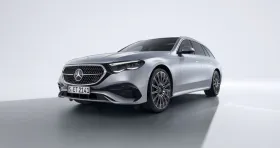
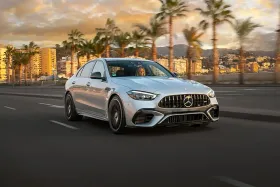
The E-Class LWB continues its legendary run as the highest-selling luxury car in India, underlining Mercedes’ deep understanding of Indian buyer preferences. AMG, meanwhile, is on a tear, posting 34% growth, proving that performance-led luxury has firmly found its audience here.

The brand’s customer base is also evolving. Salaried professionals and white-collar buyers have doubled in the last three years, and demand is no longer restricted to just metros. Tier 1 cities account for 50% of sales, but Tier 2 and Tier 3 cities together now make up the other half—a big shift for a luxury marque. Mercedes’ network expansion to 60+ cities with 145+ touchpoints, backed by ₹450+ crore dealer investments, shows serious long-term intent.
On the ownership side, Mercedes is clearly sharpening its tools. The introduction of 1 Customer Unit, along with 3 Clicks to Finance, is a smart move in a market where convenience increasingly drives buying decisions. Add to that a 28% growth in accessories and collections, aided by a Tata Cliq partnership, and 80% of customers opting for MANUFAKTUR customisation, and you see a brand that’s monetising aspiration very effectively.
ALSO READ: Kia Syros And Carens Clavis ICE Get New EX Trims With Additional Features: Details Inside
Competition Is Catching Up
However, not everything is moving at the same pace. Despite a 12% growth in BEV sales and over 20% of top-end cars being electric, Mercedes’ EV portfolio in India still feels overpriced and underwhelming when placed next to BMW—its most direct rival. BMW’s electric offerings today deliver sharper value, better perceived performance, and in some cases, a more convincing overall package. The EQS SUV, while being the highest-selling EV in the top-end luxury segment, still struggles to justify its premium when customers cross-shop aggressively.
This becomes more critical in the current economic context. Post GST 2.0, the luxury car market grew slower than the mass-market passenger vehicle segment. While mass buyers enjoyed 8–9% price benefits, luxury buyers saw just less than 1% relief, largely due to the weakening rupee against the Euro. That currency pressure isn’t going away anytime soon. In fact, Mercedes has already announced a 2% price hike in January 2026, with more increases planned to “ensure sustainable growth.”

That strategy is understandable from a business standpoint—but risky.
As the GST 2.0 rush fades, demand could soften, especially if prices keep inching upward. A 2% decline today could easily widen, particularly in EVs, where customers are already questioning value. In a segment as competitive as luxury, pricing perception matters just as much as badge value—and BMW is currently exploiting that gap better.
Diesel demand rising from ~39% to ~43% post GST 2.0 also hints that Indian luxury buyers are still pragmatic, not idealistic. They want efficiency, range, and real-world usability—areas where EVs still need to work harder to convince.
Looking ahead, Mercedes’ roadmap is ambitious: 40 global unveils over two years, 12 launches in India in 2026, and the much-anticipated CLA BEV arriving this year. Execution here will be key. If Mercedes can recalibrate EV pricing, improve value perception, and localise its electric strategy more aggressively, it will retain its crown comfortably.
ALSO READ: JSW Motors May Bring The Jetour T2 To India: Report
For now, Mercedes-Benz India remains the brand to beat. But the gap—especially in EVs—is narrowing faster than the sales charts suggest.
You can follow Smartprix on Twitter, Facebook, Instagram, and Google News. Visit smartprix.com for the latest tech and auto news, reviews, and guides.