

Quick Verdict
The Motorola Edge 70 Fusion refines the previous model with a quad-curved display, faster UFS 3.1 storage, NFC support, and a larger 7,000 mAh battery in a thinner body. The new Sony LYT-710 main camera brings a small improvement, though the overall camera system remains average. At ₹26,999 (₹24,999 with launch offers), it delivers premium design, excellent battery life, and balanced everyday performance, with software ads and slow update rollouts still lingering.
Buy it if:
- You want a slim phone with a premium quad-curved display and a large 7,000 mAh battery with fast PD charging.
- You want balanced everyday performance, decent cameras, and 4K video recording across the main, ultra-wide, and selfie cameras.
Skip it if:
- You want cleaner or more feature-rich software with more reliable updates.
- You want more performance or better cameras such as a telephoto lens available on alternatives like the Nord 5 or Phone (4a).
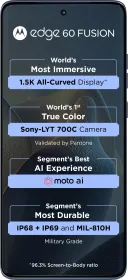
The Edge 60 Fusion was a very popular phone for Motorola. It balanced design, durability, battery life, and a decent software experience at a competitive price. It also had a few weaknesses. Gaming performance was not great, the curved display design was slightly exaggerated, and the cameras did not fully live up to their potential.
Now Motorola returns with the Edge 70 Fusion. The new model keeps the same overall formula but brings several refinements. The design moves to a true quad-curved display, the phone becomes thinner despite a larger battery, storage moves to UFS 3.1, and NFC support is finally here. The camera hardware also changes with the introduction of a new Sony LYT-710 sensor, although the overall sensor sizes remain similar.
After using the Edge 70 Fusion for over two weeks, testing its cameras, gaming performance, battery life, and everyday usage, the improvements are clear. Still, some familiar Motorola quirks remain. Let’s take a closer look at everything in this review of the Edge 70 Fusion.
HOW I TESTED
| Test Unit: Motorola provided the review unit of the Motorola Edge 70 Fusion, though the company had no input in the editorial process. Duration and Environment: The phone was used for over two weeks during testing on Jio and Airtel networks in India. The unit ran Hello UI W2WE36.56-53-3 during the review period. Tests: I ran benchmarks such as AnTuTu, Geekbench 6, and 3DMark, tested BGMI gaming performance and thermals, evaluated the cameras across multiple lighting conditions, and tracked battery performance during mixed Wi-Fi and 5G usage. Competitors: Nothing Phone (4a), OnePlus Nord 5, vivo T4 Pro, and realme P4 Power |
Motorola Edge 70 Fusion Price & Availability
The Motorola Edge 70 Fusion is available in three configurations:
- 8 GB + 128 GB: ₹26,999
- 8 GB + 256 GB: ₹29,999
- 12 GB + 256 GB: ₹32,999
Motorola is also offering ₹2,000 bank discounts during launch, which brings the effective starting price down to ₹24,999. Open sales started on March 12 through Flipkart, Motorola.in, and retail stores across India.
Pros
- Premium design with true quad-curved display
- Thinner body with larger battery
- Fast UFS 3.1 storage
- Strong battery life
- BGMI supports 120 FPS
- Very good selfie camera
- Decent performance
- NFC support added
- 4K video on ultra-wide and selfie camera
Cons
- Highlight management can struggle
- Ads present in software
- Slow Motorola update rollout history
- No native gallery app
Motorola Edge 70 Fusion Specifications
- Display: 6.7-inch pOLED, 1.5K resolution, 120 Hz refresh rate, quad-curved design, Pantone validation, 5,200 nits peak brightness
- Processor: Snapdragon 7s Gen 4
- RAM: 8 GB / 12 GB LPDDR4X
- Storage: 128 GB / 256 GB UFS 3.1
- Main Camera: 50 MP Sony LYT-710 1/1.56-inch, f/1.8, 24mm, OIS, 4K30
- Ultra-wide: 13 MP GalaxyCore GC13B0 1/3.4-inch, f/2.2, 12mm, AF, 4K30
- Front Camera: 32 MP GalaxyCore GC32E1 1/3.1-inch, f/2.2, 22mm, fixed focus, 4K30
- Battery: 7,000 mAh, 68W fast charging
- Speakers: Stereo speakers
- Connectivity: 5G, Wi-Fi, Bluetooth, NFC
- Software: Hello UI based on Android 16, 3 Android OS updates, 5 years security patches
- Colors: Pantone Blue Surf (our unit), Pantone Country Air, and Pantone Silhouette
Motorola Edge 70 Fusion Review: Unboxing
The Edge 70 Fusion comes in Motorola’s familiar eco-friendly packaging. The box design is similar to previous Edge series devices and avoids plastic wherever possible.
Inside the box you get:

- Motorola Edge 70 Fusion
- USB-C to USB-C charging cable
- 68W USB-C charger
- SIM ejector tool
- Documentation
One thing missing here is a protective case, which Motorola included with several previous models. There is also no pre-applied screen protector, so you will likely want to install one immediately after setup.
Motorola Edge 70 Fusion Review: Design and Build

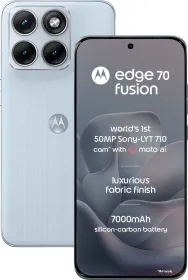
Motorola keeps the familiar design language from the previous Fusion models, though a few meaningful refinements appear this time. The most noticeable change is the display. The Edge 70 Fusion now uses a true quad-curved panel, meaning all four sides curve slightly. On the Edge 60 Fusion, the curves were mostly limited to the sides while the top and bottom remained flatter.

The result looks more balanced. The curves feel smoother in daily use and the phone sits comfortably in the hand. Visually, the device also appears a bit more premium than the previous model.

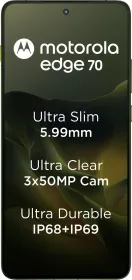
Motorola has also made the phone thinner (at 7.9 mm) than the Edge 60 Fusion (8.25 mm), which is impressive considering the battery capacity has increased. Though the weight has jumped from 181 grams to 193 grams, the phone is still manageable.
The back panel continues with the vegan leather finish in three color options: Pantone Blue Surf, Pantone Country Air, and Pantone Silhouette. It still feels great to hold, provides good grip, and avoids fingerprints that usually appear on glass backs. Smudges are rarely an issue. What could be an issue is long-term durability.

The frame is sturdy, the buttons feel tactile, and there is no noticeable flex. Motorola has also added NFC support this time, something that was missing on the Edge 60 Fusion.
The port layout remains familiar. The USB-C port, SIM slot, speaker grille, and primary microphone sit at the bottom, while another microphone is placed on the top. Button placement on the right side feels natural and easy to reach.

Overall, the design sees only a slight change compared to the previous model, though the thinner body, quad-curved display, and cleaner camera layout do help improve the look and in-hand feel.
Curved displays are still a matter of preference though. Some phones like the OnePlus Nord 5 take a different approach with a flat panel, which some users may find more practical for gaming or applying screen protectors.
Motorola Edge 70 Fusion Review: Display

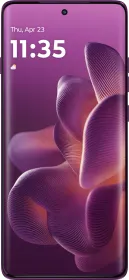
The Edge 70 Fusion features a 6.7-inch pOLED display with a 1.5K resolution and a 120 Hz refresh rate. The panel looks sharp and vibrant. Colors appear rich, contrast is beautiful, and the screen feels smooth too. Motorola continues to include Pantone validation, which aims to keep colors accurate rather than overly saturated.
Brightness is good as well. Motorola claims 5,200 nits of peak brightness and although the HBM brightness isn’t listed, outdoor visibility has been a non-issue on this device.
The biggest difference compared to the previous generation is the true quad-curved design. The display curves gently on all sides instead of only along the edges. The curves feel more refined and slightly less aggressive than before.

Watching content on the phone feels immersive. During testing, I watched Avatar on JioHotstar and several 4K HDR videos on YouTube, and the display handled both very well.
Curved displays always come with small compromises. Edge touches can occasionally happen during gaming, though they are not frequent. Screen protectors can also be harder to find.
This is where phones like the OnePlus Nord 5 take a different approach. The Nord uses a flat display, which some users prefer for durability and gaming. Its display quality is also excellent, so the choice mostly comes down to whether you prefer curved or flat screens.
Overall, the Edge 70 Fusion delivers a strong display experience. The panel looks great and the new quad-curved design finally matches Motorola’s marketing claims.
Motorola Edge 70 Fusion Review: Speakers and Haptics

The Edge 70 Fusion comes with stereo speakers, and the audio experience is decent overall. Loudness is good enough for watching videos or playing games without headphones. At higher volumes there is a bit of distortion, though it never becomes unpleasant.
Haptics feel fairly solid too. They are not flagship level but they do not feel cheap either. The vibration motor produces a tight response during typing, unlocking the phone, or navigating the interface.
System-wide haptic integration is somewhat limited though. Some UI interactions still lack vibration feedback, which makes the experience feel slightly inconsistent.
Motorola Edge 70 Fusion Review: Software

The Edge 70 Fusion runs Hello UI based on Android 16. My review unit was running software version Hello UI W2WE36.56-53-3. Motorola promises 3 Android OS updates and 5 years of security updates for the device. That is decent for this price.
The software experience feels mostly fine. Motorola still includes very few system apps, which keeps the interface lightweight. Google apps handle most tasks here, including the Google Dialer and Google Photos.

One thing that bothers me is the lack of a native gallery app. Google Photos can feel slow and sometimes frustrating to use when you just want to quickly view photos stored on the device.
There are also ads and recommendations in the Newsfeed, Smart Tray, and even the default weather app, which is disappointing. The good news is that you can disable these fairly easily in settings.

Moto AI
Motorola continues to include Moto AI features, though the dedicated Moto AI button is missing this time. You can still access these features through the app drawer or by using a double press gesture.

There’s the Image Studio, which can generate images for avatars, stickers, and wallpapers, though the output resolution is quite low. Playlist Studio can create playlists directly in Amazon Music based on prompts.

You also get an AI notes feature that can transcribe recordings, summarize them, and save everything inside the Moto Notes app. The system can remember things through reminders, save screenshots as searchable memories based on text, and you can also ask or search things directly using Moto AI. There is also an Update Me feature that summarizes your notifications.

In practice, I did not find most of these AI tools particularly useful. They exist, but they do not meaningfully improve the experience.
Hello UI still focuses on *some* customization. You get options for fonts, icon styles, colors, and other personalization settings. The interface feels light and smooth for the most part.

One area where Motorola still needs improvement is software update speed. Updates usually arrive later than on many competing devices.

Phones like the OnePlus Nord 5 offer a stronger software package. The Nord runs OxygenOS 16 based on Android 16 and comes with a longer update promise of four OS upgrades (launched with Android 15) and six years of security patches. It also delivers a smoother experience overall.
That said, Hello UI remains fairly pleasant to use. It stays close to stock Android and avoids a lot of customization layers, which some users might appreciate.
Motorola Edge 70 Fusion Review: Biometrics

The Edge 70 Fusion uses an in-display optical fingerprint scanner that works reliably in daily use. Unlocking is quick with very few missed scans, though the scanner sits slightly low on the display. Face unlock is also available through the front camera and works well in good lighting, but the fingerprint scanner remains the more secure option.
Motorola Edge 70 Fusion Review: Performance

Powering the Edge 70 Fusion is Qualcomm’s Snapdragon 7s Gen 4 chipset paired with 8 GB or 12 GB of RAM and UFS 3.1 storage. Despite the new name, the chip is largely similar to the Snapdragon 7s Gen 3 with no major architectural changes. In everyday use the phone generally feels smooth with apps opening quickly and multitasking working well, though I did notice the occasional stutter during regular usage.

Motorola also includes a 4473 mm² vapor chamber cooling system to help keep temperatures under control during heavier workloads. During my testing, the phone did not heat up much, even during gaming or benchmark runs. That was honestly a pleasant surprise.
| Benchmark | Motorola Edge 70 Fusion (Snapdragon 7s Gen 4) |
| AnTuTu v11 | 1138456 |
| Storage (Score, Sequential Read Speed, Write Speed) | Score: 119279; Sequential Read: 2112 MB/s; Sequential Write: 2131 MB/s |
| Geekbench 6 CPU (Single-Core, Multi-Core) | Single-Core: 1249; Multi-Core: 3507 |
| Geekbench 6 GPU (OpenCL, Vulkan) | OpenCL: 3566; Vulkan: 5074 |
| 3DMark Wildlife Extreme (Score, Avg FPS) | Score: 1200; Avg FPS: 7.19 |
| 3DMark Wildlife Extreme Stress Test (Best Loop, Lowest Loop, Stability) | Best Loop: 1191; Lowest Loop: 1129; Stability: 94.8% |


Gaming Performance
Gaming performance is fairly good overall. BGMI supports 120 FPS on the phone and it runs quite well with stable frame rates while staying cool, though the visual quality appears slightly reduced to maintain the higher frame rate.

Genshin Impact is more demanding, averaging around 40 FPS with occasional drops during combat or exploration, but the phone still manages to stay surprisingly cool. The cooling system clearly helps here, as the device never becomes uncomfortable during longer sessions.
Overall performance feels fine for everyday use and light gaming with well-controlled thermals, though competitors like the OnePlus Nord 5 with Snapdragon 8s Gen 3 still offer much better performance in both everyday use and gaming.
Motorola Edge 70 Fusion Review: Cameras

The Edge 70 Fusion brings a few camera changes compared to the previous generation. The main upgrade is the new 50 MP Sony LYT-710 sensor. Motorola says it improves clarity and dynamic range compared to older sensors.
The rest of the setup remains familiar. You get a 13 MP ultrawide camera that also doubles as a macro lens, and a 32 MP front camera capable of 4K recording. On paper, the hardware looks solid for this segment. But let’s take a look at the real-world performance.
Main Camera
In daylight, the main camera produces sharp photos with good contrast. The new sensor definitely helps improve overall image quality compared to the previous model.


Details look better and the images appear slightly more natural than before. Colors are balanced and HDR works reasonably well (until it doesn’t). Bright skies or reflective surfaces can sometimes blow out, which slightly hurts the dynamic range.


Overall, the main camera is an improvement, though it still does not stand out as one of the best cameras in this price range.


Portrait Mode
Portrait mode offers three focal length options: 24 mm, 35 mm, and 50 mm. Edge detection is noticeably better than the previous generation but still not perfect. Hair strands and smaller details can still be missed.
Ultra-wide Camera
The 13 MP ultra-wide camera delivers good results. Colors remain fairly consistent with the main camera (horrible lens swithcing though) and HDR works reasonably well. It is also very wide at 12mm. Edge softness is still present though. Low-light performance is average, but better than most other phones in this segment.


Since the ultra-wide camera has AF, it can also double as a macro lens. Macro results are usable but not particularly impressive in my opinion.
Selfie Camera
The 32 MP front camera is actually one of the nicer surprises here. Selfies look sharp and skin tones usually appear natural. Colors are pleasing and the dynamic range is decent.


One limitation remains. The camera does not have autofocus, so keeping the right distance from the phone becomes important. And, making product showcase videos becomes difficult.
Video Recording

Video recording is acceptable. The phone supports 4K recording on both the rear and front cameras. Stabilization works well in daylight and the footage looks fairly detailed. Selfie video colors are particularly pleasing, which makes the phone quite usable for casual video recording.
Low-light video still needs improvement. Noise becomes visible quickly and dynamic range drops in darker scenes. That said, support for 4K recording on both the ultra-wide and the selfie camera is a welcome addition at this price.
Overall, the cameras on the Edge 70 Fusion are perfectly usable but still average for the segment. They improve slightly compared to the previous generation but stronger camera phones exist in this price range.
Motorola Edge 70 Fusion Review: Battery Life and Charging

Battery life is one of the strongest parts of the Edge 70 Fusion. Motorola includes a 7000 mAh battery, which is unusually large for a phone in this category. The actual results are excellent.
With my typical usage pattern of about 70% Wi-Fi and 30% 5G, Always-On Display enabled, and regular use of apps like Twitter, Docs, Instagram, and YouTube along with calls and some gaming, the phone consistently delivered around 9 to 9.5 hours of screen-on time.

That easily translates into more than a full day of use, sometimes even stretching into the next day depending on usage.
Charging is also quite fast, with the included charger taking the phone from 0 to 100% in under an hour, which is impressive for the battery size.

Motorola also includes a USB-C to USB-C charger in the box, which is nice to see. Overall, battery life is one of the strongest aspects of this device.
Review Verdict: Should You Buy the Motorola Edge 70 Fusion?
The Edge 70 Fusion improves on the Edge 60 Fusion in several meaningful ways. The design now has a true quad-curved display, the phone is thinner, the battery is larger, storage is faster with UFS 3.1, and the new Sony LYT-710 main sensor slightly improves camera performance. Performance is also stronger and gaming support is better.
At the same time, the cameras still feel average, the software still carries ads and slow update rollouts remain a concern. With launch bank offers bringing the price down to ₹24,999, the Edge 70 Fusion becomes a solid option in its segment. Without those offers, the competition becomes harder to ignore.
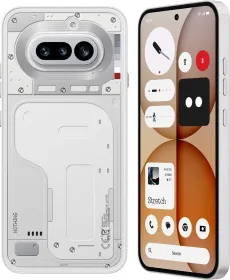
The Nothing Phone (4a) costs slightly more at around ₹27,999 with offers but adds a telephoto camera and a glass back, though it comes with a smaller battery and slower charging.
The OnePlus Nord 5 is another serious alternative. It brings stronger performance, very solid cameras, a much better selfie camera, 100W charging, and a much better software experience with a longer update promise of four OS updates and six years of security patches (though it was launched on Android 15).
The Edge 70 Fusion remains a good choice if you want a curved display design, strong battery life, and balanced performance at a lower effective price. Buyers who prioritize cameras, software support, or raw performance may find the Nord 5 or Phone (4a) more appealing depending on their priorities.

Smartprix ⭐ Rating: 8.0/10
- Design and Build: 8.5/10
- Display: 8.5/10
- Speakers: 8/10
- Software: 8/10
- Haptics: 7.8/10
- Biometrics: 8/10
- Performance: 8/10
- Cameras: 7.5/10
- Battery Life & Charging: 8.5/10
First reviewed in March 2026.