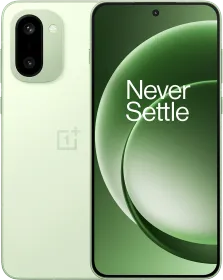


OnePlus’ lineup in 2025 quietly presents buyers with a very real dilemma. On paper, the OnePlus 15R and the OnePlus 13s are priced close enough to warrant comparison, yet they serve fundamentally different user segments. While one handset targets users who want to scale and performance of the flagship tier without spending a fortune, the other caters to people who’re looking for a comfortable one-handed experience.
If you’re torn between a big, power-first phone and a compact, do-it-all flagship, reading this breakdown should help you identify which priorities actually matter to your daily usage and which compromises you’re willing to live with before spending close to ₹50,000 on your next phone.
OnePlus 15R vs. OnePlus 13s: Table of Contents
OnePlus 15R vs. OnePlus 13s: Design
| OnePlus 15R | OnePlus 13s | |
| Dimensions | 163.4 x 77 x 8.1 mm or 8.3 mm | 150.8 x 71.7 x 8.2 mm |
| Weight | 213 grams or 219 grams | 185 grams |
| Material | Gorilla Glass 7i (front) + aluminum (frame) + glass back | Glass front + alloy frame |
| IP Rating | IP68/IP69K | IP65 |
| Colors | Charcoal Black, Mint Breeze, Electric Violet | Green Silk, Black Velvet, Pink Satin |
Between the two phones, the OnePlus 15R has a full-sized flagship form factor, whereas the OnePlus 13s (review) has a slightly compact form factor. Depending on whether you’re a double-handed or single-handed user, one of the phones would suit your usage better.

If you’re a heavy user who consumes a lot of content on your device, prefers multitasking in the split-view app, and want a big-screen phone in general, the OnePlus 15R is the better phone for you. However, if you prioritize portability, including a lightweight feel in the hand and easy pocketability, the OnePlus 13s may be the better option.
While the OnePlus 15R is slightly heavier, it offers a higher IP rating for dust- and water-resistance. The handset can withstand close-range, high-pressure water jets at very high temperatures. Meanwhile, the OnePlus 13s is only dust-tight and only protected against water jets. In practical terms, the phone should be able to withstand rain but not intense power washing.

In terms of design, both phones feature a punch-hole front camera and symmetrical bezels on all sides (the OnePlus 13s has a slightly higher screen-to-body ratio). On the rear, the OnePlus 15R features a slimmer camera module, whereas the OnePlus 15R has a near-square one; both protrude from the rear panel.
OnePlus 15R vs. OnePlus 13s: Display
| OnePlus 15R | OnePlus 13s | |
| Display Size | 6.83-inch | 6.32-inch |
| Technology | LTPS AMOLED | LTPO AMOLED |
| Resolution | 2800 x 1272 (450 ppi) | 2640 x 1216 (460 ppi) |
| Refresh Rate | 165Hz | 120Hz |
| Peak Brightness | 1800 nits (HBM), 3600 nits (peak) | 1600 nits (HBM) |
| Dimming | PWM | 2160Hz PWM |
As mentioned earlier, the OnePlus 15R has a bigger screen than the OnePlus 13s (about 17% more screen estate). Therefore, it may be a better choice for power users with higher average screen-on time. The phone also supports a higher peak refresh rate, making system animations and scrolling feel smoother.


However, the OnePlus 15R lacks an LTPO display; it doesn’t support true variable refresh rate. The refresh rate is locked to the following values: 60Hz, 90Hz, 120Hz, 144Hz, and 165Hz. The OnePlus 13s, by contrast, features an LTPO panel that can vary its refresh rate between 1 and 120Hz.
In terms of peak brightness, the OnePlus 15R leads, while both phones support PWM dimming to make the visual experience more comfortable for users. Given that both phones feature an AMOLED panel, they are expected to produce deep, inky blacks and vibrant colors.
OnePlus 15R vs. OnePlus 13s: Performance
| OnePlus 15R | OnePlus 13s | |
| Chipset | Snapdragon 8 Gen 5 | Snapdragon 8 Elite |
| Manufacturing Process | 3nm | 3nm |
| Core Configuration | 2 x 3.84 GHz prime cores + 6 x 3.32 GHz performance cores | 2 x 4.32 GHz prime cores + 6 x 3.53 GHz perfromance cores |
| GPU | Adreno 840 GPU | Adreno 830 GPU |
| NPU / AI Processing | Hexagon NPU (46% more powerful than SD 8 Gen 3) | Hexagon NPU |
| Memory Storage | 12GB LPDDR5X Ultra + 256GB or 512GB UFS 4.1 | 12GB LPDRR5X + 256GB or 512GB UFS 4.0 |
| Connectivity | Wi-Fi 7 (Wi-Fi G2 chip), Bluetooth v6.0, NFC | Wi-Fi 7, Bluetooth v6.0 |
Both phones feature quite capable chipsets; they can handle almost everything you throw at them, including multitasking, video editing, and high-end gaming. However, benchmark results indicate that the Snapdragon 8 Elite is slightly more powerful than the Snapdragon 8 Gen 5.


The difference should only be apparent when you’re running a resource-intensive app or a video game at the top graphics settings. For BGMI enthusiasts, the OnePlus 15R provides up to 165 fps in supported modes, while the OnePlus 13s maxes out at 120Hz. The OnePlus 13s also offers slightly better thermals, suitable for long hours of gameplay or heavy usage.
However, for most users, the difference is unlikely to be apparent unless the phones are used side by side. To give you a better idea of hierarchy: Snapdragon 8 Elite Gen 5 > Snapdragon 8 Elite > Snapdragon 8 Gen 5 > Snapdragon 8 Gen 3.
OnePlus 15R vs. OnePlus 13s: Operating System
| OnePlus 15R | OnePlus 13s | |
| User Interface | OxygenOS 16 | OxygenOS 15 (at launch), received OxygenOS 16 in November 2925 |
| Operating System | Android 16 | Android 15; upgraded to Android 16 |
| AI Features | OnePlus AI | OnePlus AI |
| Voice Assistant | Google Gemini | Google Gemini |
| Software + Security Support | 4 years + 6 years | 4 years + 6 years |
Out of the box, the OnePlus 15R runs on OxygenOS 16, which is based on Android 16. While my colleague Mehtab has already covered the user interface in detail in his review of the handset, I’ll give you a quick recap.

The handset, running OxygenOS 16, feels refined, smooth, and well-optimized. Then there are features such as Parallel Processing 2.0, a predictive back gesture, Motion Cues, eye comfort reminders, and Flux Themes 2.0, with a small amount of bloatware here and there.
OxygenOS 16 also includes numerous AI-based features, which the company groups under the umbrella term “OnePlus AI.” There’s Plus Mind, a personal digital memory space that works in tandem with the Plus Key and Google Gemini. Other features include AI Writer, AI Recorder, AI Notes, AI Translate, AI VoiceScribe, AI Search, and Circle to Search.

At this point (in December 2025), the OnePlus 13s has also received the OxygenOS 16 update, implying that the compact flagship has also received the new features we discussed for the OnePlus 15R. However, the more powerful chipset on the OnePlus 13s should make it feel snappier and more responsive.
Regarding software support, the OnePlus 15R will receive four years of Android updates and six years of security updates, similar to the OnePlus 13s. However, because the OnePlus 13s was released six months earlier than the OnePlus 15R, its software support will end six months earlier.
OnePlus 15R vs. OnePlus 13s: Cameras
| OnePlus 15R | OnePlus 13s | |
| Primary Camera | 50MP Sony IMX906 (f/1.8, 1/1.56-inch, OIS AF); 4K120/60/30 | 50MP Sony LYT-700 (f/1.8, 1/1.56-inch, OIS); 4K60/30 |
| Secondary Camera | 8MP Sony IMX355 ultrawide (f/2.2, 1/4-inch); 1080p30 | 50MP S5KJN5 telephoot (f/2.0, 1/2.75-inch); 2x optical zoom |
| Tertiary Camera | – | – |
| Front Camera | 32MP GalaxyCore GC32E2 (f/2.0, 1/3.1-inch, AF); 4K30 | 32MP (f/2.0, 1/3.1-inch) |
Both handsets employ different approaches to their camera systems. The OnePlus 15R features a dual-camera setup, with a 50MP primary sensor and an 8MP ultrawide camera. Despite having a slightly less powerful chipset, the OnePlus 15R can also record 4K videos at 120 fps. However, the ultrawide camera is limited to 1080p30 video.

The OnePlus 13s, by contrast, combined a 50MP 2x telephoto camera with an equally large 50MP primary camera. The video recording capabilities of the handset are limited to 4K60 from the primary camera and 4K30 from the front camera.
OnePlus 15R vs. OnePlus 13s: Battery Capacity & Charging Speed
| OnePlus 15R | OnePlus 13s | |
| Battery Capacity | 7,400 mAh | 5,850 mAh |
| Wired Charging Speed | 80W SUPERVOOC | 80W SUPERVOOC |
| Wireless Charging Speed | – | – |
If you prioritize battery life above all else and want to eliminate battery anxiety, the OnePlus 15R is the clear choice between these two phones. With moderate usage, the phone’s 7,400 mAh battery provides approximately 12-13 hours of screen-on time. Furthermore, the phone takes approximately 1 hour and 15 minutes to fully charge.

This doesn’t mean that the OnePlus 13s is bad by any standard. For a phone with a 5,850 mAh battery, managing around seven to eight hours of screen-on time is quite decent, just not as good as the OnePlus 15R. Anyway, the phone also supports 80W wired charging. With the charger provided in the box, the phone takes one hour and 15 minutes to charge from zero to 100%.
OnePlus 15R vs. OnePlus 13s: Price & Conclusion
OnePlus 15R Price

- OnePlus 15R 5G (12GB + 256GB): Rs. 47,999 (Rs. 44,999 with bank offer)
- OnePlus 15R 5G (12GB + 512GB): Rs. 52,999 (Rs. 49,999 with bank offer)
The OnePlus 15R is a phone that prioritizes power, endurance, and screen size above all else. It’s designed for users who treat their smartphone as a primary device—for work, gaming, streaming, and extended use. Its headline feature is the massive 7,400 mAh battery that supports 80W wired charging.
Furthermore, it also features a flagship-tier AMOLED screen with a 165Hz refresh rate and a Snapdragon 8 Gen 5 chipset for handling almost everything you throw at it. Last but not least, then phone also features IP69K water and dust resistance rating, which instills confidence in its built quality.
However, the phone’s size and weight reduce portability, the lack of an LTPO panel is a missed opportunity, and the camera setup is functional rather than versatile.
OnePlus 13s Price

- OnePlus 13s 5G (12GB + 256GB): Rs. 54,999 (Rs. 51,999 with bank offer)
- OnePlus 13s 5G (12GB + 512GB): Rs. 59,999 (Rs. 56,999 with bank offer)
The OnePlus 13s strives to strike a compelling balance between compact design, flagship performance, and everyday practicality. Its pocket-friendly form factor and lighter weight make it ideal for single-handed use, while the Snapdragon 8 Elite chipset delivers smooth performance across multitasking, video gaming, or video editing.
Finally, the phone also has an LTPO AMOLED panel and a telephoto camera for those who prefer that over an ultrawide camera. However, it lacks high-end waterproofing. The battery life here is good, but certainly not as good as that on the OnePlus 15R.
If the difference between the two phones is less than Rs. 5,000 (at the time you’re purchasing either of them), going with the OnePlus 13s makes more sense (unless you want exceptional battery life). However, if the difference exceeds that, you may choose based on the specifications.

You can follow Smartprix on Twitter, Facebook, Instagram, and Google News. Visit smartprix.com for the latest tech and auto news, reviews, and guides.