

OnePlus Nord 6 vs. Nothing Phone (4a): Table of contents
This comparison is about the two most competitive smartphones in the Indian mid-range smartphone: the Nord 6 and the Phone (4a). One comes from the Chinese brand of OnePlus, whose Nord series has been doing quite well in the country. The second comes from the London-based consumer tech manufacturer Nothing, a brand built on its unique design appeal.
Even though both the phones are available around the same price, they take completely different approach to impress their cusotmers. While one focuses on raw performance and exceptional battery life, the other focuses on design, a clean user interface, and photographic superiority. So, which one should you buy? Here’s a detailed comparison to help you make up your mind.
OnePlus Nord 6 vs. Nothing Phone (4a): Design
| Specification | OnePlus Nord 6 | Nothing Phone (4a) |
|---|---|---|
| Dimensions | 162.5 × 77.5 × 8.5 mm | 163.9 × 77.5 × 8.5 mm |
| Weight (India) | 217 grams | 205 grams |
| Front Glass | Crystal Guard Glass | Corning Gorilla Glass 7i |
| Back Material | Plastic | Transparent glass back |
| Frame Material | Plastic | Plastic frame |
| IP Rating | IP66 + IP68 + IP69 + IP69K + MIL-STD-810H | IP64 |
| SIM Slots | Dual Nano-SIM (no eSIM) | Dual Nano-SIM |
| Fingerprint Sensor | Under-display (optical) | Under-display (optical) |
| Colour Options | Quick Silver, Fresh Mint, Pitch Black | Black, White, Blue, Pink |
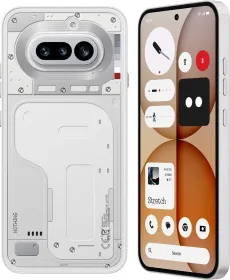
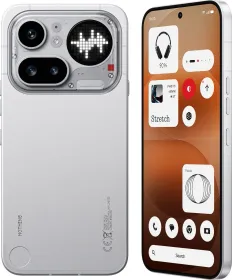
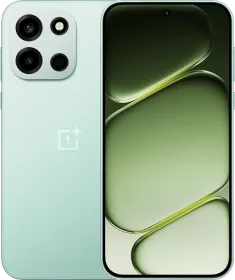
| Unique Design Element | Square camera module inspired by OnePlus 15; holographic finish on sides | Transparent back with vertical Glyph Bar (63 mini-LEDs + red recording indicator) |
To reiterate what’s already been mentioned, both phones have a similar form factor: they’re big-screen phones, neither too thick nor too slim, and neither uses any fancy materials.
The real difference lies in their overall look and ingress protection ratings. The Nord 6, for one, features slimmer bezels on the front and a subtle back panel that houses a square-shaped camera module. Moreover, it looks and feels like most other contemporary smartphones in the segment.


The Nothing Phone (4a), despite its thicker bezels, is the one with the most unique design (something the brand is known for). It features a transparent back panel with aesthetically placed elements underneath and the Glyph Bar on the back that gives the phone a one-of-a-kind look.
When it comes to ingress protection, though, the Nord 6 absolutely reigns above the Phone (4a) with four IP ratings. It also complies with military-grade standards for use in harsh environmental conditions. The Phone (4a) also features an IP64 rating, but it isn’t quite as good.
Also Read: Xiaomi 17 vs. Vivo X300: Leica vs. Zeiss, HyperOS vs. OriginOS, and Everything in Between
OnePlus Nord 6 vs. Nothing Phone (4a): Display
| Specification | OnePlus Nord 6 | Nothing Phone (4a) |
|---|---|---|
| Screen Size | 6.78 inches | 6.78 inches |
| Panel Type | LTPS AMOLED | LTPS AMOLED |
| Resolution | 1272 × 2772 px (~450 ppi) | 1224 × 2720 px (~440 ppi) |
| Aspect Ratio | 19.5:9 | 20:9 |
| Refresh Rate | Up to 165 Hz (adaptive: 60/90/120/144/165 Hz) | Up to 120 Hz (adaptive: 30–120 Hz) |
| Touch Sampling Rate | Up to 3200 Hz (Touch Reflex chip) | Up to 2500 Hz (gaming mode) |
| PWM Dimming | 3840 Hz | 2160 Hz |
| HBM Brightness | 1800 nits | 1600 nits |
| Peak Brightness | 3600 nits | 4500 nits |
| HDR Support | HDR 10 | HDR 10+ |
| Screen Protection | Crystal Guard Glass | Corning Gorilla Glass 7i |
| Colour Gamut | 100% DCI-P3, 100% sRGB | 1B colors, 100% of DCI-P3 |
| Special Display Features | Aqua Touch 2.0, Sunburst tech, Night Mode, Eye Comfort | Essential Key integration |
Even though both phones feature a 6.78-inch AMOLED screen, the way they implement it is quite different.
While the Phone (4a)’s display supports a refresh rate of up to 120Hz, the Nord 6 takes it up to 165 Hz.

In simpler terms, the Nord 6’s screen should feel smoother and potentially more responsive, especially when you’re gaming (as it also supports a higher touch sampling rate in gaming mode). A higher refresh rate may affect battery life, depending on usage, though.
In terms of PWM dimming and HBM brightness, the Nord 6 seems to have the upper hand, suggesting it may be more comfortable for flicker-sensitive users and brighter in outdoor conditions.

However, the Phone (4a) does have a higher peak brightness, which should improve the visual experience when watching HDR content, particularly in supported apps.
In everyday use, the difference between the two displays will likely be minimal for most users. The Phone (4a)’s display is excellent for general use, including casual gaming and media consumption. However, for serious gamers or those who prioritize maximum smoothness and responsiveness, the Nord 6 has a slight edge.
Also Read: iPhone 17e vs iPhone 16: The New iPhone Might Be Better For Most Users (But Not All)
OnePlus Nord 6 vs. Nothing Phone (4a): Processor
| Specification | OnePlus Nord 6 | Nothing Phone (4a) |
|---|---|---|
| Chipset | Qualcomm Snapdragon 8s Gen 4 (4 nm) | Qualcomm Snapdragon 7s Gen 4 (4 nm) |
| CPU Architecture | Octa-core: 1×3.21 GHz Cortex-X4, 3×3.0 GHz A720, 2×2.8 GHz A720, 2×2.0 GHz A720 | Octa-core: 1×2.7 GHz A720, 3×2.4 GHz A720, 4×1.8 GHz A520 |
| GPU | Adreno 825 | Adreno 810 |
| RAM Options | 8 GB LPDDR5X / 12 GB LPDDR5X | 8 GB LPDDR4X / 12 GB LPDDR4X |
| Storage Options | 256 GB / 512 GB UFS 4.1 | 128 GB / 256 GB UFS 3.1 |
| Gaming Frame Rate (BGMI) | Up to 165 FPS | Up to 120 FPS |
| Wi-Fi Standard | Wi-Fi 7 (802.11 a/b/g/n/ac/6/7), custom G2 chip | Wi-Fi 6 (802.11 a/b/g/n/ac/6) |
| Bluetooth | 5.4 | 5.4 |
| NFC | Yes | Yes |
| IR Blaster | Yes | No |
| USB | Type-C 2.0 | Type-C 2.0 (with OTG) |
| 5G Support | Yes (5G Advanced / SA / NSA) | Yes (SA / NSA) |
| Positioning | GPS (L1+L5), GLONASS, BDS, Galileo, QZSS, NavIC | GPS, GLONASS, BDS, Galileo, QZSS |
| Cooling | Flagship-grade graphene cooling | Standard thermal management |
Snapdragon 8s Gen 4 (4nm)

As mentioned in our detailed review of the Nord 6, the handset features the Snapdragon 8s Gen 4 chip, paired with LPDDR5X RAM and UFS 4.1 storage, which is one of the fastest configurations in the segment. That reflects in both day-to-day usage, multitasking, heavy workflows, gaming, and photos/video editing.
On the AnTuTu v11 benchmark, the phone scores around 2.29 million points,m which is quite impressive, and so are the storage read/write speeds (3987 MB/s and 3600 MB/s, respectively). The fact that the CPU and GPU combination provides 165 FPS gameplay on several popualr titles, not just BGMI and Call of Duty, is commendable as well (though it works via frame boost).
All the additional horsepower should also mean that the Nord 6 should age well in terms of performance and efficiency. If you’re going after raw or gaming performance, the Nord 6 is though to beat in its segment, at least for now.
Also Read: Galaxy S26 Ultra vs. Find X9 Pro: Which Rs. 1 Lakh Flagship Is Right For You?
Snapdragon 7s Gen 4 (4nm)

That doesn’t mean that the Phone (4a) isn’t a capable device. In fact, the Snapdragon 7s Gen 4 (4nm) is still better than what other brands are offering in the segment. The combination of LPDDR4X RAM and UFS 3.1 storage isn’t exactly blazing fast, but fast enough for smooth app launches, multitasking, and even gaming.
In our review of the phone, we’ve mentioned that the Phone (4a) scores 1.14 million points in the AnTuTu v11 benchmark, along with storage read/write speeds of 2162.9 MB/s and 1383.9 MB/s, respectively. In fact, the phone also provides 120 fps native gameplay on BGMI, which is quite good for most gamers, and 90 fps in Call of Duty Mobile.
It’s worth mentioning here that Nothing isn’t marketing the Phone (4a) as a gaming smartphone, and even so, the phone remains quite competitive in terms of the native FPS and gaming experience.
Also Read: Galaxy S26 vs. Find X9 vs. vivo X300: The 2026 Baseline Android Flagship Battle Intensifies
OnePlus Nord 6 vs. Nothing Phone (4a): Software
| Specification | OnePlus Nord 6 | Nothing Phone (4a) |
|---|---|---|
| Operating System | Android 16 | Android 16 |
| UI / Skin | OxygenOS 16 | Nothing OS 4.1 |
| Major OS Updates Promised | 4 years | 3 years |
| Security Patches Promised | 6 years | 6 years |
| Bloatware | Minimal (few pre-installed apps) | None (clean Android experience) |
| AI Features | AI-powered tools (OnePlus AI); CPU Scheduler optimisation | Essential Key, Essential Voice (speech-to-structured-text), TrueLens Engine 4.0 |
| Gaming Mode | Pro Gamer Mode, Adaptive Frame Booster | Pro Gamer Mode |
Both phones run on Google’s Android 16 operating system, but with their custom user interfaces on top.
OxygenOS 16

OxygenOS 16 (review) on the Nord 6 delivers a feature-rich and highly customizable experience (thanks to Flux Themes 2.0) build on Android 16, delivering smooth performance with a couple of meaningful AI-powered features. One such standout feature is Plus Mind (or Mind Space), a smart hub that collects and oragnizes screenshots,notes, and on-screen content, for easy uture referencing.
The user interface also includes tools like AI Writer, AI Recorder, AI Search, along with Google’s Gemini AI assistant and Circle to Search. Productivity-based features include Open Canvas, which enables advanced multitasking with multiple resizable apps. Real-time notifications using Fluid Cloud is one noteworthy additions as well.
OnePlus is also providing four years of major Android upgrades, along with six years of security updates, which is quite food for users who value longevity
Also Read: Samsung Galaxy S26 Ultra vs. Galaxy S25 Ultra: Here’s Everything That’s New
Nothing OS 4.1

Nothing OS 4.1 on the Phone (4a) offers a relatively cleaner and more minimalist user interface that stays pretty close to stock Android, but also manages to add a distinct visual identity with the Nothing font and themes. The highlight feature is the Glyph Bar at the back, which uses LED lighting to inform the user about notifications, calls, and charging status, among other glanceable information.
Another unique feature is the Essential Key, a dedicated button that lets you quickly capture screenshots and other on-screen content, which is then stored in the Essential Space. Yes, the feature sounds similar to Plus Mind on the Nord 6, but as far as I can recall, it was Nothing that launched it first. Additional features include Live Updates and AI-powered tools like AI Eraser.
With the Phone (4a), Nothing has promised to provide three years of major operating system and six years of security updates.
Also Read: Galaxy S26 Ultra vs. vivo X300 Pro: The Android Flagship Battle Gets Fierce
OnePlus Nord 6 vs. Nothing Phone (4a): Cameras
| Specification | OnePlus Nord 6 | Nothing Phone (4a) |
|---|---|---|
| Primary Camera | 50MP (f/1.8, 1/1.56″, OIS) | 50MP (f/1.88, 1/1.57″, OIS + EIS) |
| Secondary Camera | – | 50MP (f/2.88, 1/2.75″, OIS) for 3.5× optical zoom, 7× in-sensor, 70× digital |
| Ultrawide Camera | 8MP (f/2.2, 1/4″, 112°) | 8 MP (f/2.2, 119.5°) |
| Camera Count | Dual rear | Triple rear |
| Rear Video | 4K@30/60 fps, 1080p@30/60/120 fps, gyro-EIS | 4K@30 fps, 1080p@30/60/120 fps, OIS + EIS + AI Anti-shake |
| Selfie Camera | 32MP (f/2.0, 1/3″) | 32MP (f/2.2, 1/3.44″) |
| Selfie Video | 4K@30 fps | 1080p@30 fps |
| OIS | Yes (primary only) | Yes (primary + periscope telephoto) |
While the Nord 6 bests the Phone (4a) in a few departments, cameras are where the Phon (4a) plots its revenge, and a good one no less.

Beginning with the primary camera, both the Nord 6 and the Phone (4a) get a 50MP primary camera with optical image stabilization. However, the Phone (4a) goes ahead with its 50MP zoom camera, which provides 3.5x optical zoom (up to 70x digital zoom).
So, if you’re a photography enthusiast or into capturing portraits, Nothing has got it sorted for you. Both the phones have an 8MP ultrawide camera, but the Phone (4a)’s ultraewide camera has a wider field of view.
For photography, the Phone (4a) is better, but for videography, it is the Nord 6 that supports 4K60 videos, or 4K30 videos from the front camera.

Also Read: Galaxy A07 vs. Oppo K14x vs. Realme P4x: Which Budget 5G Phone Should You Buy?
Among the unique camera features of the Nord 6 are Clear Burst (for high-speed burst shooting), Action mode for high-speed or moving subjects, and dual-asix optical image stabilization. The Phone (4a), on the other hand, offers in-camera LUTs, Glyph Bar integration with the camera, and the TrueLens Engine.
Moreover, OnePlus offers AI-driven consistency and more video versatility, while the Phone (4a) offers more creativity and expression.
OnePlus Nord 6 vs. Nothing Phone (4a): Battery & Charging
| Specification | OnePlus Nord 6 | Nothing Phone (4a) |
|---|---|---|
| Battery Capacity (India) | 9,000 mAh (Silicon-Carbon, Si-C) | 5,400 mAh (Li-Polymer) |
| Wired Charging Speed | 80 W SuperVOOC (in the box) | 50 W |
| Wireless Charging | No | No |
| Full Charge Time (claimed) | ~70 minutes | ~64 minutes (0–100%) |
| Charging Standards | UFCS, 55 W PPS, 13.5 W PD/QC | 50 W PD |
| Charger in Box | Yes (80 W adapter) | No |
Battery life is perhaps the strongest suits of the Nord 6. It features a 9,000 mAh SiC battery that offers around 13 to 14 hours of screen-on time, which translates to a two-day usage for light to moderate usage.


It is because of this quality that the phone should be able to survive uasge on 165 Hz or long-hours of gaming. In our time with the device, it took around one hour and 15 minutes to go from 0 to 100 percent. It also offers 27W of reverse wired charging.
The Nothing Phone (4a) features a 5,400 mAh battery that supports 50W wired charging (charges the phone in around a little over an hour). In day-to-day usage, the phone provides around five to six hours of screen-on time, which should translate to a day of light to moderate usage for most users.
Also Read: Redmi Note 15 Pro+ vs. realme 16 Pro+: Which Mid-Range Should I Buy In 2026?
OnePlus Nord 6 vs. Nothing Phone (4a): Price & Verdict
| Specification | OnePlus Nord 6 | Nothing Phone (4a) |
|---|---|---|
| Base Variant (India) | Rs. 31,999 (8 GB + 128 GB) | |
| Rs. 38,999 (8 GB + 256 GB) | Rs. 34,999 (8 GB + 256 GB) | |
| Top Variant (India) | Rs. 41,999 (12 GB + 256 GB) | Rs. 37,999 (12 GB + 256 GB) |
| Launch Sale Date | April 9, 2026 (Amazon India / OnePlus Store) | March 13, 2026 (Flipkart / Nothing India Store) |
| Bank / Launch Discounts | Rs. 2,000 – Rs.3,000 (Axis Bank & HDFC Bank) | Rs. 1,000 bank offer + Rs. 6,000 exchange bonus |
OnePlus Nord 6

In my opinion, the Nord 6 is the more performance-focused smartphone in this comparison. It offers top-tier hardware, a smoother 165Hz display, and an exceptional battery life (nearing two-day usage) with its 9,000 mAh battery. It’s an easy recommendation for gamers, power users, and anyone who values longevity.
OxygenOS 16 further adds to the overall software experience with useful AI tools and multitasking features that help you use multiple apps at once. Its cameras, while reliable, lack the creative flexibility that the Phone (4a) offers. Furthermore, the design is quite minimal, which, depending on your preference, could either be a good or a bad thing.
Most value for money pick: The baseline Nord 6 with 8GB of RAM and 256GB of storage.
Nothing Phone (4a)

The Phone (4a) comes out as the more unique device in the segment (and in this comparison), primarily because of its design, the Glyph Bar, and the stock Android experience. The dedicated telephoto camera is among the strongest selling points of the smartphone, appealing to photography enthusiasts.
However, the phone falls behind in terms of raw performance, battery life, and gaming capabilities. Even so, if you want a phone that doesn’t look like anything else on the market, isn’t as boring, and starts conversations wherever you go, while providing you a solid, stable, and reliable user experience, the Phone (4a) is definitely one of the better options on the market.
Most value for money pick: The mid-tier variant with 8GB of RAM and 256GB of storage.

You can follow Smartprix on Twitter, Facebook, Instagram, and Google News. Visit smartprix.com for the latest tech and auto news, reviews, and guides.