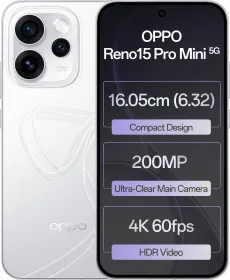


After using the OPPO Reno15 Pro Mini for over two weeks, one thing became clear very quickly. This phone exists because many users are tired of large, heavy smartphones. In a market where screen sizes and weights keep increasing, OPPO has launched a compact 6.3-inch phone that doesn’t compromise to achieve that form factor.

I have always preferred smaller phones, not out of nostalgia, but because they are easier to live with. One-handed use is simpler, long typing sessions are less tiring, and pocket comfort is noticeably better. The Reno15 Pro Mini taps directly into that preference.
2026 is shaping up to be an important year for compact devices, especially around the 6.3-inch size. The Reno15 Pro Mini is a part of this. It aims to deliver a balanced experience in a smaller body, with emphasis on cameras, software, and battery life.

So the question is not whether the Reno15 Pro Mini is good. It is whether its strengths outweigh its omissions, and whether OPPO has done enough to make this compact phone feel worth spending your money on. Let’s find out in this detailed review.
OPPO Reno15 Pro Mini Price & Availability
The OPPO Reno15 Pro Mini is available in 256GB or 512GB storage variants, both paired with 12GB of RAM. It comes in two color variants: Cocoa Brown and Glacier White. Pricing is as follows:
- 12GB + 256GB: ₹59,999
- 12GB + 512GB: ₹64,999
The phone is available through OPPO’s online store, offline retail outlets, and major e-commerce platforms across India.
Pros
- Compact 6.32-inch form factor
- Excellent battery life for a small phone
- Very good selfie camera with ultra-wide field of view and AF
- Strong portrait performance with flexible focal lengths up to 3.5X
- Reliable main camera
- Stable day-to-day performance
- ColorOS 16 offers one of the best customization and AI experiences in the segment
- IP66, IP68, and IP69 ratings with Gorilla Glass 7i protection
Cons
- USB 2.0 port at this price is hard to justify
- No NFC support
- No RAW or RAW Max shooting
- No Pro Video mode or LOG recording
- No Long Exposure photography modes
- Telephoto camera lacks telemacro capability
OPPO Reno15 Pro Mini Specifications
- Display: 6.32-inch LTPS AMOLED 1.5K, 2640 × 1216, 120 Hz, HDR10+, 1800 Nits HBM, 3600 Nits peak brightness, 1.6 mm bezels, Corning Gorilla Glass 7i
- Processor: MediaTek Dimensity 8450, octa-core CPU, Mali-G720 MC7 GPU
- RAM and Storage: 12 GB LPDDR5X RAM, 256 GB or 512 GB UFS 3.1 storage
- Rear Cameras:
- Main Camera: 200 MP Samsung HP5, 1/1.56-inch, 24 mm, f/1.8, OIS AF, 4K60/30
- Ultra-wide Camera: 50 MP OV50D, 1/2.88-inch, 16 mm, f/2.0, AF, 4K60/30
- Telephoto Camera: 50 MP Samsung JN5, 1/2.76-inch, f/2.8, 85 mm, OIS AF, 3.5X optical zoom, 30 cm MFD, 4K60/30
- Front Camera: 50 MP Samsung JN5, 1/2.76-inch, 18 mm ultra-wide (0.6X), f/2.0, AF, 4K60/30
- Battery and Charging: 6,200 mAh silicon-carbon battery, 80W SUPERVOOC wired charging, 33W PPS support
- Connectivity: 5G, Wi-Fi 6, Bluetooth 5.4, USB Type-C (USB 2.0), Dual nano-SIM, no NFC
- Audio: Stereo speakers
- Haptics: X-axis linear motor with O-Haptics
- Biometrics: Optical in-display fingerprint scanner & Face Unlock
- Build and Durability: Aluminium frame, glass back, IP66, IP68, IP69 certified
- Software: ColorOS 16 based on Android, 5 major ColorOS updates + 6 years of security patches
- Weight and Dimensions: 187 grams, 7.99 mm thickness
OPPO Reno15 Pro Mini Review: Unboxing

Inside the box, you get the phone, an 80W SUPERVOOC charger, a USB-A to USB-C cable, a clear TPU case, a SIM ejector tool, and standard documentation. A screen protector is also pre-applied.
OPPO Reno15 Pro Mini Review: Design and Build

The OPPO Reno15 Pro Mini exists at a time when compact phones are becoming rare again. With most brands pushing screen sizes beyond 6.7 inches, OPPO’s launched a 6.32-inch premium smartphone. In hand, the Reno15 Pro Mini immediately feels different.
The size is its biggest strength. One-handed use is effortless, typing is comfortable, and reaching across the display does not require extreme grip adjustments. This is the kind of phone you can use for long periods without fatigue, something that larger devices struggle with.

The phone uses an aluminium frame paired with glass on the back and front, protected by Corning Gorilla Glass 7i. Build quality feels solid throughout. Despite the smaller footprint, the phone does not feel fragile or toy-like. Weight distribution is balanced, and the phone sits comfortably in the palm.
OPPO has also gone all-in on durability. The Reno15 Pro Mini carries IP66, IP68, and IP69 certifications, meaning it is protected against dust, water immersion, and even high-pressure water jets.

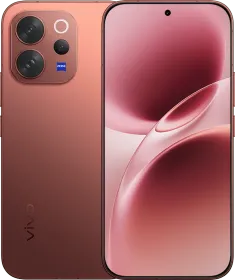
Design-wise, this is a phone that draws attention. The HoloFusion back panel with its ribbon-style pattern reflects light dynamically and is easily noticeable in public. Many people I interacted with asked about the phone and were surprised by both its size and design.
Personally though, I am not a fan of the ribbon aesthetic and would have preferred a cleaner finish, but the execution itself is high quality and clearly intentional. This is subjective, and I think many users will like it.

One disappointment at this price is the USB Type-C port being limited to USB 2.0 speeds. File transfers feel outdated for a phone positioned this high. Even more difficult to justify is the absence of NFC, which limits contactless payments and quick pairing features that many users rely on daily.
Still, in terms of ergonomics, size, weight, and durability, the Reno15 Pro Mini does perform well.
OPPO Reno15 Pro Mini Review: Display

The Reno15 Pro Mini features a 6.32-inch LTPS AMOLED display with a 1.5K resolution of 2640 x 1216 pixels and a 120 Hz refresh rate. This is not an LTPO panel, which is important to state upfront, especially given the price.
The display reaches 1800 Nits in High Brightness Mode, with higher peak brightness in supported content. In real-world outdoor usage, visibility is solid. Direct sunlight readability is not an issue, and auto-brightness behaves predictably without sudden jumps.
Bezels measure around 1.6 mm, which is slightly thicker than OPPO’s Find X9 series but still very slim for a phone under ₹60,000. They are uniform enough to keep the front looking modern and immersive.

PWM dimming is implemented properly here. OPPO uses high-frequency PWM dimming, and in daily use, it makes a noticeable difference at low brightness. I used the phone extensively at night and experienced no eye strain or flicker-related discomfort.
Color calibration is handled well. You get three profiles: Standard, Natural, and Vivid. Natural is the most balanced and accurate option, and it is the one I would recommend using. Vivid pushes saturation noticeably, while Standard sits somewhere in between.

Refresh rate switching works mostly fine. The panel scales between lower refresh rates and 120 Hz depending on usage. Some apps, such as Twitter, may stick to 90 Hz instead of 120 Hz, but this can be fixed by forcing the refresh rate to High in system settings.
Out of the box, the display defaults to 1080p resolution. You need to manually switch it to 1.5K in settings, which is something users should do immediately. Additional features include Wet Touch and Glove Mode, both of which work reliably and improve usability in real-world conditions.
The lack of LTPO means the display cannot drop to very low refresh rates for static content, which affects efficiency slightly and also the full-screen AOD, which can’t be set to “All-Day.” At this price, LTPO would have been preferable. That said, in daily use, the display remains sharp, comfortable, and reliable.
OPPO Reno15 Pro Mini Review: Speakers and Haptics

For a compact 6.3-inch phone, the speakers on the Reno15 Pro Mini are better than expected. The dual stereo setup gets loud enough for daily use and does not sound thin or hollow. Bass is present but not too deep or punchy. Compared to phones like the Galaxy S25 or iPhone 17, it lacks that fuller sound but still very good.
Haptics are well tuned. The phone uses O-Haptics with an X-axis linear motor, and vibrations feel tight and controlled. What makes the haptics better is ColorOS 16’s tuning. OPPO has clearly paid attention to how haptics are used across the system. Scrolling, switching apps, toggles, and features all have haptic integration.
OPPO Reno15 Pro Mini Review: Software

The Reno15 Pro Mini runs ColorOS 16, and it feels very close to what you get on the Find X9 series. This is not a super cut-down version of OPPO’s software. It feels like a proper flagship experience. There are slightly reduced blur effects in a few places, but most users will not notice them.

ColorOS 16 remains one of OPPO’s biggest strengths. The interface feels smooth, stable, and well put together. Animations are really smooth and the UI design is also very good, at least in my opinion. Also, the phone never feels like it is struggling, despite the smaller size.
Lock screen customization is among the best in this segment. You can adjust layouts, fonts, depth effects, and motion photos in ways that are actually useful. Home screen customization is also really good, especially with the new dark mode icons.

Unfortunately, the phone comes pre installed with plenty of unwanted apps, along with frequent notifications from the App Market and Internet apps. Most of this can be turned off, thankfully.
AI Features

ColorOS 16 is packed with a ton of AI features. You basically have everything you need. Mind Space (three finger swipe up) stands out as one of the most useful features. It lets you quickly save screenshots, notes, or ideas and later search them using the app’s own AI or Gemini integration.


Circle to Search works exactly as expected and is consistently helpful. Features like AI Recorder, AI VoiceScribe, AI Call Summary, AI Search in Settings app, AI Writer for social media posts, and AI Translate are also helpful, especially for students and working professionals.
In the Photos app, OPPO includes AI Eraser, Reflection Eraser, AI Unblur, AI Recompose, AI Perfect Shot, and AI Portrait Glow. Tools like AI Eraser and Reflection Eraser are genuinely useful. Others are more situational, but results usually look natural rather than overprocessed.
There’s also a helpful document scanner in the camera app, which allows you to quickly capture and save documents using AI upscaler, straightening, and shadow and reflection remover.

The Popout feature is also worth mentioning. You can select two to nine photos and create these super cool collages by having the subject in each photo pop out of the frame. It works with both still and motion photos, and becomes addictive once you start using it.

There is also a built-in video editor in the Photos app. It handles basic trimming, transitions, music, and effects. It has limits, but for quick edits, it works fine. For more serious editing, apps like Edits or VN still make more sense.

OPPO promises 5 major ColorOS updates and six years of security updates. This is one of the best in the segment, and still a solid commitment and gives long-term confidence.
ALSO READ: ColorOS 16 Review
OPPO Reno15 Pro Mini Review: Biometrics

The Reno15 Pro Mini uses an optical in-display fingerprint scanner. It is fast and reliable most of the time. Unlocking is quick, and false rejections are rare in normal conditions. The sensor is also placed at the bottom unlike ultrasonic scanners.
Face unlock is also available and works well in good lighting. It is fast and convenient for everyday use, but it is not secure enough for payments or sensitive apps.
OPPO Reno15 Pro Mini Review: Performance

The OPPO Reno15 Pro Mini is powered by the MediaTek Dimensity 8450, built on a 4 nm process, and is paired with 12 GB LPDDR5X RAM. Storage options include 256 GB or 512 GB of UFS 3.1, and both variants should behave identically in day-to-day usage. I have the 256 GB variant and I haven’t experienced any issues with the device so far.
In everyday use, performance is smooth and reliable. App launches are quick, multitasking is easily done, and switching between apps and games is quite smooth. There are no RAM management issues either. ColorOS 16’s scheduling also plays a key role here, keeping the experience smooth even under load.
Benchmarks
| Benchmark Test | Score / Result |
| AnTuTu v11.0.4 | 2,094,835 |
| AnTuTu Storage Test | 113,815; Sequential Read: 1744 MB/s; Sequential Write: 1781 MB/s |
| Geekbench 6 (CPU) | Single-Core: 1609; Multi-Core: 6355 |
| Geekbench 6 (GPU – OpenCL) | 12100 |
| Geekbench 6 (GPU – Vulkan) | 12250 |
| 3DMark Wild Life Extreme Test | Score: 3950; Average FPS: 23.66 |
| 3DMark Wild Life Extreme Stress Test | Best Loop: 4014; Lowest Loop: 1663; Stability: 41.4% |


Gaming performance is solid for a compact phone. BGMI runs at 90 fps natively, with an optional frame boost mode that pushes it to 120 fps. Both modes are handled well, but the latter only gets an average fps of 108 fps. In Genshin Impact, the phone averages around 56 to 58 fps, with temperatures staying under 40°C during testing in 18°C to 26°C ambient conditions.

The phone does get warm during heavy gaming and fast charging, which is expected, but there is no abnormal heating in regular usage. For its size, the Reno15 Pro Mini delivers good performance for both daily tasks and also more demanding tasks like gaming.
OPPO Reno15 Pro Mini Review: Cameras

The Reno15 Pro Mini uses the same camera hardware as the larger Reno15 Pro. On paper, the setup looks strong. You get a 200 MP main camera, a dedicated 3.5X telephoto, a 50 MP ultra-wide, and a very capable 50 MP super wide selfie camera. It clearly looks like a phone that takes cameras seriously. But does it?
In real use, the camera experience is mostly good, sometimes impressive, and occasionally frustrating. The hardware is not the problem. The limitations come from software choices and missing controls like RAW shooting that stop these sensors from reaching their full potential.
Main Camera
The 200 MP Samsung HP5 main camera is the backbone of the camera system, and overall it performs well. By default, photos are shot at 12 MP. You can manually switch to 25 MP in the settings, which is the mode I recommend using most of the time. It gives better detail than the 12 MP shots without too many compromises.


In good lighting, detail is excellent. Textures look clean, edges are sharp, and dynamic range is mostly good. HDR works fine but is not as refined as the flagship OPPO’s Find X series. In some backlit scenes, highlights are handled well, while shadows can look slightly lifted.


Low-light performance is also solid. Highlights are controlled well, and noise reduction does not go overboard. One issue is consistency when switching between 1X and 2X. Exposure and color tone shifts are noticeable and should be smoother.


Portraits
Portrait mode is one of the strongest parts of the Reno15 Pro Mini. Background blur looks natural, edge detection is clean, and skin tones are pleasing. You can smoothly zoom from 1X to 3.5X in portrait mode instead of being locked to fixed focal lengths, which makes framing much easier.


Depth mapping feels realistic, with smooth transitions between subject and background. Hair and complex edges are handled better than expected for this segment, algorithm not perfect.
Telephoto Camera
The 3.5X telephoto camera uses a 50 MP sensor with an 85 mm equivalent focal length. It works well for portraits and mid-range zoom. In daylight, sharpness is good, OIS helps with stability, and detail at 3.5X is actually good. This sensor is the same one used on phones like the OnePlus 15 and Reno14 Pro, so its behavior feels familiar.
Color consistency between the telephoto and main camera is not great. The telephoto often produces slightly different tones, which is noticeable when switching lenses.


The minimum focus distance is about 30 cm, so telemacro shots are not possible. You can try close-ups using 10X zoom or 2X crops from the main camera, but neither replaces proper telemacro. Low-light performance is okay but not impressive. HDR can become too aggressive, and images sometimes look overprocessed.


Digital zoom up to 7X is handled well. Results are consistently usable at this level. Beyond that, AI processing becomes heavy. From 10X onward, artifacts are obvious, text looks messy, and details are smudged.


Ultra-Wide Camera
The ultra-wide camera uses a 50 MP sensor with a 1/2.88-inch size and an f/2.0 aperture. In daylight, it performs well. Colors mostly match the main camera, edge distortion is expected, and sharpness is acceptable. HDR needs improvement, especially with bright highlights like neon signs.


Low-light performance is average. Sharpness drops, images look soft, and detail retention is only decent. This is clearly not a low-light-focused ultra-wide camera. For casual use, it gets the job done without major issues.


Selfie Camera
The selfie camera is the most impressive part of the camera system. It uses a 50 MP sensor with an 18 mm equivalent focal length, which makes it a super wide selfie camera. In the viewfinder, it appears as 0.6X, essentially giving you an ultra-wide camera on the front.


This makes group selfies much easier, travel shots feel wider, and framing becomes more flexible. Also, autofocus is a big advantage. It helps with vlogs, group selfies, and showcase videos, and it also improves low-light results compared to fixed-focus selfie cameras.


You can zoom up to 2X, and the results are surprisingly clean. The 2X view is so sharp that I often used it as a mirror to quickly check my appearance, which turned out to be genuinely useful. This is one of the best selfie camera experiences on a phone right now, especially for people who vlog or take group photos often.


Video Recording
The Reno15 Pro Mini supports 4K 60 fps HDR video on all cameras, including the front camera. The main camera video looks very good. Dynamic range is strong, stabilization works well, and footage is stable. Low-light video is decent, though bright lights can sometimes cause issues.

Ultra-wide video is good in daylight but struggles in low light. Telephoto video works well in daylight, including at 7X, but low-light results are inconsistent.
The selfie camera stands out again for video. Its wide field of view makes it great for travel vlogs and handheld recording. It is noticeably wider than selfie cameras on phones like the iPhone 17 or Find X9 Pro.

A major drawback is the lack of a Pro Video mode. There is no LOG recording, no advanced manual controls, and no cinematic tools. There’s a Film mode but that’s locked to a specific focal and an unknown resolution/frame rate. For a phone focused on cameras, this is disappointing.
Dual video is also available but limited. You can only use the selfie camera with the main or 3.5X telephoto lens. The ultra-wide is not supported. Videos cannot be saved separately, and you can choose from Split, Bubble, or Oblong layouts. And yes, the video resolution is 1080p.
Missing Camera Features

This is where the Reno15 Pro Mini becomes frustrating. There is no RAW or RAW Max option in photo mode, and no Long Exposure mode. These features exist on much cheaper phones, so their absence here is hard to justify.
There is a Hi-Res mode for 200 MP shots, but it cannot be forced manually. The camera automatically switches between 200 MP and 50 MP, leaving you with little control. The difference between the two is also not big enough to make the mode feel special. Hopefully, these gaps can be addressed through updates.

Overall, the Reno15 Pro Mini delivers a strong camera experience with excellent portraits and one of the best selfie cameras in its class. At the same time, missing pro controls and limited video tools are things that can be improved with updates.
OPPO Reno15 Pro Mini Review: Battery Life and Charging

The Reno15 Pro Mini features a 6,200 mAh battery that easily lasts a full day with regular use like social media, calls, messaging, photos, music, and constant 5G. I’ve been able to get a screen-on time of close to 9-10 hours, which is impressive for a phone this compact.

The standby drain is very low. Even overnight, the battery barely drops, so you never start the day feeling anxious about charge levels. Speaking of which, the 80W charger included in the box takes the phone from nearly empty to full in about 55 minutes. It also supports 33W PPS charging, which helps if you use third-party chargers.
Review Verdict: Should You Buy the OPPO Reno15 Pro Mini?
The Reno15 Pro Mini shows that compact phones can still make sense in 2026. It is small, light, and comfortable to use with one hand, without feeling like you are giving up the basics.
Battery life is great. The selfie camera is excellent, portraits are done well, and performance stays smooth even during heavier tasks. The display is bright and easy on the eyes indoors and outdoors, and ColorOS 16 feels smooth and well put together. Speakers and haptics are good, and the AI features are also useful.
That said, the ₹60,000 price is on the higher side, and omissions the lack of NFC, USB 2.0 speeds, no LTPO display, and missing pro camera features like RAW and advanced video modes are hard to ignore.
If you want full camera controls, advanced video tools, or maximum features for the price, this may not be the best pick. But if you value a compact phone that feels easy to use every day, with solid battery life, good cameras, and great software, the Reno15 Pro Mini still makes sense.

Smartprix ⭐ Rating: 8.0/10
- Design and Build: 8.5/10
- Display: 8.5/10
- Speakers: 7.5/10
- Software: 8/10
- Haptics: 7.5/10
- Biometrics: 7.5/10
- Performance: 7.5/10
- Cameras: 8/10
- Battery Life & Charging: 9/10
First reviewed in January 2026.