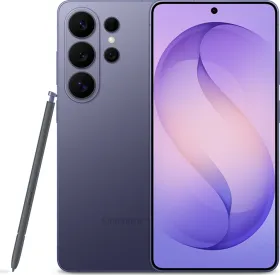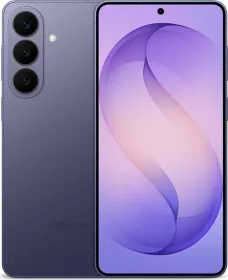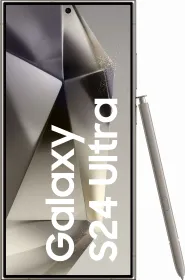


Look, I get it. Every year, I attend these briefings, and I mentally play “Spot the Difference” to see what’s new with the Galaxy S Ultra. For 2026, Samsung has made things easier by introducing one significant hardware trick and a somewhat controversial material change.
I spent an hour with the device at Samsung’s briefing here in New Delhi. After three years of sharp, stabby corners, the S26 Ultra is rounder, thinner, and feels significantly less like a weapon in your pocket. Here is what I know, what I suspect, and what feels like a marketing stretch.

| Spec | Galaxy S26 Ultra |
| Display | 6.9″ M14 OLED, 120Hz LTPO, Privacy Layer |
| Peak Brightness | 3,000 nits (Privacy Mode: ~2,550 nits) |
| Chipset | Snapdragon 8 Elite Gen 5 for Galaxy (3nm) |
| RAM | 12GB / 16GB LPDDR5X |
| Storage | 256GB / 512GB / 1TB (UFS 4.1) |
| Main Camera | 200MP ISOCELL HP2 f/1.4 (24MP default mode) |
| Telephoto | 10MP (3x) + 50MP f/2.9 (5x periscope — round) |
| Ultrawide | 50MP |
| Front Camera | 12MP |
| Battery | 5,000mAh |
| Charging | 60W wired (no charger included) |
| AI Assistant | Hey Plex (Perplexity) + Galaxy AI 2.0 |
| Software | One UI 8.5 / Android 16 |
| Starting Price | $1,300+ / ₹1,29,999 (India) |
The Hand-Feel: Subtle, But Noticeable
Opening the box, it’s the same slim packaging, cable only (no charger, as usual), which we’ve seen before with other Samsung phones. The white phone I got looked almost identical to the S25 Ultra at first, but hold it in your hand, and you can tell it’s different. The corners are softer, less sharp, so it’s way more comfortable. It still has that Ultra look, but it’s easier to live with.

That Ultraviolet titanium finish looks awesome in the light – it’s muted and kinda moody. But here’s where things get a little weird. Samsung has quietly ditched titanium, which is, like, a downgrade, I guess. The S26 Ultra uses what they call Armor Aluminum 2.0.

Why? Samsung says it’s for thermal efficiency (aluminum is a better heat conductor). I suspect it’s also about margins. Titanium was the “premium” buzzword for two years; now that the novelty has worn off, Samsung is pivoting back to a material that’s easier to mass-produce and keeps the device from overheating.

The camera bump, though? It’s bigger. Noticeably. The phone wobbles on a flat table like it’s trying to get comfortable and failing. That’s a design trade-off Samsung has repeatedly made, and it keeps not paying off ergonomically.
The Privacy Display: The Only Reason You’d Actually Upgrade
This is the headline feature, and Samsung is calling the underlying technology ‘Flex Magic Pixel.’ It lives in the display settings as a Privacy Mode toggle, and I got to play with it for a few minutes. Here’s what it looks like in practice:

When Privacy Mode is off, you get the full M14 OLED experience — Samsung claims 3,000 nits peak, and it looks stunning. Turn Privacy Mode on and hold the phone straight: everything looks completely normal. Now tilt it about 30 degrees to the side. The screen goes black. Not dim — black. To anyone sitting next to you on a plane, metro, or in a meeting room, it looks like the phone is off.

There are trade-offs. I noticed an estimated 15% brightness drop in active Privacy Mode — Samsung confirmed this. And if you look closely at the screen straight-on while it’s active, there’s a slight grain texture visible. Neither issue is a dealbreaker, but they’re real.

What I can say from my limited time: the feature feels genuinely thought-through. You can enable it per app. Leave it off for YouTube. Have it flip on automatically for your banking app or password manager. That per-app implementation is what separates this from the gimmicky privacy screen protectors people have tried sticking on phones for years.
The S-Pen: Still There, Still Good
I scribbled a few notes with the S-Pen in the brief window I had. Samsung says it has reduced input latency further this year and the first-impression verdict is: it feels fast. Writing on the screen has always been better on the Ultra than on any Android rival, and that hasn’t changed. Whether the latency is meaningfully improved over the S25 Ultra’s S-Pen is something I’d need a side-by-side to say with any confidence.
Hardware and Software: Big Numbers and AI remain the theme
The S26 Ultra is powered by the Snapdragon 8 Elite Gen 5 for Galaxy, which is Samsung’s custom version. The chip runs at 4.6GHz, and Samsung’s new Vapor Chamber 2.0 is reportedly twice as big as last year’s, which should help with heat. The unit I got had 16GB of LPDDR5X RAM and 512GB of UFS 4.1 storage. With these specs, it should be pretty reliable. Of course, we’ll be testing it thoroughly to see how it holds up under pressure.

The AI story centers on Galaxy AI 2.0, and a new Perplexity integration Samsung is calling ‘Hey Plex.’ Instead of ‘Hey Google’ or Bixby, you can set your default assistant to Perplexity and ask it to summarize a video, pull a file from cloud storage, or answer questions with live web search — all reportedly processed on-device. Whether it’s actually more useful than Google Assistant in day-to-day life is something I will genuinely tell in my review after testing.
ALSO READ: Galaxy AI on the Galaxy S26 Series: Smarter, More Context Aware, and Far More Useful
Camera: Familiar Hardware, Some Interesting Tweaks
The headline camera specs are largely unchanged: 200MP ISOCELL HP2 main sensor, 50MP 5x periscope, 10MP 3x. That last one is actually slightly smaller than before, which is an odd choice at this price. Samsung says the new ISP compensates, but that’s exactly the kind of claim that needs time to evaluate properly. Fortunately, though, the main and the 5X get an aperture bump, f/1.4 for the main, and f/2.9 for the 5X. This should lead to better depth of field and better low-light performance.

By default, it shoots in 12MP standard output and the full 200MP file — more detail without destroying your storage. That feels like a practical improvement. On 4K 120fps video: Samsung says it’s now available across all four lenses, and the transition between lenses while recording no longer produces the jarring jump that has plagued the Ultra line.

Battery & Charging: The Spec Tells You Little
5,000mAh cell, 60W wired charging. The 60W is an improvement over the 45W on last year’s model, though it still trails what Chinese OEMs have been offering for two or three years. There’s no charger in the box. I didn’t get nearly enough time with the device to say anything meaningful about real-world battery life.
Initial Impressions (based on Limited Hands-on Time)
The S26 Ultra is not going to surprise anyone who has followed Samsung’s Ultra line. It is a refinement — a good one, but a refinement. The Privacy Display (Flex Magic Pixel) is the one feature that actually feels new, and in my limited time with it, it worked as advertised. Whether it’s worth a $1,300+ or Rs 1,29,990 asking price to someone upgrading from an S25 Ultra is a question I’m not ready to answer.
If you’re coming from an S23 Ultra or older, the cumulative improvements like camera processing, AI integration, display technology, and sustained performance start to make a more compelling case. But that case needs to be made with a full review, not a first look. I’ll have that for you soon.
You can follow Smartprix on Twitter, Facebook, Instagram, and Google News. Visit smartprix.com for the latest tech and auto news, reviews, and guides.