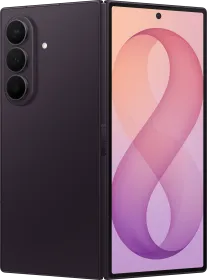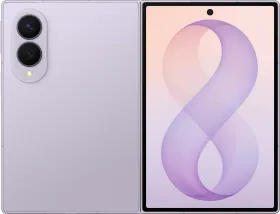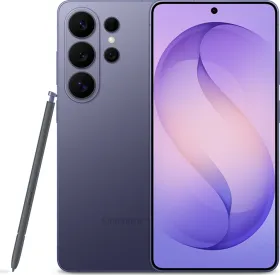


Samsung just pulled off something it hasn’t done in seven years of Galaxy foldables: it launched a book-style phone that doesn’t look like a book-style phone anymore. At Unpacked in London, the company introduced three new foldables, the Galaxy Z Fold8 Ultra (read hands-on review), the Galaxy Z Flip8, and the all-new Galaxy Z Fold8, and it’s that last one that’s got everyone talking.
Instead of being the direct Fold7 successor, the Z Fold8 name has been handed to a completely new, shorter, and wider “passport-style” foldable, while the actual Fold7 follow-up now carries the Ultra badge.
These are my hands-on impressions of the Samsung Galaxy Z Fold8, and unfolding it for the first time felt genuinely different from every Galaxy foldable that came before it. It’s built around a 4:3 inner display instead of the tall, narrow panel Samsung has shipped since 2019, and paired with a new titanium-reinforced hinge, it’s easily the biggest structural swing this lineup has taken since the original Fold. Let’s get into it.
Design

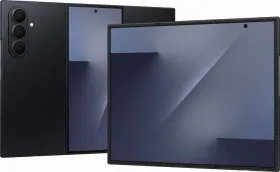
Right away, the Z Fold8 feels different and unique. Folded, it measures 81.9 x 123.9 x 9.7mm, noticeably shorter and wider than the Fold8 Ultra, sitting somewhere between that phone and the Z Flip8 in footprint, more of a squared-off block than the tall candy bar shape Samsung has stuck with for years. Unfolded, it’s 161.4 x 123.9 x 4.5mm.
At 201g, Samsung is calling this its lightest Galaxy Z Fold yet, and it’s genuinely lighter in the hand than the Fold8 Ultra (215g) despite the wider overall footprint.
The headline change, though, is the hinge. Samsung is calling it Flex Titanium, and it’s a rework of the entire display stack. Instead of the polymer support film every prior Galaxy fold has used, Samsung has slotted in a titanium-alloy film paired with an enhanced titanium plate directly beneath the OLED panel, which the company says strengthens display support, absorbs pressure and impact, and reduces crease visibility over time. It also rebalances hinge mechanics, display tension, and magnetic force to make the unfolding action itself feel smoother.
In practice, the crease is dramatically less noticeable running my thumb across the display than it was on the Fold7, closing in on what OPPO has managed with the Find N6, long considered the benchmark here. It’s taken Samsung seven generations to get here, but it finally feels solved.
The phone comes in Graphite, Cream, and Lavender, with a Pistachio colourway reserved for Samsung.com. It carries an IP48 rating, matching what we’d expect at this segment, though I’d still have liked to see Samsung push toward IP68 the way others have.
Display(s)

The cover screen is a 5.5-inch WUXGA+ panel (1,248 x 1,972, 428ppi) in a tall aspect ratio, built for vertical content like Reels and Shorts, rather than the tall sliver Samsung’s stuck with historically, and noticeably shorter than the Fold8 Ultra’s 6.5-inch cover panel, which is the whole point: this is meant to feel like a normal phone when closed, not a tall sliver.
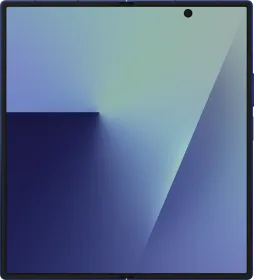
Unfold it, and you get a 7.6-inch QXGA+ panel (1,848 x 2,448, 403ppi) running a 4:3 aspect ratio, a departure from the roughly 1:1 inner screens every book-style foldable, Samsung’s included, has defaulted to. It’s designed for long-form content, articles, e-books, and web browsing without the black bars or cropping you get on a standard bar-type phone.
This is where the new shape actually earns its keep. Widescreen video still isn’t perfect on a 4:3 panel, but browsing, reading, and split-screen multitasking feel noticeably more natural than they did on the Fold7’s narrower unfolded canvas, and there’s more usable width for typing and Samsung DeX-style workflows.
Both panels run a 120Hz adaptive refresh rate and hit up to 3,000 nits peak brightness, with Vision Booster and a low-reflection finish for outdoor visibility, both new additions over the Fold7.
Hardware

The Z Fold8 runs on the Snapdragon 8 Elite Gen 5 for Galaxy, the same silicon Samsung is putting across the Fold8 Ultra and, region-dependent, the Flip8. RAM starts at 12GB on the 256GB and 512GB configurations, bumping up to 16GB on the range-topping 1TB model, a tiered approach Samsung hasn’t really done on a Fold before.
Connectivity is what you’d expect from a 2026 flagship: 5G, Wi-Fi 7, and Bluetooth 6.0, with the usual side-mounted fingerprint sensor given the folding form factor doesn’t leave room for an under-display one on either panel.
Cameras

This is the one area where the Z Fold8 is clearly the junior sibling. You get a 50MP wide (1/1.56-inch, f/1.8, OIS, AF) and a 50MP ultra-wide (1/2.55-inch, f/1.9, AF), but no telephoto at all. A 10MP camera covers the cover screen, and a matching 10MP sensor sits inside for video calls and selfies with the phone open.
Samsung is also leaning on software heavily this time: a new My FanCam feature lets you tap an object in frame and the camera will track and reframe the shot around it, alongside Dual Recording for capturing both sides of a moment at once, with aspect-ratio presets built for straight-to-social exports.
It’s a sensible enough trade-off if the pitch is a lighter, cheaper entry into book-style foldables, but anyone coming from the Fold8 Ultra’s triple setup and 200MP main sensor, or expecting Galaxy S26 Ultra-level zoom, is going to feel the gap.
Software

The Z Fold8 ships with One UI 9 based on Android 17, and the software experience takes full advantage of the larger foldable display. Samsung’s Galaxy AI features include Now Brief for personalized updates, while Now Nudge proactively suggests relevant actions based on your conversations, such as opening directions to a restaurant or reminding you when it’s time to leave.
On the Fold8, the expansive inner display lets you keep those suggestions alongside your chat or other apps, making multitasking much more seamless.
Gemini Intelligence handles much of the AI experience, with support across more than 40 apps and services for tasks like pulling up tickets, finding reservations, or booking a table.
Gemini Notebook also makes better use of the Fold8’s large inner display, letting you place notes, images, and files side by side before turning them into summaries, audio overviews, or detailed reports.
On updates, Samsung’s standard policy for flagship and foldable devices carries over: seven years of OS and security updates, putting the Fold8 on track for support into the early 2030s.
Battery and Charging

Samsung has finally moved off its long-standing battery ceiling here. The Z Fold8 packs a 4,800mAh cell, and it’s reportedly Samsung’s first smartphone to use silicon-carbon battery tech, a jump the company has resisted for years while Chinese rivals ran ahead with it. It also supports 45W wired charging, a solid jump from the 25W Samsung has capped its foldables at, and 20W wireless charging, also up from where Samsung’s foldables have sat, though still no magnetic alignment.
ALSO READ: Galaxy Z Fold8, Fold8 Ultra, and Flip8 Quietly Debut Samsung’s First Silicon-Carbon Batteries
Pricing

The Galaxy Z Fold8 starts at ₹1,79,999 for the 12GB/256GB configuration in India, with the 12GB/512GB variant priced at ₹1,99,999 and the range-topping 16GB/1TB model coming in at ₹2,39,999. In the US, pricing starts at $1,899 for the base 256GB model, rising to $2,099 for 512GB and $2,499 for the 1TB variant.
Pre-orders are open now, with shipping expected to begin the first week of August.
My Thoughts

The Galaxy Z Fold8 is the most interesting thing Samsung has done with this lineup in years, not because of the specs, but because it finally admits the tall, narrow Fold shape wasn’t working for everyone.
The 4:3 inner display makes the phone more usable day to day, the Flex Titanium hinge is the closest Samsung has come to solving the crease problem it’s had since 2019, and the lighter build makes it an easier one-handed carry than the Fold8 Ultra.
The camera setup is the obvious compromise, and buyers upgrading from a fully-specced Fold or S-series flagship will notice the missing telephoto immediately. But as a first attempt at a new form factor, arriving right as Apple is rumoured to be entering the foldable space with something similarly shaped, the Z Fold8 feels like Samsung’s most forward-looking foldable yet. Stay tuned for our full review, coming soon.

You can follow Smartprix on Twitter, Facebook, Instagram, and Google News. Visit smartprix.com for the latest tech and auto news, reviews, and guides.