

Table of Contents
Samsung has spent the last several Unpacked July events chasing one goal with its book-style foldable: make it feel less like a foldable and more like a regular flagship you happen to fold in half. The Galaxy Z Fold 7 (review) got the Korean giant quite closer to this target, shedding both weight and bulk in a way that finally brought the foldable closer to a regular flagship.
This year, instead of just refining that formula, Samsung has split it in two. Enter the Galaxy Z Fold 8 Ultra: the brand’s first attempt at solidifying its “Ultra” identity onto a foldable chassis. After spending limited hands-on time with the device at Samsung’s Unpacked briefing, here’s exactly how that translates in the hand.
| Spec | Galaxy Z Fold 7 | Galaxy Z Fold 8 Ultra |
| Main display | 8.0″ foldable AMOLED, 1968×2184, 120Hz, 2,600 nits peak | 8.0″ QXGA+ Dynamic AMOLED 2X, 2504×2256, 422ppi, 120Hz (1–120Hz), up to 3,000 nits |
| Cover display | 6.5″ AMOLED, 1080×2520, 120Hz | 6.5″ FHD+ Dynamic AMOLED 2X, 1080×2520, 422ppi, 120Hz (1–120Hz) |
| Dimensions (unfolded) | 158.4 x 143.2 x 4.2 mm | 158.4 x 143.2 x 4.1 mm |
| Dimensions (folded) | 158.4 x 72.8 x 8.9 mm | 158.4 x 72.8 x 8.9 mm |
| Weight | 215 g | 215 g |
| Chipset | Snapdragon 8 Elite for Galaxy | Snapdragon 8 Elite Gen 5 for Galaxy |
| RAM/Storage | 12GB/16GB; 256GB/512GB/1TB | 12GB RAM (256GB/512GB); 16GB RAM (1TB) |
| Rear cameras | 200MP wide (f/1.7, OIS) + 12MP ultra-wide (f/2.2) + 10MP telephoto 3x optical (f/2.4) | 200MP wide (f/1.7, OIS, now with HDR in 200MP mode) + 50MP ultra-wide (f/1.9) + 10MP telephoto 3x optical/30x Space Zoom (f/2.4) |
| Front cameras | 10MP (cover) + 10MP (main) | 10MP (cover) + 10MP (main) |
| Video | 8K@30fps, 4K@60fps | 8K@30fps (with new APV codec, Cine LUT) |
| Battery | 4,400 mAh (typical) | 5,000 mAh (typical) |
| Charging | 25W wired, 15W wireless | 45W wired (new dual-path charging), 20W wireless |
| S Pen support | No | No (not mentioned in press release) |
| Water resistance | IP48 | IP48 |
| OS | Android 16, One UI 8 | Android 17, One UI 9 |
| Launch price (US, 256GB) | $1,999.99 | $2,099.99 |
Design
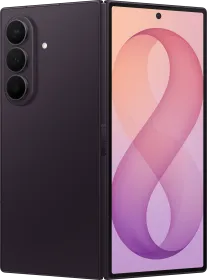
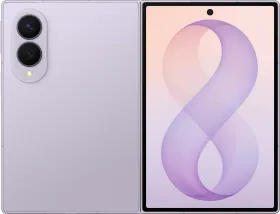
Pick up the Z Fold 8 Ultra right after putting down a Z Fold 7, and the difference registers almost immediately. Even though, on paper, this is a phone that’s only a tenth of a millimeter thinner. Samsung has shaved the unfolded thickness down to 4.1 mm, from the Fold 7’s 4.2 mm.

While that sounds negligible on a spec sheet, I’ll still say that the way the weight is distributed makes the Fold 8 Ultra feel meaningfully flatter. Folded, it comes in at 8.9mm, identical to the Fold 7, so the overall footprint hasn’t changed, and for a good reason that we’ll discuss later in the article (hint: it’s the battery).
The headline update, however, is Samsung’s new Flex Titanium hinge technology. It uses a titanium-alloy film paired with an enhanced titanium plate for reinforcing the display from underneath. Samsung has also reworked the mechanism with what it’s calling a new Flex-in arm.

The difference is tactile: the fold action needs slightly less resistance to open and close than on the Fold 7. Furthermore, there’s a smoother, more dampened feel to it, rather than the slightly springy snap you get on last year’s hinge.
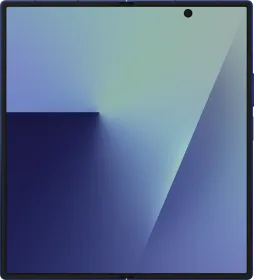
Samsung is also promising a visibly shallower crease as a result, and in the brief time we had the display lit up under showroom lighting, the crease genuinely looked less obtrusive when looking at the Fold 8 Ultra directly, and only noticeably visible at an angle. Though we’ll reserve final judgment for a longer review unit, since crease visibility is notoriously lighting- and usage-dependent.

At 215 grams, the weight itself hasn’t changed from the Fold 7.
Display
This is where Samsung has clearly decided the “Ultra” badge needs to earn its place in the lineup. Both the outer and inner panels on the Fold 8 Ultra can now achieve 3,000 nits of peak brightness. On paper, the display is brighter than the Fold 7 and the Galaxy S26 Ultra’s 2,600-nit panel.

Under the bright studio lights at the briefing area, the difference was obvious the moment we tilted the cover screen away from direct light; glare simply washed out less aggressively than it does on a Fold 7, helped along by a new low-reflection display finish.
The cover screen has also been bumped from HD+ to a full HD+ panel, and pixel density on the main display now sits at 422 ppi. In hand, text and UI elements on the inner screen appear crisper than we remember from the Fold 7, though this is admittedly a subtler upgrade than the brightness jump.

In day-to-day use, the Fold 8 Ultra’s display should be more visible, more legible, sharper, and less reflective than the Fold 7.
Hardware
Under the hood, the Fold 8 Ultra runs on the Snapdragon 8 Elite Gen 5 for Galaxy, the same chipset that powered the Galaxy S26 Ultra earlier this year, and Samsung is citing gains of 21% in AI processing, 15% in GPU performance, and 16% in raw processing power over the chip in the Fold 7.

In our limited hands-on time, which mostly consisted of navigating One UI’s menus and home screen, jumping between a handful of pre-loaded apps, and running the camera, the Fold 8 Ultra felt exactly as snappy as you’d expect a flagship Snapdragon chipset to feel.
App switching was instant, and multitasking across a split-screen layout on the large inner display didn’t introduce any kind of stutter.

However, we couldn’t push the device with sustained workload, like video editing or gaming, nor could we run synthetic benchmarks. So, we’ll reserve the final verdict about the Fold 8 Ultra’s performance for our detailed review.
Software
The Fold 8 Ultra ships with One UI 9 out of the box, built on Android 17. Samsung’s pitch this year leans into making the giant unfolded display feel like an actual workspace.

The standout addition here is a revamped split-screen mode for note-taking, which is designed to let you jot things down without ever leaving whatever app you’re already working in.
Samsung has also woven in Gemini Notebook integration, letting you drop documents, images, and recordings into a single workspace and have them converted into summaries or infographics.

Samsung’s broader push toward agentic AI is evident throughout the software layer too, from Now Brief’s expanded personalized insights to a new AI Assistant Activity dashboard that centralizes a log of what your AI has been doing on your behalf.
Cameras
Samsung has made real, tangible upgrades to the Fold 8 Ultra’s cameras. The ultra-wide lens has been upgraded from a 12MP sensor to a 50MP Quad Pixel unit, which should meaningfully close the gap between the primary and secondary lenses in both detail and low-light performance. The 200MP primary sensor carries over, but now supports HDR video capture at that resolution

Now, it’s the 10MP telephoto lens that remains the weakest link of the camera system. For content creators, Samsung has added support for the APV codec alongside Cine LUT profiles, giving the Fold 8 Ultra a genuinely more serious video toolkit than what shipped on the Fold 7.
Both the primary and ultra-wide cameras are now capable of shooting in 8K, and Samsung says the Pro Visual Engine has been enhanced to take advantage of the upgraded sensor and processor combination.

Battery and charging
Samsung has finally moved to a 5,000mAh battery, up from the Fold 7’s 4,400mAh, making it the first Samsung foldable to cross that threshold. What’s even more important is that the company has managed to keep the thickness in check while doing that.
Wired charging speeds have also climbed from 25W to 45W, while wireless charging tops out at 20W. On paper, that’s a substantial jump in both capacity and charging speed in the same product cycle, which foldables rarely get.

We weren’t able to run a genuine battery test in the time we had with the device, so real-world screen-on time and charging curve numbers will have to wait for a full review.
Pricing
The Galaxy Z Fold 8 Ultra starts at $2,099.99 / €2,199.00 / £1,899.00 for the 256GB variant, with 512GB and 1TB options also on the table.
- Fold 8 Ultra (12GB RAM + 256GB Storage): ₹1,99,999
- Fold 8 Ultra (12GB RAM + 512GB Storage): ₹2,19,999
- Fold 8 Ultra (16GB RAM + 1TB Storage): ₹2,59,999


My Thoughts
The Galaxy Z Fold 8 Ultra is Samsung finally admitting that not every Fold buyer wants the same phone. Where the Fold 7 was about proving a book-style foldable could be thin and light without compromise, the Fold 8 Ultra takes that foundation and unapologetically stacks more onto it.
Is it a bigger leap than the Fold 7 was over the Fold 6? Based on this brief hands-on, yes, particularly on battery, charging, and the ultra-wide camera, which were the most legitimate complaints anyone had left about the Fold formula. For now, though, the Z Fold 8 Ultra feels like the most convincing case yet for calling a foldable an “Ultra” phone without the word feeling like a marketing stretch.

You can follow Smartprix on Twitter, Facebook, Instagram, and Google News. Visit smartprix.com for the latest tech and auto news, reviews, and guides.