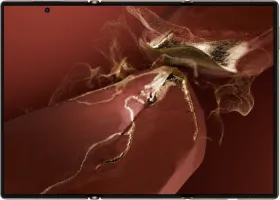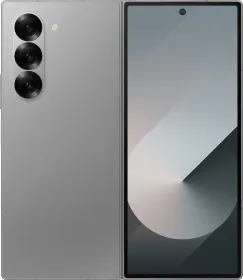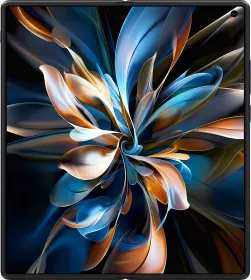


I spent two hours in a windowless room with Samsung executives and the most ridiculous phone I’ve ever seen.
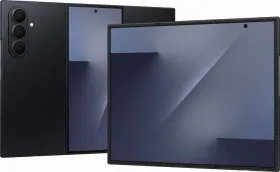
The Galaxy Z TriFold is exactly what it sounds like: a smartphone that folds twice. It starts as a slightly chunky 6.5-inch phone and unfurls into a massive 10-inch tablet. For years, we’ve seen the phones that open multiple times to turn into a tablet as glass-box prototypes at CES, but holding one is different. Tri-fold is no longer a maybe someday concept; it’s a real, functioning piece of hardware with a Snapdragon 8 Elite chip and a 200MP camera tucked inside.
Naturally, I was a skeptic. A device with two hinges usually means double the points of failure, double the thickness, and a price tag that rivals a used car. But after folding and unfolding this thing until my thumbs got tired, Samsung’s vision for the all-in-one device is finally starting to make sense.

The Galaxy Z TriFold is already on sale in South Korea and is expected to roll out to the US, China, and the UAE next. India, for now, has been left out of Samsung’s plans.
There are still big questions about the $2,600 price tag and whether that 12.9mm thickness is a deal-breaker, but one thing is clear: the era of the single-fold phone suddenly feels very dated.
Samsung Galaxy Z TriFold hands-on review: Design and Build Quality
Samsung Galaxy Z TriFold has only one other phone to compare, i.e., the Huawei Mate XT, which is also available in only certain regions. Comparing the two foldables, what immediately sets the Galaxy Z TriFold apart from its main rival, Huawei’s Mate XT, is Samsung’s decision to use an inward-folding design. While Huawei wraps its screen around the outside in a risky manner, Samsung’s 10-inch display folds neatly into itself. When closed, that delicate panel is completely protected by the frame.

It is a subtle but smart choice that prioritizes long-term durability over the visual theatrics of an always-exposed screen. The two titanium hinges feel appropriately overengineered, offering a smooth, stable action with no creaking or flex, even though a tri-fold design inherently invites double the mechanical stress of a standard foldable.

Because the device must be folded in a specific sequence, the left panel first, then the right, Samsung has added a surprisingly thoughtful protection system. If you try to force it shut the wrong way, the screen flashes a visual warning while the haptics kick in, vibrating more aggressively the further you push. This shows how much thought Samsung engineers have put into developing this sophisticated piece of tech.

As for the elephant in the room, the tri-fold layout does introduce two visible creases. However, once content is on the screen, it is less distracting than you might imagine, fading away unless you catch a direct reflection of a ceiling light.

The physical experience of the TriFold is a total contradiction. Fully unfolded, the device is shockingly thin, measuring just 3.9mm at its thinnest point. In this state, it feels almost paper-thin, more like a high-end tablet than a phone. But fold it shut, and reality hits hard. At 12.9mm thick and 309 grams, the TriFold becomes unapologetically brick-like.

It is noticeably bulkier than the Galaxy Z Fold 7 and roughly the weight of two flagship phones stacked together. One-handed use is technically possible but rarely comfortable, and the top-heavy balance will quickly remind you that this is a device meant for two hands and a serious workflow.
Samsung leaned heavily on premium materials to keep this massive structure rigid. The frame is built from Advanced Armor Aluminum, while the back panel opts for a ceramic-glass fiber-reinforced polymer instead of traditional glass.
This choice keeps the weight from spiraling even higher and improves durability, though the glossy finish is a total fingerprint magnet. For protection, the TriFold carries an IP48 rating, meaning it can survive a splash but isn’t fully sealed against the dust of the real world. Ultimately, it’s a masterclass in engineering that forces you to accept a very heavy pocket in exchange for a 10-inch screen that actually fits in one.
Samsung Galaxy Z TriFold hands-on review: Display

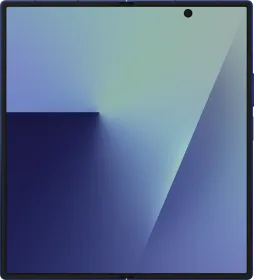
The Galaxy Z TriFold’s display is the sole reason this $2,600 experiment exists. When you finally unfurl the dual hinges, Samsung delivers a 10-inch AMOLED panel that feels like the first true bridge between a phone and a tablet. It isn’t just a slightly larger phone; it’s a distinct shift in scale. With a 2160 x 1584 resolution and a 4:3 aspect ratio, the TriFold immediately feels more Samsung Tab from the Galaxy S line-up. That ratio pays off the moment you open YouTube or Netflix movies, which fill the screen with much smaller black bars (compared to Galaxy Z Fold7), making it feel less like a stretched smartphone.

The inner display brightness tops out at 1,600 nits, which is perfectly fine for indoor and outdoor use, but if you compare it to the outer display, it falls short as the outer panel has a peak brightness of 2,600 nits. In real-world use, that inner display is vivid, sharp, and remarkably immersive. Yes, there are two creases instead of one, but as with every foldable since 2019, you have to live with a slight crease, but there has been a reduction with every generation.
Samsung Galaxy Z TriFold hands-on review: Software
Running Android 16 with One UI 8, the Galaxy Z TriFold’s software is designed to justify its massive footprint, and for the most part, it succeeds. The real magic happens when you realize that this 10-inch canvas isn’t just a bigger phone screen; it’s a distinct workspace. Because the display is divided into three physical panels, Samsung allows you to run three apps side-by-side in a way that feels natural. Unlike cramped, letterboxed layouts on standard foldables, each app on the TriFold maintains a proper smartphone aspect ratio. This is the first time multitasking doesn’t feel like a compromise to me.

But the headline feature of the Galaxy Z Trifold software is standalone Samsung DeX. For the first time, you don’t need a docking station or an external monitor. You can launch a full desktop environment directly on the 10-inch screen, complete with a taskbar and floating, resizable windows. During my briefing, a Samsung executive claimed the device could handle four parallel desktop environments simultaneously, each running a distinct set of apps.

While my limited hands-on time didn’t allow for a full stress test of this multi-desktop mode, the promise is staggering. Imagine having one desktop entirely dedicated to your Slack and email, a second for a full-screen browser, and a third for a 200MP photo edit, all switchable with a gesture. If this works as flawlessly as Samsung claims, the TriFold isn’t just a phone that unfolds into a tablet; it will allow you to leave your laptop at home and, if required, handle everything on the phone. For power users, there is still an Extended Mode to connect to a monitor, but with a 10-inch screen always at the ready, you might finally leave the laptop at home.
Samsung Galaxy Z TriFold hands-on review: Hardware & Performance
To make a 10-inch display and true three-app multitasking feel effortless, Samsung has predictably gone big on internal hardware. At its core is the Snapdragon 8 Elite chipset, paired with a massive 16GB of RAM. While this isn’t the newer Gen 5 variant making waves in early 2026 flagship rumors, performance never feels constrained even when pushing the device into desktop-style workflows with local DeX. Apps stay responsive, windows don’t stutter, and the TriFold largely avoids the thermal hiccups you might expect from a form factor this ambitious.
Because this was a tightly controlled hands-on session, we didn’t get to run a full suite of benchmarks. However, in real-world use, toggling between 8K video playback, dozens of Chrome tabs, and three simultaneous apps, the experience was flawlessly smooth. Storage options range from 512GB to 1TB, which feels less like a luxury and more like a necessity once you consider how easily a 10-inch screen invites heavy media consumption and massive file downloads.
Samsung Galaxy Z TriFold hands-on review: Camera Hardware
For all its ambition elsewhere, the Galaxy Z TriFold plays it safe with its optics. The rear setup mirrors the Z Fold 7 almost exactly: a 200MP main sensor, a 12MP ultrawide, and a 10MP 3x telephoto. It’s a capable trio, but on a device that costs north of $2,500, that familiarity feels like a missed opportunity.

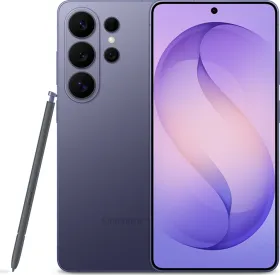
The biggest disappointment is the lack of Ultra-level zoom. While the 200MP main camera is a beast for detail, the telephoto setup falls well short of the Galaxy S26 Ultra’s periscope lens. Given that the TriFold’s massive screen doubles as the world’s best viewfinder, the absence of a high-end 5x or 10x optical zoom feels like a curious corner to cut. You get two 10MP selfie cameras, one on the cover and one embedded in the main inner screen, which are perfectly fine for Zoom calls, but don’t expect them to revolutionize your photography
Samsung Galaxy Z TriFold Hand-on Review Conclusion
The Galaxy Z TriFold is likely the most honest device Samsung has made in years. We’re living in an era of boring, minor phone updates, but this is a massive leap. By cramming a 10-inch screen into your pocket, Samsung is moving past the “cool factor” of folding glass and into actual productivity. This is the first device that actually has the potential to let you leave your laptop at home when you’re heading out on a trip or traveling to give a presentation.
But let’s me say this: the TriFold isn’t for everyone yet, and Samsung isn’t pretending it is. Between the limited release and the eye-watering $2,600 price tag, this is a look what we can do statement rather than a phone for the average person. It is a version one in every sense, meaning it’s expensive, heavy, and a little rough around the edges.
If you’re the kind of person who wants the absolute latest tech and doesn’t mind a bit of extra weight in your pocket, the TriFold is a revelation. For everyone else, it’s a fascinating look at where our phones are heading next.
First published in January 2026.