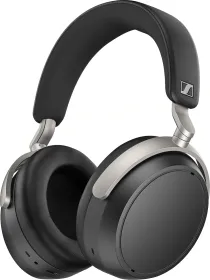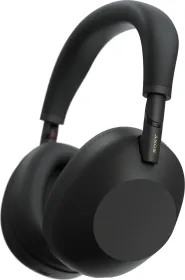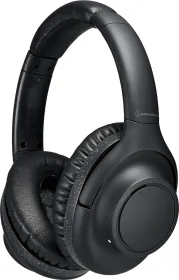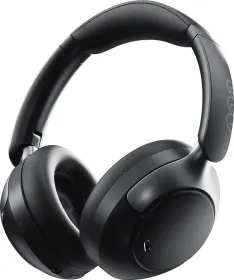


The premium wireless headphone market in India has grown rapidly over the last couple of years. The segment, once dominated by feature-heavy, travel-first ANC headphones, has now split into two broad categories: devices that prioritize class-leading noise cancellation and great sound quality (including Sony and Apple), and devices that offer excellent audio output and noise cancellation.
The latter has a rapidly growing audience, especially among enthusiasts and professionals, and that’s who Sennheiser has traditionally catered to. The Sennheiser HDB 630 enters this space with a clear intent: to deliver a refined, audiophile-leaning sound signature, long battery life, and versatility for use both wirelessly and with a cable.
I’ve spent about four weeks with the headphones, using them for music, movies, calls, and long indoor listening sessions, and it became clear to me that the headphones aren’t designed to impress in the first five minutes, but they surely grow on you with time. So, where does the HDB 630 stand in the country’s premium headphone market? Let’s find out in this detailed review.
Sennheiser HDB 630 Price & Availability
The Sennheiser HDB 630 is available on Amazon for Rs. 44,990. Buyers can also claim a Rs. 2,500 discount on HDFC bank EMI transactions, reducing the effective price of the headphones to Rs. 42,490.
Pros
- Natural, audiophile-grade sound
- Excellent midrange clarity
- Precise imaging and separation
- Deep, layered soundstage
- Tight, controlled bass
- Refined, non-fatiguing treble
- Strong wired listening performance
- BTD 700 elevates wireless audio
- Supports multiple high-res codecs
- USB-C audio with charging
- Outstanding 60-hour battery life
- Comfort Calls improve voice clarity
- Robust, premium build quality
Cons
- ANC not class-leading
- Transparency mode feels restrained
- No official IP rating
- Touch controls are overly complex
- Clamp pressure over long sessions
- Earcups can get warm
- Limited portability for travel
- Revealing of poor recordings
- Bass may feel conservative
- App learning curve for beginners
Sennheiser HDB 630 Review: Design & Build

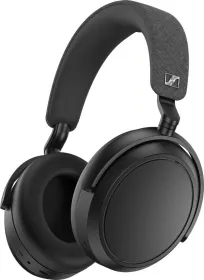
The last Sennheiser headphones I reviewed were the Momentum 4 Anniversary Edition, which had a very happening, young, graffiti-inspired design. However, the HDB 630 has a simpler, cleaner, and minimal aesthetic. It clearly leans more toward an audiophile-first, indoor-listening audience than toward a lifestyle- or travel-centric user base.
The device’s exterior plays more with textures than colors. While the shells and yokes are dark gray and silver (with a matte finish), respectively, both of them have a matte finish. The materials feel rigid and well-reinforced, with no noticeable creaks or flex when handled or twisted, reinforcing a more studio-grade build quality.

The exterior of the headband has a plush leatherette finish (quite premium to the touch), while the inner lining is relatively softer and smoother. The headband adjustment mechanism offers adequate extension for larger head sizes; it uses firm, click-based steps that hold their position securely over time.
Earcups, like the headband, also have a leatherette finish (with a finer grain) and a soft yet firm (enough for grip) cushion padding, which results in fairly decent isolation. The clamp force out of the box feels moderate: not too tight, but firm enough to maintain a consistent seal, even for spectacle wearers.

Inside, you get the angled 42 mm drivers beneath the fabric mesh, which allow sound to pass through while preventing any grime or dust from settling directly on the drivers over the long term. That said, the earcups aren’t especially deep, and the padding compresses slightly over longer sessions, which could affect comfort for users with larger or protruding ears.
While my ears didn’t touch the inner mesh lining, it could be a concern for people with relatively larger ears. It is the right earcup that houses a touch-sensitive exterior for media controls and the power/pairing button, an LED status indicator, a USB-C port, a 2.5mm jack input, and what looks like a microphone mesh (there’s one on the left earcup as well).

And yes, the earcups can swivel; you can fold them flat to keep in the case or rest them around your neck. The weight distribution is well-balanced between the headband and earcups, so wearing them around the neck doesn’t feel particularly fatiguing, despite their size.
Speaking of the case, you get a high-quality hardshell carry case in the box, which includes dedicated compartments for the USB-C cable, the 2.5 to 3.5mm analog cable, the airplane adapter, the BTD 700 Bluetooth dongle, and a quick start guide. The ports on the headphones sit flush with the housing and feel secure, with good strain relief when using them in wired mode.

I mostly used the headphones wirelessly and could easily wear them for about two to three hours. The headband features a generous inner lining, resulting in a comfortable fit. However, it was beyond the three-hour mark that I felt slight pressure roughly two inches above my ears (toward the end of the headband).
Furthermore, I noticed more-than-usual sweating while wearing the headphones, typical of leatherette padding designed more for isolation than breathability. That doesn’t have anything to do with the device’s weight, though, which is exceptionally well-managed at 311 grams (especially given the headphones’ bulky appearance).

The balanced weight distribution makes them feel lighter in practice. The Sennheiser HDB 630 are meant for indoor use, which is probably why the headphones don’t include any official IP rating or water resistance. Even the passive isolation from the earcup seal alone is reasonably practical before engaging ANC, further reinforcing their indoor-focused design.
You wouldn’t want to wear them for a workout either, as the comfort-oriented fit isn’t ideal for quick movements. Overall, the design prioritizes consistency and long, seated listening sessions over portability or active use.
Sennheiser HDB 630 Review: Sound Quality

The moment you turn on the headphones and place them over your ears, their intent is immediately clear. While the HDB 630s aren’t tuned to impress you in the first five minutes (perhaps with exaggerated bass or hyped highs), they take a far more mature, audiophile-leaning approach toward sound quality, one that rewards careful listeners and detail-seekers.
The bass is punchy, tight, and articulate, with absolutely no muddiness or bloating. Sub-bass extension is there, but it never overtakes the mid-range. In fact, Sennheiser has programmed the bass to be behind the mids in the overall mix, a conservative yet impactful move. This type of tuning complements genres such as acoustic, classical, and jazz, as well as well-mastered EDM.
For those who want slightly enhanced low-end presence, there is a “Bass boost” button in the Sennheiser Smart Connect Plus app. It adds a certain weight to the bass, but purists might prefer the headphones’ native sound signature.

The mid-range is where the HDB 630 truly shines, delivering vocals (both male and female) with utmost realism. Instrument timbre hits just the right spot, with pianos having proper decay and guitars retaining their woody sound and texture (slightly better than that on the Sony WH-1000XM6). However, there are a few instances where the mids seem a little too aggressive, exposing harshness in poorly mastered tracks. The bright side is that the headphones don’t sugarcoat music tracks.
Moving to the high end, the HDB 630’s tuning is refined, controlled, and well-balanced. There’s enough sparkle to make the audio sound engaging, along with crisp cymbals and hi-hats. There are occasions when the treble is slightly brighter than what hardcore audiophiles might prefer, but there’s no sibilance or sharpness. Anyway, there’s enough air and openness to the presentation.
The soundstage is another standout aspect of the Sennheiser HDB 630 headphones. It’s noticeably wider than the Momentum 4, with a more realistic sense of space and placement. This is more noticeable when listening to orchestral music or tracks with multiple layers of instruments. Speaking of instruments, their separation is excellent as well, to the point that I can easily pick out individual elements.

I also want to take a moment to appreciate the BTD 700 Bluetooth dongle included in the box. Connecting the dongle to my iPhone 17 (review) upgraded the Bluetooth codec from SBC to aptX Adaptive or aptX Classic, with an immediate improvement in sound quality, including a much wider soundstage. The dongle supports multiple Bluetooth modes, including Classic, Low Energy, LC3, aptX Adaptive, aptX Classic, AptX Lossless, SBC, Auracast broadcasting mode, and a low-latency (30ms) gaming mode.
While the main output format depends on the device you’re using, you can double-press the button on the dongle to enter Auracast mode and triple-press to enable gaming mode. The soundstage gains immense depth, making spatial cues more defined, and the presentation feels more three-dimensional than on any other headphones I’ve tried in a while. A USB-C to USB-C cable is included in the box, providing better audio output than regular Bluetooth pairing (with plenty of micro-details and vocal breathiness).

In terms of overall sound signature, the HDB 630 delivers a natural, deep, and balanced presentation. It’s not the typical V-shaped tuning Indian listeners are accustomed to (as many budget and mid-range headphone makers prefer), nor is it aggressively analytical like reference headphones. Instead, they strike the perfect balance among realism, clarity, and musicality, making them a great choice for listeners who value sound fidelity above all else.
Sennheiser HDB 630 Review: Noise Cancellation & Transparency

The Sennheiser HDB 630’s adaptive noise cancellation feels very much in line with that of the Momentum 4: balanced and non-intrusive. However, it is dramatically different from what other flagship ANC headphones offer. The HDB 630 doesn’t drop you into a vacuum that eliminates 90-95% of the environment’s noise.
Instead, the headphones gently reduce background noise, leaving the music clear and detailed without artificial pressure or sound-tuning artifacts. The headphones handle typical sounds, such as the engine hum in a car, the air conditioner in a flight, or the kitchen chimney’s rumble, quite respectably. But the headphones can only reduce noise by about 70%.
It lets in more sound than you’d expect in this segment, which is why the noise cancellation is behind the headphones, like the Sony WH-1000XM6 or the AirPods Max. So, if you’re a frequent commuter or flyer, or someone who wants absolute quiet to focus in the middle of a busy cafeteria or office floor, the HDB 630 could disappoint you.

On the plus side, the HDB 630 ANC doesn’t noticeably affect the headphones’ sound quality; the sound remains natural and detailed, with no reduction in clarity. It could be that the less-aggressive noise cancellation is a result of a conservative approach to preserving audio fidelity.
The transparency mode, on the other hand, is slightly better. It lets the ambient sounds in smoothly, with enough clarity to have conversations without removing the headphones. However, like noise cancellation, the passthrough isn’t as aggressive and lifelike as you’d find on the competition, so you might not notice enough input while listening to songs. While the transparency isn’t quite open and realistic, it serves its purpose.
In the Smart Connect Plus app, you can adjust the intensity of noise cancellation or transparency using a horizontal slider. Moreover, Sennheiser has prioritized musicality over absolute isolation or lifelike transparency.
Sennheiser HDB 630 Review: App & Connectivity

As mentioned earlier, you’d need the Sennheiser Smart Control Plus app to access and tune the HDB 630 to your liking. The app has a minimal yet functional user interface that lets you manage how the headphones sound, control the noise cancellation or transparency intensity, and other features like Sound Zones and Find Headphones.
While I’ve already explained the app in detail in my Momentum 4 review, the HDB 630 does come with some unique features. For instance, there’s the Parametric EQ that lets you fine-tune specific frequency bands (instead of pre-set bands in regular equalizers), adjust gain, and subtly reshape the sound without breaking the natural balance. Moreover, the HDR 630 offers more granular control over sound.

Then there’s the Crossfeed feature, which, when enabled, blends a small portion of the left channel into the right, and vice versa, as if the sound is coming from a speaker setup. In real life, the feature helps center vocals and instruments, but it also narrows the stereo image and makes spatial cues less defined. Some tracks may sound softer or less dynamic when the feature is enabled.
While the Noise Control section remains the same, enabling the Anti-Wind option (which reduces wind noise in ANC) had a slight impact on sound quality, making it slightly heavy. If you’re using the BTD 700 dongle, you can use the Connection Management section to switch between your device’s Bluetooth and the dongle. In the Settings section, you can enable the Hi-Res 24-bit / 96 kHz mode.

The section also includes features such as on-head detection (which works better than the Momentum 4), Smart Pause (pauses music when you take the headphones off), Auto-Answer Calls (answers calls when you put on the headphones), Auto Power Off, and Tone & Voice Prompts.
What I really liked is a feature called Comfort Calls, which gives phone calls a more natural, wider soundstage. So, if someone is saying something behind the caller, you’ll actually feel that the voice is coming from a different direction in the soundscape. This makes conversations feel more natural and less fighting.

The headphones include support for a wide array of codecs, including SBC, AAC, aptX, aptX Adaptive, LC3, and aptX HD. Further, they also support audio output via a USB-C cable and an analog cable provided in the box. Hence, there are plenty of options for you to connect with the headphones.
The touch controls on the right earcup, however, remain a sore spot for me, simply because there are 15 different finger-based gestures to learn. There are the slide up/down for increasing/decreasing volume, spreading/pinching for increasing/decreasing transparency, sliding front/back for playing the next/previous track, and tapping once to play/pause the music.
Sennheiser HDB 630 Review: Battery Life

Like the Momentum 4, the HDB 630 claims to offer up to 60 hours of battery life with ANC enabled (double the claimed battery life of the Sony WH-1000XM6 and more than double that of the AirPods Max). Further, the headphones can provide up to 7 hours of playback with just 10 minutes of charging.
In my experience with the device, I used it for around four weeks, averaging three to four hours of listening time every day (a mix of podcasts, music tracks, Netflix, and YouTube at around 60% volume), and I only charged the device twice. Considering that I have a no-screen-time rule on weekends, I used the device for around 80 hours during the tenure. While I’m compiling this review, the device has about 50% of its battery life left.
So yes, the Sennheiser HDB 630 headphones deliver on the claimed 60-hour battery life, perhaps around 55 hours in the real world, but even then, they are miles ahead of the competition. Given that the LED lights keep blinking during wired connection, the headphones charge via the wired connection while simultaneously allowing playback.
Review Verdict: Should You Buy the Sennheiser HDB 630?
The Sennheiser HDB 630 is built for listeners who prioritize sound quality above everything else. Its natural, mid-forward tuning, excellent instrument separation, and deep, three-dimensional soundstage (especially with the BTD 700 dongle, since I’m an iPhone user), make it one of the most musically satisfying wireless headphones I’ve used in a while. Add class-leading battery life, robust connectivity options, and a feature-rich companion app to the mix, and you get a product that feels purpose-built for focused listening sessions.
However, the HDB 630 lags behind in a few aspects, including noise cancellation, effortless touch controls, or a travel-first design. The headphones are deliberately conservative, the earcups could run warm over time, and the gesture-heavy controls take patience to learn. At Rs. 44,990 (Amazon), the HD 630 are among the most premium wireless headphones available in India, making it a tad less accessible to the masses.
Who should buy: listeners who prioritize natural, detailed sound quality, long battery life, and versatility across wired and wireless modes.
Who should avoid: those who want the strongest ANC, intuitive touch controls, or a travel-focused design over pure audio fidelity.

Smartprix ⭐ Rating: 8.3/10
- Sound: 8.75/10
- Design and Build: 8.50/10
- Fit and Comfort: 8.25/10
- Controls: 8.00/10
- Companion App: 7.50/10
- Connectivity: 9.00/10
- Noise Cancellation: 7.50/10
- Microphones: 8.00/10
- Battery and Charging: 9.00/10
First reviewed in December 2025.