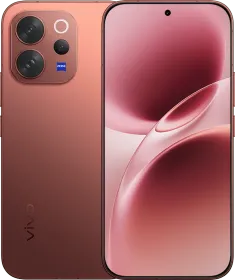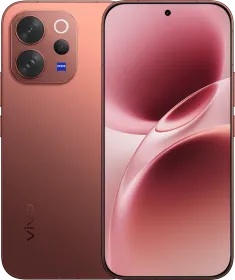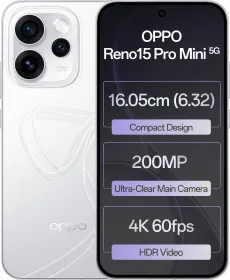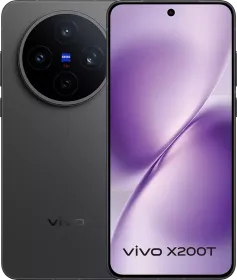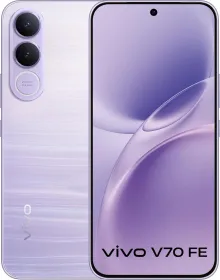


The vivo V-series has always had a clear identity in India: slim design, Zeiss cameras, portrait-first photography, and polished software. What it has never had is a genuinely powerful processor. The vivo V70 Elite changes that. For the first time in V-series history, vivo has put a Snapdragon 8-series chip – the 8s Gen 3, into a V phone. The result is a phone that can do things the V60 simply couldn’t: handle demanding games without throttling, multitask without hesitation, and process camera computations faster than you’d expect at ₹51,999.
I have been using the Sand Beige variant for this review, and the short answer is: this is the best V-series phone vivo has made. But “best V-series phone” and “best phone at ₹51,999” are not the same thing. The OnePlus 15R and OPPO Reno 15 are real competition here. Whether the V70 Elite earns the premium over the standard V70 (starting at ₹45,999) comes down to whether you actually use what the Elite’s chipset unlocks. Here is the honest breakdown.
vivo V70 Elite Price & Availability
The vivo V70 Elite comes in a single 8GB + 256GB variant priced at ₹51,999 in India. The phone is available across major online platforms, vivo experience stores, offline retailers, and vivo e-store.
Pros
- Premium slim aluminum design
- IP68 and IP69 rated
- Bright 120Hz OLED panel
- Reliable ultrasonic fingerprint scanner
- Fast LPDDR5X RAM
- UFS 4.1 storage speeds
- Excellent 3.5x telephoto results
- ZEISS portrait styling modes
- 6,500 mAh battery with 90W charging
- Polished OriginOS experience
- Extensive customization options
Cons
- 8MP ultrawide is not that great
- USB 2.0 Type C port
- No Gyroscope
- No LTPO refresh rate
- AI overprocessing beyond 20x
- USB-A charging brick
vivo V70 Elite Specs:
- Display: 6.59″ AMOLED LTPS, 2750×1260 (1.5K), 459 PPI, 120Hz, 5000 nits peak / 1800 nits HBMs
- SoC: Qualcomm Snapdragon 8s Gen 3 (4nm), Adreno 735 GPU
- RAM: 8GB or 12GB LPDDR5X
- Storage: 256GB or 512 GB UFS 4.1
- Rear Cameras: 50MP Sony IMX766 f/1.88 OIS (primary) + 50MP Sony IMX882 f/2.65 3.5x OIS (telephoto) + 8MP f/2.2 115° (ultrawide) — ZEISS optics
- Front Camera: 50MP f/2.0 AF, 92° FOV, 4K30/60
- Speakers: Dual stereo speakers
- Battery and Charging: 6,500mAh Li-ion, 90W wired fast charge
- Build: Aluminum frame, glass back, IP68 + IP69 certified
- Connectivity: 5G, Wi-Fi 7, Bluetooth 6.0, NFC, USB 3.0 Gen 1, eSIM, 4 mics
- Biometrics: 3D ultrasonic fingerprint scanner, face unlock
- Weight and Dimensions: 157.5 × 74.3 × 7.4mm (Black) / 7.6mm (Beige/Red) and 187g (Black) / 194g (Beige/Red)
vivo V70 Elite Review: Design and Build
Hold the V70 Elite for five minutes, and you understand what vivo has been refining for years. At 7.6mm slim and 194g in the Beige variant I have been testing, it occupies the precise middle ground between this feels premium and this is actually pocketable. The flat aluminum alloy frame has just enough texture to grip well without feeling industrial, and the soft-touch glass back is the rare material that looks better after a week of handling than it does on day one. I have not used a screen protector during this entire review period, and while the front glass has yet to pick up any noticeable scratches.

vivo has carved its name into the lower left of the back panel in a subtly reflective finish that catches light differently from the surrounding soft-touch surface. The camera module, with its metallic ring and slightly different surface finish, is bold without being garish. The one functional downside: it protrudes enough to cause consistent wobble on flat surfaces. If you work at a desk and constantly pick your phone up and put it back down, this will bother you. A case solves it, but the included case is thin enough that the wobble persists.


The IP68 and IP69 ratings are worth dwelling on because IP69 is meaningfully rarer than IP68 at this price point. IP68 means it survives submersion; IP69 means it can handle high-pressure, high-temperature water jets. In practice, you can confidently use this phone in heavy rain, rinse it under a tap, or hand it to someone at a poolside without anxiety. That is a legitimate premium feature, not a marketing addition.

If you are choosing between colours: the Authentic Black uses Glass Fiber rather than glass for the back panel, weighs 7g less at 187g, and is 0.2mm thinner. It is the better choice if portability is your priority.
The Beige and Red variants look more premium, but you carry the extra weight all day. The asymmetric bezels — bottom bezel at 1.77mm versus side bezels at 1.25mm — are a minor imperfection that most users will not consciously register, but that becomes obvious if you place the V70 Elite next to a phone with true uniform bezels. It is not a dealbreaker, but at ₹51,999 it is the kind of fit-and-finish detail that competitors like Nothing are starting to get right.
vivo V70 Elite Review: Display
The 6.59-inch 1.5K AMOLED (2750 × 1260, 459 PPI) is one of the sharpest panels in its price band. The 5,000 nits local peak brightness is not a marketing number that only lights up in a controlled lab test — under direct afternoon sun, the screen stays readable where most competitors start squinting. Global HBM brightness sits at 1,800 nits, which is ample for normal indoor and outdoor use.

This is an LTPS panel, not LTPO, so it does not get a truly variable refresh rate. The smart adaptation mode locks the display at 120Hz for scrolling and navigation, drops to 90Hz for video apps, and 60Hz for static content. Battery impact is real but manageable. The display ships set to HD (1080p) by default — go to Settings → Display → Screen resolution and switch to the full 1.5K straight away; the sharpness difference is immediately visible.

Three colour modes are available: Natural (the most accurate), Professional, and Bright. Natural is the right choice for day-to-day use. HDR10+ support is present, and the display handles high-dynamic-range content on Netflix and YouTube well.
vivo V70 Elite Review: Speakers and Haptics
The dual-speaker setup, which includes an earpiece and a bottom-firing driver, is genuinely loud when used together. But the bottom speaker does most of the heavy lifting, and the balance is noticeably uneven. Streaming music on Spotify or watching YouTube reveals a treble-heavy sound profile with limited bass. Switch to gaming (BGMI, COD Mobile), and the audio quality improves considerably. The stereo effect is real but shallow. At this price, the OnePlus 15R offers a more balanced output.
The X-axis linear haptic motor is one of the best things about this phone that nobody will mention in a spec sheet. Typing, navigation taps, and notification pulses all feel crisp and intentional, a level above what you typically find in the sub-₹60,000 bracket. The phone syncs haptic feedback with in-game actions in Ultra Game Mode, which adds genuine texture to gaming sessions.
vivo V70 Elite Review: Biometrics

The 3D ultrasonic in-display fingerprint scanner is fast, consistent, and works with wet fingers — a genuine advantage over optical scanners. Enrollment takes under 30 seconds, and failure rates during extended testing were negligible. Face unlock is available but uses an optical sensor, not 3D face data, so it should not be used for payment authentication. For anything security-sensitive, use the fingerprint scanner.
vivo V70 Elite Review: Performance
The Snapdragon 8s Gen 3 paired with LPDDR5X RAM and UFS 4.1 storage represents the most significant internal upgrade in V-series history. The combination matters more than any individual component: UFS 4.1 storage means apps launch at a speed that feels genuinely different from UFS 2.2 devices, LPDDR5X RAM handles multitasking with less overhead, and the 8s Gen 3 itself processes camera computations, AI features, and gaming workloads at a tier the V-series has never operated at before. This is not a marginal improvement over last year — it is a category jump.

Day-to-day usage is smooth in a way that high-end chips make possible, but mid-range processors rarely achieve: not just no lag, but a fluency where the phone responds to intent rather than input.
Opening the camera from the lock screen, switching between a dozen Chrome tabs and a running video, and editing a photo immediately after shooting it, all of these transitions happen without the brief hesitation that reveals a processor working. After extended time with this phone, going back to a mid-range device feels like switching from automatic to manual.

Gaming is where the chipset advantage over the standard V70 becomes viscerally clear. COD: Mobile at Very High graphics and Max frame rate held a steady 59–61fps across extended sessions with no notable throttling, and peak temperatures reaching 41°C indoors make it warm, but not uncomfortable. Genshin Impact at High settings maintained a clean 60fps; pushing to Very High made 30fps unstable, which is expected behaviour at this tier. BGMI at 90fps is stable and smooth, and the phone supports the frame rate reliably rather than advertising it and then dropping to 60fps when the scene gets busy.
Benchmarks
Antutu: 1731345;
Antutu Storage test:135407
3DMark
Best Loop Score: 2197
Lowest Loop Score: 1660
Stability: 75.6%
Geekbench 6
Single-Core Score: 1970
Multi-Core Score 4866
These are strong numbers for the segment. The chip is the same silicon as competing phones, so the differentiator is thermal management and software optimisation rather than raw horsepower. Two genuine concerns. First, RAM management is aggressive on the 8GB base model.
The phone kills background apps at the sixth or seventh slot, which becomes noticeable when you switch away from a game and return to find other apps have been restarted. The 12GB variants handle this significantly better, and I would strongly recommend paying the extra ₹5,000 for the 12GB+256GB configuration if you are a heavy multitasker.
vivo V70 Elite Review: Software
OriginOS 6 on Android 16 is a genuinely polished Android skin. The three-dimensional Space System UI uses layered cards, translucent textures, and gradient blur. It looks intentional rather than busy, and the liquid glass aesthetic is more tasteful here than on competitors’ implementations.

The Origin Island dynamic island equivalent handles notifications and live activities well, and the Drag & Go feature (long-press any text or image to draft it to the Island for sharing) is the kind of small interaction that saves 10 seconds multiple times a day.

The three available font options (Default, vivo Sans, and Classic) and the breadth of wallpaper, theme, and transition personalisation options mean the phone can look genuinely different depending on who owns it
AI features are extensive. AI Captions for real-time meeting transcription, AI Creation for text generation, and vivo DocMaster for document processing. The India-exclusive AI Holi Portrait is a fun seasonal addition that optimises skin tones and colour accuracy for Holi photography. AI Magic Weather, which adds weather effects to photos, failed to detect skies reliably in testing a miss.


The software commitment is solid: four years of Android OS updates and six years of security patches. That is not as strong as Samsung’s seven-year promise on Galaxy S-series phones, but it is competitive for this price band and significantly better than what vivo offered two years ago.
vivo V70 Elite Review: Cameras
Looks like the V70 Elite’s camera setup is almost the same as the V60 – triple ZEISS lenses on the back and a 50MP selfie cam with autofocus. But, there are a couple of small changes that show where vivo is focusing its attention. The ultrawide lens went from f/2.0 to f/2.2, which means it’s not as good in low light, and that lens was already the weakest part of the previous system. On the flip side, the front camera got better, going from f/2.2 to f/2.0, so it’s brighter. It seems like vivo thinks selfies are more important to V-series buyers than the ultrawide lens.


Let’s talk about the main camera first, ’cause that’s where the V70 Elite really shines. The 50MP Sony IMX766 sensor, which is bigger than most phones in this price range, takes daylight shots with good contrast and cooler, more vibrant colors than the competition. The V70 Elite captures slightly more detail and texture than the OnePlus 13s, even though they’re in the same price bracket.


The OnePlus has warmer, softer images with better dynamic range, but it doesn’t hold up as well when you look closely at things like fabrics, leaves, or fine details in buildings. I think most people will prefer vivo’s images because they’re crisper and more eye-catching. If the default colors are too much, you can switch to the ZEISS Natural profile, which makes the colors more realistic.


In low light, the main camera is alright, but the processing can be a bit much. It’s good at controlling highlights – better than the OnePlus 13s at keeping bright lights from washing out. But with super contrasty scenes, it tries too hard to even things out, and the dark parts get too flat, losing that natural texture. Streetlights are where it shines: enough light for the camera, and Night mode gives clean, detailed pics. But if it’s super dark – like a dim restaurant – the quality really drops, and things get blurry.


The 50MP Sony IMX882 sensor with 3.5x telephoto and OIS produces portraits with natural background compression and a bokeh quality that feels earned rather than algorithmically pasted in. The cool colour science carries over from the primary camera: portraits look vivid and striking at first glance, but facial details are slightly softened, and in harsh direct sunlight, the processing can flatten skin texture in a way that makes subjects look slightly smoothed over. However, its simulated bokeh of vivo’s gives it a clear edge over the competition.


On the downside, the telephoto has a close-focusing limitation. Anything under 60 cm distance, the camera silently falls back to the primary sensor and applies digital zoom, which produces noticeably softer results. The viewfinder sometimes warns you to move further away, and sometimes does not. The workaround is to treat 60cm as the minimum telephoto distance and step back when shooting close subjects.
Zoom beyond 3.5x follows a pattern that is now familiar across the segment: good at 3.5x, acceptable at 5.5x, usable at 10x, impressionistic beyond that. Vivo calls its 10x output “AI UHD”. At 3.5x, street-lit night shots hold up surprisingly well thanks to longer exposures; the telephoto is more useful in low light than its aperture (f/2.65) might suggest.


The 8MP ultrawide is a genuine weak link, and there is no way to dress that up at ₹51,999. The 120-degree field of view is wide enough to be useful for architecture, group shots, and scenes where you simply cannot step further back. Having said that, the quality gap between the ultrawide and the primary camera is obvious the moment you compare frames. In low light, the gap becomes embarrassing. The ultrawide cannot shoot 4K video either, capping out at 1080p 30fps.
The 50MP selfie camera is where the V70 Elite makes its strongest and least-argued case. The f/2.0 aperture upgrade over. It results in cleaner exposure in mixed indoor lighting and better shadow detail in challenging backlit conditions. Skin tones come out more natural. Autofocus on the front camera means close-up selfies actually resolve sharply. Night selfies are usable, which is better than most.
On video, all four cameras support 4K at 60fps, the ultrawide being the exception, stuck at 1080p 30fps. Daylight 4K footage is clean with good stabilisation; 60fps footage is noticeably sharper and smoother than 30fps and worth using if storage allows. Low-light video is where the system shows its limits: noise cancellation becomes aggressive, textures soften, and 60fps footage in dim conditions can look slightly overexposed as the camera tries to maintain frame rate without sacrificing brightness.
vivo V70 Elite Review: Battery and Charging
The 6,500mAh battery is one of the most compelling reasons to buy this phone. In real-world usage with a SIM active and 5G connected, expect 8–10 hours of screen-on time with moderate use. In early testing without SIM, the phone gave 4 hours 3 minutes of screen-on time at 32% battery consumed, which extrapolates to over 12 hours under lighter conditions. This is a phone that gets most users through two full days on a single charge.
The included 90W charger fills the battery in under an hour. One frustrating note: the charger uses a USB-A port rather than USB-C on both ends. The USB 2.0 Type-C port on the phone itself is the more significant miss. USB 2.0 means no fast data transfers, no video output, and no future-proofing. At ₹51,999 in 2026, USB 3.2 Gen 1 is not an unreasonable expectation, and its absence is a conscious cost cut that will bother some buyers more than others.
Review Verdict: Should You Buy the vivo V70 Elite?
The vivo V70 Elite is the most convincing V-series phone vivo has ever built, and it is a strong choice for buyers who want the best portrait-and-telephoto camera system and all-day battery in this price range. The Snapdragon 8s Gen 3 finally gives the V-series a performance backbone it has always lacked. But the USB 2.0 port is a real-world annoyance, the missing gyroscope will trip up certain users, and the 8MP ultrawide lets down an otherwise impressive camera setup.
At ₹51,999, it faces the OnePlus 15R and OPPO Reno 15, which offer better raw value for spec-hunters. If cameras, haptics, battery stamina, and polish matter more to you than benchmark charts, the V70 Elite earns its asking price. If you need every rupee to work hard on paper, the alternatives are worth a serious look.

Smartprix ⭐ Rating: 8.12/10
- Design and Build: 8.5/10
- Display: 8.0/10
- Speakers: 7.5/10
- Software: 8.0/10
- Haptics: 8.0/10
- Biometrics: 8.5/10
- Performance: 7.9/10
- Cameras: 8.2/10
- Battery Life & Charging: 8.5/10
First reviewed in Februry 2026.