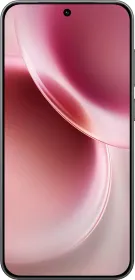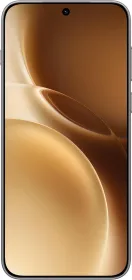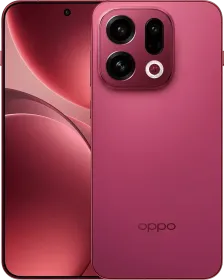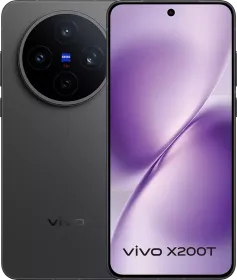


The vivo X300 is a compact flagship that feels familiar yet surprisingly ambitious in all the ways that matter. It builds on the foundation laid by the X200 and the X200 Pro mini, but the improvements this year are far more substantial than a simple refresh. vivo itself positions the X300 as the spiritual successor to the X200 Pro mini rather than the X200, and after spending time with it, that claim holds true.
Almost every part of the device receives a meaningful upgrade: the display moves from LTPS to a 1-120 Hz LTPO panel, the battery jumps from 5,800 mAh to 6,040 mAh, wireless charging arrives for the first time at 40W, the main camera grows from a 1/1.56-inch sensor to a 1/1.4-inch 200 MP HPB unit, the optical fingerprint scanner is replaced with an ultrasonic one, and the selfie camera jumps from 32 MP fixed focus to a 50 MP autofocus ZEISS front camera.
On paper the X300 looks like a complete upgrade over the X200, but what matters is how these improvements translate into everyday use. In this review, we will take a closer look at the real world performance, thermals, battery life, display quality, and of course the camera performance across all focal lengths. Let’s find out whether the vivo X300 delivers the compact flagship experience it promises.
vivo X300 Price & Availability
The vivo X300 is available in three variants in India:
- 12 GB RAM + 256 GB storage: ₹75,999
- 12 GB RAM + 512 GB storage: ₹81,999
- 16 GB RAM + 512 GB storage: ₹84,999
Colour options include Elite Black, Mist Blue, and Summit Red (exclusive to India). It is available through vivo’s online store, Flipkart, Amazon, authorised retail partners, and offline outlets.
The ZEISS 2.35X Extender Kit is priced at ₹18,999, and buyers get a ₹4,000 discount when bundling it with the device during the December 2 to 9 preorder window. A 10% instant discount is also part of the pre booking offer.
Pros
- Compact and lightweight flagship form factor
- 200 MP 1/1.4 inch main sensor with CIPA 4.5 rated OIS
- 3X telephoto with support for telemacro at 15cm
- Excellent front camera
- LTPO 1-120 Hz AMOLED with high brightness
- 40W wireless charging support
- Dimensity 9500 + V3+ imaging chip
- 5 OS + 7 years security updates
- ZEISS Extender Kit compatibility
- Improved build quality and materials
- Humanistic mode produces great results
- 4K 120 FPS video support
Cons
- Thermals can get warm in regular use
- Portrait mode beauty can’t be disabled completely
- AI in photos can be aggressive
- Battery life could be better
- Haptics are average
vivo X300 Specifications
- Display: 6.31-inch AMOLED, 2640 x 1216, 1-120 Hz LTPO, 460 ppi, HDR10+, 2160 Hz PWM, 4500 Nits, SCHOTT Xensation XT Core
- Processor: MediaTek Dimensity 9500, CPU 1x C1-Ultra 4.21 GHz + 3x C1-Premium 3.5 GHz + 4x C1-Pro 2.7 GHz, Arm G1-Ultra GPU
- RAM & Storage: LPDDR5X + UFS 4.1 (12/256, 12/512, 16/512)
- Battery: 6,040 mAh, 90W FlashCharge, 40W wireless
- Cameras:
- Main: 200 MP Samsung HPB, 1/1.4 inch, 23 mm, f/1.68, OIS, AF, 12 cm MFD, 4K 120/60/30
- Ultra Wide: 50 MP Samsung JN1, 1/2.76 inch, 15 mm, f/2.0, AF, 3.5 cm MFD, 4K 60/30
- Telephoto: 50 MP Sony LYT602, 1/1.95 inch, 70 mm, f/2.57, OIS, AF, 15 cm MFD, 4K 60/30
- Selfie: 50 MP Samsung JN1, 1/2.76 inch, 20 mm, f/2.0, AF, 4K 60/30
- Build: Glass front + Fiberglass back, aluminium frame, IP68 + IP69
- Software: OriginOS 6
- Weight and Thickness: 190 grams, 7.95 mm
- IP rating: IP68 + IP69
- Connectivity: Wi-Fi 6 GHz support, Bluetooth 5.4, NFC, USB 3.2 Gen 1 Type-C, dual nano SIM + eSIM support
- OS: OriginOS 6 on Android 16, 5 + 7 updates
vivo X300 Review: Unboxing

The vivo X300 comes in a classic premium X-series box with the familiar flat layout. Inside, the presentation is clean and straightforward. You get the phone placed on top, followed by the 90W adapter, USB Type-A to -C cable, color-matched protective case, SIM ejector, documentation, warranty card, and a pre-applied screen protector. It’s a complete in-box package, making the phone ready to use the moment you unbox it.
vivo X300 Review: Design and Build

vivo has kept the X300 compact and visually clean, making it one of the few premium phones that still prioritises one hand usability. The dimensions come in at 150.57 × 71.92 × 7.95 mm and the weight at 190 grams, which places it firmly in compact flagship territory. The weight makes it feel a bit denser, so keep that in mind.


The new unibody 3D “glass” design is a step up from the X200 series. The rear fiberglass blends smoothly into the frame with no sharp transitions, and the Coral Velvet Glass technique adds a soft matte texture that resists fingerprints while feeling premium in hand.

The circular camera module does not protrude as much as the vivo X200; enough to avoid wobble and feels better integrated into the back than last year. SCHOTT Xensation XT Core protection is used on the front, and the overall machining is clean with consistent tolerances across the frame.

vivo X300’s colors are quite interesting. There are three shades to choose from: Elite Black, Mist Blue, and Summit Red. Summit Red, the one that I have for review, is exclusive to India. Personally, I like the Mist Blue more.

Button placement is ideal, and the feedback from the power and volume buttons feel solid. The X300 also includes an IR blaster on the top and a USB 3.2 Gen 1 Type-C port at the bottom, which is an edge over the iPhone 17 and the Find X9’s USB 2.0 ports.
The phone carries both IP68 and IP69 ratings, matching the X300 Pro and placing it among the best protected devices available today. Overall, the X300’s build feels solid, although the fiberglass back may not hold up as well against scratches. Thankfully, the included case helps keep it protected.
vivo X300 Review: Display

The X300 uses a 6.31-inch AMOLED panel with a 2640 x 1216 resolution and an LTPO backplane that supports a true 1-120 Hz adaptive refresh rate. This is a major upgrade over the LTPS panel on the X200.
By default, many apps (Twitter, Docs, Neko, YT Music (60Hz), Instagram, Gmail, WhatsApp, Chrome, Slack, ChatGPT) still run at 60 Hz/90 Hz, but you can force them to run at 120 Hz. Having an option to select the refresh rate manually for each app would’ve been awesome, though.
Anyway, the advantage of LTPO is that you get support for full-screen always-on display without any time limitations. Scrolling and animations feel smooth on the X300, and the panel intelligently adjusts refresh rate (in Smart adaptation mode) across system layers to save power.

The screen reaches 2000 Nits of HBM brightness and up to 4500 Nits of peak brightness, which keeps the display readable even under harsh sunlight. The display boosts colour saturation and contrast outdoors, preventing the washed out look that some AMOLED panels exhibit in direct sunlight. Colour tuning is good, and HDR10+ is supported, though Dolby Vision is not available.
Viewing angles are excellent, and the ultra-slim bezels enhance the overall look of the device. The panel also supports vivo’s full suite of eye protection features, including 2160 Hz PWM dimming, Night Eye Protection Mode, Custom Brightness 2.0, and anti-fatigue brightness.
The flat display makes applying screen protectors easier and reduces edge related mistouches, and the punch hole is small enough to avoid distraction. Overall, the X300’s display feels well suited for both media and photography, and the LTPO upgrade brings it in line with flagship expectations.
vivo X300 Review: Speakers and Haptics

The vivo X300 uses a stereo speaker setup with a dedicated top and bottom speaker. Loudness is good for a compact device, and dialogue clarity in videos remains consistent even at higher volumes. However, the speaker tuning needs work. The sound signature lacks the depth and body present on the OPPO Find X9 or the iPhone 17, which still sound noticeably fuller.

Haptics leave room for improvement as well. The vibration motor is better than last year, but it is still not on the same level as the Find X9, iQOO 15, or the X300 Pro. Feedback feels less precise and a bit weak. The UI also misses feedback in key areas like the volume and brightness sliders, the notification clear button, lens switching inside the camera app, and more. Hopefully, this can be resolved with a software update.
vivo X300 Review: Software

The vivo X300 runs OriginOS 6 based on Android 16, and this is one of the biggest generational improvements compared to the X200 series. The transition from FuntouchOS to OriginOS brings a more coherent interface, smoother animations, and a more polished visual identity throughout the system. The layout, typography, and material lighting effects are nice, and the overall UI feels more modern with fewer inconsistencies than before.
The redesigned control centre offers split and merged layouts, both of which feel cleaner than the previous generation. The full screen Always On Display, Flip Cards with tilt based animations, new lock screen widgets, and the updated vivo Sans font contribute to a more premium software experience.

Animations have also been reworked with dual rendering, improved blur transitions, and smoother app switching, making the system feel lighter and faster. Although it’s not perfect with some glitches here and there, the overall smoothness feels better than the X200.
Multitasking works well. Split screen, floating windows, and the stacking window interface remain fluid even with multiple apps open. Drag and Go, Origin Island live capsules, and the new cross device collaboration features with Windows and Mac make everyday workflow better.

The system also includes Office Kit for better connectivity with your Windows/Mac machine. You can cast your screen, transfer files, or even remotely control the device. This is an awesome productivity tool.
There are still a few areas that need attention. Some micro jitters appear during transitions and animations or when switching between apps, though these are less frequent than on FuntouchOS. I’m not happy with the limited home screen customization either.

The vAppStore and Browser app cannot be disabled and send notifications unless manually restricted, which disrupts the premium feel. There are also notifications from the lock screen poster and other pre-installed apps. Hopefully, vivo allows us to disable these apps completely. For now, you can just disable the notifications so they don’t bother you again.

Nonetheless, the overall refinement is significant, and the update policy of 5 OS + 7 years of security updates places the X300 among the best supported Android devices today.
AI Features
AI on the vivo X300 is spread across the system in a way that feels more practical than overwhelming. In the Albums app, features like AI Erase, AI UHD, AI Image Expander, and color adjustment help clean up and enhance photos quickly. Reflection removal (within AI Erase) works well for most images, but there are instances where it needs to do better.

You can also erase people from Live Photos, thanks to multi frame erasing, which removes people across the entire motion sequence with one tap. There’s also a new AI Storyboard tool available in both the Albums app and the camera. As long as the image is above 3 MB, the AI automatically generates a layout or collage with different templates. It’s a fast way to turn a regular photo into something more stylised for social posts.


In Notes and vivo DocMaster, AI can summarise long text, rewrite it in different tones, extract key points, or format it neatly. If you didn’t know, the vivo DocMaster can open files directly, run AI summaries, extract information, or convert content for quick sharing. This setup makes the device useful for students and work related tasks, without needing third party apps.

The Recorder app supports AI transcription and auto summaries, and it handles meetings and interviews well. Accuracy is high enough that the transcribed text often needs minimal correction.

Inside the camera, AI Visual offers several AIGC filters such as seasonal tones and cinematic looks. The results take a few seconds to process but allow quick style changes. You can also swap the style later in the gallery if you want a different mood.


Available styles include: Morning Glow, Clear Sky, Evening Glow, Twilight, Snowy Town, Desert, Island, Spring, Summer, Autumn, Winter, Cyber, Animation, Oil Blend, and Fireworks. The results really depend on the environment you’re taking the photo in. Not all styles are suited for all photos.
Overall, OriginOS 6 delivers what it promises: a huge upgrade over Funtouch OS. Refinements are still needed, for example, with the home screen and the occasional bugs, but it’s still a great software experience.
vivo X300 Review: Biometrics

The X300 uses a 3D ultrasonic in-display fingerprint scanner, and it performs very well. Registration is quick, taking about a second to complete, and accuracy in daily use is excellent. You can change the unlock animation and fingerprint icon separately if you wish.
Face unlock is available and works instantly under most lighting conditions, though it relies on a standard 2D implementation. It’s just a convenience feature in my opinion, just like most other Android phones.
vivo X300 Review: Performance

The vivo X300 is powered by the MediaTek Dimensity 9500, paired with the Arm G1 Ultra GPU, 12/16GB LPDDR5X RAM, and 256/512GB UFS 4.1 storage. This is a sizeable upgrade over the Dimensity 9400 on the X200. The phone feels quick and responsive in most everyday tasks.
In regular use, performance remains stable, but the thermals trend slightly on a warmer side. In ambient temperatures around 28°C, the device tends to heat up during regular social media browsing.
Benchmarks
| Benchmark Test | vivo X300 (Dimensity 9500) | vivo X300 Pro (Dimensity 9500) | OPPO Find X9 (Dimensity 9500) |
| AnTuTu v11.0.4 | 3,105,943 | 3,164,914 | 3,593,056 |
| AnTuTu Storage Test | 132,026 | 127,733 | 147,806 |
| Geekbench 6 (CPU) | Single-Core: 3036; Multi-Core: 8723 | Single-Core: 3085; Multi-Core: 8021 | Single-Core: 3219; Multi-Core: 9032 |
| Geekbench 6 (GPU – OpenCL) | 23,064 | 24,699 | 23,496 |
| Geekbench 6 (GPU – Vulkan) | 25,674 | 25,111 | 27,491 |
| 3DMark Wild Life Extreme Test | Score: 5947; Average FPS: 35.61 | Score: 6585; Average FPS: 39.43 | Score: 6940; Average FPS: 41.74 |
| 3DMark Wild Life Extreme Stress Test | Best Loop: 6154; Lowest Loop: 2772; Stability: 45% | Best Loop: 6350; Lowest Loop: 2900; Stability: 45.7% | Best Loop: 6996; Lowest Loop: 3657; Stability: 52.3% |


Gaming

Gaming performance is decent for a compact flagship. The phone supports 120 FPS in BGMI, and the gameplay hovers between 115 and 118 FPS, and that small drop becomes more obvious when the device heats up. The 4,000mm² VC gives a little extra runway, although the heat buildup offsets any advantage. Temperatures climb to roughly 44 to 45°C within 10 to 20 minutes.
Genshin Impact shows a similar pattern. Highest settings can push close to 55 FPS in short bursts, but the temperature spike arrives quickly. However, with options like bypass charging or slightly lowered graphics, the X300 can handle casual gaming without much trouble.
Overall, the X300 delivers reliable flagship performance with good smoothness and strong efficiency, though thermal optimisation could be improved with future updates.
vivo X300 Review: Cameras

The vivo X300 brings one of the biggest year to year jumps in the compact flagship category. A larger 200 MP main sensor, a stronger 3X telephoto, an autofocus ultra wide, and a much better selfie camera together create a meaningful upgrade in everyday use.
Main Camera
The new 1/1.4 inch 200 MP HPB sensor improves clarity, contrast, and highlight control. Colours look more consistent in ZEISS Natural and textured profiles, and shadow recovery is better than before. HDR works well in most scenes although neon boards in low light can produce glow. High resolution 50 MP and 200 MP modes capture excellent detail but take longer to process.


Ultra Wide Camera
The 50 MP JN1 ultra wide maintains colour consistency with the main lens and benefits from autofocus for close subjects. Centre sharpness is strong but the edges soften slightly, especially in low light.


Telephoto Camera
The 50 MP LYT602 telephoto is the highlight of the system. The 3X shots have good depth and separation and the 15 cm telemacro ability brings out details that most compact phones simply cannot achieve.


Portraits look pleasing although the skin beautification and softening remains even with beauty off. There are also different ZEISS focal lengths and bokeh styles to choose from. Zoom is reliable till 10X and low light performance follows the behaviour of the main lens with controlled noise.


There’s a lot of AI involved in photos, even at 1X and 3X, with no real option to turn it off. There’s RAW Lighting but that disabled HDR and Night Mode for you.


vivo does let you turn off telephoto enhancement but that only helps a little. If you like AI in your photos, this won’t be a problem for you.


Humanistic Mode
Humanistic Mode remains the best way to get natural looking results on the X300. It reduces AI involvement and produces more lifelike tones, but it’s limited to 24, 35, 50, 85, and 135 mm focal lengths. It lacks HDR and night mode, so it works best in flatter lighting.


Selfie Camera
The 50 MP AF selfie camera is a major leap over the previous model. It captures sharper detail, more accurate skin tones, and better low light shots while keeping faces in focus comfortably. It’s also very wide at 20mm focal length.


Video
The main, ultra wide, telephoto, and selfie cameras can record up to 4K60, with the main lens also supporting 4K120. Stabilisation is steady although highlights can cause bloom on the main and ultra wide lenses. You can also record in 4K120 LOG on the main camera and 4K60 on the ultra-wide and telephoto, and the results are good.
We recommend that you read our full camera review for detailed comparisons and deeper results here: vivo X300 Camera Review: Don’t Let the Size Fool You
vivo X300 Review: Battery Life and Charging

The X300 sports a massive 6,040 mAh battery with 90W wired and 40W wireless charging. This is a significant improvement over the X200 in both battery size (considering the phone is now more compact) and charging speeds.
In real world usage, with Telegram, Twitter, Chrome, messaging, and mixed camera use on 5G 40% of the time, the device delivers around 6 to 7 hours of screen-on time. The endurance is respectable but not exceptional. Hopefully, vivo further optimizes the battery with a software update.
Charging is fast and consistent. The phone reaches 90% in under 45 minutes and completes a full charge in about an hour. Wireless charging works well on standard Qi chargers (at a lower speed though), and vivo’s battery health management should help long-term reliability.
Review Verdict: Should You Buy the vivo X300?
The vivo X300 is a well-rounded compact flagship that brings major upgrades over the X200. The combination of a brighter LTPO display, a larger battery, wireless charging, upgraded cameras, improved build quality, and OriginOS 6 makes it feel like a true successor to the X200. The camera improvements are especially impressive, with the main sensor, telephoto, and selfie shooter all delivering better results.
The phone still has areas where vivo needs to refine things. Thermals can run warm, battery life could be better, portraits need tuning, and high resolution imaging takes too long to process. But these are manageable issues for a device that otherwise excels in design, display day-to-day performance, everyday responsiveness, and photography.
If you want a compact flagship with strong imaging performance, good design, and long term software support, and USB 3.2 the vivo X300 stands out as one of the best options available today. For those who prefer stronger speakers, better haptics, or cooler sustained performance, the Find X9 or iQOO 15 might be better fits, but the X300 remains the more balanced choice for a compact phone overall.

Smartprix ⭐ Rating: 8.7/10
- Design and Build: 8.8/10
- Display: 8.9/10
- Speakers: 8/10
- Software: 8.7/10
- Haptics: 7.8/10
- Biometrics: 9/10
- Performance: 7.9/10
- Cameras: 8.8/10
- Battery Life & Charging: 8.5/10
First reviewed in December 2025.