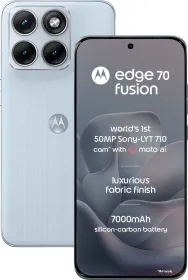


Our smartphones are evolving fast, powerful processors, stunning cameras, AI features, and foldable displays. But the one thing that hasn’t kept up? The battery. Despite all the innovation, most phones still need a daily charge. That could (is) finally change(ing) with lithium-silicon batteries.
What even is a battery?

Let’s start with the basics. A battery has three core components: the anode, cathode, and electrolyte. The anode sends out electrons, the cathode pulls them in, and the electrolyte helps ions move between them.
When you charge your phone, ions head from the cathode to the anode. When you use your phone, they move back the other way, creating electricity that powers everything you do. It’s kind of simple, but also genius.
Lithium-ion batteries
Lithium-ion batteries have been around since the ‘90s. Sony kicked it off in ‘91, but NASA was experimenting with the idea back in the ‘60s. Lithium is great because it’s super light and energy-efficient. In most lithium-ion batteries, the cathode is some form of lithium metal oxide, and the anode is graphite. It works, but graphite has a limit, and it’s that it can only store so much energy: about 372 mAh per gram.
Enter silicon-carbon batteries

That’s where lithium-silicon or silicon-carbon comes in. By replacing some of the graphite in the anode with silicon, you can significantly increase energy storage. Silicon’s theoretical capacity is 3600 mAh/g, which is almost ten times more than graphite. In theory, this could mean phones that last days on a single charge. But silicon swells by up to 300% when it charges, which risks damaging the battery or even causing fires.

To manage this, researchers combine silicon nanoparticles with carbon to form a composite (this is where the name silicon-carbon is born). It doesn’t expand as much and still increases capacity to around 550 mAh/g, which is about a 20% improvement over standard graphite. That boost is already showing up in real products.
A big revolution for smartphone batteries
HONOR led the way with the Magic 5 Pro in China, followed by the global launch of the Magic 6 Pro. The ultra-thin Magic V3 foldable also used this battery tech. Today, dozens, if not hundreds, of smartphones use silicon-carbon batteries. Most recently, HONOR released its largest battery phone yet, featuring an 8,000 mAh capacity made possible by this technology.

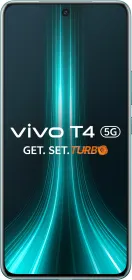
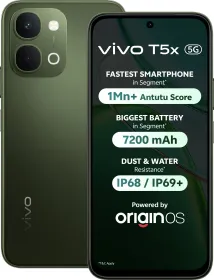
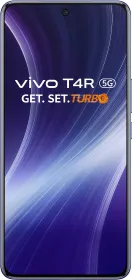
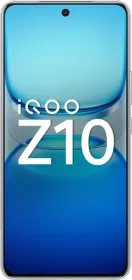
We also got phones like the vivo T4 (review) and the iQOO Z10 with 7,300 mAh batteries and 90W charging, all under ₹25,000. Earlier, larger batteries would mean thicker phones with slower charging, but that’s no longer the case, thanks to silicon-carbon and dual-cell technologies. The vivo T4 is just 7.98mm thick despite the large 7,300 mAh battery.
ALSO READ: vivo T4 Review: Great Battery But Does it Check the Other Boxes?
In the near future, we’ll see more phones with larger batteries across different price segments, especially in the budget and mid-range categories. Silicon-carbon has also made it easier to build compact flagships by enabling larger batteries in smaller form factors, solving one of the biggest issues with smaller phones.

Unfortunately, the biggest smartphone players, Apple and Samsung, have yet to adopt this technology in their devices. It would have made sense for them to use silicon-carbon batteries in their upcoming ultra-thin phones, the iPhone 17 Air and the Galaxy S25 Edge, but that’s not the case.

The best part about silicon-carbon is that it isn’t some far-off thing like solid-state batteries. Lithium-silicon/silicon-carbon batteries use similar materials and processes to current lithium-ion batteries, so scaling up is practical and cost-effective. While it’s not solid-state, those are still years away, it’s a meaningful step forward that’s already hitting shelves.
ALSO READ: Major Updates Apple is Expected to Announce During WWDC 2025: Hardware debuts also tipped
Final words
If all goes well, 2025 could be the year we finally stop stressing about low battery warnings. More hours of gaming, scrolling, streaming, and fewer panicked hunts for chargers. Hopefully, brands like Samsung and Apple will also adopt the technology in their phones soon, so that more users can benefit from this technological advancement. What are your thoughts on this? Let us know in the comments section below.
You can follow Smartprix on Twitter, Facebook, Instagram, and Google News. Visit smartprix.com for the latest tech and auto news, reviews, and guides.