

Xiaomi 17 ULtra vs. vivo X300 Pro: Table of Contents
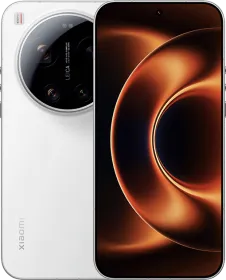
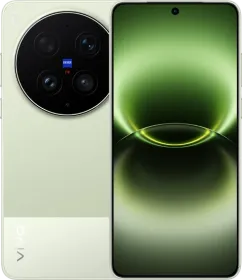
Choosing between the Xiaomi 17 Ultra and the vivo X300 Pro is less about picking the “better” phone and more about choosing a philosophy.
One goes all-in on camera hardware bravado — a one-inch sensor, a 200MP continuous-zoom periscope, and even a physical zoom ring — while the other bets on polish, stability, and a video pipeline that creators will actually trust.
On paper, both tick every flagship box: 3nm chipsets, LTPO AMOLED panels, massive Si/C batteries, and IP69 ratings. In reality, they cater to very different users. This comparison isn’t about spec-sheet flexing — it’s about figuring out which phone fits how you actually use your smartphone.
Xiaomi 17 Ultra vs. vivo X300 Pro: Design
| Xiaomi 17 Ultra | vivo X300 Pro | |
| Dimensions | 162.9 x 77.6 x 8.5 mm | 161.2 x 75.5 x 8 mm |
| Weight | 230 grams | 226 grams |
| Material | Glass / Aluminum / Fiber or Silicone Polymer Back | Glass / Aluminum / Glass |
| IP Rating | IP68/IP69 (immersible up to 6m for 30 min) | IP68/IP69 (immersible up to 1.5m for 30 min) |
| Colors | Black, White, Starry Green, Purple | Phantom Black, Mist Blue, Dune Brown, Cloud White |
In terms of overall size, both the Xiaomi 17 Ultra and the vivo X300 Pro share a similar form factor, with the former being slightly larger and heavier. However, if smartphone thickness is a concern, the X300 Pro is the thinnest of the two, by a significant margin.


The materials used on the phones are similar, but the Xiaomi 17 Ultra offers more back material options than the vivo X300 Pro. Although both smartphones feature an IP68/IP69 rating, the Xiaomi 17 Ultra is water-immersible up to 6 meters for up to 30 minutes.
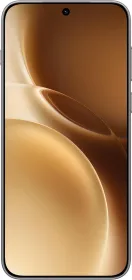
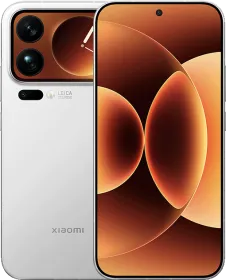
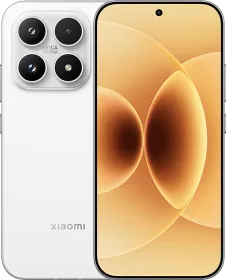
In addition to the technical specifications, the two phones share a similar overall design, with a circular rear camera module, a punch-hole screen, and symmetrical front bezels. Despite its larger screen, the Xiaomi flagship offers a higher screen-to-body ratio (92.3% vs. 91.6%).
Xiaomi 17 Ultra vs. vivo X300 Pro: Display
| Xiaomi 17 Ultra | vivo X300 Pro | |
| Display Size | 6.9-inch | 6.78-inch |
| Aspect Ratio | 19.5:9 | 20:9 |
| Technology | LTPO AMOLED (68B colors) | LTPO AMOLED (1B colors) |
| Resolution | 2608 x 1200 pixels (416 ppi) | 2800 x 1260 pixels (452 ppi) |
| Refresh Rate | 120Hz | 120Hz |
| Peak Brightness | 3500 nits (HBM) | 4500 nits (HBM) |
| Dimming | 2160Hz PWM dimming | 2160Hz PWM dimming |
| HDR Formats | Dolby Vision, HDR 10+ | Dolby Vision, HDR 10+ |
Right off the bat, the Xiaomi 17 Ultra flaunts a slightly larger display, but the added screen estate results in lower sharpness (pixel density: 416 ppi vs. 452 ppi). Both displays also use a slightly different aspect ratio. Even though both phones feature LTPO AMOLED panels that dynamically adjust refresh rates between 1 and 120Hz, there’s a difference that might go unnoticed.
Xiaomi’s latest flagship features a 12-bit display, implying that it can produce many more color shades per channel than the 10-bit screen on the vivo X300 Pro. Buyers should expect smoother gradients, reduced banding, and improved HDR headroom. However, the overall visual experience also depends on the operating system and the app optimization.

About the other aspects of the screens, the 17 Ultra can achieve a lower peak brightness than the X300 Pro, which shouldn’t be a problem indoors, but the difference should be apparent under direct sunlight. Finally, you get 2,160Hz PWM dimming (making the screen more comfortable for your eyes), along with support for Dolby Vision and HDR10+ formats on both phones.
Also Read: Find X9 vs. OnePlus 15 vs. Pixel 10: Which Android Flagship Is Right For You?
Xiaomi 17 Ultra vs. vivo X300 Pro: Performance
| Xiaomi 17 Ultra | vivo X300 Pro | |
| Chipset | Snapdragon 8 Elite Gen 5 | Dimensity 9500 |
| Manufacturing Process | TSMC’s N3P 3nm | TSMC’s N3P 3nm |
| Core Configuration | 8 cores: 2 x 4.60 GHz prime cores + 6 x 3.62 GHz performance cores | 8 cores: 1 x 4.21 GHz prime core + 3 x 3.50 GHz performance cores + 4 x 2.7 GHz efficient cores |
| GPU | Adreno 840 | Arm G1-Ultra |
| NPU / AI Processing | Qualcomm Hexagon NPU for over 30% faster AI performance than 8 Elite | Qualcomm Hexagon NPU for over 45% faster AI performance over the prior generation |
| Memory / Storage | LPDDR5X & UFS 4.1 | LPDDR5X + UFS 4.1 |
| Connectivity | Wi-Fi 7, Bluetooth v5.4 | Wi-Fi 7, Bluetooth v5.4 |
Both handsets in this comparison are powered by flagship chipsets, capable of handling everything you can do on a smartphone, including editing 4K videos, playing demanding video games at the highest settings, and, of course, day-to-day multitasking and other digital chores.

However, when it comes to raw performance, the Xiaomi 17 Ultra should come out on top, but only by a slight margin. We’ve tested the Snapdragon 8 Elite Gen 5 chip on the OnePlus 15, and it scores around 3,536/10,595 points on the single- and multi-core Geekbench 6 CPU tests. In comparison, the vivo X300 Pro, with its Dimensity 9500 chipset, scores 3,085/8,021 points on the same benchmark.
It’s a bit weird, though, since the Oppo Find X9 Pro, with the same chipset, scores 3,270/9,644 points on the same benchmark. Now, it could be the hardware-software optimization at play here. Still, we expect the Xiaomi 17 Ultra to perform similarly in benchmarks to the OnePlus 15 and, by extension, a tad better than the vivo X300 Pro.

While the vivo X300 Pro can run BGMI at 120 fps, we’re not sure about the Xiaomi 17 Ultra (it has the GPU for it, but how much the company spends on optimizing it with the game at its Indian launch is something we need to find out).
And if that all sounds too technical, know that both the Xiaomi 17 Ultra and the vivo X300 Pro are among the best smartphones on the market in terms of CPU and GPU performance. Furthermore, both of them can handle on-device AI-based features, so you shouldn’t be worried about anything.
Also Read: OnePlus 15 vs. OnePlus 13: What’s Changed? A Rs. 72,999 Question
Xiaomi 17 Ultra vs. vivo X300 Pro: Operating System
| Xiaomi 17 Ultra | vivo X300 Pro | |
| Opreting System | Android 16 | Android 16 |
| User Interface | HyperOS 3.0 | OriginOS 6 |
| Key Features | HyperIsland Live Activity, Xiaomi ecosystem integration, cross-device features | Origin Engine for performance optimization, advanced UI and lock screen customization, system-wide AI features |
| AI-Based Features | AI writing tools (with DeepThink Mode), AI speech recognition, AI dynamic wallpapers | AI creation, AI photo editing tools, AI transcript, Live Text |
| Software Update Policy | 4 OS + 6 years security updates | 5 OS + 7 years security updates |
Xiaomi’s latest Ultra flagship is based on HyperOS 3 (on top of Android 16), which also takes a heavy inspiration from Apple’s Liquid Glass design language. The user interface also includes a Hyper Island dynamic notificaiton hub (similar to Apple’s Dynamic Island), along with the Xiaomi HyperAI hub, which includes AI writing tools, smart screen recognition for text and content extraction, DeepThink AI mode for smarter suggestions, AI Speech Recognition, AI-generated wallpapers, and context-aware AI suggestions throughout the user interface.


Like Xiaomi’s HyperOS 3, vivo’s OriginOS 6 also draws inspiration from Apple’s Liquid Glass design interface, which provides elastic motion effects, a dynamic clock on the lock screen, a gradual blur system, and AI-powered predictive typing. Among other AI-based features available on the user interface are the AI Search, AI Captions, AI Landscape Master, AI Storyboard, and integration with Google Gemini tools (including smart suggestions, Circle to Search, and Gemini Live).
While you can pick the user interface you prefer (based on your current smartphone or a featuer that attracts you), it is vivo that offers longer software support (both for Android version and security updates).
Also Read: realme GT 8 Pro vs. OnePlus 15 vs. iQOO 15: Camera Comparison
Xiaomi 17 Ultra vs. vivo X300 Pro: Optics
| Xiaomi 17 Ultra | vivo X300 Pro | |
| Primary Camera | 50MP (f/1.7, 1.0-inch, OIS) | 50MP (f/1.6, 1/1.28-inch, OIS) |
| Video Resolution | 8K30, 4K120 | 8K30, 4K120 |
| Secondary Camera | 200MP (f/2.4-3.0, 1/1.4-inch, OIS) | 200MP (f/2.7, 1/1.4-inch, OIS) |
| Tertiary Camera | 50MP (f/2.2, 1/2.76-inch, 115˚,PDAF) | 50MP (f/2.0, 1/2.76-inch, 119˚, AF) |
| Selfie Camera | 50MP (1/2.88-inch) | 50MP (1/2.76-inch) |
| Video Resolution | 4K60 | 4K60 |
To kick this aspect off, the Xiaomi 17 Ultra features a one-inch primary sensor, which should capture more detail, less noise, and capture better pictures in low-light environments. The X300 Pro also has a large 1/1.28-inch camera sensor with a larger f/1.6 aperture. Both phones can capture 8K30 and 4K120fps videos.
When it comes to the secondary camera, the competition between the two flagships gets even fiercer. Both of them flaunt a 200MP 1/1.4-inch zoom camera that provides higher optical zoom (ideal for capturing natural portraits) and even higher hybrid zoom range (120x on the Xiaomi 17 Ultra and 100x on the vivo X300 Pro).
However, there’s one thing the Xiaomi 17 Ultra does differently from every other phone in the category: it provides continuous optical zoom from 3.2x to 4.3x (between 75 and 100mm). The telephoto camera’s aperture also changes across the zoom range (f/2.4 to f/3.0). Although this isn’t the first time a manufacturer has implemented continuous zoom on a smartphone (Sony has done so for years), the Xiaomi 17 Ultra surely offers a unique feature that should appeal to photography enthusiasts.
Besides the Xiaomi 17 Ultra, there’s a Xiaomi 17 Ultra Leica Edition that includes a physical zoom ring (built into the edge of the camera module) that lets you adjust the optical zoom range, just like you would on a DSLR. Both the Xiaomi 17 Ultra and the vivo X300 Pro have a 1/2.76-inch ultrawide camera, but the vivo X300 Pro has a wider field of view.

Last but not least, the handsets offer a 50MP front-facing camera, both of which can record 4K60 videos. Other than that, Xiaomi has partnered with Leica, while vivo has partnered with Zeiss for tuning the overall optics of the handset.
Also Read: ColorOS 16 vs. iOS 26: Who Did Lock Screen Customization Better?
Xiaomi 17 Ultra vs. vivo X300 Pro: Battery Life & Charging Speed
| Xiaomi 17 Ultra | vivo X300 Pro | |
| Battery Capacity | 6,800 mAh Si/C | 6,510 mAh Si/C |
| Charging Speed | 90W wired, 50W wireless | 90W wired, 40W wireless |
The Xiaomi 17 Ultra features a 6,800 mAh Si/C battery, which should easily provide over 10 hours of screen-on time between charges. In fact, with lighter use, the phone could even outlast that number. However, with power usage, including capturing a lot of pictures and videos, playing video games, and browsing social media, the usage time could come down to around six to eight hours (true for every other powerful flagship).
The vivo X300 Pro, during our review, consistently provided around six to eight hours of screen-on time, which is slightly disappointing for a handset that features a 6,510 mAh Si/C battery. Anyway, both the phones support the same wired charging speed — 90W — which should juice them up in around an hour for the Xiaomi 17 Ultra, and slightly less than an hour for the vivo X300 Pro.

Regarding connectivity options, both the phones provide Wi-Fi 7, Bluetooth v5.4, dual-band GPS, NFC, IR Blaster, and a USB Type-C 3.2 Gen 2 port for fast wired data transfer.
Xiaomi 17 Ultra vs. vivo X300 Pro: Price & Conclusion
Xiaomi 17 Ultra Price

- Xiaomi 17 Ultra (12GB + 512GB): CNY 6,999
- Xiaomi 17 Ultra (16GB + 512GB): CNY 7,499
- Xiaomi 17 Ultra (16GB + 1TB): CNY 8,499
- Xiaomi 17 Ultra Leica Edition (16GB + 512GB): CNY 7,999
- Xiaomi 17 Ultra Leica Edition (16GB + 1TB): CNY 8,999
The Xiaomi 17 Ultra is a no-compromise flagship aimed largely at photography enthusiasts. Its one-inch primary sensor, 200MP periscope with continuous optical zoom, and Leica tuning make it one of the most distinctive camera phones in its class. You also get a massive 6,800mAh Si/C battery, fast wired and wireless charging, a large 12-bit LTPO AMOLED display, and top-tier Snapdragon performance.
However, it’s heavy and bulky, the display isn’t the brightest among rivals, and video creators may find competitors more polished. If you value camera innovation and hardware flair over slimness and software longevity, the Xiaomi 17 Ultra delivers.
Keep in mind that Xiaomi hasn’t launched the Xiaomi 17 Ultra in India yet.
vivo X300 Pro Price

The vivo X300 Pro is a refined, camera-first flagship that prioritises consistency over experimentation. Its 50MP 1/1.28-inch primary sensor, 200MP telephoto, and ZEISS tuning deliver reliable stills, while 4K120fps video, Dolby Vision, and 10-bit Log make it one of the best options for video creators. The phone also stands out with a brighter, sharper display (4500 nits, 452 ppi), a slimmer and lighter design, and longer software support (5 OS + 7 years).
However, battery life is only average despite the 6,510mAh cell, wireless charging is slower than rivals, and it lacks bold camera hardware innovation. If you value polish and predictability, the X300 Pro fits the bill.

You can follow Smartprix on Twitter, Facebook, Instagram, and Google News. Visit smartprix.com for the latest tech and auto news, reviews, and guides.