

TL; DR
- The 2026 Verna gets a bolder front end, Boss Mode passenger seating, and over 25 new updates.
- Powertrains carry over unchanged, but the car now packs L2 ADAS, seven airbags, and 75-plus safety features.
- Twelve variants spanning Rs 10.98 lakh to Rs 18.25 lakh, taking on the City, Slavia, and Virtus head-on.
Buying a sedan in India in 2026 takes conviction. Your relatives want to know why you didn’t just get a Creta. The neighbour two houses down already has one. And at every dealership, someone is probably mid-pitch about SUV resale values.
The Verna has put up with this for years, carried on regardless, and sold in decent enough numbers to justify its existence. The 2026 facelift is Hyundai’s answer to everyone who wrote the sedan off. Goes on sale today from Rs 10,98,400 (ex-showroom), with the turbo DCT sitting at the top at Rs 18,25,400.
2026 Hyundai Verna: Variant-Wise Pricing

The old EX, S, SX, SX(O) variant names are gone. It’s all HX now, matching the Venue’s naming scheme. Turbo buyers, you’re in HX8 or HX10 territory. No exceptions.
| Powertrain | Transmission | HX2 | HX4 | HX6 | HX6+ | HX8 | HX10 |
|---|---|---|---|---|---|---|---|
| 1.5L MPi Petrol | 6 MT | 10,98,400 | 12,25,400 | 13,19,400 | 13,81,400 | 14,88,400 | – |
| 1.5L MPi Petrol | IVT | – | – | 14,40,400 | 15,02,400 | 16,09,400 | 17,15,400 |
| 1.5L Turbo GDi Petrol | 6 MT | – | – | – | – | 16,28,400 | – |
| 1.5L Turbo GDi Petrol | 7 DCT | – | – | – | – | 17,62,400 | 18,25,400 |
Also Read: Toyota Adds a Stripped-Down Rumion E at Rs 9.56 Lakh, But the Ertiga Still Undercuts It
2026 Hyundai Verna: Exterior & Interior
Exterior

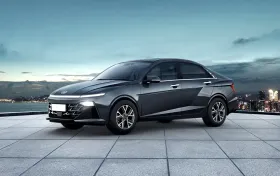
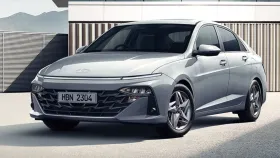
The 2023 Verna’s nose was the kind of design that made people feel strongly — one way or the other. Hyundai has listened. So the grille is bigger, the bumpers are new front and rear, the headlamps are dual LED projectors, and there’s a faux diffuser with silver inserts at the back that adds some muscle to the tail end.

The alloys are new 16-inch diamond-cuts. What hasn’t changed is the roofline — that slight coupe slope is staying put — nor the dimensions. 4,565 mm long, 1,765 mm wide, 2,670 mm wheelbase. Same as before, still the biggest footprint in the segment. That genuinely matters on a long drive with people in the back.

New colours: Classy Blue and Titan Grey Matte join the existing lineup. Atlas White now comes with an optional black roof.
Interior

Steering wheel first — it’s got the Hyundai ‘H’ in Morse code, same as the Ioniq 5 and Creta Electric — but curvature at the bottom doesn’t look so good to my eyes. The driver’s seat gets an 8-way electric adjustment with memory, so it returns to your setting every time you get in.
The passenger seat gets 4-way electric adjustment and a walk-in function — push it forward, and the person behind you actually gets legroom. City, Slavia, Virtus — none of them have this. Hyundai’s calling it a segment-first.

Rest of the cabin: leatherette upholstery, ventilated front seats, rear window sunshade, wireless charger, ambient lighting, 528-litre boot. That sunshade is one of those things you’ll genuinely thank Hyundai for the first time you’re stuck in afternoon traffic in peak summer with the sun aimed directly at the back row.
Also Read: Renault Bridger Sub 4-Meter SUV Teased: Here’s Everything We Know About It
Features

Dual 10.25-inch screens — infotainment and digital cluster — now in a cleaner integrated setup. Bluelink connected car tech with 70-plus features and 350 voice commands. Wireless Android Auto and Apple CarPlay, Bose 8-speaker audio, sunroof, surround view monitor, blind spot monitor, and a built-in dashcam. That last one is something most Verna buyers were picking up separately anyway.
2026 Hyundai Verna: Powertrain Options

Lift the bonnet, and it’s the same story as before — which isn’t a complaint.
The 1.5L NA petrol with a 6-speed manual or IVT does the sensible-buyer duties. The 1.5L Turbo GDi — 160 PS, 253 Nm — pairs with a 6-speed manual or 7-speed DCT. That DCT version gets to 100 in about 8.8 seconds.

A Brezza driver who just got overtaken cleanly on the expressway will have some feelings about that number. Turbo trims get Sport mode and paddle shifters. As for a hybrid, not happening yet. Eight hybrid Hyundais are coming to India by 2030, and the Verna is somewhere in that list, just not at the front of it.
Also Read: Yamaha XSR155 Gets a Stealthy Makeover: New Metallic Black Shade Hits India at Rs 1.58 Lakh
2026 Hyundai Verna: Safety Features

On safety, the 2026 Verna gets seven airbags, L2 ADAS with 20 functions, ESC, hill start assist, rain-sensing wipers, rear parking sensors, TPMS, and ISOFIX child seat mounts. The running total, per Hyundai, is north of 75 safety features. The outgoing Verna earned a 5-star NCAP rating — this update isn’t fixing what wasn’t broken, just making sure it stays that way.
2026 Hyundai Verna: Competitors

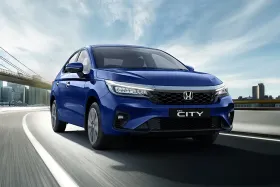
Honda City from Rs 11.64 lakh — dependable, uncomplicated, but no turbo and thinner on features at matching prices.
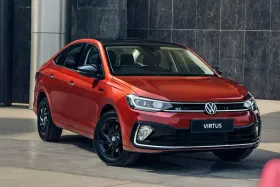
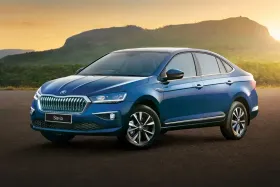
Skoda Slavia and Volkswagen Virtus are slightly better to drive (or that’s what the brand and its loyal customers aned fan claim); the 1.0 turbo in both is a fun unit, but they trail on features at a similar price.
The Verna gives you the most kit and the strongest engine in the segment. It’s not the sharpest car to drive here — the Germans have that covered — but nothing else in this price band offers this much, packaged this well.
Also Read: Tata Motors Sold 63,331 Cars In February: EVs, Commercial Vehicles Add To The Push

You can follow Smartprix on Twitter, Facebook, Instagram, and Google News. Visit smartprix.com for the latest tech and auto news, reviews, and guides.