

Galaxy S26 Ultra vs. Find X9 Pro: Table of contents
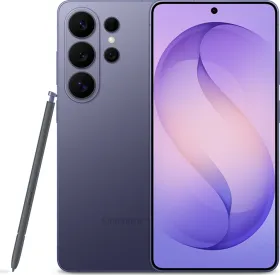
The Galaxy S26 Ultra needs no introduction — it’s Samsung’s most powerful phone, full stop. The Find X9 Pro is a different story. OPPO spent the last couple of years quietly rebuilding its flagship credentials, and this time around, they’ve arrived with Hasselblad cameras, a 7,500mAh Silicon-Carbon battery, and enough hardware ambition to make Samsung’s spec sheet look a little safe by comparison.
On paper, these two shouldn’t be this close. One’s a global icon with years of brand recognition behind it, the other is OPPO making its loudest statement yet. But flagship phones in 2025 don’t get to coast on reputation alone — the hardware has to back it up.
So we put both through their paces across every category that actually matters. Here’s what we found.
Also Read: Galaxy S26 Ultra vs. vivo X300 Pro: The Android Flagship Battle Gets Fierce
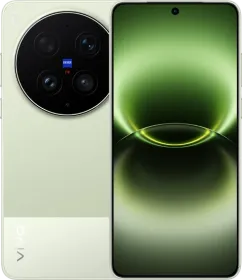
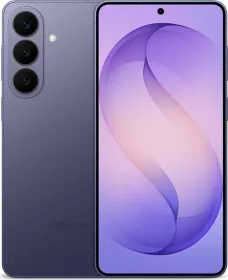
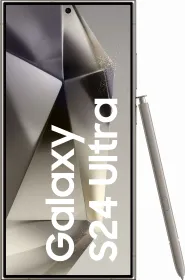
Galaxy S26 Ultra vs. Find X9 Pro: Design
| Galaxy S26 Ultra | Find X9 Pro | |
| Dimensions | 163.6 x 78.1 x 7.9 mm | 161.3 x 76.5 x 8.3 mm |
| Weight | 214 grams | 224 grams |
| Material | Glass / Titanium frame / Glass | Glass / Aluminum / Glass |
| Display Protection | Corning Gorilla Armor 2 | Gorilla Glass Victus 2 |
| IP Rating | IP68 (1.5m for 30 mins) | IP68 / IP69 (1.5m for 30 mins) |
| Colors | Black, White, Cobalt Violet, Sky Blue, Silver, Pink Gold | Silk White, Titanium Charcoal, Velvet Red |
Samsung’s taller and wider, OPPO’s thicker and slightly heavier — that extra bulk on the Find X9 Pro isn’t wasted space, though, it’s housing a Silicon-Carbon battery that explains every millimeter.

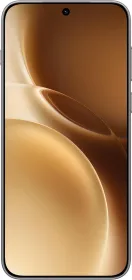
Materials follow the usual story — Samsung’s titanium frame feels more premium, OPPO goes with aluminum. Perfectly fine, just a different tier. What’s worth noting is that OPPO went with a flat display and flat edges this year, which is a pretty significant design shift for the Find series and honestly makes it look sharper than its predecessors.
Display protection is where people stop paying attention, but probably shouldn’t. Samsung’s Corning Gorilla Armor 2 is anti-reflective glass ceramic — genuinely reduces glare outdoors in a way you actually notice. OPPO has Gorilla Glass Victus 2, which handles drops well but doesn’t do the same thing for glare.

Water resistance goes to OPPO — IP68 plus IP69 means it survives high-pressure jets too, not just the usual sink splash. Samsung stops at IP68.
Samsung gives you six options, OPPO gives you three really good ones. That Velvet Red is the kind of colorway that makes strangers ask what phone you’re holding. OPPO also throws in a customizable Snap Key on the side. Small thing, genuinely useful.
Also Read: Galaxy S26 vs. Find X9 vs. vivo X300: The 2026 Baseline Android Flagship Battle Intensifies
Galaxy S26 Ultra vs. Find X9 Pro: Display
| Galaxy S26 Ultra | Find X9 Pro | |
| Display Size | 6.9-inch | 6.78-inch |
| Aspect Ratio | 19.5:9 | 19.5:9 |
| Technology | LTPO AMOLED | LTPO AMOLED |
| Resolution | 3120 x 1440 pixels (498 ppi) | 2772 x 1272 pixels (450 ppi) |
| Refresh Rate | 120Hz | 120Hz |
| Peak Brightness | 2600 nits | 3600 nits (peak) |
| Dimming | 2160 Hz PWM dimming | |
| HDR Formats | HDR10+ | Dolby Vision, HDR10+ |
| Colors | 1B | 1B |
Both screens are LTPO AMOLED, both do 120Hz, both render a billion colors — so let’s skip the identical bits and get to what actually matters.
Size is a non-argument. 6.9 vs 6.78 inches — you’re not feeling that difference in real life. Resolution is a bit more meaningful, though, Samsung’s at 498 ppi against OPPO’s 450 ppi. Both look sharp, but side by side with fine text or detailed photos, Samsung’s noticeably crisper.

Brightness is where OPPO flips the script. Samsung peaks at 2600 nits, OPPO hits 3600 nits. That’s not a small gap — on a sunny afternoon, OPPO’s screen stays readable where Samsung’s starts working harder. Both are fine indoors, but outdoors tells a different story.
HDR-wise, Samsung does HDR10+. OPPO does Dolby Vision and HDR10+. If you watch Netflix or Apple TV regularly, Dolby Vision support on compatible titles is a genuine real-world difference, not just a spec you never see. OPPO also has 2160Hz PWM dimming, which matters more than most people realize — it’s what keeps eye strain in check during long usage sessions. Samsung’s silent on this front.

Samsung hits back with two things OPPO can’t match — Gorilla Armor 2’s anti-reflective coating handles glare better than Victus 2, and the Privacy Display mode narrows viewing angles on demand so nobody next to you sees anything. Brighter outdoors goes to OPPO, more versatile overall goes to Samsung. Both are excellent screens; they just make different trade-offs.
Also Read: iQOO 15R vs OnePlus 15R: Which Snapdragon 8 Gen 5 Phone Is Better For You?
Galaxy S26 Ultra vs. Find X9 Pro: Processor
| Galaxy S26 Ultra | Find X9 Pro | |
| Chipset | Snapdragon 8 Elite Gen 5 | Dimensity 9500 |
| Manufacturing Process | 3 nm | 3 nm |
| Core Configuration | Octa-core: 2 x 4.74 GHz Oryon V3 Phoenix L + 6 x 3.62 GHz Oryon V3 Phoenix M) | Octa-core: 1 x 4.21 GHz C1-Ultra + 3 x 3.5 GHz C1-Premium + 4 x 2.7 GHz C1-Pro |
| GPU | Adreno 840 | Arm G1-Ultra |
| Memory / Storage | LPDDR5X + UFS 4.1 | LPDDR5X + UFS 4.1 |
| Connectivity | Wi-Fi 7, Bluetooth v5.4 | Wi-Fi 7, Bluetooth v6.0 |
The chip gap between these two is real, but it’s not the whole story.
Snapdragon 8 Elite Gen 5 for Galaxy

Qualcomm’s Oryon V3 cores inside the S26 Ultra run at 4.74GHz — not because that’s the standard clock speed, but because Samsung specifically asked for more and got it. The Adreno 840 GPU is 23% faster than the previous generation and draws 20% less power doing it. We’ve tested the chipset on the OnePlus 15, and it scored 3536/10595 points in the single/multi-core CPU performance benchmark.
MediaTek Dimensity 9500

The Dimensity 9500 in the Find X9 Pro runs ARM’s C1 cores — a ground-up redesign that prioritizes running cool and efficient over chasing clock speeds. And it mostly delivers on that. Everyday tasks, browsing, multitasking — you’d never feel a difference between this and the Snapdragon. Gaming is where the gap opens up. We ran the GeekBench 6 CPU benchmark test on the device, and it scored 3270/9644 points in the single/multi-core CPU tests.
The ARM G1-Ultra GPU’s ray tracing claims look great on a spec sheet, but longer gaming sessions bring temperatures up and performance down faster than the headline numbers imply.
One thing OPPO wins cleanly — Bluetooth 6.0 while Samsung’s still on 5.4.
Also Read: iPhone 16 vs. Reno 15 Pro Mini: Which Is The Better Compact Flagship Under Rs. 60,000?
Galaxy S26 Ultra vs. Find X9 Pro: Software
| Galaxy S26 Ultra | Find X9 Pro | |
| Operating System (At Release) | Android 16 | Android 16 |
| User Interface | One UI 8.5 | ColorOS 16 |
| Software Update Policy | 7Y OS + 7Y SS | 5Y OS + 6Y SS |
Both run Android 16; that’s where the similarities end.
One UI 8.5


Seven years of OS and security patches from Samsung against OPPO’s five years of OS and six years of security. If you’re keeping this phone past 2028, Samsung’s just the safer long-term call, and there’s not much to argue there.
The UI experience is a different conversation, though. One UI 8.5 is deep and feature-packed, built up over years of refinement. ColorOS 16 took a different approach entirely — OPPO built a Luminous Rendering Engine underneath that makes scrolling and touch response feel genuinely smoother than most Android skins you’ll use right now. It’s less about the number of features and more about how the whole thing just flows in your hand.
AI is where both phones get interesting, just in different ways. Samsung’s Galaxy AI is broader — Perplexity baked into Notes and Calendar, EdgeFusion for on-device image generation, AI notification summaries across the whole system. It’s designed to work across everything at once. OPPO goes sharper in specific areas instead.
ColorOS 16

AI Mind Space lets you swipe up with three fingers, saves whatever’s on screen, and organizes it by topic automatically — point the camera at a concert poster, and it pulls the date straight into your calendar without you opening a single app. AI Recorder transcribes conversations in real time, separates speakers, and generates a summary when you’re done. For anyone sitting in back-to-back meetings, that feature alone is worth paying attention to.
Photo editing gets AI Eraser, Unblur, Reflection Remover, and a Clarity Enhancer that upscales low-res shots to UHD quality — all without a third-party app. OPPO also partnered with Google to weave Gemini directly into Mind Space, and buyers get three months of Google AI Pro with 2TB storage included.
Samsung’s AI covers more ground. OPPO hits harder where it focuses. But update longevity is Samsung’s win, and it isn’t close.
Also Read: Reno 15 Pro Mini vs. OnePlus 13s: Which Compact Premium Phone Should You Buy?
Galaxy S26 Ultra vs. Find X9 Pro: Cameras
| Galaxy S26 Ultra | Find X9 Pro | |
| Primary Camera | 200MP (f/1.4, 1/1.3″, OIS) | 50MP (f/1.5, 1/1.28″, OIS) |
| Video Resolution | 8K@24/30fps, 4K@30/60/120fps, 1080p@30/60/120/240fps | 4K@30/60/120fps, 1080p@30/60/120/240fp |
| Telephoto Camera (1) | 10MP (1/3.94″, OIS); 3x optical zoom | 200MP (f/2.1, 1/1.56″, OIS); 3x optical zoom |
| Telephoto Camera (2) | 50MP (f/2.8, 1/2.52″, OIS); 5x optical zoom | – |
| Maximum Zoom | 100x Space Zoom | 120x |
| Ultrawide Camera | 50MP (f/1.9, 1/2.5″, 120°, AF) | 50MP (f/2.0, 1/2.76″, 120˚, AF) |
| Selfie Camera | 12MP (f/2.2, 1/3.2″, PDAF) | 50MP (f/2.0, 1/2.76″, AF) |
| Video Resolution | 4K@30/60fps | 4K@30/60fps |
Cameras are where the Find X9 Pro makes its boldest statement, so let’s not rush through this one.

Both primary cameras are similarly sized sensors — Samsung’s 200MP at f/1.4, OPPO’s 50MP Sony LYT-828 at f/1.5. OPPO’s running Hasselblad color tuning and Real-Time Triple Exposure that captures shadows and highlights in a single shot. Samsung wins megapixels, OPPO wins color science. Different strengths, genuinely different results.
The 3x telephoto is where OPPO does something Samsung still hasn’t managed — a 200MP Hasselblad-certified lens on a 1/1.56″ sensor, can focus as close as 10cm for macro shots, and consumes 25% less power than the previous generation. Samsung’s 3x is 10MP on a 1/3.94″ sensor, which has been the weak link in Samsung’s camera system for a couple of years now and somehow still hasn’t been fixed.

Samsung does have the 5x periscope, though, which OPPO completely lacks — so zoom range overall still goes to Samsung. Maximum zoom is 100x on Samsung, 120x on OPPO — but past the optical range on both, you’re looking at heavily processed images that reviewers consistently describe as messy.
Video is interesting. Samsung shoots 8K, OPPO stops at 4K — but OPPO shoots 4K at 120fps in Dolby Vision with LOG recording and ACES certification. That’s cinema-grade color grading support on a smartphone. Four studio microphones with AI Sound Focus for concert recording is another detail worth noting.

Selfie camera — 50MP f/2.0 on OPPO vs Samsung’s 12MP f/2.2. AI-wise, OPPO’s LUMO Image Engine handles multi-frame processing even at full 200MP resolution, and a dedicated spectral sensor measures ambient light for color accuracy that no other phone here offers.
Samsung has zoom range. OPPO has almost everything else.
Also Read: Xiaomi 17 Ultra vs. vivo X300 Pro: Which Camera-Centric Flagship Actually Makes Sense For You?
Galaxy S26 Ultra vs. Find X9 Pro: Battery
| Galaxy S26 Ultra | Find X9 Pro | |
| Battery Capacity | 5,000 mAh | 7,500 Si/C mAh |
| Wired Charging Speed | 60W | 80W |
| Wireless Charging Speed | 25W | 50W |
Samsung’s on 5,000mAh for the third year in a row. OPPO walks in with 7,500mAh Silicon-Carbon — 50% more capacity in a phone that’s still just 8.3mm thin. That extra thickness is earning its keep.

Real-world numbers are hard to argue with. While the Galaxy S25 Ultra, with a similar battery size, offers around eight to 10 hours of screen-on-time (depending on your usage), the Find X9 Pro offers around 10 to 13 hours of screen-on time, which is phenomenal for a smartphone. With improvements in its chipset’s efficiency, the S26 Ultra should, in a very real way, offer some endurance gains.
Charging is 80W wired and 50W wireless on OPPO, against Samsung’s 60W wired and 25W wireless. One thing to flag — OPPO uses its own AIRVOOC wireless standard and doesn’t support Qi2, so universal wireless pads won’t work here. Samsung does support Qi2 (but via magnetic charging cases).
Galaxy S26 Ultra vs. Find X9 Pro: Price & Verdict
Galaxy S26 Ultra Price

- Galaxy S26 Ultra (12GB + 256GB): Rs. 1,39,999
- Galaxy S26 Ultra (12GB + 512GB): Rs. 1,59,999
- Galaxy S26 Ultra (16GB + 1TB): Rs. 1,89,999
Here’s the thing about the S26 Ultra — it’s not trying to surprise you. Samsung knows exactly who’s buying this phone, and they’ve built it accordingly. You get the S Pen nobody else offers, a camera system that covers more ground than anything in this comparison, titanium that actually feels different from aluminum when you hold both back-to-back, and a software ecosystem that’s spent years getting to where it is. One UI 8.5 isn’t flashy; it’s just deeply thought through — and seven years of updates mean Samsung’s still patching this phone when your next car needs service.
The battery number hasn’t moved since 2022. Sixty watts sounds fine until you’ve spent a week with a phone that does 80 or 90. And the 3x camera — look, it’s been the weak link since the S22 series, and somehow it’s still here unchanged.
- Buy it if: The S Pen is genuinely part of how you work, you’re already deep in Samsung’s ecosystem, or you actually factor update longevity into your buying decisions.
- Skip it if: You’ve seen OPPO’s battery numbers and Samsung’s response is still 5,000mAh and 60W.
Oppo Find X9 Pro Price

OPPO came in with a clear gameplan — out-spec Samsung on hardware and let Hasselblad handle the camera reputation. The 7,500mAh Silicon-Carbon battery with 80W charging is genuinely class-leading, the 200MP Hasselblad telephoto is one of the most interesting camera components on any smartphone right now, and the cinematic video capabilities with LOG recording and Dolby Vision make it a serious content creator’s tool. That 3600 nit display and IP69 rating show OPPO wasn’t cutting corners anywhere.
Where it gives ground, the 5x periscope telephoto means the optical zoom range stays behind Samsung. ColorOS 16 is smooth, but One UI is deeper, and support for updates ends 2 years earlier.
- Buy it if: Battery life, Hasselblad camera quality, cinematic video, and raw hardware specs are what drive your buying decision.
- Skip it if: Long-term software support and a deeper ecosystem matter more — Samsung’s two-year update advantage is real.

You can follow Smartprix on Twitter, Facebook, Instagram, and Google News. Visit smartprix.com for the latest tech and auto news, reviews, and guides.