


TL;DR
- AI data centers are absorbing memory production, so DRAM prices for ordinary PCs have climbed sharply since late 2025.
- A 32GB DDR5-6000 kit that sold for about ₹6,500 in early 2025 was listed at around ₹40,000 in mid-2026.
- Gigabyte India executive expects no meaningful relief before 2028. IDC and TrendForce expect supply to stay tight through 2027.
- If your current PC still works, wait. If you must buy, price the whole platform, and consider DDR4 if it meets your needs.
I never thought I’d say this, but in some PC builds, RAM now costs more than almost anything else inside the case.
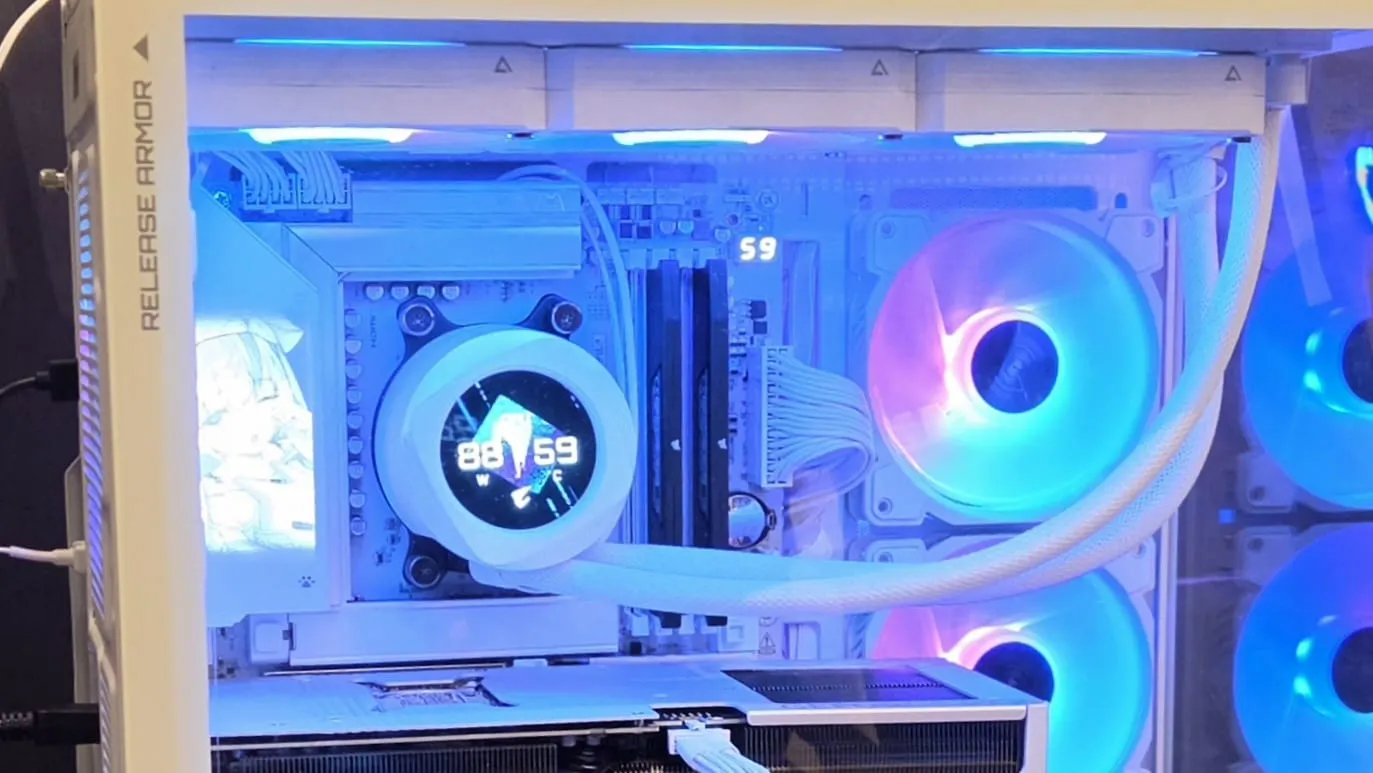
That’s what stood out most when the Gigabyte team took the stage for their 40th anniversary. Sunil Grewal, who heads Gigabyte India, told the gathering that memory used to be about 15% of a PC’s total cost. Now, in some builds, it’s jumped to 40 or even 45%.
Gamers and crypto miners aren’t driving this spike. This time, it’s all about AI.
Why is the AI boom making RAM so expensive?
The short version: the same factories make two kinds of memory, and one of them is far more profitable.
AI accelerators from Nvidia and others use HBM (high-bandwidth memory), a stacked, premium form of DRAM. Samsung, SK Hynix and Micron, which make most of the world’s DRAM, have been shifting production capacity toward HBM because that’s where the margins and long-term contracts are. That leaves less capacity for the conventional DRAM that goes into your desktop, laptop, and phone.
TrendForce said in September 2026 that HBM and conventional DRAM are still competing for limited wafer capacity, and that supply will stay tight through 2027. Grewal says the squeeze became visible in late 2025. Many buyers held off, expecting prices to settle within a few months. They didn’t.
How much does RAM cost in India right now?
It’s a lot more than it used to be.
In early 2025, a 32GB DDR5 kit could be found for around ₹6,500. By July 2026, popular 32GB DDR5-6000 kits were selling for about ₹40,000 on Amazon India. Even 32GB DDR4-3200 kits, the older and supposedly “stable” option, were selling for roughly ₹25,000 to ₹27,000.
India gets hit harder than most places because we import almost all our memory. When global prices go up, they show up right away in Indian stores, and any rupee swings just make it worse.
Grewal pointed out that it’s not just RAM. PCB and other parts have gone up, and graphics cards now cost more because of pricier memory. Motherboards, he claims, have stayed pretty stable. That’s easy for a motherboard maker to say, but it matches what I see in Indian retail listings.
Is RAM really 40% of a PC’s cost now?
It really depends on who’s buying. That’s the key thing to understand about this whole mess.
Gartner estimates that memory will peak at 23% of a PC’s bill of materials in 2026, up from 16% in 2025. That’s far below Gigabyte’s 40 to 45%. But Gartner is measuring what large PC makers pay on long-term supply contracts. Grewal is describing what a DIY builder in India pays at retail.
If you build a ₹1 lakh gaming PC and drop ₹40,000 just on DDR5, Gigabyte’s numbers start to make sense. When you buy parts one by one, you pay whatever the market says. Big brands like HP and Lenovo don’t have to.
Either way, the direction is clear. Gartner expects combined DRAM and SSD prices to rise about 130% by the end of 2026, and average PC prices to rise 17% compared with 2025.
Should you buy DDR4 or DDR5 in 2026?
For most mainstream buyers, DDR4 still makes sense, but don’t expect it to be cheap.
Grewal says the market has split in two. Professionals doing video editing and other heavy work are still moving to DDR5, because the time saved justifies the cost. Mainstream buyers who were planning to upgrade from DDR4 to DDR5 are increasingly staying put.

Gigabyte says DDR4 has held its price better because more companies make it, and it sells motherboards for both memory types across chipset tiers. The catch is that the major memory makers have been winding down DDR4 production. A wider supplier base today doesn’t guarantee supply in two years.
Here’s my take: if you’re gaming, focus on the GPU and CPU. They matter way more than whether you’re on DDR4 or DDR5. Spending ₹15,000 extra just for DDR5 doesn’t make sense unless your work really needs that bandwidth.
Can used parts or software tweaks save you money?
A little, but not as much as you might hope.
Gigabyte is promoting Ultra Boost, a feature on select motherboards that it says improves memory bandwidth, with claimed system performance gains of up to 15%. That figure is the company’s best case. Real gains will depend on your board, memory kit and what you run. Software tuning can get more out of the RAM you have, but it won’t give you more RAM.
Grewal is wary of used components that have been in service for three to five years, pointing to unknown remaining lifespan and reliability. For tight budgets, he suggests a new DDR4 system over one built from old parts.
That’s a good starting point, but not a hard rule. If you find a used part with a clear history, some warranty left, and it passes a test run, it can be a better deal than a random new one. Always ask for the invoice, run a memory test, and if the seller won’t let you, just walk away.
When will RAM prices go down?
Not anytime soon. The only question is how long we’ll have to wait.
- Gigabyte India: no meaningful relief before 2028. Grewal advises buyers not to wait for a sudden drop, and warns prices could keep rising quarter after quarter.
- IDC (June 2026): no relief before the end of 2027, with global PC shipments expected to fall 11.3% this year.
- TrendForce (September 2026): memory supply stays tight through 2027.
IDC also points out that even if capacity grows over the next two years, prices probably won’t go back to 2025 levels. That’s what matters most for buyers. Relief just means prices stop rising, not that they drop back down.
ALSO READ: Oppo Reno 17 Series Launches In China On November 16: What We Know So Far
AI is also the next reason to upgrade
There’s a twist here. The technology driving up memory prices is also the strongest new reason to buy more memory.
Grewal sees growing interest in local AI, meaning models that run on your own machine instead of in the cloud. For businesses, the appeal is control: proprietary data never has to leave the building, and models can be tuned on internal documents and workflows.
Running local models takes a lot of memory. So the same AI boom that made a 32GB kit expensive may soon make 64GB feel like the minimum for professional work.
Local doesn’t automatically mean private, though. A local model is only as secure as the machine it runs on, the people who can access it, and whatever external services it still calls. It reduces your reliance on the cloud. It doesn’t replace good security practice.
The bet underneath all of this
Everything above rests on one assumption: that AI infrastructure spending keeps growing.
Grewal acknowledged that the return on data centre investment is still being debated across the industry, and that some of these investments could take four to five years to pay off. If spending holds, memory makers have every reason to keep prioritising HBM. If it slows, the balance could shift back towards consumer DRAM faster than any forecast expects.
For now, the supply chain is serving the customers with the biggest cheques. Right now, that isn’t you.
What PC buyers in India should do right now
Gigabyte is 40 years old, and for most of that time the deal was simple: wait a generation and get more for less. AI has broken that deal, at least for now.
- Your current PC still works?
- Keep it. Gartner expects consumers to hold onto their PCs about 20% longer by the end of 2026, and that’s a sensible response, not a failure to upgrade.
- You need a machine for work?
- Buy now and stop waiting for a price crash that no forecaster expects.
- Building a gaming PC?
- Price the CPU, motherboard and RAM as one platform. A cheaper DDR4 platform plus a better GPU will usually beat a DDR5 build with a weaker card.
- Considering used parts?
- Only with an invoice, a warranty and a test run.
The last two big shortages, the crypto mining boom and the pandemic, both ended in a price crash. This one feels different, because the buyer competing with you isn’t a gamer with a spreadsheet. It’s a hyperscaler with a ten-year plan.

FAQ
Will RAM prices go down in 2026?
No. Gigabyte India, IDC and TrendForce all expect memory supply to stay tight through at least 2027, and Gigabyte doesn’t expect meaningful relief before 2028.
Why is RAM so expensive right now?
Because memory makers are prioritising high-bandwidth memory (HBM) for AI data centres. That cuts the capacity left for the conventional DRAM used in consumer PCs, laptops and phones.
Is DDR4 still worth buying in 2026?
Yes, for most mainstream and gaming builds. DDR4 is cheaper than DDR5 and more widely available, but prices have still risen sharply, and manufacturers are winding down production over the long term.
How much does 32GB of DDR5 RAM cost in India?
About ₹40,000 for a popular 32GB DDR5-6000 kit as of mid-2026, up from around ₹6,500 in early 2025.
Should I buy a PC now or wait?
Buy now if you need it for work. Wait if your current system still handles what you do, because no major forecaster expects prices to return to 2025 levels.
You can follow Smartprix on Twitter, Facebook, Instagram, and Google News. Visit smartprix.com for the latest tech and auto news, reviews, and guides.