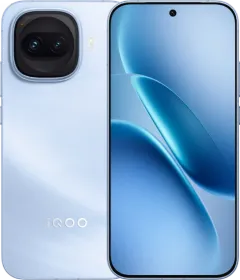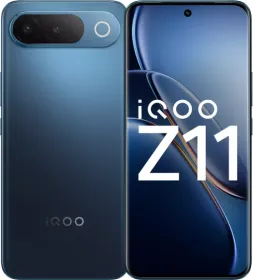



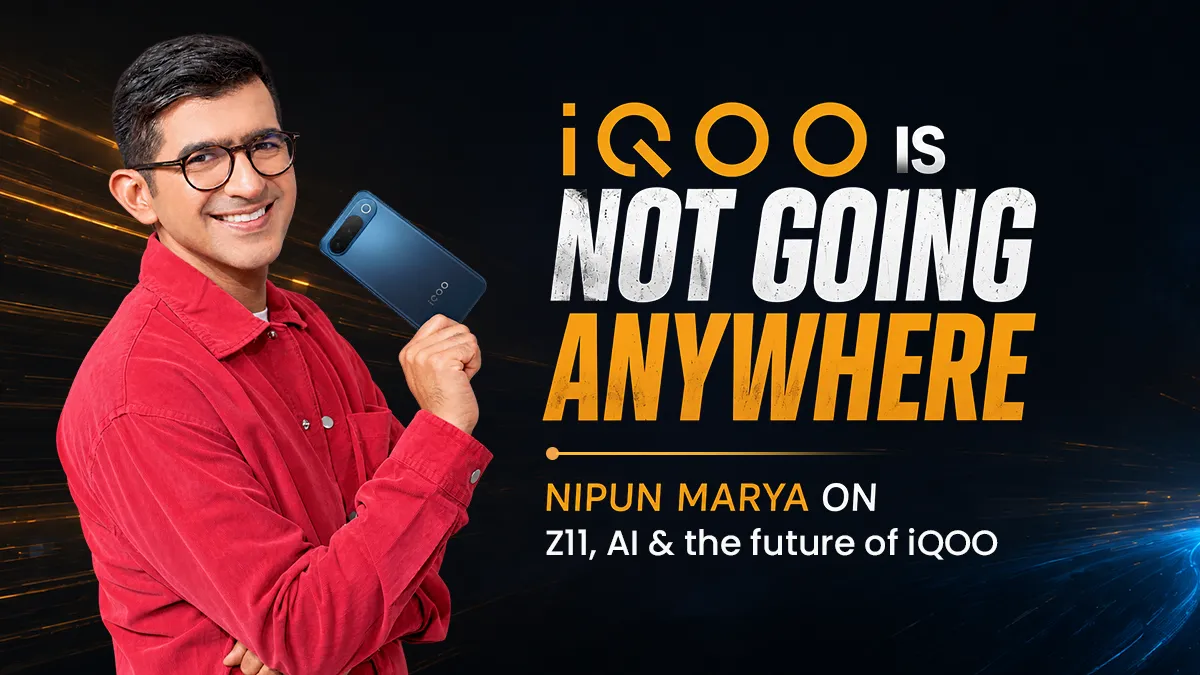
iQOO is trying to change what “performance” means.
iQOO used to be all about fast processors, gaming, and big specs. Now, with the Z11, the focus shifts. The company is talking less about benchmarks and more about AI-powered productivity, battery life, and how the phone actually helps you get things done.
Ahead of the Z11 launch, iQOO’s Nipun Marya says the Z Series still targets college students, but their needs have changed. The Z11 is built around one idea: ‘Faster & Smarter with AI.’
We also talked about iQOO’s future, its connection to Vivo, reports of Neo crashes and motherboard failures, and whether the industry is pushing AI too hard.
iQOO Z11 is built for college students
Marya says iQOO’s three smartphone families have deliberately different audiences.
The flagship series targets working professionals, the Neo lineup targets esports enthusiasts and users seeking peak performance, while the Z Series is designed primarily around the everyday needs of college students.
“The focus is around college-going students,” Marya said.
iQOO spent time talking to college students and digging into their daily routines and smartphone habits. The takeaway was clear: students want tech that helps them work smarter, not harder.
That’s why the Z11 focuses on AI-powered productivity instead of just piling on specs.
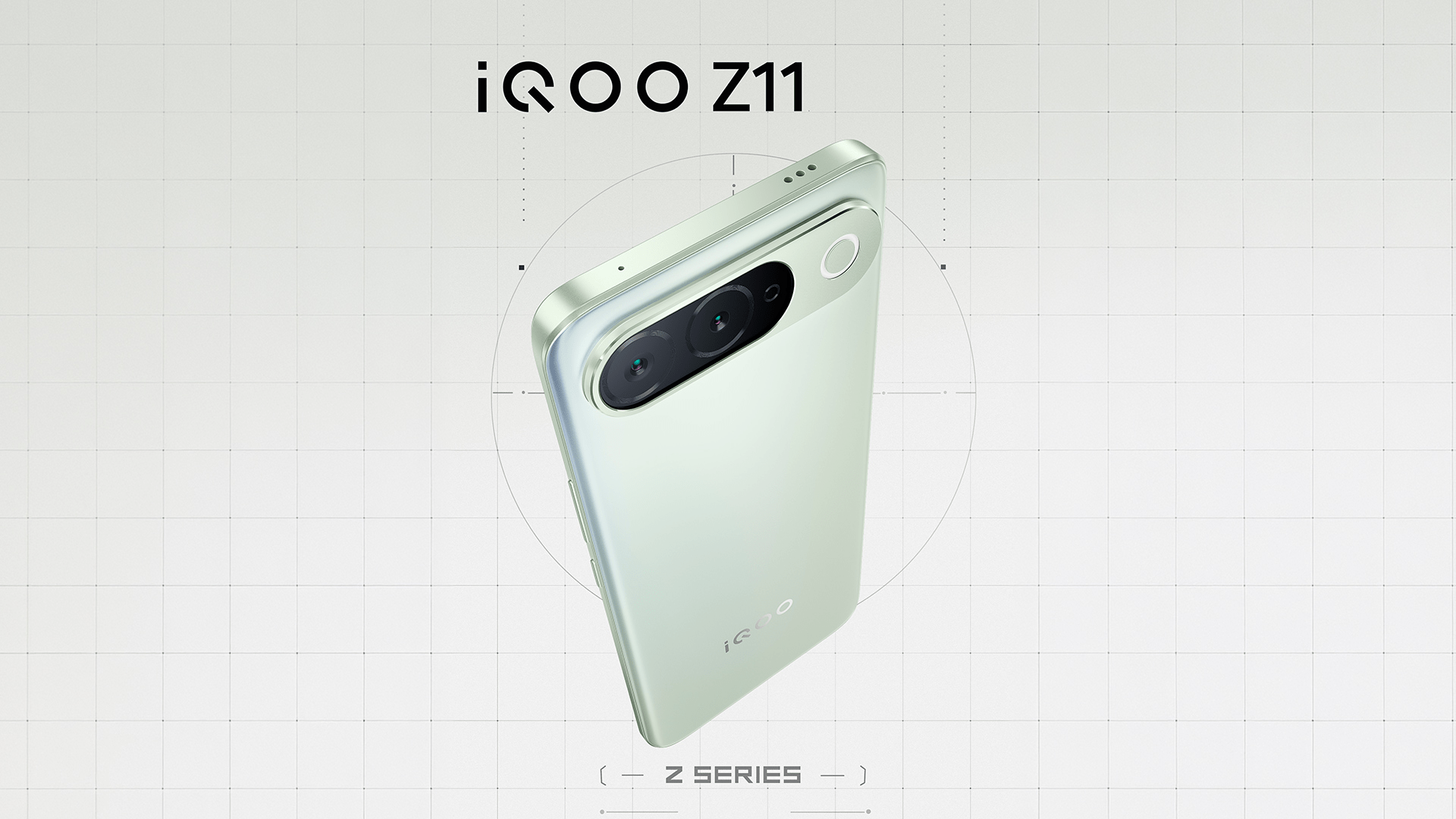
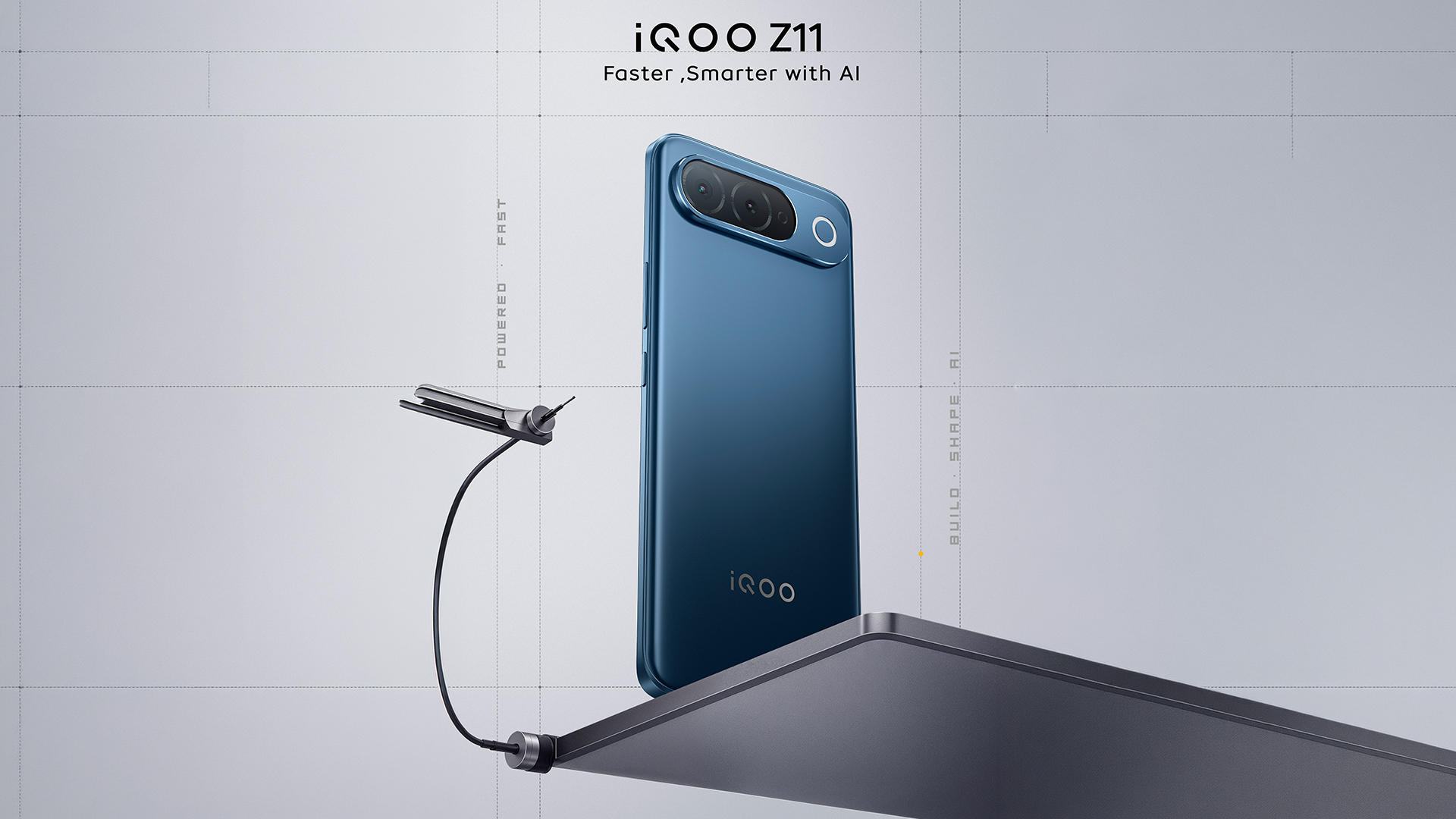
The phone packs a MediaTek Dimensity 7500 Turbo chipset, a 50-megapixel Sony main camera with OIS, a 7,050mAh battery, 44W charging and a 6.83-inch 144Hz AMOLED display with up to 2,000 nits HBM brightness.
iQOO thinks Gen Z is adopting AI faster than expected
The Z11’s biggest shift is its focus on AI.
The phone offers AI-powered transcription, translation, captions, summarisation and creation tools. iQOO says its AI Captions system combines Google Gemini and Microsoft Azure technologies to deliver transcription and translation, while dedicated AI processing hardware in the chipset is claimed to provide up to twice the overall AI performance of the previous-generation processor.
iQOO is dropping usage limits for AI Captions and AI Creation.
Other brands cap AI features at 120 to 300 minutes. With the Z11, you don’t have to worry about those limits.
If you’re a college student, the use cases are obvious: transcribe lectures, translate conversations, summarise study material, brainstorm ideas, and polish assignments.
Marya says iQOO is seeing AI adoption among young consumers happen faster than he expected.
“The adoption of AI is very fast. It is faster than I had expected.”
He believes students and younger consumers are among the first to adopt AI because they want tools that make them “faster, more efficient and more effective.”
iQOO isn’t saying AI alone will sell phones.
When asked whether the smartphone industry is overestimating consumer demand for AI, Marya said the technology clearly has a role, but its success depends on implementation.
“I certainly think AI has merit,” he said, adding that students and younger consumers are among the first groups to adopt it.
iQOO knows there’s a risk in just adding more AI features. Brands need to avoid overwhelming users and focus on practical use cases.
That distinction could become important as almost every major smartphone brand begins marketing AI as a core selling point.
iQOO wants “performance” to mean more than benchmarks
This shift matters for iQOO. Performance has always been its core identity.
Marya says that DNA isn’t changing.
“Performance first is in our DNA and we will always be focused on that,” he said.
But what performance means is changing.
“You can give consumers the most powerful hardware and impressive software specifications, but true performance is only meaningful when that technology translates into a better experience in real-life usage,” Marya said.

He put it even more simply:
“Specifications tell you what a smartphone can do; true performance is about what it enables you to do in your everyday life.”
That’s why iQOO is highlighting the Z11’s big battery, long-term battery health, and AI features.
The Z11 has a 7,050mAh battery and 44W FlashCharge, alongside a claimed five-year battery health rating. It also comes with a 60-month smooth-experience promise, three generations of Android upgrades and five years of security updates.
For iQOO, sustained performance is now part of what performance means.
iQOO addresses Neo crashes and motherboard failure reports
We also talked about complaints from Neo users about crashes and motherboard failures.
Marya acknowledged that iQOO is aware of the issue.
“Yes, you are right,” he said when asked about the reports. According to Marya, iQOO has identified around four cases and is already working with the affected consumers to resolve them.
“Is it an issue? Yes, it is an issue. Are we taking it seriously? We are taking it very, very seriously and we will solve it,” Marya said.
At the same time, he described the cases as isolated rather than a widespread problem.
“But it’s still an isolated thing. It’s not like a mass thing,” Marya said, adding that the cases were “very few in number.”
iQOO’s written response similarly says that the majority of users have not faced issues following the recent OS update, while a small number of highlighted cases are being investigated.
So far, iQOO hasn’t found a bigger systemic issue.
iQOO says it is not going anywhere
Perhaps the most interesting part of the interaction had little to do with the Z11.
Marya was asked directly about reports suggesting iQOO could be integrated back into Vivo or that its independent operations could be scaled down.
His response was unequivocal:
“It’s business as usual for us. No change in our structure or operational set-up.”
Marya went further, saying iQOO remains part of Vivo’s long-term strategy.
“iQOO is very much a part of Vivo’s long-term strategy,” he said. “That is how we have thought about iQOO when we started iQOO in 2020. That is how we still think about iQOO in 2026.”
He also pushed back against interpreting short-term changes in the smartphone business as evidence of a larger strategic shift.
“Short-term blips should be thought of as short-term blips and not extrapolated to anything bigger,” Marya said.
In other words, iQOO isn’t shutting down, and the Z11 isn’t a farewell.
iQOO isn’t setting a three-year market-share target
Interestingly, Marya did not give a specific market-share or shipment target for iQOO over the next three years.
Instead, he said the company is focused on building a healthy, sustainable brand over the long term.
“We want to build a healthy and a long-term brand,” Marya said.
That’s a big shift from the usual smartphone obsession with quarterly numbers.
For iQOO, the immediate goal appears to be maintaining its performance identity while expanding what that identity means.
Gen Z wants more than a spec sheet
Another important shift is in iQOO’s thinking.
iQOO knows its audience does their homework and digs into specs before buying. But just adding more specs isn’t enough for Gen Z now.
“Gen Z consumers are extremely evolved and very clear on what they want,” the company said in its response to Smartprix. If brands simply pile on specifications without explaining their relevance, consumers “see through it as a hard sell without substance.”
That’s why iQOO talks more about student use cases and less about technical jargon with the Z11.
The strategy is simple. Don’t just list features like AI, a fast processor, or a big battery. Show how they make life easier.
The bigger bet behind the iQOO Z11
The Z11 lands as the smartphone industry runs out of easy ways to stand out.
Processors are getting faster. Displays are getting brighter. Batteries are getting larger. Charging is getting quicker. And AI is now being added to almost every product.
iQOO helped build the performance-first category. Now, the company isn’t just defining performance by processor or benchmark scores.
Instead, iQOO wants performance to mean what the phone lets you accomplish.
That makes the Z11 a big experiment for iQOO.
If students use the Z11’s AI tools all day, iQOO can prove AI is part of real smartphone performance.
If not, iQOO may find that battery life, camera quality, gaming, display, and software still matter more than an AI badge.
For now, iQOO is waiting to see where the market goes.
That might be the most telling part of the Z11 story.
You can follow Smartprix on Twitter, Facebook, Instagram, and Google News. Visit smartprix.com for the latest tech and auto news, reviews, and guides.