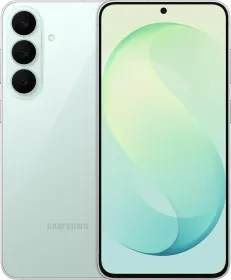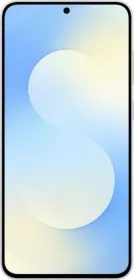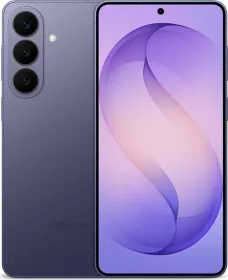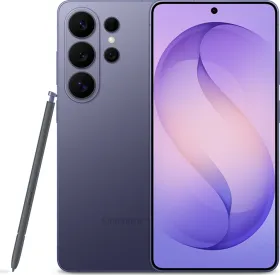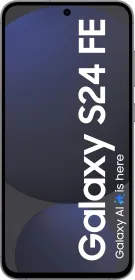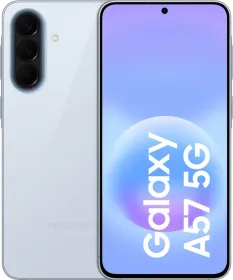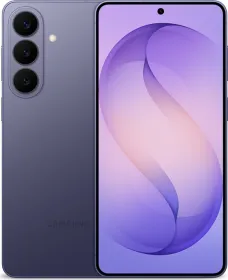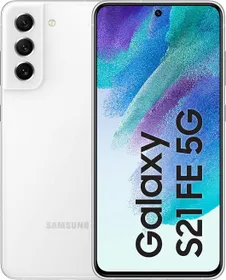


Here’s one thing about the Galaxy S26 FE that nobody is really talking about. This year, the “Fan Edition” is restricted to one memory and storage configuration. The 128GB and the 512GB variants are gone, and if you don’t already know this, the reason is the ongoing memory crisis. Samsung sells exactly one configuration this year: 8GB RAM, 256GB storage, Rs. 79,999, take it or leave it.
There’s also a quieter reversal buried in here: this is the first phone in the entire S26 family, including the flagship Ultra, to ship with One UI 9 out of the box. From what I’ve seen, the “Fan Edition” usually catches up to the flagships. This time, it’s ahead of them. I spent my review period trying to figure out whether that inversion, and the single-SKU pricing that comes with it, actually changes how this phone feels to live with day to day.
Samsung Galaxy S26 FE Price & Availability
The Samsung Galaxy S26 FE is available in India in one configuration: 8GB RAM with 256GB storage, priced at ₹79,999. Last year, the S25 FE was priced at ₹65,999 for the same configuration.
Launch offers include an exchange bonus of up to ₹8,000, a bank cashback of ₹7,000 on select credit and debit cards.
The phone went on sale on September 18, 2026, via Samsung.com, major e-commerce platforms, and offline retail stores nationwide. It’s available in three colorways: Blueberry, Graphite, and Pistachio.

Galaxy S26 FE: Tech Specifications
| Specification | Details |
| Display | 6.7-inch Dynamic AMOLED 2X, FHD+ (1080 x 2340 pixels), 385 ppi, 120Hz refresh rate (fixed 60Hz/120Hz, no LTPO), 1,900 nits peak brightness (rated), Gorilla Glass Victus+, HDR10+ |
| Processor | Samsung Exynos 2500 (3nm), 10-core: 1x Cortex-X925 @ 3.3GHz + 2x Cortex-A725 @ 2.74GHz + 5x Cortex-A725 @ 2.36GHz + 2x Cortex-A520 @ 1.8GHz |
| GPU | Xclipse 950 (AMD RDNA 3-based) |
| RAM & Storage | 8GB RAM, 256GB storage (single variant in India) |
| Main Camera | 50MP, f/1.8, 1/1.57-inch sensor, OIS |
| Ultrawide Camera | 12MP, f/2.2, 1/3.0-inch sensor, no OIS |
| Telephoto Camera | 8MP, f/2.4, 1/4.4-inch sensor, OIS, 3x optical zoom |
| Front Camera | 12MP, f/2.2, no autofocus |
| Video | Up to 8K recording, 4K@60fps (main and selfie only), 4K@30fps (ultrawide and telephoto), multi-camera recording capped at 1080p/30fps |
| Battery | 4,900mAh |
| Charging | 45W wired, 15W wireless, reverse wireless charging (no native Qi2 support) |
| Build & Durability | Aluminum frame, Gorilla Glass Victus+ (front and back), IP68 rating |
| Biometrics | In-display optical fingerprint sensor |
| Connectivity | 5G, Wi-Fi 6E, Bluetooth 5.4, NFC, USB 2.0 (downgraded from USB 3.2 Gen 1 on the S25 FE) |
| Audio | Stereo speakers |
| Software | One UI 9 based on Android 17, 7 years of OS and security updates |
| Dimensions & Weight | 161.6 x 76.9 x 7.4mm, 193 grams |
| Colors | Blueberry, Graphite, Pistachio |
| Price | Rs. 79,999 (8GB + 256GB, only variant in India) |
6 Things I Like About The Galaxy S26 FE
1. Flagship-Like Design And In-Hand Feel
What I liked most about the Galaxy S26 FE is also what got me the most compliments: its look.

In the new Pistachio color, the S26 FE looks gorgeous. It didn’t matter whether it was in my hand, on the table, or sitting among the other phones in the group I was with; people kept reaching out to ask which phone it was, and said they really liked the color (and I agree).
Thanks to the lighter shade of the back panel, the Corning Gorilla Glass Victus+ back doesn’t really pick up any visible fingerprint smudges. The back panel also houses the refreshed camera island, which now sits on top of a slim, vertical island rather than sitting flush as it did on the S25 FE.

While I understand this is an attempt to make the phone look like it belongs to the Galaxy S26 series, it does introduce a bit of a wobble when you place the phone face up on a flat surface.
Sliding from the back to the sides, the phone features a textured aluminum frame with the power/volume buttons (relatively soft) on the right rail, the SIM tray, USB-C port, and the primary speaker grille at the bottom, plus six antenna bands around the phone.

The front also has the same Gorilla Glass Victus+ protection. Overall, the phone measures 161.6 x 76.9 x 7.4 mm, and that last figure adds a noticeable premium feel.
Like other Samsung phones, this one is substantially slimmer than its contemporaries. It weighs only 193 grams, so it doesn’t feel heavy in hand, especially during extended use. If I can cover about 75 to 80% of the screen with my thumb on my 6.3-inch iPhone 17, I can cover around 60 to 65% of the screen on the 6.7-inch S26 FE. It’s not ideal for one-handed use, but it stays pocketable, easy to maneuver, and comfortable enough to carry all day.

Finally, the phone also carries an IP68 dust and water resistance rating, which could act as a safety net if you accidentally drop it in a sink or bucket of water, or get caught in a sudden downpour.
2. Display Holds Up Really Well Outdoors
Samsung is known for its stunning displays, and the one on the Galaxy S26 FE is no different, at least not in terms of brightness, resolution, or overall punchiness.

The latest Fan Edition smartphone features a 6.7-inch Dynamic AMOLED 2X, FHD+ (1080 x 2340) screen with an effective pixel density of 385 ppi (nothing too fancy, but nothing I found myself complaining about either).
The screen size, I’d say, lies right between the 6.3-inch compact flagships and the much larger 6.9-inch phones. In my opinion, it strikes the perfect balance between the two. As always, the colors are accurate, with strong contrast, and those deep, inky blacks that we’ve come to expect from the company.

It also supports a 120Hz refresh rate, which makes general scrolling smooth and seamless. Out of the box, the Motion Smoothness setting is set to “Adaptive” in the Settings menu. The color profile (or what Samsung calls the Screen Mode) is set to Vivid (with an option to set it to Natural), which slightly accentuates the blues and gives the display a more vibrant look.
I like the display to showcase more information, so I usually tweak the Font Size and Style and the Screen Zoom options, but that comes at the cost of a smaller font, which is a trade-off I’m willing to make.

Other features like Accidental touch protection and increased touch sensitivity are also there, just something you should know about.
As for brightness, the phone has a rated peak brightness of 1,900 nits (local). The global peak brightness numbers, though lower than the rated number, are still high enough for the phone to be visible in direct sunlight. Indoors, I usually keep the slider between 10 and 15%, while outdoors, I’m often around 50 to 60%. Unless I’m directly under the sun, in which case I’ve got to max out the slider.

While you’ll get slightly brighter displays in this price range, the Galaxy S26 FE doesn’t leave much to nitpick about. For me, the size, colors, and smooth 120Hz refresh rate make it a display I genuinely enjoy using every day. It may not lead the class on paper, but it gets the important things right.
The stereo speaker setup is genuinely good, though. They sound fuller; there’s enough focus on vocals and the high end for clarity, and no distortion at the highest volume.

3. The Galaxy S26 FE Is The First In The Family To Get One UI 9
Yes, that is right. Not the Galaxy S26 Ultra, not the S26 Plus or the regular S26, but it’s the Galaxy S26 FE that gets One UI 9 (based on Android 17) first in the lineup; it’s installed out of the box. It goes without saying, but this one also gets Samsung’s seven-year promise of operating system and security updates, something that the competition (except Google lacks in the segment.
The overall experience, whether you’re accessing the system menus, the Quick Panel section, switching between apps, or customizing the home/lock screen, remains seamless, provided that you’re familiar with One UI and its nature to locate the smaller settings deeper in the menus.

There are plenty of subtle yet user-friendly changes, including a simplified Quick Panel section with standalone brightness, sound, and media player blocks (reminds me of iOS to an extent), a streamlined Smart Switch data-transfer wizard that lets you migrate passwords, passkeys, and call history easily from any iOS or Android device.
Android 17 also brings more granular app-level privacy permissions and anti-theft security restrictions. One UI now requires a password to log back in to the handset if you (or someone else) restart the phone, a small but important addition.

One UI 9 also introduces specific features like multiple split-video layouts (three, to be precise), plus the option to record Pro Video at 24, 30, 60, and 120 fps and control the microphone input. Finally, One UI to iOS sharing and native AirDrop support are also in place and work fine (most of the time).
One thing that’s worth noting: the Perplexity app comes pre-installed on this one, unlike the regular Galaxy S26 I reviewed earlier this year. And yes, you can set Perplexity as the Default Digital Assistant App as well. I actually like having the option, especially if you already prefer Perplexity over Gemini for certain tasks.

Now, on the AI side, the Galaxy S26 FE includes the full Galaxy AI suite, and it has more features than I can cover in a single post, so I’ll list the main ones.
There’s Now Nudge and Now Brief that offer proactive suggestions based on what you’re doing and highly personalized morning/daily summaries detailing upcoming schedules, weather context, and tailored wellness tracking. I found these more useful as quick at-a-glance features than something I’d actively open throughout the day. They also offer communication and translation AI features, including Call Assist, Interpreter, and Writing Assist.

There are also a bunch of camera-related features, but we’ll cover those later. Also worth noting is Google’s Gemini integration. It supports the Gemini AI assistant (as the default assistant), the Circle to Search visual lookup feature with the multi-item upgrade, and other features like Gemini Live.
While the phone can do some cross-app tasks, like fetching a Google Maps listing and sending it to a contact on WhatsApp, there’s a RAM-related ceiling on the Gemini side worth knowing about, and I’ll get into exactly what it locks you out of in the cons section below.

There are a couple of pre-installed apps like Instagram, Facebook, Spotify, and Netflix, but since almost everyone I know uses them, I’m not sure I’d call them bloatware. For me, they’re more of a minor convenience, since they save people the manual effort of downloading apps they’d probably install anyway.

4. The Exynos 2500 Feels Fluid And Smooth For Most Tasks
The Exynos 2500 (3nm) in the S26 FE brings a substantial performance leap over the Exynos 2400 (4nm) in the Galaxy S25 FE.

The Exynos 2500 is a 10-core processor built on Samsung’s 3nm GAA process, with one high-performance Cortex-X925 core clocked at up to 3.3GHz, two Cortex-A725 cores at 2.74GHz, five more Cortex-A725 cores at 2.36GHz, and two efficiency-focused Cortex-A520 cores at 1.8GHz. On the graphics side, it uses Samsung’s Xclipse 950 GPU, based on AMD’s RDNA 3 architecture.
At the same time, the 3nm process is designed to improve efficiency and performance compared with the 4nm chip used in the previous generation.

I noticed the difference pretty quickly in everyday use. Everything from booting the phone and opening apps to switching between them, running heavier apps like video games or benchmarks, and the benchmark scores themselves feel smoother and more responsive on the S26 FE.
Since the RAM hasn’t increased from the S25 FE, the more capable chipset and GPU are doing the heavy lifting. I’d say the performance is enough for most regular users who don’t want to spend on top-tier Samsung flagships and instead want something that just gets the job done. For those wondering about benchmark gains, check the table below.
| Benchmark | Galaxy S26 FE | Galaxy S25 FE |
| AnTuTu V11 | 2,291,721 (27% higher) | 1,802,927 |
| Storage V11 (128GB) | Score: 92,198 / Read: 2,214.2MB/s / Write: 1,900 MB/s | Score: 64,837 / Read: 1,874 MB/s / Write: 586 MB/s |
| Geekbench 6 CPU | Single-Core: 2,192 / Multi-Core: 6,7,693 | Single-Core: 1,977 / Multi-Core: 6,659 |
| Geekbench 6 GPU | OpenCL: 17,682 / Vulkan: 20,817 | OpenCL: 13,809 / Vulkan: 18,377 |
| 3DMark Wild Life Extreme Stress Test | Best: 4,931 / Lowest: 2,762 / Stability: 56% / Temp: 34°C → 46°C / Battery drop: 10% | Best: 4,095 / Lowest: 2,072 / Stability: 50.6% / Temp: 31°C → 46°C / Battery drop: 10% |
That stress-test stability figure is worth a closer look, and I’ll unpack exactly what it means for real-world use in the cons section.

Regarding gaming, the phone can handle BGMI and COD:M with ease, though only on the medium settings. There’s no 120fps or 90fps option in BGMI, though, which shouldn’t be the case technically. Perhaps Samsung could add support with a software update in the coming days. As the phone heats up, the frame rate drops a bit.
5. S26 FE Offers Camera Versatility To Photography Enthusiasts
The S26 FE’s biggest advantage over some competitors is its telephoto camera. It offers a dedicated 3x optical zoom (8MP, f/2.4, 1/4.4-inch sensor, OIS), letting you get closer to a subject without physically moving and capture portraits with that classic telephoto look.

The other two cameras are a 50MP primary (f/1.8, 1/1.57-inch sensor, OIS) and a 12MP ultrawide (f/2.2, 1/3.0-inch sensor, no OIS), giving you a pretty versatile setup for most everyday shooting. However, it’s the primary camera I’d praise most, probably because of that considerably larger sensor and wider aperture (similar to the vanilla Galaxy S26). I’ve relied on this sensor most throughout my time with the S26 FE.
Primary Camera
The S26 FE carries the same 50MP primary camera as the S25 FE, but I’m not saying that in a bad way.


It isn’t the largest primary sensor in the segment, but in my experience, it still does well more than 90% of the time. Shots have excellent detail, a wide dynamic range, and virtually no noise in broad daylight.


Like previous Galaxy phones, this one also leans toward a slightly vibrant, punchy look across the board, which I personally quite like. Pictures look sharp at the 2x in-sensor crop as well, though I’d not call it optical-level zoom. Yes, indoor shots look slightly softer than the ones captured outdoors, but it’s a difference only a keen eye will notice.


At the minimum focusing distance, I also get a pleasing, natural-looking background blur that adds a bit more character to close-up shots. This sensor also holds up best in low light, especially with the dedicated night mode.
Telephoto Camera
This is easily my favorite sensor of the three.


It could definitely use a larger sensor, but it’s better to have one than to rely on the primary sensor for the 2x or 3x in-sensor crops (like on the regular foldables or the iPhone 17). In daylight, the shots have plenty of detail and character, retain skin textures well, and don’t look overprocessed or oversharpened.


I especially appreciate that when shooting people. I’d say that the zoom is practically usable up to 10x, but not beyond that. Since it’s an 8MP sensor, you can only crop so much. However, within the sweet spot of 3x and 5x, I found that the sensor does quite well. Those are the zoom levels I’d stick to most of the time.


8K video recording is also available for those who want to use it.
6. All-Day Battery Life Leaves Battery Anxiety Behind
The battery capacity remains unchanged from the Galaxy S25 FE, but I’ve noticed the S26 FE lasts longer between charges, thanks in part to the chipset’s jump from 4nm to the more power-efficient 3nm fabrication process. With mixed usage, the S26 FE easily returns over 7 hours of screen-on time. On lighter days, I’ve even managed to get around 8 hours.


With light use, you can easily spread those seven hours across an entire day, or even a day and a half, depending on your usage. Heavy usage drops that number to around 5-5.5 hours, though. I also feel that the 45W wired charging speed is enough for an average user. The battery reaches around 50 to 60% in 30 minutes, and a complete charge takes around 70 to 75 minutes.


You also get plenty of battery-related features, including the ability to set background usage limits for apps, battery protection that limits time spent at 100%, and a toggle to enable wireless power sharing.
5 Things I Wish Were Better About The Galaxy S26 FE
1. Bezel, Refresh Rate, And Haptics
Given the Galaxy S26 FE’s price point, I didn’t expect to see a thicker bottom bezel. I would have accepted the chip, but I’ve seen how beautiful Samsung’s displays look with symmetrical bezels. Several mid-range phones also sport symmetrical bezels around the screen.

Besides the bottom bezel, the next generation could improve by adding an LTPO panel. The phone supports up to a 120Hz refresh rate, but it’s fixed at certain values between the maximum and the minimum range. Finally, the haptics could also use some improvement.
2. RAM And Sustained Performance
Samsung hasn’t moved past the 8GB threshold this year, and the most immediate consequence is Gemini Intelligence, as it needs over 12GB of RAM. Even so, the phone could have benefited from 12GB of RAM, especially for retaining more apps in the background.
Second is throttling. In the 3DMark Wild Life Extreme stress test, the phone posted a best loop of 4,931 and a lowest loop of 2,762, for 56% stability, with temperatures climbing from 34°C to 46°C. That’s close to half the peak performance lost under sustained load.

It’s still an improvement over the S25 FE’s 50.6%, so things are heading in the right direction. However, even so, performance under extended, demanding use won’t match what you see in the first few minutes. I’ve also noticed the phone getting noticeably warm while capturing pictures back-to-back or running benchmarks.
The USB port is now limited to USB 2.0, down from USB 3.2 Gen 1 on the S25 FE, which means slower wired transfers and no wired DeX. However, wireless DeX still works for those who want to use it.
3. Software Quirks
Call Brief, the One UI 9 feature that surfaces contextual info during calls, is missing here, even though the Galaxy Z Flip 7 runs the same Exynos 2500 and includes it. Samsung doesn’t state why it’s missing.

The S26 FE also lacks full-screen Always-On Display with lock screen wallpaper support, a feature present on phones using the flagship display tech. Neither is a dealbreaker, but they could be better.
4. The Ultrawide And Selfie Camera
The ultrawide doesn’t match the primary camera’s standard. Sharpness drops toward the edges, edge distortion isn’t well controlled, and in low light, its output can carry a different color temperature than the main camera’s in the same scene.


I also found that the ultrawide and telephoto struggle more than the primary camera once light drops, and this isn’t just a noise issue. I noticed the camera occasionally failing to lock focus in dimmer conditions, something Night mode doesn’t always fix.
On video, switching between all three rear cameras mid-recording caps you at 1080p/30fps, since 4K@60fps is limited to the main and selfie cameras. Pro Video mode also lacks a Log profile or an APV codec, both of which are present on other S26-series phones.


5. Native Qi2 Wireless Charging
There’s no native Qi2 support (like the flagship Galaxy S26 series), so magnetic accessories require a third-party case, and wireless charging tops out at 15W. Reverse wireless charging is present but doesn’t work with any Galaxy smartwatch launched since 2024.
Review Verdict: Should You Buy the Samsung Galaxy S26 FE?
The Galaxy S26 FE is a genuinely good phone to live with. The design draws compliments unprompted, the display is the kind of screen I stopped noticing because it just worked, and the telephoto camera quietly became my most-used lens over the review period. Getting One UI 9 before Samsung’s own flagships, alongside the full seven-year update promise, makes a real case for this being a phone you buy once and stop thinking about for a long while.
But the compromises are specific. If you were hoping to lean on Gemini Intelligence, the 8GB RAM ceiling rules that out entirely. If you push the chip for extended stretches, whether gaming or benchmarking, Exynos 2500’s limitations show up, but for every other thing a regular user does, the chipset holds its ground quite well. And in India specifically, the single ₹79,999 SKU removes the lower entry point that made past FE phones feel like the value pick in Samsung’s lineup.
If you want a Samsung phone that looks and feels premium, shoots reliably across most focal lengths, and will keep receiving updates well into the next decade, this earns its price. If you were counting on the “Fan Edition” name to mean a genuine discount or a RAM-heavy configuration, that’s not what you’re getting this year.

Smartprix ⭐ Rating: 8/10
- Design and Build: 8.5/10
- Display: 8.5/10
- Speakers: 8.25/10
- Software: 9/10
- Haptics: 7/10
- Biometrics: 7.5/10
- Performance: 7.5/10
- Cameras: 8/10
- Battery Life & Charging: 7.5/10
First reviewed in September 2026.