


Samsung Galaxy Z Flip 8: Table of Contents
Samsung is gearing up to enter the smart glasses market, one of the fastest-growing consumer tech segments to emerge over the last few years, and a big chunk of that market is already held by Meta.
On July 22, at Galaxy Unpacked London, is when Samsung could drop the ball. Previewed on stage at Google I/O 2026, the Galaxy Glasses are Samsung’s first mass-market eyewear product, built on Android XR with Gemini as the primary interface. Here is everything known about them.
Also Read: Pixel 11 Series Prices Leak as Google Officially Confirms Pixel Event for August 12
Samsung Galaxy Glasses: At A Glance
| Category | Details |
| Platform | Android XR |
| AI assistant | Google Gemini (voice-first) |
| Chipset | Qualcomm Snapdragon AR1 (rumored) |
| Camera | 12MP (rumored) |
| Display | None (audio-only; 2026 model) |
| Audio | Directional over-ear speakers (rumored) |
| Activation | “Hey Google” voice command or frame tap |
| Battery | ~155mAh, estimated 6-8 hours (rumored) |
| Weight | ~50g (rumored) |
| Connectivity | Paired to Android or iOS smartphone |
| Frame partners | Warby Parker, Gentle Monster (confirmed) |
| LED indicators | Dual (facing wearer + facing bystander) |
| Codename | Jinju (SM-O200J) |
| Estimated price | $379–$499 |
| Commercial launch | Fall 2026 (confirmed) |
| Display version | 2027; codename Haean (SM-O200P) |
Also Read: Samsung’s Home Up Update Adds 36 New Ways to Take Screenshots
Samsung Galaxy: Release Date & Availability
Google confirmed at I/O 2026 that glasses are “coming later this fall,” and Samsung’s July 22 Unpacked in London is where we could get more information about the pricing, full specifications, and additional details. Commercial availability, however, could follow in fall 2026.
While the pre-reservation for the Galaxy Unpacked is already live, it doesn’t mention the Galaxy Glasses, nor does it offer any direct or indirect hint of them. There’s no word on the Indian availability of the glasses either. Based on the limited-rollout pattern seen with the Samsung Galaxy headset earlier in 2026, Indian buyers should expect a phased launch.
Also Read: Nothing Phone (4b) Launched in India: Check Pricing and Specifications
Samsung Galaxy Glasses: Design & Frames
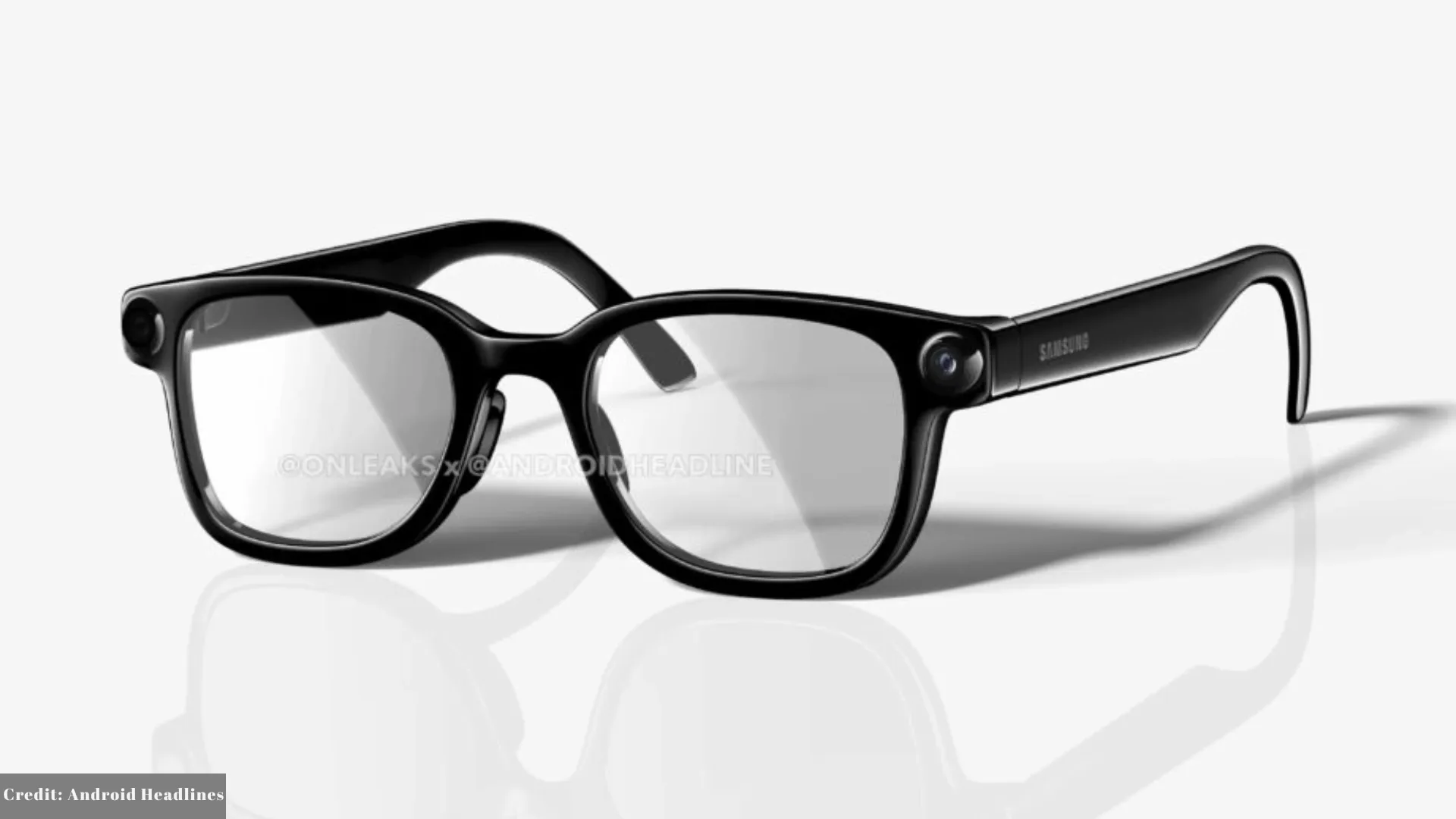
Samsung isn’t designing the Galaxy Glasses alone. In fact, it has partnered with two global eyewear brands for this: Gentle Monster, known for fashion-forward silhouettes, and Warby Parker, which offers an everyday option. Both collections are expected at launch.
Reports suggest a weight of approximately 50g, and imagery from the I/O preview shows frames that match standard eyewear proportions rather than bulkier smart glasses. Several reports note dual LED indicators: one visible to bystanders to signal active recording, and one facing the wearer for status.

Also Read: Samsung Galaxy Z Flip 8: Release Date, Price In India, Expected Specs, And Everything Else We Know
Samsung Galaxy Glasses: Platform & AI
Out of the box, the Galaxy Glasses will run on Android XR, a platform built by Google, Samsung, and Qualcomm. If you’re wondering what role Gemini plays, it’s the primary audio-based interface the glasses rely on (similar to how the entry-level Ray-Ban Meta Glasses rely on Meta AI).
With no display to fall back on, every output is an audio response, a spoken notification, or a summarized read-aloud. Ahead of the launch, Google has already confirmed a couple of features, including turn-by-turn navigation using the glasses’ location and directional awareness, contextual questions about your surroundings, hands-free calls, text and notification summaries, and music playback.
One of the most important aspects of AI-enabled glasses, live translation, should also be available with tone-matched audio. Google also demonstrated third-party app integration at the I/O, but with limited apps. More importantly, Google confirmed that the glasses pair with both Android and iOS devices, expanding the addressable market beyond the Samsung Galaxy ecosystem.

I recently reviewed the Ray-Ban Meta AI Glasses (Gen 2), the ones without a display, and my experience of using Meta AI was mostly good. Hopefully, Google’s Gemini, the omnipresent AI assistant layer we use on our phones, in our email, and even on YouTube, will do equally well as a voice-only assistant.
Also Read: Dreame’s Two New Robot Vacuums Mop Corners, Lift Off Carpets, And Start At ₹27,999
Samsung Galaxy Glasses: Chipset & Sensors
It’s highly likely that the Samsung Galaxy Glasses will use the Qualcomm Snapdragon AR1. The chipset is designed specifically for always-on wearable glasses rather than headsets, prioritizing thermal management and power efficiency at low weight over raw computational power.

By handing off all the heavy AI processing to the paired smartphone, the glasses themselves remain heat-free and battery-efficient. During my time with the Ray-Ban Meta, I did notice the device heating up a few times, especially during the initial setup session, but it was a once in 10 or 15 occasion.
Also Read: Moto G77 Power Launches in India With a 7,000mAh Battery for ₹25,999
Samsung Galaxy Glasses: Camera & Audio
At Google I/O, Samsung demonstrated photo capture and voice-controlled AI editing powered by Gemini. The glasses can offer features such as contextual scene recognition, object identification, and menu translation, all of which were shown as camera-dependent Gemini features. In other words, the camera could be the device’s primary sense organ.
Speaking of the cameras, reports suggest that the Samsung Galaxy AR Glasses could come with a 12MP camera. For some context, the Ray-Ban Meta Gen 2 also comes with a 12MP ultra-wide camera that provides 3K video editing with decent stabilization, and the Galaxy Glasses should match that mark.

Reports suggest the presence of directional over-ear speakers designed for private audio, without full environmental isolation. Google’s I/O demo showed real-time translation with tone-matched audio, navigation directions delivered naturally, and incoming calls handled without reaching for a phone. Microphones for voice pickup and Gemini activation are built into the frame.
Also Read: Nothing has launched the Ear (3a) with 32MB built-in storage, but not in India
Samsung Galaxy Glasses: Battery Life
Recent reports place the Galaxy Glasses battery right next to that of the Ray-Ban Meta Gen 2. Samsung’s first AI-enabled glasses could come with a 155 mAh battery, similar to Meta’s 154 mAh cell.

With the cell, the Galaxy Glasses could last about six to eight hours on a single charge, depending on how often you use the Gemini AI assistant or the built-in camera. No charging case runtime figure has been confirmed for the Galaxy Glasses.
For comparison, the Meta Gen 2 offers up to eight hours of mixed usage. However, in my experience, the device lasted for around four to five hours of active mixed use.
Also Read: Redmi Turbo 5 Review: 120fps Gaming Meets A 7,540mAh Battery Accompanied With A Few Compromises
Samsung Galaxy Glasses: Competition
For now, it’s the Ray-Ban Meta Gen 2 that defines the smart eyewear category, at least in India (since there are plenty of other options available in other markets). They start from ₹39,900 or ₹379 for the baseline variant with clear lenses and a shiny black frame. However, you can often find it at a lower price.

That is the benchmark against which Samsung’s first Glasses will be compared, not just in India, but globally. With the ever-expanding suite of Meta AI features, camera capture, and fashion-forward designs created with the help of EssilorLuxottica, Meta has sold over seven million pairs since the device came out.
In fact, the company has carved out a market so well that even Apple is rumored to be launching its own AI-powered glasses.

Anyways, coming back to the Galaxy Glasses, Samsung could price them between $379 and $499, which doesn’t undercut the Ray-Ban Meta Gen 2, but places them right next to it. Clearly, Samsung is betting that Gemini’s deeper multimodal capabilities and tighter integration with the Android ecosystem justify the comparable pricing.
Also Read: iOS 27 Beta 3 Released: Here’s Everything New

Frequently Asked Questions (FAQs)
Q. When will the Samsung Galaxy Glasses officially launch?
Samsung and Google previewed the Galaxy Glasses at Google I/O 2026 and confirmed a fall 2026 commercial launch. Right now, it looks like the device could go official on July 22, during the Galaxy Unpacked event.
Q. Will the Galaxy Glasses launch in India?
India is not included in any confirmed first-wave market list at this time. Samsung’s Galaxy XR headset followed a limited rollout model, and it’s still not available in India.
Q. Do the Galaxy Glasses have a screen?
No. As Google confirmed at I/O 2026, the 2026 model (codename Jinju) is audio-only.
Q. Can the Galaxy Glasses be used with an iPhone?
Yes. Google confirmed at I/O 2026 that the glasses pair with both Android and iOS devices.
Q. What is the expected price of the Galaxy Glasses?
Multiple sources report a range of $379 to $499 for the 2026 audio-only model.
You can follow Smartprix on Twitter, Facebook, Instagram, and Google News. Visit smartprix.com for the latest tech and auto news, reviews, and guides.