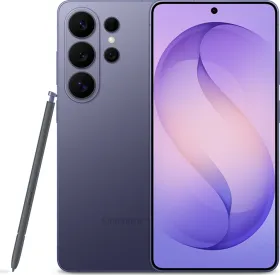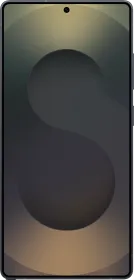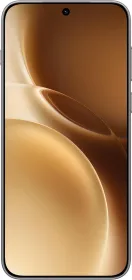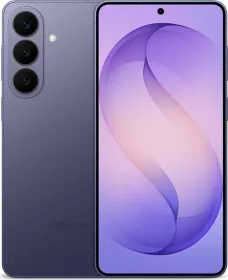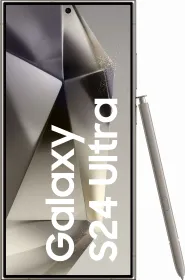


Samsung’s new Galaxy S26 Ultra arrives as the successor to the Galaxy S25 Ultra with changes across design, display technology, performance, cameras, connectivity, and charging. The overall formula stays familiar.
Samsung focused on refining the hardware and adding a few new capabilities, with the Privacy Display standing out as the headline feature. So what exactly changed from the S25 Ultra? And should you upgrade if you already have the S25 Ultra? Let’s find out in this article.
Design and Build Changes

The Galaxy S26 Ultra keeps the same overall design language but Samsung adjusted the frame and dimensions slightly. The S25 Ultra measured 162.8 x 77.6 x 8.2 mm and weighed 218 grams. The new model measures 163.6 x 78.1 x 7.9 mm with a weight of 214 grams.
The phone becomes a bit taller and wider while also becoming thinner and lighter, which makes it feel more comfortable during long use. The corners are also more rounded and the camera module now sits on another layer, similar to the Z Fold7. The infamous camera rings are also now gone.
Samsung also changed the frame material. The Galaxy S25 Ultra used a grade 5 titanium frame, while the Galaxy S26 Ultra has now switched to aluminum. The front still uses Corning Gorilla Armor 2 and the back keeps Gorilla Glass Victus 2.
IP68 water and dust resistance remains the same with protection for submersion up to 1.5 meters for 30 minutes. SIM options remain identical with dual Nano SIM support alongside eSIM configurations depending on the region. The built in S Pen also continues unchanged with no Bluetooth support once again.
Display Improvements and Privacy Display
Both phones use a 6.9-inch Dynamic LTPO AMOLED 2X panel with a 1-120 Hz adaptive refresh rate, and a resolution of 1440 x 3120 pixels. Screen size stays the same although the screen to body ratio shifts slightly due to design adjustments. Pixel density increases slightly from around 498 ppi to roughly 500 ppi.
Protection remains Gorilla Armor 2 along with Samsung’s DX anti reflective coating, though it’s not as effective as the one of the S25 Ultra. Brightness remains the same at 2600 Nits. The Galaxy S26 Ultra moves from an 8-bit display to a 10-bit panel which improves gradient transitions and HDR rendering (confirmation pending).
The biggest display change is the new hardware-level Privacy Display. Samsung redesigned the pixel structure and optical layers so light traveling at wide viewing angles gets redirected inside the panel. The result is a screen that looks normal from the front while appearing dark from the sides.

Samsung allows two levels of protection. A standard mode maintains a comfortable viewing angle while limiting side visibility. A maximum protection mode narrows the viewing angle further. The system also works with software triggers. Users can activate it when entering a PIN or password, assign it to certain apps, or hide notification pop ups while keeping the rest of the display visible.
ALSO READ: Samsung Galaxy S26 Ultra Privacy Display Hands-On: Is This the Beginning of a New Era?
Performance and Hardware Upgrades

The Galaxy S25 Ultra runs on the Snapdragon 8 Elite built on a 3 nm process. The Galaxy S26 Ultra upgrades to the Snapdragon 8 Elite Gen 5, also built on a 3 nm node but with a newer architecture.
CPU clocks increase from 2 × 4.47 GHz + 6 × 3.53 GHz to 2 × 4.74 GHz + 6 × 3.62 GHz. GPU performance also improves with the shift from the Adreno 830 running at 1200 MHz to the newer Adreno 840. The new chip improves AI processing as well and works with Samsung’s updated AI features inside One UI 8.5.
Camera Changes
The camera setup looks familiar but Samsung adjusted several components. The main camera continues with a 200 MP sensor measuring 1/1.3 inches with 0.6 µm pixels and OIS. The big change is the aperture which moves from f/1.7 on the S25 Ultra to f/1.4 on the S26 Ultra. This allows noticeably more light into the sensor which improves low light photography.

The 3X telephoto camera remains a 10 MP sensor but the sensor size changes slightly from 1/3.52 inches to around 1/3.94 inches with 1.0 µm pixels. Optical zoom remains 3X with OIS and PDAF.
The periscope telephoto camera continues with a 50 MP sensor sized 1/2.52 inches. The aperture becomes brighter moving from f/3.4 to f/2.9 while keeping the same 5X optical zoom and 115 mm equivalent focal length. The ultra-wide camera remains a 50 MP unit with a 120° field of view, 1/2.5 inch sensor size, and f/1.9 aperture
Laser autofocus, Best Face, LED flash, panorama, and HDR features remain present. Video capabilities also remain similar on paper with support for 8K at 24 and 30 fps, 4K up to 120 fps, 1080p up to 240 fps, 10 bit HDR recording, HDR10+, gyro based stabilization, and stereo audio recording.
The selfie camera remains a 12 MP 1/3.1-inch sensor with f/2.2 aperture and dual pixel autofocus capable of recording 4K video at 30 and 60 fps.
Samsung also upgraded stabilization this year with a new Super Steady feature called Horizontal Lock. The system uses expanded optical angles along with the phone’s gyroscope and acceleration sensors to understand the direction of gravity and keep footage level at all times.

Even if the phone rotates a full 360°, the video remains aligned with the horizon. The feature is especially useful when recording while running, cycling, hiking on uneven ground, or capturing action scenes.
The major camera improvements come from processing, the new aperture on the main camera, and Samsung’s new professional video tools such as the APV codec for high quality video workflows.
ALSO READ: Samsung Galaxy S26 Series Launches with Privacy Display, Galaxy AI, and Pro Video Upgrades
Battery and Charging Improvements

Battery capacity stays the same at 5000 mAh. Charging speeds improve slightly.
The Galaxy S25 Ultra supports 45W wired charging which reaches about 65% in 30 minutes. The Galaxy S26 Ultra increases wired charging to 60W and reaches around 75% in the same time.
Wireless charging improves from 15W to 25W with the newer Qi standard while reverse wireless charging remains available at around 4.5W. There is no MagSafe support still.
Software and Additional Features
The Galaxy S26 Ultra launches with Android 16 and Samsung promises seven major Android upgrades just like the previous model. The phone ships with One UI 8.5 while the previous model launched with Android 15 and One UI 8.
Samsung has improved Finder on the Galaxy S26 Ultra. You can now search using everyday language right from the home screen to quickly find reservations, appointments, reminders, notes, or travel details. Finder gathers the information in one place so you do not have to open multiple apps.

Samsung adds several new Galaxy AI tools on the Galaxy S26 series. The biggest one is Now Nudge, which reads what is happening on your screen and suggests actions such as adding plans to your calendar, sharing photos, or saving travel details from emails.

Photo Assist also gets an upgrade with prompt based editing, object repositioning, background expansion, and lighting adjustments. Creative Studio turns photos into stickers or graphics, while AI Call Screening answers unknown calls, transcribes them, and lets you decide whether to pick up.

The update also includes a smarter Bixby that helps with device settings through natural conversation, an expanded Audio Eraser that removes background noise even from videos posted in third party apps, and Privacy Alerts that warn you when apps try to access sensitive data.
Samsung also adds AI notification summaries that organize alerts based on importance, while existing Galaxy AI tools like Note Assist, Transcript Assist, Interpreter, Writing Assist, and Drawing Assist remain part of the experience.
ALSO READ: Samsung Galaxy S26 Ultra hands-on: Playing It Safe, Adding a Trick
Colors and Variants
The Galaxy S25 Ultra launched in Titanium Silver Blue, Titanium Black, Titanium White Silver, Titanium Gray, Titanium Jade Green, Titanium Jet Black, and Titanium Pink Gold.
The Galaxy S26 Ultra arrives in Cobalt Violet, Sky Blue, Black, White, Silver Shadow, and Pink Gold, the latter two being exclusive to Samsung.com.
Final Thoughts

The Galaxy S26 Ultra builds directly on the Galaxy S25 Ultra rather than introducing a dramatic redesign. The device becomes thinner and lighter, introduces a new privacy focused display system, improves performance with the Snapdragon 8 Elite Gen 5, adds a brighter main camera lens, upgrades Bluetooth connectivity, and increases charging speeds.
People using the Galaxy S25 Ultra will still find a very similar overall experience. The core hardware remains familiar and many changes feel incremental in daily use. The S26 Ultra makes more sense for someone using an older Galaxy device or anyone interested in the new privacy focused display and the newer chipset.
Samsung continues to polish the Ultra formula here. The phone stays focused on refinement, performance, and software features that integrate deeper into the system.

You can follow Smartprix on Twitter, Facebook, Instagram, and Google News. Visit smartprix.com for the latest tech and auto news, reviews, and guides.