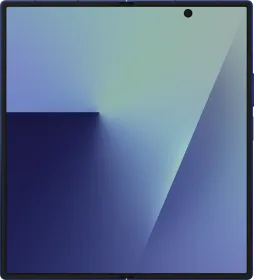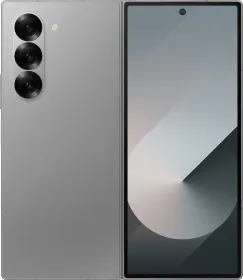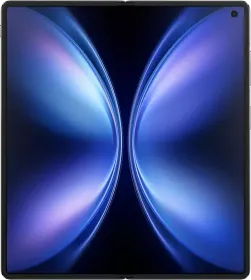


Quick Verdict
If your phone usage mainly revolves around quick tasks like messaging, social media, and occasional browsing, the Fold7 may feel unnecessary. A traditional flagship phone would do those tasks just as well for a much lower price.
The Fold7 really makes sense for people who treat their phone like a portable workstation. The large inner display is perfect for reading long articles, reviewing documents, multitasking between apps, editing photos or videos, and managing emails.
Multitasking tools in One UI make it easy to run multiple apps simultaneously. Content creators, professionals, and heavy multitaskers benefit the most from the Fold form factor.
The device also appeals to people who simply enjoy using cutting-edge hardware. Foldables still carry a sense of novelty, but the Fold7 feels polished enough that the novelty eventually turns into practicality.
Buy it if:
- You want a foldable that actually feels practical for everyday use with great multitasking.
- You like the idea of replacing both your phone and a tablet with one device.
Skip it if:
- You want faster charging and better camera performance.
- You don’t really need the foldable form factor and would be happier with a flagship.
For a long time, I viewed folding phones as an expensive, fragile gimmick. But after spending several months with the Samsung Galaxy Z Fold 7, I have to admit I was wrong, its the first Fold that truly feels mature. It is thinner, lighter, faster, and more practical than previous generations. The wider cover display makes daily use far more comfortable, the larger inner screen improves productivity, and Samsung’s software still leads the foldable experience.
The Fold7 is not perfect. Charging speeds remain slow and the telephoto camera still feels average. Even so, the overall experience is refined enough that the Fold7 starts to feel less like an experimental niche phone and more like a genuinely useful daily driver.
If you already like the idea of a foldable phone, the Galaxy Z Fold7 is easily one of the most complete versions of that idea so far. Let’s jump into this long-term review to find out why.
HOW I TESTED
| Reviewed By: Mehtab Ansari, Expert in Smartphones, Laptops, Audio Gear, AI and more (5 years experience, 100+ reviews). Test Unit: This is a retail unit of the Samsung Galaxy Z Fold7, with no involvement from Samsung in this long-term review. Duration and Environment: I used the Blue Shadow variant as my primary smartphone for several months on a Jio SIM in India. The phone was also tested extensively outdoors, including during travel to Sri Lanka. Tests: My daily usage included calls, emails, multitasking, social media, streaming, and navigation. I also used the inner display quite a bit for productivity, along with some gaming, and I took a good number of photos and videos across different lighting conditions, including outdoor and travel use. Competitors: Google Pixel 10 Pro Fold and vivo X Fold5. |
Samsung Galaxy Z Fold7 Price & Availability
The Samsung Galaxy Z Fold7 sits firmly in the ultra-premium category. It launched globally with three configurations:
- 12 GB + 256 GB: ₹1,74,999 / $1,999
- 12 GB + 512 GB: ₹1,86,999
- 16 GB + 1 TB: ₹2,16,999
The device is available through Samsung’s official store, Flipkart, Amazon, and major offline retailers across India. Samsung offers the Fold7 in multiple colors including Blue Shadow, Silver Shadow, Jet Black, and Mint.
Bank offers and trade-in discounts often bring the effective price down. However, even with those offers, the Fold7 remains one of the most expensive Android phones available. That makes the long-term experience even more important, since buyers expect a device at this price to remain reliable for years.
Pros
- Exceptionally thin and light for a foldable
- Large 8-inch inner display that feels immersive
- Much more usable cover display
- Snapdragon 8 Elite delivers strong performance
- One UI still offers the best foldable software experience
- Improved main camera with 200 MP sensor
- Seven years of Android and security updates
Cons
- Charging speeds remain slow at 25W
- Telephoto camera performance is below average
- S Pen support removed
- Inner display gets very reflective
Samsung Galaxy Z Fold7 Specifications
- Display: 8.0-inch Foldable LTPO Dynamic AMOLED 2X, 1-120 Hz, 2600 Nits, 1968 x 2184, 368 PPI (Inner) + 6.5-inch LTPO Dynamic AMOLED 2X, 1-120 Hz, 1080 x 2520, 422 PPI, Gorilla Glass Ceramic 2 (Cover)
- SoC: Snapdragon 8 Elite (2x 4.47 GHz Oryon V2 Phoenix L + 6x 3.53 GHz Oryon V2 Phoenix M, Adreno 830, TSMC 3 nm)
- RAM: 12 / 16 GB LPDDR5X
- Storage: 256 / 512 GB / 1 TB UFS 4.0
- Main Camera: 200 MP, 1/1.3-inch, f/1.7, OIS, PDAF, 24mm, 4K60 / 8K30
- Ultra-wide Camera: 12 MP, 1/2.55-inch, f/2.2, AF, 120°, 13mm, 4K60
- Telephoto Camera: 10 MP, 1/3.94-inch, f/2.4, OIS, 3X optical, PDAF, 67mm, 4K60
- Front Camera: 10 MP, f/2.2, 18mm (Inner) + 10 MP, f/2.2, 24mm (Cover), 4K60
- Speakers: Stereo speakers
- Battery and Charging: 4,400 mAh, 25W wired, 15W wireless, 4.5W reverse wireless
- IP Rating: IP48 (1.5m for 30m, dust >1 mm)
- Connectivity: 5G, Wi-Fi 7, Bluetooth 5.4, NFC, UWB, eSIM
- Biometrics: Side-mounted fingerprint, 2D face unlock
- Dimensions and Weight: Unfolded 158.4 x 143.2 x 4.2 mm, Folded 158.4 x 72.8 x 8.9 mm, 215g
- Build: Glass back, aluminum frame, glass cover display (Gorilla Glass Ceramic 2), plastic inner display
Samsung Galaxy Z Fold7 Review: Unboxing
Inside the box you will find the Samsung Galaxy Z Fold7 itself, a USB-C to USB-C cable, SIM ejector tool, and some documentation.
As expected, there is no charger included in the box, so you will need to use an existing USB-C charger or purchase Samsung’s 25W adapter separately.
Samsung Galaxy Z Fold7 Review (Long-Term): Design and Build

The most noticeable change with the Galaxy Z Fold7 appears the moment you pick it up. Samsung has dramatically reduced the thickness compared to the previous generation. When folded, the device measures 8.9 mm, while the unfolded thickness drops to just 4.2 mm. That makes it one of the thinnest foldable phones Samsung has ever produced.

The weight has also been reduced significantly. At 215 grams, the Fold7 is noticeably lighter than the 239 gram Galaxy Z Fold6. It is also the lightest book-style foldable in the industry right now. And this difference is easy to feel. The phone no longer feels like a heavy piece of hardware in the pocket.
After months of usage, I think this thinner and lighter design makes a real difference. The Fold7 carries much more like a traditional smartphone when closed.

The hinge mechanism has also been redesigned on the Fold7. It feels smoother and more consistent when opening or closing the phone. Even after extended use, the hinge maintains almost the same resistance and stability that it had during the first week.
Samsung uses Advanced Armor Aluminum with titanium reinforcements to strengthen the frame. The phone also retains an IP48 rating, meaning it can survive water exposure and some level of dust resistance. Though we do have better ratings on other foldables now, like the Google Pixel 10 Pro Fold with IP68.
Durability still requires some caution, as with any foldable phone. While the device feels sturdy overall, accidental drops can still damage the frame or hinge area. The paint is also quite easy to chip away, so you have to be mindful of that.
One of the biggest design improvements is the wider cover display. Earlier Galaxy Fold devices used a very narrow front screen that felt awkward for typing. The Fold7 increases the cover display to 6.5 inches with a 21:9 aspect ratio, which makes everyday tasks such as replying to messages, scrolling social media, and browsing websites far more comfortable.

Over time, the cover display becomes the screen you use most frequently. Quick tasks rarely require unfolding the phone anymore. Don’t get me wrong, it’s still taller and narrower than your normal slab phone but better than before.
Opening the device reveals the 8-inch inner display, which is noticeably larger than the 7.6-inch panel on the Fold6. The crease is still present but less distracting than before. During normal usage like reading articles or watching videos, it becomes easy to ignore.

What isn’t easy to ignore is the absence of an anti-reflective coating on the inner display. It gets quite reflective and feels tricky to use outdoors unless you’re in the shade. It’s not a deal-breaker, though it’s something you’ll notice.
Oh, and it comes in three colors (four, actually): Blue Shadow, Jet Black, and Silver Shadow. There’s also a fourth option, Mint, which is exclusive to Samsung’s website. I have the Blue Shadow with me.

The back doesn’t pick up a lot of smudges, which is nice, but the camera module tends to collect dust and it’s not easy to clean. It also sticks out quite a bit, so using the phone flat on a surface comes with a noticeable amount of wobble.

Overall, the Fold7 is a significant step forward for Samsung’s foldable design. It finally manages to feel slim, light, and practical enough to carry every day without constantly reminding you that it is a foldable device.
Samsung Galaxy Z Fold7 Review (Long-Term): Display

The Galaxy Z Fold7 uses two displays, and both play a different role in everyday use. Over time, the way you interact with them naturally evolves.
The cover display is now a 6.5-inch Dynamic AMOLED 2X panel with a 21:9 aspect ratio, and this change alone improves the Fold experience significantly compared to the Fold6. The older model had a narrower cover screen that often felt cramped for typing or replying to messages.

With the Fold7, the cover display finally behaves like a regular smartphone screen. Texting, replying to emails, scrolling social media, and quickly checking notifications all feel natural. Over months of use, this becomes the screen you interact with most often. Many quick tasks no longer require unfolding the phone.
That said, the aspect ratio still feels slightly tall and narrow compared to typical flagship phones. Typing takes a little time to get used to, especially if you switch between devices.

Unfolding the device reveals the 8-inch Dynamic LTPO AMOLED 2X inner display, which is noticeably larger than the 7.6-inch panel on the Fold6. On paper the difference looks small, but in real usage the additional screen space becomes noticeable when reading long articles, reviewing documents, or multitasking between apps.

Watching videos and browsing websites feels far more immersive here. Long reading sessions also benefit from the larger screen since text resembles a tablet layout rather than a stretched phone interface.
The crease remains present, though it has improved compared to older Fold devices. When the display is off or when light hits it from certain angles, the crease becomes visible.

During normal usage it fades into the background quickly. After months of use, the crease has not deepened significantly, though it does become slightly more noticeable compared to when the device was brand new.

Brightness remains strong across both displays. Outdoor visibility stays reliable even under harsh sunlight. The inner display can reach up to 2600 nits peak brightness, which helps when watching HDR content or using the phone outdoors.

One limitation of the displays still appears when using the camera outdoors. During extended camera usage in bright sunlight, the display can dim quickly to manage thermals.
Reflections are also more noticeable on the inner display due to the protective plastic layer placed above the screen. It is something you eventually get used to, though it can occasionally feel distracting in bright environments.
Nonetheless, the display experience remains one of the Fold7’s biggest strengths. Having a tablet-sized screen in your pocket continues to be the defining feature of the device.
Samsung Galaxy Z Fold7 Review (Long-Term): Speakers and Haptics

Foldables often struggle to deliver strong audio because of their thin design, but the Fold7 performs quite well in this area. The phone includes stereo speakers with Dolby Atmos support, and they produce loud, clear audio. The stereo separation is good enough to create an immersive effect when using the inner display.
Haptics are also good. Samsung uses a high-quality vibration motor that produces tight and responsive feedback. Typing on the keyboard feels satisfying, though the integration across the system could’ve been better. Still, among foldable devices, the Fold7 offers one of the better haptic experiences available.
Samsung Galaxy Z Fold7 Review (Long-Term): Software

Software is where Samsung’s foldables continue to stand out. The Galaxy Z Fold7 ships with One UI 8 based on Android 16, and Samsung promises seven years of Android and security updates. This long update commitment adds significant long-term value for a device that costs as much as the Fold7.
Over months of usage, the software experience remains smooth and reliable. Samsung’s One UI understands the foldable form factor better than most competitors. Multitasking tools gradually become part of everyday habits. Features like split-screen apps, floating windows, and drag-and-drop interactions work consistently well.

Running two apps side by side is easy and simple, while the ability to run three apps simultaneously on the inner screen can be occasionally useful during productivity tasks. You can also have several floating windows running at the same time.
Samsung’s taskbar and sidebar shortcuts also improve the workflow… significantly. Launching frequently used apps or switching between them becomes quicker once muscle memory develops.

The Fold7 also supports Samsung DeX, which allows the phone to function like a desktop computer when connected to an external monitor. While not everyone will use this feature daily, it remains a valuable tool for certain productivity scenarios.
Customization remains another strong point. Samsung’s Good Lock modules allow users to adjust the interface far beyond what most Android skins allow. Modules like Home Up, LockStar, and MultiStar provide deeper control over the layout and multitasking experience.
Samsung’s ecosystem features also play a role in long-term usage. Samsung Wallet, Secure Folder, and Knox security tools integrate well into daily routines.
Galaxy AI

Samsung packs the Fold 7 with a wide mix of AI features that feel genuinely useful day to day. You get writing tools inside the Samsung Keyboard, AI Eraser, and an emoji generator that creates stickers from text or expressions with multiple styles for a more personal touch.
Samsung Internet supports webpage summaries, translation, and read-aloud highlights, which helps when going through long articles. System-wide natural language search is also here. You can search photos in Gallery with phrases like “me wearing a hat,” or type something like “my internet isn’t working” in Settings to get relevant suggestions. It works well most of the time, though it can miss a few obvious queries.
Circle to Search remains one of the most practical features, now with music recognition and scrollable page translations. Now Brief gives a daily overview with weather, calendar updates, and screen time insights, along with occasional usage-based suggestions.

Gemini is deeply integrated across the system. It can handle tasks like planning, sending messages, or adding calendar events across apps. Gemini Live enables real-time conversations that feel natural and responsive. Samsung also includes a trial of Gemini Advanced, which adds extra capabilities and cloud storage.
On the media side, instant Audio Eraser removes background noise from videos directly on-device, while Generative Edit allows object removal, image expansion, and filling missing parts in photos. Additional tools like Writing Assist, Note Assist, Call Assist, and Live Translate (with multi-language support) round out the experience.
Overall, Galaxy AI on the Fold 7 feels well integrated and polished, with several AI features that can be helpful. Samsung’s software remains one of the biggest reasons the Fold series continues to lead the foldable category.
Samsung Galaxy Z Fold7 Review (Long-Term): Biometrics

When it comes to biometrics, the side-mounted fingerprint scanner works fine, though it can feel a bit unreliable at times and slightly slow. It’s easier to use without a case, but once you put a case on, it gets noticeably more annoying to reach and use consistently.
I wouldn’t call it bad, though it definitely could’ve been better. If you ask me, an ultrasonic fingerprint scanner on both the inner and outer displays would’ve been a much better solution. We’ve seen something similar on the vivo X Fold3 Pro before, so it’s impossible to do.
Samsung Galaxy Z Fold7 Review (Long-Term): Performance

The Galaxy Z Fold7 runs on the Snapdragon 8 Elite for Galaxy, Qualcomm’s flagship chipset built on a 3 nm architecture. Compared to the Snapdragon 8 Gen 3 used in the Fold6, this chip brings noticeable improvements in both performance and efficiency.
Daily performance feels extremely fast. Apps launch almost instantly, switching between multiple tasks happens smoothly, and multitasking on the large display feels effortless.
The phone also includes up to 16 GB LPDDR5X RAM and 1 TB UFS 4.0 storage, which is a lot for most users. I have the base 12 GB RAM + 256 GB storage variant, and it’s been working fine for me. The file sizes for photos and videos are reasonable, so that helps out too.
Even after several months of usage, the Fold7 continues to handle multitasking really well. Running three apps on the inner display while keeping others in the background rarely slows the phone down.
Synthetic Benchmarks
| Benchmark | Samsung Galaxy Z Fold7 (Snapdragon 8 Elite for Galaxy) |
| AnTuTu Score | 2732858 |
| Storage (Score, Sequential Read Speed, Write Speed) | Score: 152007; Sequential Read: 4241 MB/s; Sequential Write: 3417 MB/s |
| Geekbench 6 CPU (Single-Core, Multi-Core) | Single-Core: 2874; Multi-Core: 8853 |
| Geekbench 6 GPU (OpenCL, Vulkan) | OpenCL: 16606; Vulkan: 24799 |
| 3DMark Wildlife Extreme (Score, Avg FPS) | Score: 5095; Avg FPS: 30.51 |
| 3DMark Wildlife Extreme Stress Test (Best Loop, Lowest Loop, Stability) | Best Loop: 5469; Lowest Loop: 3657; Stability: 66.9% |


Gaming performance also benefits from the powerful chipset. Titles like BGMI can run at up to 120 FPS, and the frame rate remains stable during extended sessions. Average performance typically stays around 119 FPS, with device temperatures hovering between 37°C and 39°C.
More demanding games such as Genshin Impact average around 50 to 55 FPS. Considering the large display and thin chassis, that performance remains respectable. Though you could notice the device getting hotter than usual with this game, especially when playing for long hours.

Samsung says they’ve the phone’s thermal system with a split vapor chamber and multiple graphite layers, helping it distribute heat across the frame more efficiently. And it shows. Over the last few months, I’ve only noticed the device getting warmer outdoors under the sun, during heavy gaming, editing photos in LR, or while using the camera.
Overall, the Fold7 delivers excellent performance for a foldable smartphone. It may not always chase the highest benchmark numbers, but it handles multitasking and productivity tasks really well.
Samsung Galaxy Z Fold7 Review (Long-Term): Cameras

Samsung finally gave the Fold series a serious camera upgrade with the Galaxy Z Fold7. The phone uses a brand new 200 MP main sensor (same as S25 Ultra), a 12 MP ultrawide, and a 10 MP 3X telephoto, along with two 10 MP selfie cameras on the inner and cover displays.
The new 200 MP primary camera captures extremely detailed photos in daylight. Images look sharp, colors appear natural, and dynamic range is strong enough to handle most lighting situations. Samsung’s image processing has also become more balanced compared to older Fold devices, avoiding overly saturated colors while still maintaining contrast.
Over time, this camera becomes the one you rely on most. Landscapes, portraits, and everyday photos come out consistently good. The ability to shoot at 200 MP also allows you to crop heavily without losing too much detail.
Portrait photography is also quite good. Skin tones usually appear natural, and subject separation is decent. Edge detection still struggles occasionally with complex hair or busy backgrounds, though overall results are still fine for social media and everyday photos.
The ultra-wide camera has also improved compared to previous Fold models. Samsung increased the sensor size and added autofocus, which enables macro photography. Close-up shots of objects, textures, or food are now possible.
However, the telephoto lens remains the weakest part of the camera system. It still uses a small 10 MP sensor with 3X optical zoom. In daylight it works fine, but detail falls behind what you get from flagship slab phones. Low-light zoom photos can look noisy and soft. You can zoom in digitally up to 30X, by the way.
Interestingly, using the 200 MP main camera and cropping sometimes produces better results than the telephoto lens at similar zoom levels.
Selfie cameras are good overall. Samsung replaced the older under-display camera with a regular punch-hole sensor on the inner display, which improves clarity significantly. Video calls and selfies look sharper and more natural now.
One of the best tricks with the Fold7 is using the rear cameras for selfies while previewing the shot on the cover display. This produces far better results than using the front cameras. Though holding the phone like that is a bit awkward.
Video performance is also solid. The phone supports 8K recording and 4K at 60 fps, with HDR10+ and LOG support. Stabilization works well, and Samsung’s processing produces consistent colors across lenses. The main camera video is really good. Ultra-wide and telephoto need improvement.

Overall, the Fold7 delivers a camera experience that is closer to flagship standards, at least with the main camera. Still, the telephoto and the ultra-wide leave room for improvement. If you need better cameras, it’s better to go for something like the vivo X Fold5.
Samsung Galaxy Z Fold7 Review (Long-Term): Battery Life and Charging

Battery capacity remains the same as the previous generation. The Fold7 uses a 4,400 mAh battery, paired with 25W wired charging, 15W wireless charging, and reverse wireless charging. On paper that might look underwhelming for a device this large. However, in real usage, the results are better than expected.
After months of use, battery life usually lands around 6 to 8 hours of screen-on time, depending on how often the inner display is used. This figure comes from usage that is roughly 90% on the cover screen.
Using the cover display for most tasks helps extend battery life significantly. On days when the inner screen is used frequently for multitasking, video streaming, or gaming, battery life drops a lot and you might have to charge twice in a day.
Charging remains the biggest drawback with the Fold7. The phone still supports only 25W wired charging, which is slow compared to many Android flagships today, including many foldables. A full charge takes roughly around 1 hour and 30 minutes, depending on the charger used.
Review Verdict: Should You Buy the Samsung Galaxy Z Fold7?
After using the Galaxy Z Fold7 for a few months, it’s pretty clear Samsung has figured out a lot of things with foldables. The whole experience just feels more refined now. The thinner design actually makes a difference when you carry it around, the wider cover screen is way more usable for regular tasks, and the inner display is still unmatched when you want to get real work done. Performance has been solid throughout, and Samsung’s software still feels one of the most complete on a foldable.
The cameras are better this time, mainly because of that 200 MP main sensor, but the telephoto still feels just okay. Battery life has been reliable, though charging speeds are still slower than what you get on other foldables.
What really stands out is how normal it all starts to feel. After a while, unfolding the phone into a bigger screen doesn’t feel like a gimmick anymore, it just becomes part of how you use it.
It’s still an expensive device, no doubt. But this is easily one of the most complete foldables Samsung has made so far. If you want something that can genuinely replace both your phone and a tablet, the Galaxy Z Fold7 is still one of the best options right now.


Smartprix ⭐ Rating: 8.75/10
- Design and Build: 9/10
- Display: 9/10
- Speakers: 9/10
- Software: 9/10
- Haptics: 9/10
- Biometrics: 8/10
- Performance: 8.5/10
- Cameras: 8/10
- Battery Life & Charging: 8/10
Last reviewed in March 2026.