

Quick Verdict:
The vivo X200T is a shockingly capable upper-midrange phone that completely defies expectations and punches well above its ₹60,000 price tag. It pairs a phenomenal portrait camera and practically endless battery life with super-clean software, though hardcore gamers might want to look elsewhere due to thermal throttling under heavy load.
Buy it if: You want flagship-tier portraits, you suffer from battery anxiety, and you prefer a good software experience.
Skip it if: You are a hardcore gamer, You move massive files via cable, You hate processed photos
I’ll be honest, when vivo announced the X200T, my first reaction was a shrug. A ‘T’ variant of a phone that already existed, showing up in the shadow of the brand-new X300? It sounded like a parts-bin phone, something to fill a shelf gap. I was fully prepared to write it off.
One month later, here I am writing this instead: the X200T might genuinely be the smartest Android buy under ₹60,000 right now.
It runs on the MediaTek Dimensity 9400+, sports a Zeiss-branded triple 50MP camera system, and comes loaded with Android 16 out of the box. It’s not flawless, nothing at this price is, but the sum of its parts is hard to argue with. Let’s get into it.
HOW I TESTED
| Reviewer: Deepak Singh Rajawat, Technology Editor (11 years experience, 500+ reviews). Test Unit: vivo provided the review unit, but had no input on the contents of this review. Duration and Environment: I used the vivo X200T (12GB RAM / 512GB Storage) as my primary smartphone for 15 days on the Jio network in India, logging over 45 hours of screen time across heavy gaming, 5G navigation, and camera testing. Tests: I ran synthetic benchmarks (Geekbench 6, AnTuTu, Throttle Test, 3DMark) and conducted real-world battery-drain tests on 5G, including 45-minute continuous BGMI sessions to test thermal throttling. Competitors Considered: OPPO Reno 15 Pro, OPPO X9, Google Pixel 10a, Samsung Galaxy S25 FE, Motorola Edge 60 Signature, and OnePlus 15R. |
vivo X200T Pros and Cons
Pros
- Vibrant, sharp, and flat display
- Two-day battery life
- Top-tier portraits
- Clean software
- Compact and Premium feel
Cons
- Thermal throttling
- USB 2.0 port
- At times, photos are overprocessed
- No LTPO panel
vivo X200T Price & Availability
The vivo X200T is priced at ₹59,999 for the base 256GB ROM + 12GB RAM model and scaling up to ₹69,999 for the 512GB tier.
vivo X200T Review: Design and Build
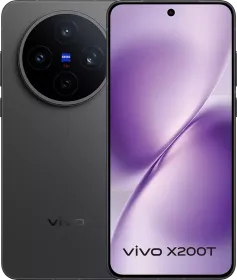
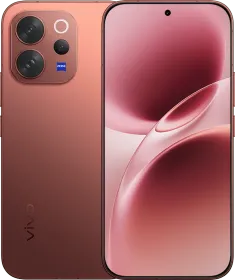
Pull the X200T out of the box, and it’ll look familiar if you’ve seen any recent Vivo flagship. The circular Zeiss camera island on the back, the centered punch-hole up front, the clean flat sides, it’s the same design language as the X200 and X300. Nothing groundbreaking, but it’s a polished, well-put-together look.

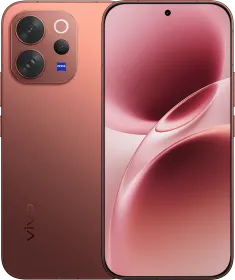
Two colorways are available: Stellar Black and Seaside Lilac. The Lilac is the one to get; it’s a soft, pearlescent lavender that shifts subtly depending on the light hitting it, and it photographs beautifully. The Black is fine; the Lilac is special.


Build quality is solid across the board. You get an aluminum-alloy frame, flat sides, and a glass back with a sandblasted matte finish. That matte nano-coating on the rear is genuinely impressive; fingerprints and smudges barely show up, even after a full day of use without a case. It’s one of those small details that make daily handling feel more premium than the price suggests.


At around 203–205g and roughly 8mm thick, this isn’t a featherweight phone. But the slightly curved rear edges and well-distributed mass make it far more comfortable in hand than the numbers imply. It slips easily in and out of a pocket, one-handed use is manageable, and the added thickness actually helps with heat management, something we’ll come back to.
vivo X200T Review: Display
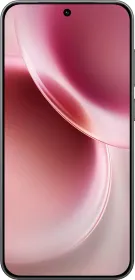
The 6.67-inch flat AMOLED panel is one of the X200T’s biggest strengths. At 1.5K resolution (2800 x 1260 pixels) and 460 PPI, everything on screen looks sharp and detailed. The slim bezels push the screen-to-body ratio to 90.4%, giving the whole front face a clean, modern look.

vivo calls this a ZEISS Master Color Display, and in practice, it earns the label. The default color profile is vibrant and punchy without looking garish. Switch to Pro mode, and colors shift to accurate, neutral reproduction genuinely useful if you edit photos on your phone.
Outdoor visibility is excellent. High Brightness Mode peaks at 1,600 nits, and the display claims a maximum of 5,000 nits. Whether you’re squinting at your screen on a sunny afternoon or watching HDR content in a dark room, the display handles both with ease. HDR10+ is supported natively across Netflix, YouTube, and Prime Video, but Dolby Vision is absent.
The one real caveat: the X200T uses an LTPS panel rather than LTPO. That means the adaptive refresh rate can only step between 60Hz and 120Hz, not scale all the way down to 1Hz like some competitors. It’s a minor efficiency trade-off, most noticeable during low-key tasks like reading, but it’s worth knowing if battery life is your top priority.
Biometrics are handled by a 3D ultrasonic fingerprint scanner embedded in the display. It’s fast, well-positioned, and crucially works even with damp fingers. For a phone rated IP69, that matters.
vivo X200T Review: Speakers and Haptics
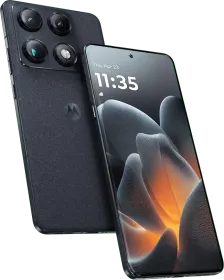
The dual stereo speaker setup that includes one on the bottom edge, one behind the earpiece, delivers a wide, full soundstage with solid volume and minimal distortion, even cranked all the way up. What’s surprising is that the X200T actually sounds fuller and bassier than the Motorola Edge 60 Signature, which ships with dedicated Bose tuning. No branded partnership here, but the results are better regardless.

Haptics are firm and satisfying in daily use, like typing, notifications, and in-app feedback, all feel deliberate and well-weighted. There’s a slight springiness to the vibrations that keeps them from feeling as precise as a Samsung or OnePlus flagship, but it’s a minor quibble rather than a genuine complaint.
vivo X200T Review: Software
The X200T ships with OriginOS 6, built on Android 16 and if your last experience with vivo software was FuntouchOS, you’re in for a pleasant shock. OriginOS 6 is clean, visually cohesive, and genuinely easy to navigate. The Liquid Glass-inspired design language, blurred notification panel, and smooth animations all feel deliberate and modern rather than borrowed.

Customization depth is a standout. Icons, animations, lock screen layouts, Always-On Display styles, and widgets can all be tweaked without needing third-party apps. In daily use, the software is stable and fast with no random crashes, no stuttering animations, and no frustrating slowdowns after a week of use.

The Origin Island,a vivo’s take on Apple’s Dynamic Island, works well for quick app access and multitasking. Call recording is built into the native dialer and, unlike on some other phones, it doesn’t announce itself to the person on the other end. That’s genuinely useful for journalists or anyone in a professional context.

Bloatware is notably reduced compared to older Vivo phones. Disable recommendations during initial setup, and most of the junk disappears. Vivo’s default browser and app store may still push notifications you’ll want to manually silence, but it’s a far cry from what the brand used to ship.
AI features are grouped under the ‘Agentic AI’ banner, featuring AI Retouch, AI Erase, AI Image Expander, AI Transcript Assist, Circle to Search, and AI Global Translation, all of which make an appearance. They work as advertised. How often you’ll actually reach for them depends entirely on your workflow.

vivo X200T Review: Performance
The MediaTek Dimensity 9400+ (3nm) is doing the heavy lifting here, and it’s a seriously capable chip. The all-big-core architecture, clocked up to 3.73 GHz, combined with 12GB of LPDDR5X Ultra RAM and 512GB of UFS 4.1 storage, makes this phone feel effortlessly quick. Apps open instantly, multitasking is smooth, and nothing in everyday use manages to slow it down.


Benchmark numbers back it up: AnTuTu scores around 2.81 million, comfortably beating the standard X200’s 2.53 million. Geekbench returns a single-core score of 2,675 and a multi-core score of 8,463. For gaming, BGMI runs at 120fps with a sustained average of around 110fps over 50 minutes. Genshin Impact at maximum settings holds 56–59fps during 30–40 minute sessions. Call of Duty: Mobile runs at 120fps on medium preset with excellent stability.
Here’s the honest asterisk: sustained load performance drops off. In throttling tests, the X200T scored 34.4% behind the Motorola Edge 60 Signature (39.1%) and even the standard X200 (49.7%). Under extreme extended stress, the X200T dips harder than its rivals. Most users will never push it to that point, but hardcore marathon gamers should be aware.
Surface temps rose 14.4°C in lab stress testing, slightly more than the Motorola. But in real-world use, the phone actually felt cooler to the touch because its thicker chassis gives heat more space to disperse away from the display and frame. There’s a meaningful difference between what a stress test measures and what your hand actually feels. One legitimate frustration: the bottom port is USB Type-C 2.0, not 3.2. File transfers are slower than they should be at this price. It’s not a dealbreaker, but it’s an unnecessary cut that Vivo shouldn’t have made.
vivo X200T Review: Cameras
The triple Zeiss-branded rear system that includes 50MP primary with OIS, 50MP ultrawide, and 50MP periscope telephoto with 3x optical zoom, is where the X200T really makes its case. And for the most part, it delivers.

The main 50MP camera captures detailed, punchy images with reliable exposure and strong HDR performance. Backlit portraits are a particular strength; the balance between bright backgrounds and properly exposed subjects is handled better here than on most phones at this price. The trade-off is that Vivo’s processing leans warm, boosts reds, and applies aggressive sharpening. Photos come out looking Instagram-ready out of the box. If you prefer raw, clinical realism, you’ll need to dial the processing back manually.


The 3x periscope telephoto is the highlight of the whole system. Portrait shooting across five focal lengths (23mm, 35mm, 50mm, 85mm, and 100mm) gives you real creative flexibility, and the bokeh rendering and edge detection are excellent for this price bracket. The caveat applies here, too: default beautification is aggressive. Skin-smoothing, artificial skin tone warming, and softened facial detail are all dialled up out of the box. Flattering? Yes. Realistic? Less so.


Low-light performance is a genuine strength. Flare control is excellent, highlights are preserved, and digital noise stays under control without the overprocessed, watercolour look that plagues most night modes. Night shots look natural and detailed rather than artificially scrubbed clean.


Video recording is strong: 4K at 60fps across all lenses, including the front camera, with excellent stabilisation. The ultrawide matches the primary lens’s color science well when switching but its overall output is disappointing. Distortion control is poor, detail falls off compared to the other two lenses, and sharpening is overdone.
The 32MP front camera is sharp in good light and renders accurate detail, but the same aggressive skin-smoothing, a slight red tint, and the absence of autofocus hold it back from being truly great.
vivo X200T Review: Battery and Charging
The X200T is equipped with a 6,200mAh battery built on third-generation silicon-anode technology a chemistry designed not just for larger capacity, but for better thermal performance during intensive tasks. In practice, it shows.
Day-to-day endurance is excellent. Heavy usage navigation, social media, multitasking, and gaming run the phone through a full day with charge to spare, and with mixed use it can comfortably stretch into a second day. In standard heavy-usage testing, the X200T consistently delivers around 6 hours of screen-on time. Under a mixed Wi-Fi and 5G scenario, it’s been observed pushing past 8 hours of SOT.
For gamers specifically, the X200T supports bypass charging, which routes power directly to the phone’s components without continuously cycling through the battery when plugged in. That means less heat buildup and reduced long-term battery degradation during extended gaming sessions a small but thoughtful feature.
Charging speed will be added here once confirmed fast wired charging is supported, and in line with category expectations.
Review Verdict: Should You Buy the vivo X200T?
I expected to be underwhelmed. I wasn’t.
The Vivo X200T is a genuinely well-considered phone that gets the big things right: flagship-tier performance, a brilliant display, a versatile camera system, excellent battery life, and clean software with a meaningful long-term update commitment. None of the trade-offs — thermal throttling under sustained stress, USB 2.0 on the bottom, LTPS over LTPO, processed camera output — are dealbreakers in isolation.
At its price point, sitting neatly between the X200 FE and the X300, it represents real value. The competition under ₹60,000 is good, but the X200T clears the bar in enough categories to stand above it.
If you’re shopping in this segment and want a phone that handles virtually everything without making you feel like you compromised on the things that matter, this is the one to beat right now.

Smartprix ⭐ Rating: 8.1/10
- Design and Build: 8.5/10
- Display: 8.5/10
- Speakers: 8/10
- Software: 8/10
- Haptics: 7.8/10
- Biometrics: 8/10
- Performance: 8/10
- Cameras: 8/10
- Battery Life & Charging: 8.5/10
First reviewed in March 2026.