

I’ve been reading, writing, and reviewing smartphones for years now, long enough to recognize that the industry has settled into a predictable rhythm.
At the very top of the smartphone market, design has become increasingly conservative. Premium phones adhere to a fixed template meant to appeal to the masses, leaving little room for visual or material experimentation.
When it comes to performance, flagship devices are anchored to the fastest chipsets available, even though most users will never come close to tapping their full potential. Brighter displays, higher-resolution camera sensors, and gigantic batteries are being used as launch-day bragging rights.

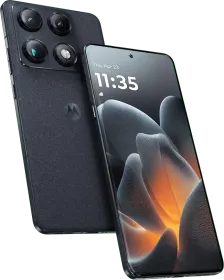
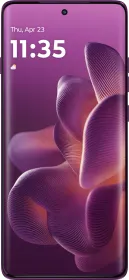
Against that backdrop, Motorola’s latest premium phone — the Signature — feels almost contrarian. It doesn’t have a single standout spec, but it aims to strike the right balance between performance and design, usability and lifestyle.
In a detailed conversation with Ruben Castano, the Vice President of design, brand, and customer experience at Motorola Mobility, I tried to understand the philosophy behind the company’s evolving definition of premium and “lifestyle tech.”
Rather than pitching it as a departure from core engineering priorities, Castano framed it as a recalibration: an attempt to design smartphones around longevity, daily use, and emotional relevance for buyers.
Also Read: Motorola Signature Quick Review: When Standing Out Matters More Than Playing Safe
Design Versus Performance: The Long-Standing Cost of Thin Smartphone Hardware

Thinness has rarely come without consequences for sustained performance. Some of the slimmest devices I’ve tested have also been the first to throttle once the initial performance burst wears off. That trade-off has long defined how far manufacturers can push design before usability starts to suffer.
When I raised the tension between slim design and sustained performance with Castano, he pointed to the Signature as an attempt to balance in-hand feel with the components that support it—not just in isolation, but as part of the overall smartphone experience.

“It is when you think about thiness as one of the core components alongside the camera, display, battery, and chipset, that you find the right balance, and that’s exactly what we did with the Motorola Signature,” explained Castano.
To support that balance under prolonged use, the Signature relies on Motorola’s ArcticMesh cooling system, adapted from thermal solutions developed by Lenovo’s research and development teams, which have long worked on gaming laptops. As Castano put it, the challenge wasn’t simply adopting the technology, but reshaping it for a much slimmer device.
“Our job there was not only borrow the technology, but to do quite a bit of internal development and innovation to miniaturize it and make it work” on the Signature.
Also Read: Qualcomm Introduces Snapdragon 8 Gen 5, Launching First On the OnePlus 15R
The Fine Line Between Personal Expression and Cosmetic Upgrades

Design-led differentiation in smartphones has a rather complicated reputation. Brands have often deployed surface-level upgrades as new colors, textures, or collaborations that add visual flair, only to be criticized for the lack of meaningful hardware upgrades.
Are lifestyle enhancements actually enriching the users’ experience, or simply redirecting attention away from compromise?
Our consumers want these devices that are so personal to them to represent who they are, something that they’re proud to carry every day, something that when they see it, they get excited,” says Castano.

Motorola’s vision of “lifestyle tech” isn’t an alternative to engineering rigor but rather meant to coexist with it. The unique blend of form and function on the Signature, according to the executive, resonates with owners’ emotional and personal attachment to the device, serving as a medium of personal expression.
Design choices, materials, and finishes aren’t meant to compensate for weaker hardware, but to reinforce a sense of ownership and longevity once the novelty of specs wears off, according to the brand.
“And our partnership with Swarovski, just to finish your question, is something that we are extremely proud of. Uh, again, it’s another proof point of lifestyle, in this case, fashion and jewelry, being able to merge with the world of technology.”
Long-Term Software Support Only Works If the Hardware Is Built to Last

While long-term software support has become one of the industry’s most glorified and ambitious promises, it’s the hardware that often falls short.
Components like batteries, RAM modules, storage, and the chipset begin to wear down over time, raising concerns about whether the Signature, which also comes with a seven-year software promise, is built to last that long.
Rather than treating long-term software support as a standalone commitment, Castano framed it as a process that requires deliberate synchronization with hardware selection and testing.

“All the components like the silicon carbon battery technology, the charging system, the chips at selection, the materials, and the way they were tested, it’s all been considered to deliver performance and reliability over the lifespan of the device,” Castano explained.
Interestingly, Castano also touched on the resale value of a smartphone, something that not many brands address. More and more people are opting for exchange bonuses while buying a new smartphone. Even so, whether seven years of support ultimately feels meaningful will depend on how well those choices hold up in real-world use.
The Memory Squeeze Shaping Modern Smartphones

Rising memory costs are one of the lesser-known phenomena affecting the consumer electronics industry. Smartphone makers are making careful decisions about memory configurations and pricing.
“Increasing pricing in core components is a reality today. And you’re absolutely right that memory is one of the key issues right now, impacting the industry. has to do with, you know, a lot of increase in demand for AI experiences and technology,” says Castano.
Castano acknowledged that Motorola isn’t immune to such pressures, at least not entirely. However, he remained optimistic about the brand’s position within Lenovo’s ecosystem.

Sharing supply chains across Lenovo’s PC, laptop, and tablet lineups gives Motorola a slight edge over standalone smartphone manufacturers, helping to keep the component costs under control. However, that doesn’t mean that the Motorola is entirely immune to it.
“There are a lot of core components that are shared among different platforms from PCs to tablets, to smartphones and so on [within the Lenovo ecosystem]. So that gives us a quite unique position. We are working actively and continuing to have strategic partnership with core component suppliers to make sure, you know, the cost that is minimized.”
Motorola’s approach with the Signature emphasizes adding value in rather unique ways, such as extended software support, materials designed to age well, and features intended to remain useful over time.
Also Read: AI is Eating the World, Starting With Your Phone Budget
Making AI Useful Without Making It Loud
Artificial Intelligence, or AI, has quickly become the industry’s next arms race, in the sense that every major smartphone manufacturer is trying to grab a couple of AI-based features and promote their phones around them. The result? Smartphones sure have powerful AI features, but without a clear sense of how or when to use them.
Motorola, however, is taking a different approach toward the industry trend. The Motorola Qira is the company’s latest personal intelligence assistant, positioned as an omnipresent cross-device assistant that learns users’ habits and preferences over time and provides the most relevant responses or suggestions.
“It’s working seamlessly on any screen that you have access to at any particular time. Your PC screen, your tablet screen, your phone screen. It’s the same AI across all of these devices that is learning about your habits, that is building history, a rich history with you that understands your context, that allows you to, for example, search across devices as well.”
Qira was announced at the CES in January 2026. While it’s not available on the Motorola Signature at launch, the handset will be among the first devices to get the cross-device AI assistant “over the next few months.”
Conclusion
In an industry where progress is often quantified in numbers, Motorola seems to be raising a great question about what actually makes a smartphone worth living with or making a part of our lifestyle. That’s a relatively harder problem to solve, one that doesn’t give in to launch-day theatrics.
However, I’d remain cautious by instinct. Thin phones have often disappointed before; lifestyle branding has often been used to hide stagnation; and long-term software promises, even from industry giants, often outpace the hardware that isn’t meant to support them. Whether Motorola’s balance-first philosophy succeeds is something only time and sustained usage of the Signature will answer.

You can follow Smartprix on Twitter, Facebook, Instagram, and Google News. Visit smartprix.com for the latest tech and auto news, reviews, and guides.