

Quick Verdict
The Samsung Galaxy S26 Ultra is the smartest Android phone on the market, leaning heavily into transformative software features like Agentic AI and a brilliant hardware-level Privacy Display. However, at Rs 1,39,999, it trades premium physical hardware for these invisible software upgrades. The shift to an aluminum frame, severe regressions in macro photography, and thermal throttling under heavy load mean this is no longer an uncompromising device. It remains the undisputed king of Android all-rounders, but the crown is heavier this year.
Buy it if:
- You want the most reliable all-rounder in the market, supported with updates through 2033.
- You are upgrading from a Galaxy S23 Ultra or an older model.
- The accumulated leaps in charging speed, display brightness, thermal efficiency, and AI automation will feel like a generational shift.
Skip it if:
- You are a macro photography enthusiast. The loss of close focusing distances is a genuine downgrade.
- You own a Galaxy S25 Ultra. The changes here are iterative. Faster charging and a privacy display are not worth an upgrade.
Samsung’s Galaxy S26 Ultra is no longer trying to be the most overpowered piece of physical hardware in your pocket. It wants to be the smartest. For years, the “Ultra” moniker meant you were buying the absolute bleeding edge of camera sensors, battery tech, and luxury materials. This year, Samsung is flipping the script. At ₹1,39,999, the S26 Ultra trades raw optical dominance and a titanium frame for aggressive software efficiency, a genuinely useful Privacy Display, and AI tools that actually save you time.
But does this software-first strategy justify the massive price tag when competitors are shipping larger batteries and 1-inch camera sensors for less money?
The S26 Ultra has some amazing new stuff and a few kinda annoying things. This review will help you see what’s worth it for your everyday use.
HOW I TESTED
| Reviewer: Deepak Rajawat, Technology Editor (11 years experience, 500+ reviews). Test Unit: Samsung provided the review unit, but had no input on the contents of this review. Duration and Environment: I used the Samsung Galaxy S26 Ultra (12GB RAM / 512GB Storage) as my primary smartphone for 14 days on the Jio and Airtel networks in India and the Lyca network in the UK. I routed all my daily emails, calls, and Slack messages through the device, using it extensively for GPS navigation and Spotify streaming during commutes. Tests: I ran synthetic benchmarks (Geekbench 6, 3DMark) and conducted real-world battery-drain tests on 5G, including 45-minute continuous BGMI sessions to test thermal throttling. Competitors: iPhone 17 Pro Max, vivo X300 Pro, Google Pixel 10 Pro XL,, OPPO Find X9 Pro, and Xiaomi 17 Ultra |
Samsung Galaxy S26 Ultra Pros and Cons
Pros
Cons
- Frustrating macro photography downgrade (minimum focus distances doubled)
- 8-bit Panel instead of a 10-bit or 12-bit panel
- Heavy thermal throttling during extended gaming sessions
- The aluminum frame feels like a cost-cutting step back from titanium
- A thinner chassis causes a severe table wobble
- Still no built-in magnetic Qi2 charging
Samsung Galaxy S26 Ultra Price & Availability
In India, the Galaxy S26 Ultra demands a premium, starting at ₹1,39,999 for the base 256GB model and scaling up to an eye-watering ₹1,89,999 for the 1TB tier.
In the US, the pricing structure is similarly steep, kicking off at $1,299.99 and maxing out at $1,799.99 for the 1TB model. But as is tradition in the US market, trade-ins and carrier subsidies are the best way to bypass the retail price. Buying an unlocked unit directly from Samsung can net you up to $720 in instant credit if you hand over a recent flagship. Meanwhile, major carriers like T-Mobile and UScellular are aggressively subsidizing the phone with massive bill credits, effectively absorbing most of the cost provided you trade in an eligible device and lock into a two- or three-year installment plan.
Samsung Galaxy S26 Ultra Review: Design and Build
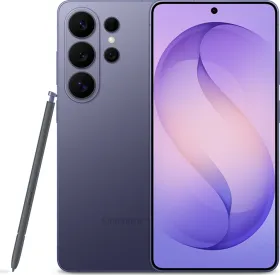
Samsung has spent the last two generations moving the Ultra line away from the sharp, boxy corners of the old Galaxy Note days. The S26 Ultra completes that transition. At 7.9mm thick, it feels distinctly slimmer in the hand despite retaining a massive 6.9-inch footprint. The glass-to-frame seam is perfectly smoothed out, and the “phantom bulk” of older Ultras is gone. Ergonomically, it is a triumph.

However, the materials tell a different story. Samsung swapped last year’s titanium frame for Armor Aluminum 2. Set the phone on a desk, and it clacks with the sharp sound of aluminum rather than the muted, premium thud of titanium. At this price point, titanium is not a luxury; it is the baseline expectation.


That all said, it is not a flawless design. The slim body pushes the camera lenses further out, resulting in a dreaded table wobble. Typing while the phone is flat on a desk is persistently irritating without a thick case. Also, the new curves mean the S-Pen must be inserted in a specific orientation to sit flush, a minor but real muscle-memory adjustment for long-time users.
Finally, we are years into the magnetic charging era, yet Samsung still forces you to buy a third-party case to use MagSafe-style mounts and chargers. It is a glaring omission.
Samsung Galaxy S26 Ultra Review: Display
The 6.9-inch OLED panel (1440 x 3120, 1-120Hz adaptive refresh rate) is the finest flat display on any Android smartphone. It hits 1,480 nits in auto mode and peaks over 2,800 nits for HDR content. Combined with the anti-reflective coating, it is phenomenally legible in direct sunlight. Conversely, it drops to an incredibly dim 1.1 nits in pitch-black rooms, making midnight reading painless.

The headline feature is the Privacy Display. Samsung embedded physical narrow and wide pixel pairs into the hardware. When activated, the screen physically restricts the viewing angle so only the person directly in front of the phone can read it. It is customizable by app or location (e.g., automatically turning on when you open a banking app). It works flawlessly.


The caveat? Activating maximum privacy halves the number of active pixels. Peak brightness drops to around 800 nits, and blacks wash out to a grayish tint. It is a brilliant tool for reviewing sensitive documents on a train, but you will not leave it on 24/7.

There is also a frustrating communication misstep for display purists. During pre-launch briefings, Samsung representatives explicitly stated the S26 Ultra featured a native 10-bit panel capable of producing 1 billion colors. However, post-launch, the brand quietly clarified that it actually uses an 8-bit panel relying on Frame Rate Control (FRC) to simulate those 10-bit colors. For 99 percent of people, it looks fantastic. But if you are sensitive to screen flicker, this underlying tech might cause eye strain during long sessions. At this premium price point, a true 10-bit panel should be the standard.
Samsung Galaxy S26 Ultra Review: Performance & Benchmarks
The Snapdragon 8 Elite Gen 5 for Galaxy is an exclusive, overclocked variant of Qualcomm’s top processor. Samsung pushed the two primary Oryon V3 Phoenix L cores from 4.6 GHz to a blistering 4.74 GHz, and bumped the Adreno 840 GPU to 1300 MHz. Paired with up to 16GB of RAM and UFS 4.x storage, the benchmark numbers I recorded are extraordinary:
- Geekbench 6: 3,539 (Single-Core) | 10,585(Multi-Core)
- AnTuTu v11: 36,68,406
- 3DMark Wild Life Extreme Stress Test: 6,454 (Best loop score) | 2,325 (Lowest loop Score) | Stability: 36 percent.


These figures comfortably outpace the Dimensity 9500 found in the vivo X300 Pro and leave Google’s Tensor G5 in the Pixel 10 Pro XL so far behind that the comparison barely feels relevant.
Peak performance is undeniably real. The problem is sustaining it.

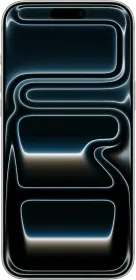
Despite a redesigned, larger vapor chamber and the inherently better heat dissipation of the new aluminum frame, I found that the S26 Ultra throttles heavily under sustained load. In my extended stress tests, CPU performance dipped below 50 percent of its maximum. During a 20-minute 3DMark GPU run, the frame rates dropped notably. If you are gaming at maximum settings, the experience remains smooth but measurably less consistent than the iPhone 17 Pro, which maintains a much higher sustained performance ceiling.
In the overwhelming majority of real-world use cases, AI processing and multitasking on the S26 Ultra were flawless. But Samsung has essentially built the fastest sprinter in Android; it just cannot run a marathon at full pace.
Samsung Galaxy S26 Ultra Review: Software and AI
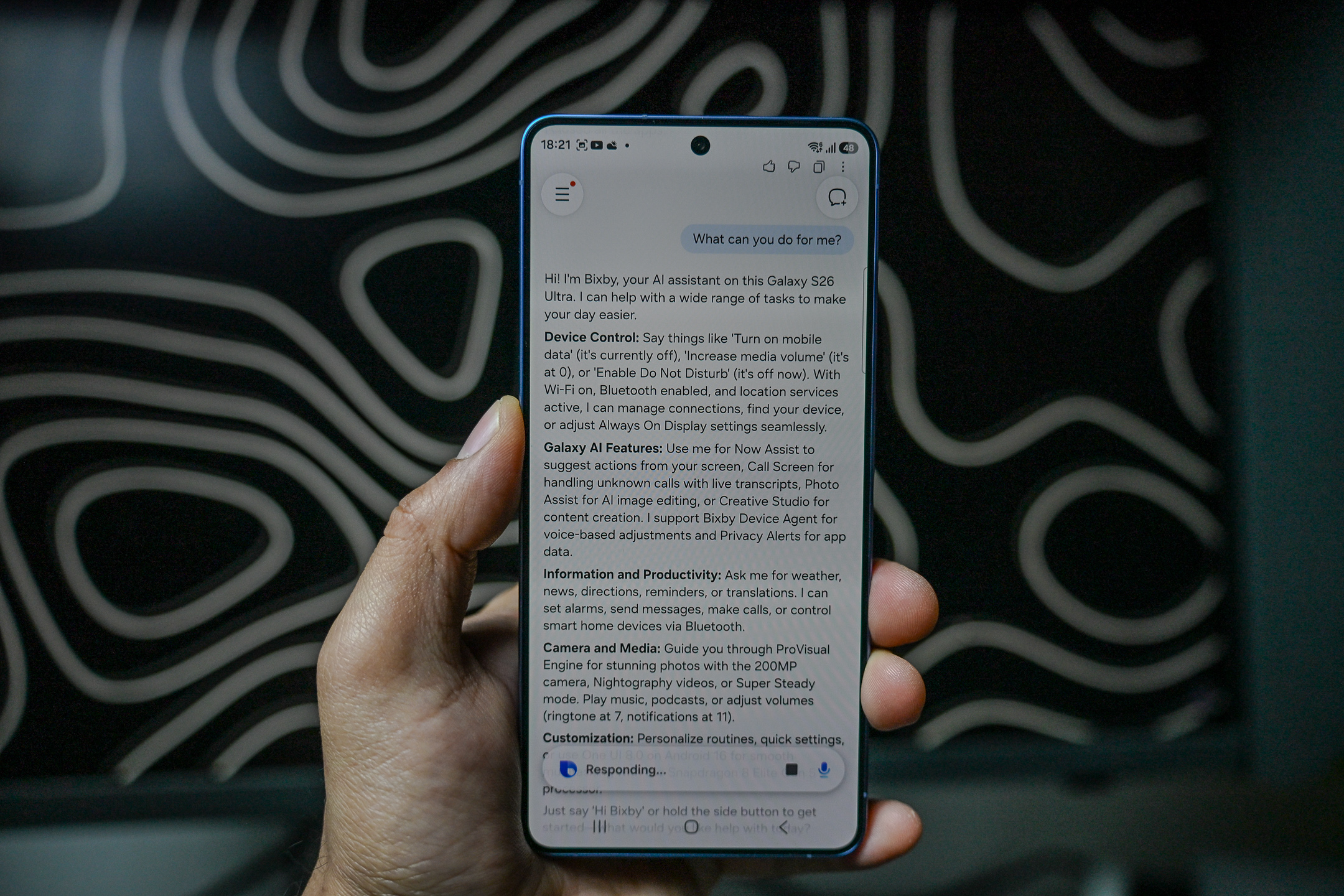
Running One UI 8.5 on Android 16, Samsung has anchored this phone with a seven-year OS and security update commitment. It is one of the best long-term value propositions in the Android market. But the software story is really defined by two tiers of AI features: the ones that actually change how you use your phone, and the ones that shipped six months too early.

Gemini Task Automation is the standout. For Indian users, the promise of this agentic AI is massive. Imagine verbally building a grocery cart on Blinkit or ordering a meal on Zomato without ever touching the screen. While the rollout for these local apps is still ongoing, we already know exactly how well it works because the feature is fully live in the US. There, you can ask Gemini to book an Uber or order DoorDash, and it physically navigates the interface, selects the items, and pauses politely at checkout for your approval. It is a genuine preview of what mobile AI actually means.

Similarly, the Audio Eraser’s expansion is quietly brilliant. It now works globally across YouTube, Netflix, and Instagram, filtering background noise to isolate voices. For anyone watching content during a noisy local commute, this changes how you consume media.
Interestingly, Samsung also packed in Perplexity AI, activated by saying “Hey Plex.” It is meant to function as a multi-step task agent for pulling live web info and scheduling, but with Gemini so deeply integrated, having dual, competing AI assistants feels like a disjointed strategy rather than a cohesive ecosystem.

Then there are certain misfires. Now Brief surfaces contextually relevant daily info, and Now Nudge monitors messages to suggest calendar additions. During my testing, they rarely activated correctly, worked on only a handful of apps, and occupied prominent screen real estate while providing zero actual value.

The default Samsung Keyboard remains an unnecessary bloat for me. With Samsung and Google getting cozy year after year, they could have switched to Gboard. The Samsung Keyboard’s Voice typing regularly mishandles punctuation, and swipe typing lags noticeably behind Google’s Gboard. Most users will switch to Gbarod during the first hour of setup.
The generative editing capability in the Gallery app is technically impressive. You can use natural language to replace outfits or insert entirely fabricated backgrounds. However, these tools are epistemically corrosive. A tool that allows a photo’s entire subject matter to be altered after capture with a text prompt does not enhance photography; it replaces it. Whether this matters to you depends entirely on what you think photographs are actually for.
Samsung Galaxy S26 Ultra Review: Cameras


The S26 Ultra’s quad-camera system receives meaningful optical upgrades while simultaneously introducing frustrating compromises. It is a combination that perfectly characterizes the entire phone.


The main 200MP sensor is structurally unchanged, but widening the aperture from f/1.7 to f/1.4 increases light intake by 47 percent. In my low-light testing, the practical effect is significant. The camera reaches for lower ISOs and faster shutter speeds, producing sharper images that finally ditch the artificial, over-processed “Nightography” look of older Galaxies.


The 50MP 5x telephoto also swapped its folded periscope design for a conventional ALoP lens with a brighter f/2.9 aperture. Background highlights now render as natural, circular “cat’s eye” shapes. Portrait photography finally looks organic rather than computationally cut out. The video is equally stellar, offering an APV codec for perceptually lossless encoding and a “Horizontal Lock” that acts like a flawless software gimbal while running.


Because of this new lens architecture, macro capability took a massive hit. The main camera’s minimum focusing distance jumped from 8cm to 18cm, and the 5x lens leaped from 30cm to 52cm. If you frequently photograph food, textures, or small objects, you will constantly find yourself stepping back to get the camera to lock focus. This is a severe regression. Compounding the issue, the 10MP 3x telephoto feels like a relic, producing soft, grainy results in anything but perfect daylight.


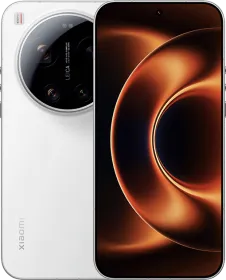
When you look at the wider market in India or other Asian markets, the hardware gap between premium Chinese flagships and the S26 Ultra is real, measurable, and widening. Devices like the Xiaomi 17 Ultra and Oppo Find X9 Pro are shipping massive 1-inch sensors and dual-periscope systems that exist in a different category of optical capability, while vivo is doing magical things with Zeiss portrait science.
The S26 Ultra holds its own against the iPhone 17 Pro Max and Pixel 10 Pro, though Apple and Google still lead in natural color rendering, which most people actually want for everyday moments, but Samsung is no longer pushing the boundaries of raw mobile camera hardware.
Samsung Galaxy S26 Ultra Review: Battery Life and Charging
Keeping a 5,000 mAh battery when the rest of the industry is adopting massive 7,500 mAh silicon-carbon cells looks like a misstep on the spec sheet. In reality, Samsung’s aggressive software optimization steps up.
During everyday use, hitting over seven hours of screen-on time is the standard. It routinely outlasts phones with physically larger batteries, leaving you with plenty of juice at the end of a long day. More importantly, Samsung finally addressed a major pain point: charging speeds. The jump to 60W wired charging is immediately noticeable, taking the phone from zero to 100 percent in just 46 minutes. The company also included 25W wireless charging, rounding out a highly reliable, all-day power setup.
Samsung Galaxy S26 Ultra Review: Speakers, Haptics & Biometrics
Samsung tuned the stereo speakers this year to eliminate the squeaky, vocal-heavy output of older models. The setup is using the bottom speaker, and the earpiece delivers a richer, more balanced sound profile. The trade-off is that you lose a bit of raw maximum volume to get that clarity.
But the best audio upgrade is actually software. The new AI Audio Eraser lives in your notification shade and works live across third-party apps like YouTube, Netflix, and Instagram. If you are watching a poorly mixed video on a noisy train, a quick tap scrubs out the background noise and isolates the dialogue. It is exactly the kind of practical AI tool that changes how you use your phone.
Unfortunately, the vibration motor is still lagging behind the competition. Put the S26 Ultra next to a Pixel 10 Pro—which uses incredibly precise haptics to make every swipe and tap feel alive—and Samsung’s flagship feels stiff and hollow.
Hardware-wise, the under-display ultrasonic fingerprint sensor remains untouched, and rightfully so. It unlocks the phone instantly, even with wet or dirty hands. However, for a device branded as “Ultra,” Samsung continues to stubbornly omit an IR blaster. It is a cheap, simple sensor that comes standard on premium Chinese rivals like the Vivo X300 Pro, and its absence here remains an annoying oversight for power users.
Review Verdict: Should You Buy the Samsung Galaxy S26 Ultra?
The Galaxy S26 Ultra is a highly considered, carefully engineered, and occasionally frustrating powerhouse. It represents a fundamental shift in what Samsung believes a flagship phone should be. You are no longer paying top dollar strictly for the best physical hardware in the world; you are paying for the most reliable software ecosystem in Android.
If you view your smartphone primarily as a command center to manage your life, automate tasks with AI, and securely browse sensitive data on a crowded train, the S26 Ultra has no equal. If you find yourself searching “Should I upgrade from S24 Ultra to S26 Ultra?” the answer is a cautious yes; the accumulated leaps in charging speed, display brightness, and thermal efficiency will feel like a meaningful jump.
However, if you view your phone as a physical luxury item or a dedicated camera replacement, the compromises are hard to ignore. The loss of close-up macro focusing is a genuine downgrade. The shift to aluminum clacks rather than thuds on a desk, and forcing users to buy a case just to use magnetic accessories, is a miss.
When stacking the Galaxy S26 Ultra vs iPhone 17 Pro Max, Apple still holds the crown for video color accuracy and sustained gaming performance. Meanwhile, if raw optical capability is your priority, Chinese flagships like the Xiaomi 17 Ultra and Vivo X300 Pro offer vastly superior 1-inch sensors for less money. And if you already own an S25 Ultra, you should absolutely skip this generation.
But for power users who want one device that does 95 percent of everything better than the rest of the market, and is securely supported through 2033, the Galaxy S26 Ultra remains the undisputed, if slightly flawed, king.
Consider the Alternatives:
If battery capacity and sheer optical hardware are your top priorities and you don’t mind stepping out of the Samsung ecosystem, the Chinese market offers superior photography, battery life, and charging experience for less money. For pure video color accuracy, the iPhone 17 Pro Max still holds the crown.
But for power users who want one device that does 95% of everything better than the rest, the Galaxy S26 Ultra remains the undisputed king. Almost perfect is still almost.

Smartprix ⭐ Rating: 8.32/10
- Design and Build: 8/10
- Display:8.8/10
- Software: 8.5/10
- Haptics: 7.8/10
- Biometrics: 9/10
- Performance: 8.5/10
- Cameras: 8/10
- Battery Life & Charging:8/10
First reviewed in March 2026.

Frequently Asked Questions:
Does the Samsung Galaxy S26 Ultra overheat while gaming?
It does not overheat to the point of shutting down, but it does aggressively thermal throttle. During extended stress tests and maximum-setting gaming sessions lasting over 20 minutes, the overclocked Snapdragon 8 Elite Gen 5 chip drops below 50 percent of its peak performance to manage heat. It remains smooth for casual use but runs warmer and less consistently than the iPhone 17 Pro Max under sustained load.
Does the Galaxy S26 Ultra have built-in Qi2 magnetic charging?
No. Despite the industry moving heavily toward magnetic wireless charging standards, Samsung omitted built-in Qi2 magnets from the S26 Ultra. You will still need to purchase a specialized third-party case to use MagSafe-style chargers, wallets, or car mounts.
Is the Galaxy S26 Ultra camera better than the iPhone 17 Pro Max or Chinese flagships?
It depends entirely on your shooting style. The S26 Ultra excels in 5x portrait bokeh, 8K video stability, and sharp low-light captures. However, it severely regressed in macro photography, requiring you to stand much further back from close-up subjects. The iPhone 17 Pro Max still leads in natural color rendering and skin tones, while premium Asian flagships like the Xiaomi 17 Ultra and Oppo Find X9 Pro offer vastly superior 1-inch sensor hardware.
You can follow Smartprix on Twitter, Facebook, Instagram, and Google News. Visit smartprix.com for the latest tech and auto news, reviews, and guides.