


TL; DR
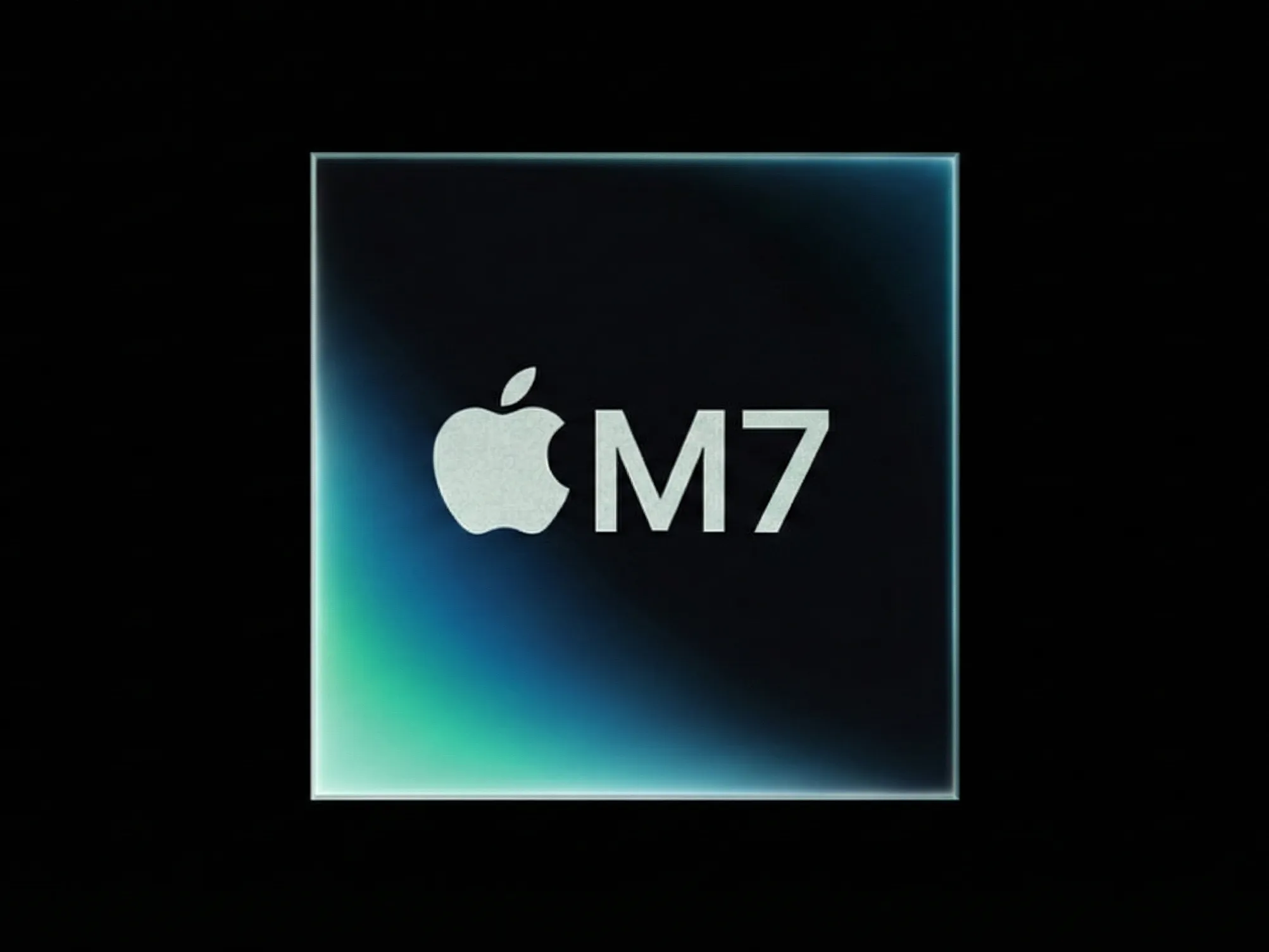
- Apple began taping out the M7 just six months after finalizing the M6 chip.
- M7 Ultra targets 1.5 TB of unified memory and AI performance approaching that of Nvidia’s Blackwell accelerators.
- Apple plans to use the M7 Ultra to power Apple Intelligence servers starting in 2029.
Apple’s decision to skip the M6 Pro, M6 Max, and M6 Ultra was unusual enough when Bloomberg’s Mark Gurman first reported it in June. However, the same source now reports that Apple began work on the M7 just six months after finalizing the M6.
That is an unusual pace. The normal gap between tape-outs in Apple’s silicon program is 12 to 18 months. Shortening that to six months doesn’t sound like a scheduling decision: it is a signal that two generations were already in parallel development.

Also Read: Samsung Raised the Galaxy M47’s Price by ₹10,000 in Just Eight Days
Why Apple Is Fast-Tracking The M7?
Gurman’s explanation is direct: “Apple had been planning major neural-processing upgrades for the M7 family and ultimately decided those improvements were important enough to justify accelerating the next generation rather than completing the M6 lineup.”
In practice, the M7 base chip could arrive in H1 2027 (with Air or other baseline Macs) at around 240 GB/s of memory bandwidth, while M7 Pro and M7 Max could follow by the end of 2027 (with the MacBook Pro or other top-tier Mac configurations). The M7 Ultra, on the other hand, lands in 2028.

That reinforces what Gurman claimed in his report: don’t expect Apple to release the M6 Pro or the M6 Max chips. Second, the company seems to have made up its mind to launch the Ultra chip in alternative lineups.
Also Read: Apple Accuses OpenAI of Poaching Talent and Taking Trade Secrets Along the Way
After the M3 Ultra, we could get an M5 Ultra later this year (powering one of the Mac Studio configurations), and then the M7 Ultra in 2028; it looks like an odd number game to me.
The M7 Ultra Signals Apple’s AI Ambitions
Gurman reports the M7 Ultra is being designed to support up to 1.5 terabytes of unified memory, roughly double the M5 Ultra’s expected ceiling. More importantly, he describes its AI performance as approaching dedicated accelerators, with Nvidia’s Blackwell as the reference.

Apple is also evaluating the M7 Ultra as the backbone of Apple Intelligence servers starting in 2029, which tells you exactly what capabilities you can expect from this device. When a company starts designing its Mac silicon to rival other companies’ AI infrastructure hardware, its ambition shifts into an entirely different category.
Also Read: Global PC Shipments Just Snapped A Nine-Quarter Winning Streak
Separately, Gurman reports that two new Apple Pencil models are coming in early 2027, likely alongside the M6 iPad Pro, and will feature redesigned battery systems to meet EU regulatory compliance.

You can follow Smartprix on Twitter, Facebook, Instagram, and Google News. Visit smartprix.com for the latest tech and auto news, reviews, and guides.