


TL;DR
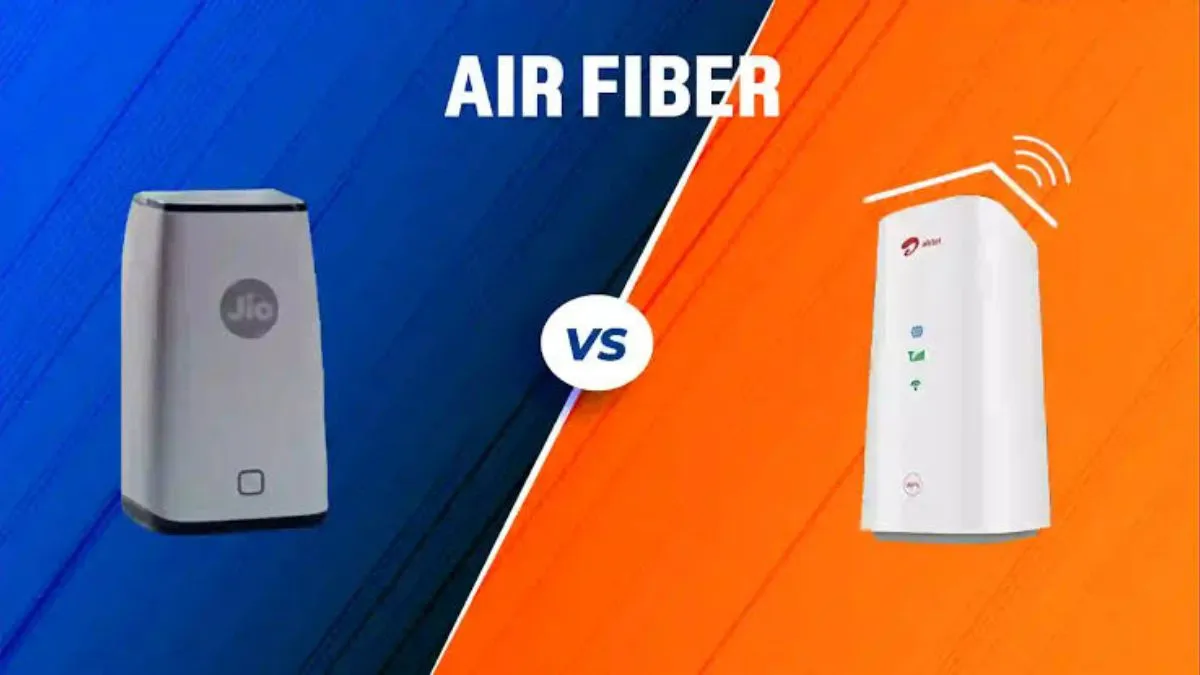
- Jio AirFiber offers broader coverage across India, lower starting prices, and greater OTT variety, ideal for semi-urban and rural users seeking high speed and value.
- Airtel Xstream AirFiber excels in major cities with more stable, lower-latency performance, making it the best pick for work-from-home, competitive gaming, and superior customer support.
- For best results, check local 5G coverage and compare hidden costs before deciding, your ideal choice depends on location, usage type, and entertainment needs.
If you’re choosing between Jio AirFiber and Airtel Xstream AirFiber in 2026, here’s the short answer: Jio wins on price, speed tiers, and OTT variety. Airtel wins on network stability, gaming latency, and customer support. Your best choice depends on where you live and how you use the internet.
Read on for the full breakdown — plans, speeds, OTT benefits, installation, hidden costs, and a verdict for every type of user.
What Is AirFiber? (And Why It’s Different From Regular Broadband)
AirFiber is a Fixed Wireless Access (FWA) service. Instead of digging roads to lay fiber-optic cables to your home, it picks up 5G signals from the nearest tower and delivers high-speed internet wirelessly through a small outdoor antenna and a Wi-Fi router inside your home.
Key advantages over traditional fiber:
- No cable installation — no road digging, no waiting weeks
- Works in apartments, rented homes, and areas where fiber hasn’t reached
- Installation is typically done within 24–48 hours.
- Portable setup in some configurations
The trade-offs to know:
- Speed depends on signal strength from the nearest 5G tower.
- Heavy rain can cause brief signal dips (usually seconds, not hours)
- Latency is slightly higher than wired fiber.
- Both Jio and Airtel apply a 1TB Fair Usage Policy (FUP) — speeds drop once that limit is reached.
ALSO READ: Airtel WiFi Plans 2026: Prices, Speeds, and Benefits — Compared and Explained
Jio AirFiber vs Airtel Xstream AirFiber: Quick Comparison (2026)
| Starting Price | ₹599/month + GST | ₹699/month + GST |
| Max Speed | Up to 1 Gbps | Up to 100 Mbps |
| FUP Data Limit | 1TB (then 64 Kbps) | 1TB (then 2 Mbps) |
| OTT Apps | Up to 16 apps (Netflix, Prime, Hotstar, etc.) | 22+ apps via Xstream Play + Hotstar |
| Live TV Channels | 800+ | 350+ |
| City Coverage | 5,800+ towns | Select cities only |
| Security Deposit | ₹1,500–₹2,500 (refundable) | ₹3,300 (Black/advance plans) |
| Best For | Budget users, streamers, rural/semi-urban | Stability, gaming, urban professionals |
Jio AirFiber Plans (May 2026): Verified Pricing
Jio AirFiber postpaid plans start at ₹599 per month and scale up to ₹3,999 for the 1 Gbps tier. Here’s the full current lineup: Jio
| AirFiber Basic | ₹599 | Up to 30 Mbps | 1TB | JioCinema, SonyLIV, ZEE5, and more (12 apps) |
| AirFiber Standard | ₹899 | Up to 100 Mbps | 1TB | Netflix Basic, Amazon Prime Lite, YouTube Premium + 12 apps |
| AirFiber Premium | ₹1,199 | Up to 300 Mbps | 1TB | Full Netflix, Disney+ Hotstar + 12 apps |
| AirFiber Max Basic | ₹1,499 | Up to 500 Mbps | 1TB | 16 apps including Discovery+ |
| AirFiber Max Standard | ₹2,499 | Up to 500 Mbps | 1TB | Netflix Standard + Amazon Prime Lite + 16 apps |
| AirFiber Max Premium | ₹3,999 | Up to 1 Gbps | 1TB | All premium OTT apps including Netflix Premium, Amazon Prime Lite, Disney+ Hotstar, SonyLIV, ZEE5, Lionsgate Play, Discovery+, and more |
Note: All prices are exclusive of 18% GST. A ₹599 plan effectively costs ~₹707/month. After the 1TB FUP, speeds drop to 64 Kbps. Jio offers data top-up sachets to restore high-speed access.

Airtel Xstream AirFiber Plans (May 2026) — Verified Pricing
Airtel currently offers three main AirFiber plans at ₹699, ₹799, and ₹899 per month.
Note: Airtel AirFiber plans include up to 1TB of data per month. After the FUP limit, speed is throttled to 2 Mbps; unlike Jio, Airtel does not offer data top-up sachets. All prices exclude GST. Prices may also vary by city; for example, the 100 Mbps plan costs ₹799/month in Delhi and Mumbai but ₹999/month in Chennai and Bengaluru.

Best Plan for Your Usage Type
Don’t pay for speed you won’t use. Here’s the right plan based on real-world usage:
| Budget / light user | Jio AirFiber Basic | ₹599 + GST | Cheapest entry, 30 Mbps, 12 OTT apps |
| Budget with entertainment | Airtel AirFiber Lite | ₹699 + GST | 40 Mbps + 350+ TV channels + 20+ OTT apps + 4K box |
| Work from home + streaming | Airtel AirFiber Standard | ₹799 + GST | Stable 100 Mbps, ideal for video calls |
| OTT-heavy household | Jio AirFiber Standard | ₹899 + GST | 100 Mbps + Netflix + Prime + YouTube Premium |
| 4K streaming + gaming | Jio AirFiber Premium | ₹1,199 + GST | 300 Mbps, full Netflix, Hotstar |
| Large household / smart home | Jio AirFiber Max Basic | ₹1,499 + GST | 500 Mbps, 16 OTT apps |
| Power user / content creator | Jio AirFiber Max Premium | ₹3,999 + GST | 1 Gbps, all premium OTTs |
Speed & Performance: How They Actually Compare
Both services use 5G Fixed Wireless Access, so real-world speeds depend heavily on your distance from the nearest tower and local network congestion.
Jio AirFiber:
- Offers speed tiers from 30 Mbps to 1 Gbps
- Performs better in areas with high 5G tower density
- Speeds can dip during peak evening hours (8–11 PM) in congested zones.
- Typical latency: 25–50ms, which can spike under load
Airtel Xstream AirFiber:
- Tops out at 100 Mbps across all current plans
- More consistent performance in urban areas during peak hours
- Typical latency: 20–35ms — lower and more stable
- Better suited to real-time applications like video calls and online gaming
Bottom line on speed: If you need raw throughput for 4K streaming or large file transfers, Jio is the clear winner. If you need consistent, low-latency performance for work or competitive gaming, Airtel is more reliable.
OTT Streaming: Which Gives You More Entertainment Value?
Jio AirFiber OTT benefits (higher-tier plans):
- Netflix (Basic to Premium, depending on plan)
- Amazon Prime Lite
- Disney+ Hotstar
- SonyLIV, ZEE5, JioCinema Premium
- Discovery+, Lionsgate Play, and more — up to 16 apps
Airtel Xstream AirFiber OTT benefits:
- Disney+ Hotstar
- 22+ OTT apps via Xstream Play
- 350+ live TV channels
- Free 4K Android TV Box (₹699 and ₹899 plans)
Verdict on OTT: For users prioritizing premium streaming apps like Netflix and Prime Video, Jio’s package is the better fit. For users wanting a combined live TV, OTT, and set-top-box bundle, especially if you watch a lot of live sports and news channels, Airtel’s Xstream package is more suitable for a traditional home entertainment setup.
Work From Home: Which Is Better for Remote Workers?
| Zoom / Google Meet calls | Good, may fluctuate | Stable and consistent | Airtel |
| VPN and remote desktop | Higher latency possible | More consistent | Airtel |
| Large file uploads / cloud backups | Faster on higher-tier plans | Moderate, reliable | Jio (higher plans) |
| Peak-hour reliability | Depends on tower load | More consistent in cities | Airtel |
For remote workers who need stable video calls and VPN sessions, Airtel’s lower latency and more consistent urban performance make it better suited. For users regularly transferring large files or needing fast upload speeds, Jio’s higher-tier plans are more appropriate.
Gaming: Which Is Better?
Latency matters more than raw speed in online gaming.
- Jio AirFiber: Latency typically 25–50ms, can spike during peak hours. Adequate for casual gaming and cloud gaming (Xbox Cloud, GeForce NOW) on higher-speed plans.
- Airtel Xstream AirFiber: Latency typically 20–35ms, more consistent. Better suited for competitive titles like BGMI, Valorant, and Call of Duty Mobile, where stable ping is critical.
For competitive gamers who prioritize stable ping and low latency, Airtel Xstream AirFiber is the better choice. For users playing casually or using cloud gaming on plans with at least 100 Mbps speed, both services work well.
Coverage: Where Is Each Service Available?
This is one of the biggest practical differences between the two.
Jio AirFiber is available across a large number of towns and cities in India, with coverage extending to semi-urban and even some rural locations with strong 5G tower presence.
Airtel Xstream AirFiber is currently available in select cities, including Delhi, Ghaziabad, Noida, Faridabad, Gurgaon, Kolkata, and Rajkot, with more urban expansion ongoing.
If you live in a non-metro or semi-urban area, Jio AirFiber is likely your only AirFiber option. Those in cities where both are available should always check actual serviceability at your PIN code on the official Jio or Airtel website before deciding.
What Does AirFiber Installation Actually Involve?
Both Jio and Airtel send a technician for installation. Here’s what to expect:
What you get with both services:
- Outdoor antenna/unit (mounted on wall, balcony, or terrace)
- Indoor Wi-Fi router
- 4K Set-Top Box (Jio includes it on all plans; Airtel includes it on ₹699 and ₹899 plans)
Important things to check before booking:
- The outdoor unit needs a clear line of sight to the nearest 5G tower.
- In high-rise buildings above the 10th floor, the signal is often stronger.
- Some housing societies restrict rooftop or balcony mounting — verify with your building management first.
- Thick concrete walls can reduce indoor Wi-Fi range; ask about a mesh extender if your home is large.
Always ask the technician to perform a signal-strength test on your specific unit before confirming installation. Both Jio and Airtel allow this on request.
Hidden Costs to Factor In
Plan prices look attractive, but here’s what adds to your actual monthly cost:
- GST (18%): All published prices exclude tax. A ₹599 plan costs ~₹707/month; a ₹899 plan costs ~₹1,061/month.
- Security deposit: Jio charges a refundable deposit of ₹1,500–₹2,500 for the outdoor unit and router. Airtel charges ₹3,300 for Black or advance (6/12-month) plans.
- Installation fee: Free on annual plans. Monthly plans may carry a ₹500–₹1,000 installation charge.
- Post-FUP data: After the 1TB limit, Jio drops to 64 Kbps but lets you buy top-up sachets. Airtel reduces speed to 2 Mbps with no top-up option — your speed stays throttled until the next billing cycle.
Always calculate the total first-month cost (deposit + installation + plan + GST) before comparing. The difference between plans can be significant once all costs are included.
How to Check If AirFiber Will Work Well at Your Home (Before You Buy)
- Test signal with your phone: Insert a Jio SIM (for Jio AirFiber) or Airtel SIM into a 5G-capable smartphone and run speed tests at different points in your home at different times of day. Consistently crossing 100 Mbps is a strong positive signal.
- Check coverage maps: Visit Jio.com or Airtel.in and search by your PIN code to confirm 5G coverage in your area.
- Ask neighbors: If anyone nearby already uses the service, their real-world experience is the most reliable data point.
- Request a signal test: Before committing to installation, ask the technician to measure signal strength at your specific unit or apartment.
How to Get Jio AirFiber
- Visit jio.com and navigate to AirFiber plans.
- Enter your address and check availability.
- Select a plan, fill in your details, and book installation.
- A technician will visit within 1–2 days for setup.
How to Get Airtel Xstream AirFiber
- Visit airtel.in/plans/airfiber
- Enter your address to check serviceability.
- Choose a plan and provide your name, mobile number, and installation address.
- Book the connection — installation is typically done within 24–48 hours.
Customer Support: Real-World Experience
Airtel Xstream AirFiber generally receives better customer support ratings. Users report faster complaint resolution, clearer communication, and a more structured escalation process compared to Jio.
Jio AirFiber support is more variable — smooth in some cities, slower and harder to reach in others. Given Jio’s scale and broader coverage, this inconsistency is not surprising, but it is worth factoring in if you’re in a city where both services are available.
Pros and Cons: Quick Summary
| Pros | Wider coverage (5,800+ towns), higher max speed (1 Gbps), better OTT variety, lower starting price | More stable urban performance, lower latency for gaming, better customer support, good live TV bundle |
| Cons | Support quality varies by city, speed can fluctuate at peak hours, 64 Kbps post-FUP | Limited city coverage, max 100 Mbps, no data top-up after FUP, higher deposit |
Final Verdict: Which Should You Choose?
Choose Jio AirFiber if:
- You live outside a major metro or in a semi-urban area.
- You want the lowest starting price (₹599 + GST)
- You stream across multiple platforms and want Netflix, Prime, and Hotstar bundled.
- You need speeds above 100 Mbps
Choose Airtel Xstream AirFiber if:
- You live in a major city with strong Airtel 5G coverage.
- You work from home and need stable, low-latency performance.
- You play competitive online games.
- You already use an Airtel mobile or DTH and want a bundled Airtel Black ecosystem.
- You prefer consistent service with better support infrastructure.

Frequently Asked Question
Which is better — Jio AirFiber or Airtel AirFiber in 2026?
Jio AirFiber is better for most users in India due to wider coverage, lower pricing, higher max speeds (up to 1 Gbps), and a larger OTT bundle. Airtel Xstream AirFiber is better if you live in a major city and prioritize network stability, gaming performance, and high-quality customer support.
What is the cheapest Jio AirFiber plan?
The Jio AirFiber Basic plan starts at ₹599/month (+ 18% GST), offering up to 30 Mbps speed, 1TB FUP data, 800+ TV channels, and 12 OTT apps, including JioCinema, SonyLIV, and ZEE5.
What is the cheapest Airtel Xstream AirFiber plan?
The Airtel AirFiber Lite plan is priced at ₹699/month (+ GST), offering up to 40 Mbps speed, 1TB FUP data, 350+ TV channels, 22+ OTT apps, and a free 4K Android Box.
What happens after the 1TB data limit on AirFiber?
On Jio AirFiber, speed drops to 64 Kbps after 1TB, but you can purchase data top-up sachets to restore full speed. On Airtel Xstream AirFiber, the speed drops to 2 Mbps and stays there until your next billing cycle, as there’s no top-up option.
Does Jio AirFiber work in the rain?
Yes. Jio AirFiber is generally unaffected by rain. You may experience brief signal dips of a few seconds during heavy downpours, but extended outages due to weather are rare with 5G FWA technology.
Is Airtel AirFiber the same as Airtel Xstream Fiber?
No. Airtel Xstream Fiber is a wired fiber-to-home service with faster speeds and lower latency. Airtel Xstream AirFiber is the wireless 5G FWA alternative for homes where fiber cables haven’t been laid. AirFiber is more convenient to install but slightly less stable than wired fiber.
Can AirFiber be installed in high-rise apartments?
Yes, but check two things first: your building management’s rules on mounting outdoor equipment, and whether there is a clear line of sight to the nearest 5G tower. Units above the 10th floor often get a better signal than ground-floor apartments. Always request a signal test from the technician before confirming installation.
Which AirFiber is better for gaming — Jio or Airtel?
Airtel Xstream AirFiber is better for competitive online gaming due to lower, more consistent latency (20–35ms vs. Jio’s 25–50ms). For cloud gaming or casual play, both services work well on a plan with 100 Mbps or higher.
Which AirFiber is better for OTT streaming?
Jio AirFiber offers better OTT value overall, with up to 16 bundled apps, including full Netflix, Amazon Prime, and Disney+ Hotstar on higher-tier plans. Airtel offers 22+ apps via Xstream Play, 350+ live TV channels, and a 4K set-top box — the better pick if you want a complete home entertainment setup with live TV.
Is there a minimum contract for AirFiber?
No mandatory long-term contract is required. Both Jio and Airtel offer monthly plans. However, annual or semi-annual plans typically include free installation, lower effective monthly costs, and additional OTT benefits.
Can AirFiber replace my current wired broadband?
For most households, yes, especially if you need a quick setup or live somewhere fiber cables haven’t reached. If your work requires ultra-stable, low-latency connectivity (e.g., financial trading, large server operations), wired fiber remains more reliable.
Does AirFiber slow down during peak hours?
It can. Both Jio and Airtel AirFiber run on 5G towers shared with mobile users. Speeds may dip during peak hours (8–11 PM on weekdays, weekend afternoons). Airtel tends to handle peak-hour congestion more consistently in dense urban areas; Jio performs better in areas with high 5G tower density.
Can I carry Airtel AirFiber to a new location?
The device is technically portable, but the service is registered to a specific address. Moving to a new home requires a fresh installation request. Signal strength and coverage will also vary by location.
Is AirFiber good for smart homes with multiple devices?
Yes. On plans of 100 Mbps and above, both Jio and Airtel AirFiber can comfortably handle 10–15 connected devices simultaneously — smartphones, TVs, laptops, smart speakers, and security cameras. For homes with 20+ devices, choose a plan with 300 Mbps or higher.
Note: Prices and plan details verified on the official Jio.com and Airtel.in pages as of May 2026. All prices are exclusive of 18% GST. Plan availability varies by PIN code. Always check serviceability on the official website before purchasing.
You can follow Smartprix on Twitter, Facebook, Instagram, and Google News. Visit smartprix.com for the latest tech and auto news, reviews, and guides.