

For years, the smartphone industry implied that choosing a compact phone meant settling for less. Smaller body? Smaller battery. Manageable weight? Downgraded chip. Fits in your pocket? Compromised camera. The prevailing belief was clear: to get the best, you had to buy the biggest.
vivo is about to challenge that notion.
vivo launches the X300 FE on May 6th. If vivo’s official X300 FE microsite is anything to go by, it delivers flagship hardware in a compact body, with no visible compromise in chip, camera, or battery.
The X300 FE is tailored for buyers seeking uncompromised photography and performance, in a compact flagship under ₹100,000 . Let’s discuss what’s confirmed about the vivo X300 FE so far.
vivo X300 FE: At a Glance
- Display: 6.31-inch 1.5K LTPO AMOLED with segment-leading 5000 nits peak brightness.
- Processor: Flagship Snapdragon 8 Gen 5 chipset.
- Battery: Massive 6,500 mAh capacity with 90W wired and 40W wireless charging.
- Camera: 50MP ZEISS Periscope Telephoto with 100x Digital Zoom.
- Durability: Dual IP68 + IP69 rating for extreme water and heat resistance.
- Pricing: Expected between ₹75,000 – ₹80,000, undercuting rivals like the Samsung Galaxy S26 (₹87,999) and iPhone 17 (₹82,900).
The Camera Specs That Have No Business Being on an “Entry” Flagship
This section merits careful scrutiny. If vivo’s disclosed figures prove accurate in practice, the X300 FE’s camera system could outperform phones at significantly higher price points.

The primary talking point is the 50MP ZEISS Telephoto with Periscope architecture, featuring a 3x optical baseline and an f/2.65 aperture. Periscope zoom is the mechanism that allows a phone to achieve meaningful optical zoom without the camera module protruding to unreasonable depths. It folds the optical path horizontally inside the body. It is a feature that, until recently, was exclusive to Ultra-tier phones. vivo has brought it to the X300 FE.


The competitive comparison here is direct and unflattering to the alternatives.
| Camera Spec | vivo X300 FE | Samsung Galaxy S26 | iPhone 17 |
| Main Camera | 50 MP (f/1.57, OIS) | 50 MP (f/1.8, OIS) | 48 MP (f/1.6, OIS) |
| Telephoto Sensor | 50 MP (f/2.65, 3x OIS) | 10 MP (f/2.4, 3x OIS) | N/A |
| Front Camera | 50 MP (f/2.0, AF) | 12 MP (f/2.2, AF) | 18 MP (f/1.9, AF) |
| Max Digital Zoom | 100x | 30x | 10x |
| Anti Glare Coating | ZEISS T* | Not disclosed | Not disclosed |
| Telephoto Extender Kit | 200mm kit (sold separately) | No | No |
While the hardware is impressive, the real shift is in the software. Every manufacturer is talking about AI, but vivo is taking a different path than Apple or Samsung.

The X300 FE introduces over 25 AI Styles within its Creative Camera. This isn’t just a collection of filters; it’s an automated aesthetic engine. While competitors like the iPhone 17 offer “Photographic Styles” that allow for subtle tone adjustments, they remain relatively safe and manual. On the other side, many modern AI tools require “prompting” literally typing out what you want the image to look like.

vivo has removed that friction. The 25+ styles are instant and prompt-free. You don’t have to describe a “cinematic 1970s film look” or wait for a cloud server to process your request. You simply select the style and shoot.

This level of creative variety is currently absent from the S26 and iPhone 17, which favor a “natural” look that often requires third-party apps to make the photos look distinct. By baking these ZEISS-inspired rendering profiles (like Distagon and Planar) directly into the shutter button, vivo is betting that users want professional-grade edits without the professional-grade effort.


The 100x digital zoom figure comes with a caveat that vivo itself addresses through software: extreme zoom is a war against physics. To win, vivo uses the AI True Clarity Engine. This is a two-layer system designed to clean up the “noise” and “blur” that usually ruins high-zoom shots. Whether this delivers a usable photo at 100x remains to be seen, but on paper, vivo’s intent to dominate the category is clear.
We’ll see if the FE continues that legacy when the full details are revealed on May 6th.
A Compact Phone Designed to Look Like It Belongs in 2026
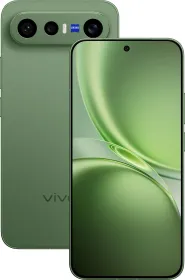
Teaser images suggest the X300 FE brings a refreshed design over the X200 FE with a distinct new identity. The flat camera visor looks cleaner, keeps the phone stable on a table without wobble, and sits neatly at the top with the ZEISS logo integrated into the layout. The 7.99 mm, 191g body is incredibly compact with a modern silhouette.

Urban Olive, exclusive to India, takes the lead as the standout finish. It looks fresh, premium, and instantly more memorable than the usual black or silver choices seen across the segment. Its matte texture and earthy tone give the X300 FE stronger shelf appeal.
Lilac stands out as a trend-forward option offering a sophisticated tone that has been prominent in premium consumer electronics for 2 years. Black is executed with restraint.

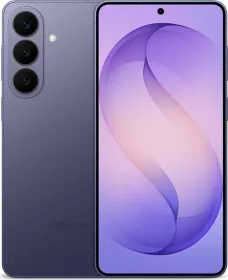
That distinctive design also makes the X300 FE stand apart from the competition. Samsung’s S26 continues a familiar look seen across earlier generations and parts of the A series, while the iPhone 17 stays close to Apple’s established design language. The X300 FE’s design feels newer, distinct, and more intentional in comparison.
Beyond aesthetics, the X300 FE stands out from competitors at this price point due to its dual IP68 & IP69 rating. While IP68 protects against submersion up to 1.5 meters for 30 minutes, as seen on the Samsung Galaxy S26 and iPhone 17, IP69 provides resistance against high-pressure, high-temperature water jets used in industrial wash-downs.
For users, this means the X300 FE, if, by accident, you forget to take out your phone before throwing it in the washing machine, the vivo X300 FE will survive this torture better than phones rated only IP68. Neither Apple nor Samsung offers IP69 as standard; vivo includes it, indicating new baseline expectations for compact flagships.
The Battery Number That Makes Compact Phone Buyers Do a Double Take
Here is where the X300 FE makes its most aggressive statement.
Compact phones have historically struggled with battery life due to limited physical space for cells. Manufacturers have addressed this by either accepting smaller batteries and optimizing with software or discontinuing compact models worth buying. The X300 FE takes a different approach: it incorporates a 6,500 mAh battery in a compact chassis.

That number requires context to land properly.
| Feature | vivo X300 FE | Samsung Galaxy S26 | iPhone 17 |
| Battery Capacity | 6,500 mAh | 4,300 mAh | 3,692 mAh |
| Wired Charging | 90W | 25W | 40W |
| Wireless Charging | 40W | 15W | 15W (MagSafe) |
Compared to competitors, the X300 FE’s battery is about 51 percent larger than the S26’s and 76 percent larger than the iPhone 17’s. Both Samsung and Apple’s compact flagships have noticeably smaller batteries. vivo’s focus on a larger battery signals a shift in priorities to address battery anxiety among compact flagship buyers.
Charging matches the device’s ambition: 90W wired, 40W wireless. Wired charging fills the battery in under an hour. Wireless puts the X300 FE ahead of most Android rivals and Apple’s speeds.
The Chip That Refuses to Make Excuses
Battery is the first compromise for compact flagships; processor comes second. Smaller phones require tighter thermal management, often resulting in a throttled or older chip.
vivo equips the X300 FE with the Snapdragon 8 Gen 5, Qualcomm’s top-tier chip. No caveats, no ambiguous claims about capability.

The memory and storage configuration that vivo has confirmed around it is equally unhedged. LPDDR5X Ultra RAM is the current ceiling for mobile memory bandwidth, the specification required to handle 4K video workflows and sustained AI processing without the device throttling under load. Paired with UFS 4.1 storage, it is the fastest internal storage standard available on mobile, translating to fast app launches, quick camera processing, and file operations that don’t interrupt the experience.

On connectivity, vivo has confirmed Wi-Fi 7 and Bluetooth 6.0 for the India variant, notably an upgrade from Bluetooth 5.4 on the global version, offering better range and lower audio latency. These are the standards that will remain current for years, which matters on a phone vivo is selling with a five-year update commitment.
One under-discussed hardware detail worth flagging: the X300 FE uses a 3D Ultrasonic single-point fingerprint sensor rather than the optical in-display scanners common at this price. The practical difference is that ultrasonic scanners read the physical structure of your fingerprint rather than relying on optical reflection. This means the fingerprint sensor functions reliably on wet or greasy fingers, unlike optical sensors, which regularly fail. It’s a small thing. It’s the kind of small thing that determines whether you trust your phone.
Origin OS 6 Gets Shake to Share
OriginOS 6 is packed with new software tricks, but we’ve learned that a new feature called Shake & Share is set to debut specifically with the X300 FE. It’s a refreshingly physical way to move files that skips the usual menu-hunting.

The process is built for speed: you simply shake your phone to trigger a search for nearby devices. Once the X300 identifies other active users in the area, you can pull them into a group to share. From there, you can beam photos or documents instantly by dragging them directly into the “Origin Island”, the interactive hub at the top of the screen or by selecting files the old-fashioned way.
That’s not all, vivo is promising five years of major Android updates and seven years of security patches. That matches the formal commitments of industry leaders like Apple and Samsung, ensuring a phone bought today stays secure well into the early 2030s.
Out of the box, the device also includes a suite of Google and vivo AI tools like AI Reflection Eraser, AI Creative Camera for background manipulation, and Circle to Search, a Google visual search tool built directly into the interface. They are tools integrated at the OS level, available from day one.
The ₹75,000 to ₹80,000 Question
The expected price range of ₹75,000 – ₹80,000 places the X300 FE alongside the Samsung Galaxy S26 and just below the iPhone 17. Both competing devices are considered leading options in this segment; therefore, the X300 FE must demonstrate how it stands out at this price.
But before dissecting what the number buys, it’s worth understanding why flagship phones cost what they do in India right now, because the context makes the X300 FE’s positioning considerably more interesting.

LPDDR5X Ultra RAM, the memory standard vivo is shipping in the X300 FE, has seen its cost rise significantly over multiple pricing cycles as global demand for high-bandwidth memory has outpaced supply. UFS 4.1 storage, the fastest internal storage standard available, carries a similar premium. Neither of these is cheap to source, and both have become more expensive to build around. At the same time, the rupee-dollar equation has worsened materially due to ongoing geopolitical pressures like tariff uncertainties, supply chain restructuring, and broader macroeconomic frictions between major economies. For any brand importing components priced in dollars and selling in rupees, that gap has a direct and unavoidable effect on retail pricing.
This is the environment in which every flagship sold in India in 2026 is being priced. The Samsung Galaxy S26 and iPhone 17 are priced in it too. None of these phones is cheap because none of them can be.
Within that context, the X300 FE’s specification-to-price argument becomes harder to dismiss. A Snapdragon 8 Gen 5 processor. A 50MP ZEISS Periscope Telephoto with 100x zoom. A 6,500 mAh battery with 90W wired and 40W wireless charging. Dual IP68 + IP69 certification. Five years of OS updates. These specifications, individually, appear in phones costing significantly more and they’re being offered here amid the same cost pressures that have pushed competitor pricing higher.
The Samsung Galaxy S26, at a comparable price, offers a 4,300 mAh battery, a 10MP telephoto lens, and IP68 protection. The iPhone 17 has no dedicated telephoto camera, a 3,692 mAh battery, and IP68. But on hardware delivered per rupee spent, in a market where every component costs more than it did two years ago, the X300 FE’s case is genuinely difficult to argue against.
Bottomlines: The vivo X300 FE Could End the Era of Compact Compromises

The vivo X300 FE, as vivo has described it, is a phone for someone specific: a buyer who wants the substance of a flagship without the footprint of one, who photographs seriously enough to want a periscope lens and ZEISS optics, and who is buying with a five-year horizon in mind rather than an upgrade in eighteen months.
If you were planning to pick up an iPhone 17 or a Galaxy S26 this week, stop. Wait until May 6th. The compact compromise might finally be over. From the details that vivo has already put out, the X300 FE appears to be the best-specced compact flagship at ₹75,000 that India has seen this year.

vivo X300 FE — Frequently Asked Questions
Q: When does the vivo X300 FE launch in India?
A: The vivo X300 FE launches in India on May 6, 2026, at a dedicated launch event.
Q: What is the expected price of the vivo X300 FE in India?
The vivo X300 FE is expected to be priced between ₹75,000 and ₹80,000 in India. This positions it directly against the Samsung Galaxy S26 and below the Apple iPhone 17 in the premium flagship segment.
Q: What processor does the vivo X300 FE use?
The vivo X300 FE is powered by the Snapdragon 8 Gen 5, Qualcomm’s current flagship-tier chipset, paired with LPDDR5X Ultra RAM and UFS 4.1 storage.
Q: What is the battery capacity of the vivo X300 FE?
The vivo X300 FE has a 6,500 mAh battery. This is approximately 51 percent larger than the Samsung Galaxy S26’s 4,300 mAh battery and 76 percent larger than the Apple iPhone 17’s 3,692 mAh battery. It supports 90W wired charging and 40W wireless charging.
Q: Does the vivo X300 FE have a periscope camera?
Yes. The vivo X300 FE features a 50MP ZEISS Telephoto camera with Periscope architecture, offering 5x optical zoom and an f/2.65 aperture. It supports up to 100x digital zoom.
Q: How does the vivo X300 FE camera compare to the Samsung Galaxy S26 and iPhone 17?
The vivo X300 FE has a 50MP periscope telephoto camera with 100x digital zoom. The Samsung Galaxy S26 has a 10MP telephoto with a maximum of 30x digital zoom. The Apple iPhone 17 has no dedicated telephoto camera and a maximum of 10x digital zoom. The X300 FE also includes ZEISS Natural Color calibration and ZEISS Style Portrait Modes not available on either competitor.
Q: What is the IP rating of the vivo X300 FE?
The vivo X300 FE carries a dual IP68 and IP69 rating. IP68 certifies protection against water submersion up to 1.5 metres for 30 minutes. IP69 additionally certifies protection against high-pressure, high-temperature water jets. The Samsung Galaxy S26 and Apple iPhone 17 carry only IP68.
Q:What colours is the vivo X300 FE available in?
The vivo X300 FE is available in Urban Olive (exclusive to India), Lilac, and Black.
Q: What is Urban Olive on the vivo X300 FE?
Urban Olive is an India-exclusive colour option for the vivo X300 FE. It features a matte earthy-green finish positioned as a premium, trend-forward alternative to the typical glass-backed flagship aesthetic.
Q: How many years of software updates will the vivo X300 FE receive?
vivo has committed to 5 years of major Android OS updates and 7 years of security patches for the vivo X300 FE. The phone ships with Android 16-based OriginOS 6.
Q: Does the vivo X300 FE support Wi-Fi 7?
Yes. The vivo X300 FE supports Wi-Fi 7 and Bluetooth 6.0. The Bluetooth 6.0 specification is an upgrade over the Bluetooth 5.4 on the global variant of the device.
Q: What is the difference between the vivo X300 FE and the vivo X300 Ultra?
The vivo X300 Ultra is the top-tier flagship of the X300 series, built for maximum photography performance and processing power without size constraints. The vivo X300 FE is the entry-level flagship of the same family, a compact alternative that retains flagship-grade hardware, including the Snapdragon 8 Gen 5 and ZEISS Periscope Telephoto, while offering a more manageable form factor and lower price point.
Q: What fingerprint sensor does the vivo X300 FE use?
The vivo X300 FE uses a 3D Ultrasonic single-point fingerprint sensor, which reads the physical structure of a fingerprint rather than relying on optical reflection. This allows it to function reliably with wet, greasy, or dry fingers — an advantage over the optical in-display scanners common at this price range.
Q: What AI features does the vivo X300 FE include?
The vivo X300 FE ships with AI Reflection Eraser, AI Creative Camera for background manipulation, Circle to Search, and 30+ AI styles in the AI Creative Camera. It also features the AI True Clarity Engine comprising NICE 3.0 Optical Reconstruction Engine and Magic 2.0 Image Restoration Engine for high-zoom image clarity and portrait accuracy.
Q: What is ZEISS Natural Color on the vivo X300 FE?
ZEISS Natural Color is a colour calibration standard applied to the vivo X300 FE’s camera output. It prioritises colour accuracy and tonal balance over heavily saturated output, producing images closer to how subjects appear to the human eye.
Q: Is the vivo X300 FE a good value compared to the Samsung Galaxy S26 and iPhone 17?
At the expected price of ₹75,000 – ₹80,000, the vivo X300 FE offers a Snapdragon 8 Gen 5 chip, a 50MP ZEISS Periscope Telephoto with 100x zoom, a 6,500 mAh battery with 90W wired charging, and dual IP68 + IP69 rating. The Samsung Galaxy S26 at a comparable price offers a 4,300 mAh battery and a 10MP telephoto. The iPhone 17 offers no dedicated telephoto camera and a 3,692 mAh battery. On a hardware-per-rupee basis, the X300 FE’s specification bundle is difficult to match at this price point.
You can follow Smartprix on Twitter, Facebook, Instagram, and Google News. Visit smartprix.com for the latest tech and auto news, reviews, and guides.